

Related Topics
Have you ever been so anxious that your ears start ringing? Do you ever feel the world around you go silent when you’re super stressed out—as if someone’s shoved you into a soundproof room?
As it turns out, there’s good reason.
“Most of us are pretty aware that hearing loss affects our mental health,” said Amanda Krisher, Associate Director, Behavioral Health at NCOA’s Center for Healthy Aging. “Now we’re learning the opposite is also true. Anxiety, stress, and even depression: these things can cause hearing loss in some people.”
Thankfully, anxiety-related hearing loss is usually temporary. But it’s important to be aware of the phenomenon and take steps to address the underlying reasons for it—especially if it happens to you often.
That’s because stress and hearing loss are tightly bound in a cycle that can be hard to break. “If constant stress and anxiety affects our hearing, we can become even more stressed and anxious because we don’t hear well,” Krisher explained. “This increases our risk for things like social isolation, depression, and other issues that affect our well-being.”
On top of all that, most of us will lose at least some of our hearing as we age. By the time we’re 65, one in three of us will experience this. By the time we’re 75, almost half will.1
It’s important to know the difference between this type of hearing loss and anxiety-related causes because the treatments aren’t the same. What works for one may not help the other. Sometimes they even overlap. If you’re concerned about your hearing, consider asking your primary care doctor for advice on how to get properly diagnosed and whether the best hearing aids or another treatment may be appropriate.
As Krisher pointed out, “early and effective intervention is key to improving our hearing and our quality of life.”
Ready to take charge? Here’s what you need to know about anxiety and hearing loss.
Hearing loss and anxiety
For those of us outside the deaf community, our ability to hear well is a vital part of two-way communication. We depend on it when we interact with friends and family; when we socialize with friends and colleagues; when we talk with people at the post office or grocery store; and so many things between.
“Hearing other people clearly allows us to engage in thoughtful and meaningful conversation, respond appropriately to verbal cues, and overall just enjoy our everyday relationships and be comfortable with our place in them,” Krisher said.
On the other hand, not hearing well can make us anxious. Here are some reasons why:
- Concern that we won’t understand what others are saying
- Worry that we’ll say the wrong thing
- Fear that people may make fun of us
- Embarrassment around all of these things
Hearing loss and depression
Given the above, it’s no surprise that hearing loss also puts us at greater risk for depression—particularly later in life. And, just as with anxiety, the two play off each other. In people who already live with the condition, hearing loss can make it worse.2,3
Here are some of the ways that hearing loss and depression are connected:
- Social isolation—With hearing loss, we can feel alone even when we’re around other people. Eventually, we may withdraw entirely; it can feel easier and less stressful. Ironically, this withdrawal can lead to social isolation which can cause depression or deepen it.
- Mental exhaustion—When we’re constantly straining to hear other people, our brains pay the price. Scientists call this “cognitive overload,” which can negatively affect our emotions, reasoning, and resilience.4 It also can lead to dementia—another risk factor for depression.5
- Strained relationships—“What?” “Can you say that again?” Family and friends can become frustrated by our inability to hear them well and their need to repeat themselves. And we can get upset by their frustration and impatience. Sometimes our bonds can fray over that.
Hearing loss and social anxiety
Social anxiety is a more specific form of anxiety defined by feelings of intense nervousness and self-consciousness around other people. When we’re socially anxious, we’re hyper aware of being judged—however unlikely this might be—and worry about doing or saying something embarrassing.
“Social anxiety, social isolation, and depression often overlap,” Krisher explained. “And hearing loss definitely contributes.” In other words, if we’re socially anxious—whether because we can’t hear well or another reason—we’re more likely to avoid gatherings and less comfortable making and keeping friends. And the cycle continues.
Can anxiety cause hearing loss?
Yes. Researchers increasingly have noticed a link between the two.
Here’s how they believe it works:
- Reduced blood flow to the inner ear: Our auditory (hearing) nerve and our cochlea (the part of the ear that looks like a snail) are essential to hearing health. They both depend on oxygen, carried by our blood, in order to function the way they should.
When we’re stressed or anxious, our bodies produce adrenaline—a hormone responsible for our “fight or flight” response.6 Adrenaline narrows our blood vessels7 (called vasoconstriction), including those in our ears. This temporarily robs our inner ears of oxygen and can impact our hearing. - High blood pressure: When our vessels contract, our blood pressure rises. This also affects our inner ears.
Typically, high blood pressure doesn’t cause hearing loss—at least not in times of acute stress. (But over the long term, uncontrolled high blood pressure can damage the cochlea).8 Instead, short-term blood pressure spikes can interfere with our hearing in other ways. These include tinnitus and a feeling of “fullness” in our ears that can muffle speech and sound.8 - Auditory exclusion: Perhaps best described as “tunnel-hearing,” this stress-related response happens for a variety of complex reasons.9 Commonly, if we’re in a chaotic environment and overstimulated by visual cues, our brains automatically prioritize eyesight over hearing. Sounds become muffled or distant as we work to process what we’re seeing. In effect, our brains are tuning out the noise—whether we want it or not.
These are just several links among many that researchers have identified. Studies are ongoing to better understand how and why anxiety and hearing loss are related.
Symptoms of anxiety-related hearing loss
Hearing loss due to anxiety usually comes on suddenly and is temporary. You might regain your normal hearing before you even have time to notice that it changed. Still, there are some tell-tale signs to watch out for; most result from the effects of anxiety on your inner ear. These include:10,11,12
- Tinnitus (ringing, buzzing, or pulsing in your ears that only you can hear)
- Dizziness or vertigo (feeling woozy, “seasick,” or that the room is spinning)
- Pressure or discomfort (feeling as if your ears are blocked or stuffed with cotton)
- Hyperacusis (increased sensitivity to everyday noise that drowns out other sounds)
It’s also important to note that many of these symptoms can point to other forms of hearing loss. The only sure-fire way to tell the difference is to ask your primary care doctor or visit an audiologist for a comprehensive hearing assessment.
Tips to manage auditory-related stress
The sooner you recognize and seek help for any form of hearing loss, the more effectively you can treat it. If your hearing loss is stressing you out, there are a number of strategies you can use to manage your anxiety. These include:
- Finding support: Simply talking to trusted friends or family can help you feel less anxious. Group and individual talk therapy also can be effective.
- Practicing mindfulness: Meditation, yoga, and deep breathing exercises can help relieve the physical symptoms of anxiety and make you feel more relaxed.
- Getting enough sleep: Anxiety can interfere with sleep, and being overtired can worsen feelings of anxiety. Try to get between 7-9 hours most nights (these tips for better sleep can help).
Hearing aids and auditory technology
Anxiety-related hearing loss typically is temporary. When your anxiety improves, so will your hearing.
If, on the other hand, your hearing loss is due to something else, you might consider hearing aids. When your hearing improves, so will your hearing-related anxiety. “It’s a win-win,” said Krisher.
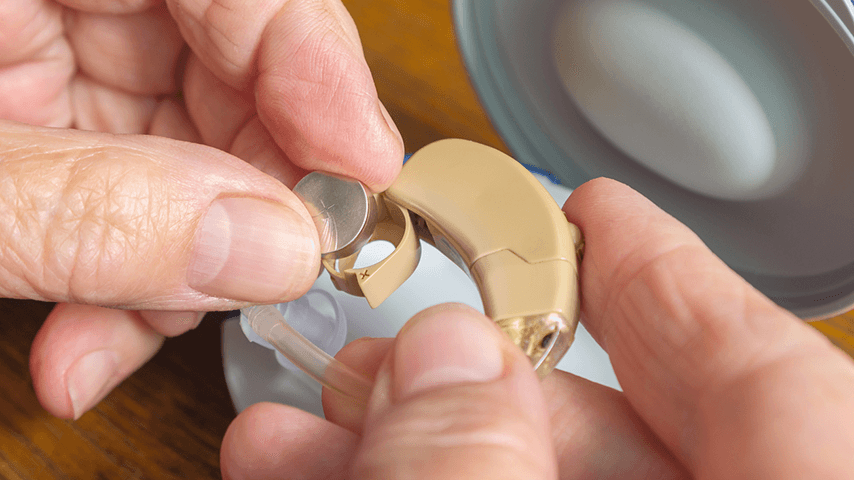
There are many prescription and over-the-counter hearing aids available today. Knowing where to start—and which kind is best for you—depends on the degree of your hearing loss, your individual anatomy, your needs and your preferences. Many hearing aids can treat tinnitus, for example. Check our hearing aid buyers guide for helpful tips on types, features, and how and where to shop.
Finally, hearing aids can be expensive. Our article on hearing aid insurance coverage helps you understand what Medicare and other policies may and may not pay for. If your coverage is limited and your budget is tight, one or more of these hearing aid financial assistance programs may help.
When to see a doctor for hearing loss, anxiety, or both
Right away, Krisher advised.
“Addressing hearing loss, regardless of the underlying cause, has significant health benefits," she said. "When we treat hearing loss we can reduce the risk of social isolation, depression, and even dementia.”13
If you're not sure how to start the conversation with your doctor, or if you know someone who likely has untreated hearing loss and is reluctant to get help, check out these tips.
Sources
1. National Institute on Deafness and Other Communication Disorders. Age-Related Hearing Loss (Presbycusis). February 2023. Found on the internet at https://www.nidcd.nih.gov/health/age-related-hearing-loss
2. Lisa Rapaport. Hearing loss tied to increased risk for depression. Reuters. April 17, 2019. Found on the internet at https://www.reuters.com/article/us-health-hearingloss-depression/hearing-loss-tied-to-increased-risk-for-depression-idUSKCN1RT2HS/
3. Yunfei Tan et al. Relationship between hearing loss and depression: A cross-sectional analysis from the National Health and Nutrition Examination Survey 2015-2018. Psychiatric Research. October 2024. Found on the internet at https://www.sciencedirect.com/science/article/abs/pii/S002239562400428X
4. Oklahoma Hearing Center. The exhausting reality of hearing loss. Feb. 17, 2025. Found on the internet at https://okhc.org/the-exhausting-reality-of-hearing-loss/
5. Alzheimer’s Association. Depression. Found on the internet at https://www.alz.org/help-support/caregiving/stages-behaviors/depression
6. Cleveland Clinic. Adrenaline. Found on the internet at https://my.clevelandclinic.org/health/body/23038-adrenaline
7. Endocrine Society. Adrenal Hormones. Jan. 24, 2022. Found on the internet at https://www.endocrine.org/patient-engagement/endocrine-library/hormones-and-endocrine-function/adrenal-hormones
8. Hope Gillette. How Hypertension Can Affect Your Ears. Healthline. Dec. 19, 2024. Found on the internet at https://www.healthline.com/health/high-blood-pressure-hypertension/hypertension-ears#effects
9. Rich Gasaway. Understanding Stress - Part 6: Auditory Exclusion. Situational Awareness Matters. Found on the internet at https://www.samatters.com/understanding-stress-part-6-auditory-exclusion/
10. Aspire Hearing. Anxiety And Your Hearing. Sept. 16, 2020. Found on the internet at https://www.aspirehearing.com/hearing-loss-articles/what-anxiety-does-to-your-body/
11. Amplifon. Dizziness, confusion, and plugged ears: Is anxiety to blame? March 27, 2024. Found on the internet at https://www.amplifon.com/uk/audiology-magazine/can-anxiety-cause-vertigo-clogged-ears
12. Hearing Consultants. A Link Between Stress And Hearing Loss. May 20, 2019. Found on the internet at https://www.hearingconsultants.com/blog/a-link-between-stress-and-hearing-loss
13. John Hopkins Medicine. The Hidden Risks of Hearing Loss. Found on the internet at https://www.hopkinsmedicine.org/health/wellness-and-prevention/the-hidden-risks-of-hearing-loss
Explore Our Best Hearing Aids Review
Hearing loss can impact well-being. The right hearing aid can make a huge difference. Learn more about our top recommendations based on affordability, comfort, and more.