
Related Topics
City traffic. Crowded restaurants. Barking dogs. Humming hair dryers.
Many of these sounds are so common that it’s easy to ignore how they might be damaging our hearing. But harmful noise exposure isn’t just a matter of intensity—it’s also a matter of duration.
“Most of us know not to stand next to a jackhammer or blow an air horn without protecting our ears,” explained Gretchen Dueñas-Tanbonliong, MS, MPH, RDN, Associate Director of Health and Wellness at NCOA. “Yet noises that seem much quieter can still damage our hearing in as little as half an hour.”
Fortunately, this outcome isn’t inevitable. Of the three common types of hearing loss, noise-induced hearing loss (NIHL), is the one that’s fully preventable.1 In this article, we’ll empower you with the knowledge you need to maintain safe listening practices for good hearing health. Keep reading to learn:
- How noise is measured
- How loud is too loud
- How long is too long
- When to protect your ears
- How to protect your ears
What decibel level causes hearing loss
Experts agree: any noise above 85 decibels (dB) can cause hearing loss.2,3 This is true whether your exposure to it is brief or prolonged. But the louder the noise, the less time it takes for NIHL to occur.
It’s important to realize that noise intensity ramps up quickly. As a result, so does hearing risk. Any increase of three decibels doubles the intensity and cuts in half the amount of safe exposure time.4
To put this in perspective: According to the Occupational Safety and Health Administration (OSHA), the maximum “safe level” of noise exposure is 85 dB (about the sound of a blender) over the course of eight hours.5 At 88 dB, safe exposure time drops to four hours. At 91 dB (about the sound of a lawnmower), it’s two.
Normal decibel level for hearing
Normal conversation measures between 60–70 dB.2 If you’re talking with someone else—and you’re standing within a few feet of each other without having to shout—then the background noise level likely is safe. On the other hand, repeatedly yelling “what?” or “can you hear me?” at that same distance is a warning sign. In this scenario, the background noise level likely reaches or exceeds 85 dB.6
Hearing decibel chart
Curious about how loud some common sounds are? This chart breaks it down.
Examples and risks of different noise levels
| Decibel level | Examples | Exposure guidelines |
|---|---|---|
| 20 | Ticking watch | Safe for any amount of time No ear protection necessary |
| 40 | Quiet room | |
| 60 | Dishwasher | |
| 70 | Vacuum | |
| 80 | Alarm clock | Risk increases with duration Wear ear protection over 85 dB regardless of exposure time. |
| 85 | Blender | |
| 90 | Lawnmower | |
| 95 | Hair dryer | |
| 100 | Automatic hand dryer | |
| 105 | Gas-powered leaf blower | |
| 110 | Car horn | |
| 120 | Airplane (at takeoff) | Never safe for any amount of time Always wear ear protection. |
| 130 | Ambulance siren | |
| 140+ | Fireworks |
Sources: Hearing Health Foundation; American Academy of Audiology; American Speech-Language-Hearing Association
What is a decibel?
Simply put, a decibel is the standard unit of measurement for sound. The quietest sounds register at 0 dB. The loudest can exceed 140 dB.
Factors that affect hearing loss
Among American veterans, hearing loss is the most common service-connected disability.7 And it makes sense: just a single exposure to a very loud explosion—like gunfire—can cause noise-induced hearing loss in as little as one second.4
Most of the time, however, NIHL occurs gradually. Sounds can be significantly quieter yet still harm our ears with continuous exposure. Several factors contribute to the risk:4
- Loudness: The higher the decibel level, the louder the noise. According to the American Speech-Language-Hearing Association (ASHA), any noise at or below 70 dB is safe; anything at or above 85 dB is potentially harmful.4
- Duration: Exposure time matters, too. We can listen to noise below 70 dB for as long as we want without worrying about it. However, at 85 dB, we risk hearing damage if we listen for more than eight hours at a time.
- Distance: We know instinctively that the exact same noise is louder up close than farther away. And there’s a reason: each time we double our distance from the source, the sound intensity drops by 6 dB.
Decibel hearing test
As the above chart shows, experts recommend wearing ear protection any time we’re around noise of 85 dB or above. But how are we supposed to know when that is?
Today’s technology makes it easy. If you have a smartphone or watch, you can download an app that measures the noise for you. For example, the NIOSH Sound Level Meter App offers professional-level capabilities for free. (Note that this app is currently only available for iOS devices). Many others exist, too. Some even will proactively alert you when a noise is too loud. Visit the app store on your phone, tablet, or watch and search “sound meter” or “decibel meter” to get started.
If you don’t have access to any of the above tools or apps, you can use this online noise meter, offered by the National Institute on Deafness and Other Communication Disorders, to get a rough estimate of common sounds and how loud they are.
“And there’s always your gut sense,” Tanbonliong said. “If you think your environment is too loud, then it probably is.”
Some practical clues that your hearing’s at risk include:
- You have to shout to be heard over the background noise
- Your ears hurt while in the presence of the noise
- You experience tinnitus or can’t hear normally for a few hours afterwards
How to protect your ears
Noise-induced hearing loss is common. That doesn’t mean it’s inevitable. And there are ways you can preserve the hearing you have while preventing future damage. To help safeguard your hearing health:
- Wear ear protection in loud environments. Choose an option that’s comfortable for you and effectively reduces noise to below 85 dB.
- Reduce your exposure. If you can’t avoid noise above 85 dB, try to limit how long you spend around it and how close to the source you are.
- Turn it down. Do you use ear buds? Follow the 60-60 rule: listen at a volume no greater than 60% of maximum for no longer than 60 minutes at a time.
Best types of hearing protection
You have choices when it comes to protecting your ears. These include:
- Ear plugs: Ear plugs can be foam or plastic, mass-produced or custom-made. No matter your preference or budget, audiologists offer the same advice: make sure the plugs fit snugly enough that they totally block your ear canal. This provides maximum benefit and can reduce noise exposure by 15–30 dB.4
- Earmuffs: Earmuffs look a lot like headphones—except they block sound instead of delivering it. In order to be effective, earmuffs should completely cover each ear and be tight enough to form a seal. Like earplugs, earmuffs run the gamut of quality and price. When they fit well, they can cut noise by 15–30 dB.4
- Both: For the absolute highest level of hearing protection, experts recommend combining ear plugs and earmuffs. You should consider this strategy essential if you’re going to be around noise that exceeds 105 dB for longer than eight hours—or if you will experience any “impulse exposure” of 140 dB or more regardless of time.4
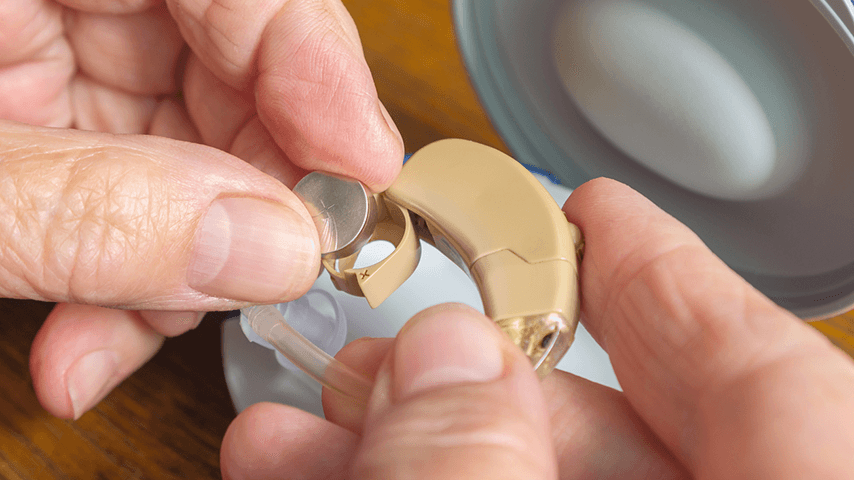
- Hearing aids: If you already have noise-induced hearing loss, the best hearing aids can help: They effectively bypass existing damage and protect your brain’s ability to process sound.8 (Check out our Oticon hearing aid review to learn about the BrainHearing feature and how it improves listening).
When to see a doctor about hearing loss
Regardless of the cause or type, hearing loss in any degree can hurt our health and well-being. In fact, waiting to treat it—or avoiding it altogether—can lead to balance problems, anxiety, and even dementia.9 Hearing loss also can be a sign of diabetes.
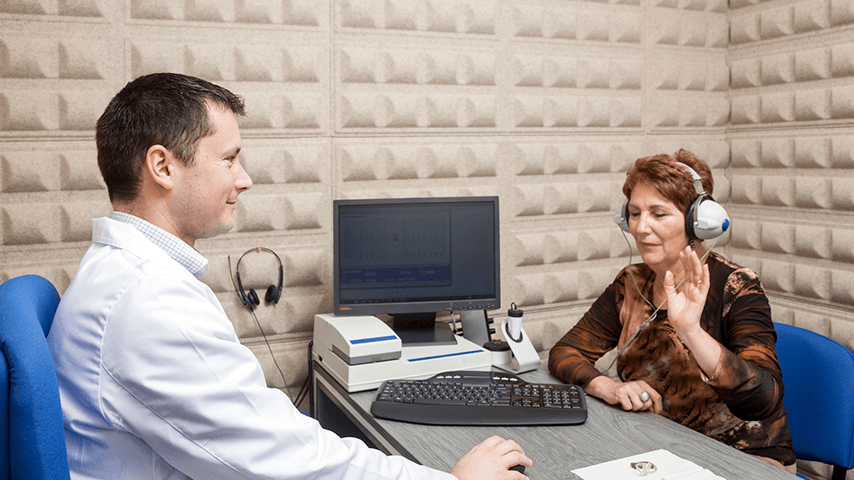
“I urge you to make an appointment with a licensed audiologist or an ear, nose, and throat (ENT) specialist if you experience any amount of hearing loss,” Tanbonliong advised. “Getting help right away can prevent further damage and benefit your overall health.”
Why wait? We depend on our hearing when we interact with friends and family; when we socialize with friends and colleagues; when we talk with people at the post office or grocery store; and so many things between. A hearing expert can help determine whether you’ll benefit from wearing hearing aids. If so, there are many choices available to fit your needs, preferences, individual anatomy, and budget. (Plus, many hearing aids are invisible—an added bonus if you prefer not to draw attention to them).
FAQ
At what decibel level is hearing protection required?
The Occupational Safety and Health Administration (OSHA) mandates that employers provide “hearing conservation programs” for workers who are exposed to noise levels at or above 85 decibels during an eight-hour period.5 (The standard is slightly higher—90 decibels—for the construction industry).
How can I protect my hearing?
Our guide on how to prevent hearing loss covers effective strategies for maintaining your hearing health. And, if you frequently are exposed to noise louder than 85 decibels—including common sounds like hair dryers or gas-powered lawn equipment—it makes good sense to wear ear plugs, headphones, or ear muffs.
Does noise canceling technology protect hearing?
Probably not. These headphones may help reduce your perception of loud background noise—like roaring airplane engines or rowdy conversations—but they don’t actually lower the decibel level. Plus, they offer no protection against sudden loud noises that cause immediate hearing damage.
What is noise-induced hearing loss?
Noise-induced hearing loss, or NIHL, is a type of sensorineural hearing loss that can affect people of all ages. Most often, it happens gradually after repeated exposure to sounds that are too loud for too long. Such exposure permanently damages structures in the inner ear responsible for conducting sound waves to our brain.
How loud is 50 decibels (dB)?
Most everyday conversations measure between 50–60 dB. Experts consider levels below 70 decibels to be hearing safe no matter how long we’re exposed to them. This includes common sounds like dishwashers, vacuums, and leaves blowing in the wind.
Sources
1. Hearing Health Foundation. Causes of Hearing Loss. Found on the internet at https://hearinghealthfoundation.org/causes-of-hearing-loss
2. National Institute on Deafness and Other Communication Disorders. Noise-Induced Hearing Loss. April 16, 2025. Found on the internet at https://www.nidcd.nih.gov/health/noise-induced-hearing-loss
3. American Academy of Audiology. Noise-Induced Hearing Loss. Found on the internet at https://www.audiology.org/consumers-and-patients/hearing-and-balance/noise-induced-hearing-loss/
4. American Speech-Language-Hearing Association. Loud Noise Dangers. Found on the internet at https://www.asha.org/public/hearing/loud-noise-dangers/
5. U.S. Department of Labor. Occupational Health and Safety Administration. Occupational Noise Exposure. Found on the internet at https://www.osha.gov/noise
6. Hearing Health Foundation. What Are Safe Decibels? Found on the internet at https://hearinghealthfoundation.org/keeplistening/decibels
7. U.S. Department of Veterans Affairs Office of Research & Development. Hearing Loss. Found on the internet at https://www.research.va.gov/topics/hearing.cfm
8. Geoffrey Waring. Hearing aids don't just help you hear. They can also prevent permanent hearing loss. Keck School of Medicine of USC. Sept. 29, 2022. Found on the internet at https://keck.usc.edu/news/hearing-aids-dont-just-help-you-hear-they-can-also-prevent-permanent-hearing-loss/
9. ACHIEVE Healthy Aging. Fast Facts: Hearing Loss & Dementia. Found on the internet at https://www.achievestudy.org/fast-facts-hearing-loss-dementia
Explore Our Best Hearing Aids Review
Hearing loss can impact well-being. The right hearing aid can make a huge difference. Learn more about our top recommendations based on affordability, comfort, and more.