

Related Topics
Hearing changes can creep up on us gradually, which makes them easy to overlook at first. We may find ourselves turning up the TV just a tad or asking friends and family to repeat themselves more often. Maybe we struggle more to follow conversations in loud or crowded spaces.
Can you relate? If so, you might have thought about taking an online hearing test to figure out if you’re dealing with hearing loss. These tests are widely available and usually cost nothing. To get a quick assessment from the comfort of your home, all you need is your smartphone or computer.
But while online hearing tests can provide valuable insights, they don’t always tell the whole story. Knowing exactly what these tests can (and cannot) reveal is important when making decisions about your hearing health.
How do online hearing tests work?
Online hearing tests use a series of tones, spoken words, or background-noise exercises to gauge how well you hear certain sounds and speech frequencies. Some focus mainly on volume and pitch detection, while others measure how well you understand speech in noisy environments.
What happens during an online hearing test?
Most online hearing tests are fairly quick, taking anywhere from three to 10 minutes to complete. Before starting, the test may ask you to adjust your device volume or answer questions about your age, health, medical history, and symptoms (e.g., ringing in the ears).
The interactive screening portion of the test works something like this:
- The test plays sounds at different pitches and volumes through your headphones or speakers. You may also hear spoken words presented with varying levels of background noise.
- You may be asked to indicate when you hear a sound by clicking a button or selecting words.
- Based on your responses, the program reveals whether your hearing appears normal or if mild, moderate, or significant hearing loss is present. You’ll typically get immediate results in an on-screen summary or follow-up email, which may also advise on the steps you should take next.
Best practices for taking an online hearing test
To improve the accuracy of your hearing loss test results, you’ll want to create the best possible testing conditions. Here are some pointers:
- Use high-quality over-the-ear headphones or earbuds instead of relying on your device speakers.
- Take the test in a quiet room by yourself without background noise. Turn off nearby televisions, radios, or fans.
- Follow the volume calibration instructions carefully.
- Use a reliable internet connection and updated device.
- Try to avoid guessing.
- Retake the test if you get interrupted at any point.
Remember: Even under ideal conditions, online screenings are not a substitute for a professional hearing evaluation.
How do online hearing tests measure hearing loss?
Online hearing tests generally measure your ability to hear sounds across different frequencies and volumes:
- Frequency (pitch) refers to pitch. Low-frequency sounds are deeper, like thunder or a bass drum. High-frequency sounds are sharper, like birds chirping or children’s voices. Age-related hearing loss often affects high-frequency hearing first, which is why speech may start sounding muffled.
- Volume (intensity) is measured in decibels (dB). The softer the sound you can hear, the better your hearing ability at that frequency. Hearing thresholds help determine the degree of hearing loss:
- Normal hearing: -10 to 15 dB
- Slight hearing loss: 16 to 25 dB
- Mild hearing loss: 26 to 40 dB
- Moderate hearing loss: 41 to 55 dB
- Moderately severe hearing loss: 56 to 70 dB
- Severe hearing loss: 71 to 90 dB
- Profound hearing loss: 91 dB or higher
Test results can vary based on factors like device quality, room noise, and whether the sound calibration is accurate.
Are online hearing tests accurate?
Online hearing tests can be reasonably accurate as screening tools, especially for identifying possible mild to moderate hearing loss. They can help people recognize hearing changes they may have been ignoring or unsure about. Findings from a 2022 study suggested that initial results from a smartphone hearing test were comparable to those from in-clinic hearing assessments.1
But online hearing loss tests are limited in key ways:
- Lack of control over testing conditions: Unlike professional hearing exams, online screenings cannot fully control testing conditions. Background noise, poorly calibrated headphones, internet lag, and device settings can all affect your test results. The American National Standards Institute (ANSI) has established guidelines for how quiet a room must be to ensure accurate hearing test results. In most cases, meeting these standards requires a specially designed sound-treated room.
- Inability to diagnose complex hearing loss causes: Online tests cannot detect certain medical problems that may lead to hearing changes. Issues like earwax buildup, infections, medication side effects, balance disorders, or conditions affecting one ear differently than the other can only be determined with a physical exam.
- Lack of real-world relevance: Many online tests focus mainly on detecting sounds or pitches. But in real life, hearing loss isn’t that simple. Hearing challenges often involve understanding speech in noisy environments or processing conversations quickly.
- No professional input: Online hearing tests don’t include the opportunity to discuss your results, risk factors, or next steps with an audiologist. Without that expert support, you may leave the experience feeling confused or concerned about what your results really mean.
That said, free hearing tests online can still be valuable as a first step. If your screening indicates early hearing loss, it may motivate you to seek treatment that improves your quality of life. Untreated hearing loss has been linked to social isolation, depression, a higher risk of falls, and cognitive decline in older adults.
Online hearing tests compared
There are many free hearing loss tests available online today. Here are a few commonly recommended options:
- American Speech-Language-Hearing Association (ASHA) Hearing Screener: This is a simple pass/fail type of screening to help you identify hearing loss that can affect your well-being.
- Johns Hopkins Hearing Number App: This smartphone app focuses on how well you understand speech in background noise. It's available for iOS (iPhone) and Android devices.
- Audicus Online Hearing Test: This one measures how well you hear tones and speech at different volumes and frequencies and provides instant results with advice on next steps.
- Starkey Online Hearing Test: This test evaluates how well you hear different sounds and speech patterns and may help determine whether you’d benefit from a professional hearing exam.
- Miracle Ear Online Hearing Test: This option gauges how well you can hear speech and tones in different listening situations.
- Signia Online Hearing Test: This hearing loss test checks if you can hear high-frequency tones, low-frequency tones, and spoken words in different scenarios and provides guidance on whether you may need follow-up care.
Developed by the Johns Hopkins Bloomberg School of Public Health and Germany-based Mimi Hearing Technologies, the Hearing Number App is a strong option among online hearing tests. Not only is it research-based; it focuses on understanding speech in background noise and offers a more realistic picture of how hearing loss affects everyday conversations.
Keep in mind that no online test can diagnose the cause of hearing loss or fully replace a clinical exam performed by an audiologist or hearing specialist.
Free vs. paid online hearing tests: What's the difference?
Most online hearing tests cost you nothing. They may be offered by health insurance companies or hearing aid manufacturers, often as a way to introduce users to their products and services. Some companies may ask for your email address or other contact information before providing you with your results, but do not require you to make a purchase. If you come across an online hearing test that requests immediate payment, it’s best to move on to another option.
Some teleaudiology (virtual) platforms like Hear.com may offer an online hearing test followed by a one-on-one consultation with an audiologist. These appointments tend to be billed like in-office visits, depending on the provider and your insurance coverage.
How do online hearing tests compare to in-person hearing exams?
A comprehensive, in-person hearing exam with an audiologist provides a much fuller picture of your hearing health than a free online hearing test
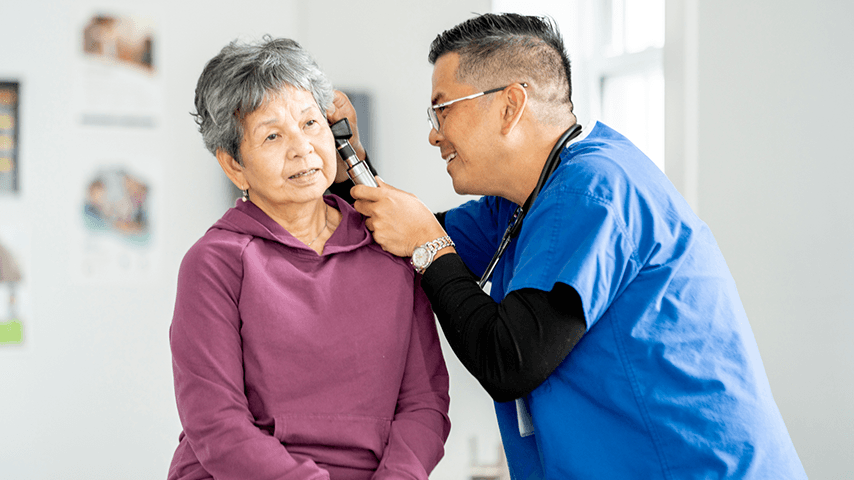
During an in-person evaluation, an audiologist uses specialized equipment in a sound-treated room to measure how well you hear different tones, pitches, and speech sounds at varying volumes. Your exam may also include tests that check how well the middle ear is functioning or look for medical issues like earwax buildup, damage to the ear canal, or other underlying conditions.
Together, these results help the audiologist identify the type and severity of hearing loss and inform next steps, which may include medical treatment, hearing aids, or other hearing support options.
Who should take an online hearing test?
An online hearing test may be helpful as an initial assessment if you:
- Frequently ask others to repeat themselves
- Turn the TV volume up higher than others prefer
- Struggle to hear conversations in restaurants or crowds
- Feel conversations sound muffled
- Have a family history of hearing loss
- Were exposed to loud noise regularly during work or military service
- Live far from hearing care facilities (e.g., in a rural area)
Even mild hearing changes can affect your confidence and happiness over time. And a free, quick online hearing test can give you an early indication of a problem that needs more attention.
If your online hearing tests show you have mild to moderate hearing loss, consider over-the-counter (OTC) hearing aids. You can purchase these devices directly online or in-store without a prescription. See our list of the best-rated hearing aids.
When should I take an in-person hearing test or see a doctor?
Schedule an in-person assessment if your online hearing test results are unclear or don’t match the difficulties you’re experiencing.
You should also have an in-person evaluation or see your health care provider if you have symptoms such as:
- Tinnitus
- Sudden hearing loss (especially after illness)
- Hearing loss only in one ear
- Hearing loss that comes and goes
- Fullness, pain, or pressure in the ears
- Balance issues or dizziness
These symptoms could be a sign of illness or infection.
Experts recommend a hearing screening every one to three years for adults age 65 and older.2 Since hearing loss often develops gradually, regular screening can help pinpoint problems early before they start interfering with your everyday life.
What are the pros and cons of online hearing tests?
Like many digital health tools, online hearing loss tests offer both benefits and drawbacks. Consider these factors before taking a virtual screening:
Pros
- Convenient and easy to access from home
- Typically free of charge
- Quick results
- May provide early evidence of hearing loss
Cons
- Less accurate than in-person auditory assessments
- Results can be affected by device quality and background noise
- Cannot diagnose medical conditions (e.g., ear wax buildup)
- May miss certain types of hearing problems
- Some tests are tied to hearing aid marketing/sales
- Can pose challenges for users without a stable internet connection, reliable device or headphones, and enough comfort with technology to navigate the online screening
For many older adults, online hearing tests can provide reassurance or help confirm it’s time to seek further care. But they work best as part of a broader approach to hearing health rather than a substitute for professional evaluation.
"Many of these tests can be reliable under the right conditions. But results can vary, and I'd advise caution when using them,” Meaghan Reed, AuD, CCC-A, clinical director of Audiology at Mass Eye and Ear, told Harvard Health Publishing. “You need to know what they can and can't offer."
Frequently asked questions (FAQ)
Does Medicare cover hearing tests?
Original Medicare (Parts A and B) may cover diagnostic hearing tests ordered by a doctor if they’re deemed medically necessary. But routine hearing exams for hearing aids are generally not covered under original Medicare. Some Medicare Advantage (Part C) plans may offer additional hearing benefits, including hearing exams and hearing aid coverage.
Are online hearing tests accurate?
Online hearing tests can be useful screening tools, but they’re not quite as accurate as professional hearing exams. Their results can be affected by factors like the quality of your headphones or earbuds, the audio settings on your digital device, and any background noise present.
How long does a hearing test take?
The majority of free online hearing tests take anywhere between three and 10 minutes. A full in-person hearing exam with an audiologist may take 30 minutes or so.
Do I need to take a hearing test before getting hearing aids?
Yes. A hearing evaluation helps determine the type and degree of hearing loss and ensures the hearing aids are right sized to your needs. It can also rule out any underlying medical conditions that may require treatment, like diabetes or Ménière's disease. See our expert reviews of Audicus, Signia, and Starkey OTC hearing aids.
How often should you get your hearing checked?
Experts recommend hearing screenings every one to three years for older adults age 65 and older.1 You may need testing sooner if you notice hearing changes or have risk factors like exposure to loud noise or certain medical conditions.
Sources
1. Amaury Hazan, et. al. Home-Based Audiometry With a Smartphone App: Reliable Results? American Journal of Audiology. September 21, 2022. Found on the internet at https://pubmed.ncbi.nlm.nih.gov/35926189/
2. Shelly Chadha, et. al. Monitoring hearing and vision functions in older adults: rationale and process. Age Ageing. October 30, 2023. Found on the internet at https://pmc.ncbi.nlm.nih.gov/articles/PMC10615057/#ref16
Explore Our Best Hearing Aids Review
Hearing loss can impact well-being. The right hearing aid can make a huge difference. Learn more about our top recommendations based on affordability, comfort, and more.