
The Best Invisible Hearing Aids in 2026
Don’t want a bulky hearing aid? We tested invisible hearing aids for those who prefer a discreet option. Our top pick is the Audien Atom Pro 2.

- We chose the Audien Atom Pro 2 as the Best Over-the-Counter Invisible Hearing Aid because of its discreet, snug fit and strong value.
- The best invisible hearing aids on our list range in cost from $289–$4,000+ per pair. Some brands offer discounts or financing options.
- Smaller hearing aids often have fewer features, so some invisible models may not include Bluetooth or longer battery life.
- Invisible hearing aids may work best for people who want a more discreet device and are comfortable with a smaller fit.
- Looking at both price and features can help shoppers choose a model that fits their needs and budget.
We’ve spent more than 5,000 hours researching hearing aids to give you the most accurate product reviews. To find the best hearing aids, we:
- Consulted with audiologists, hearing instrument specialists, and aging care experts
- Put more than 50 hearing aids through a series of 21 different tests
- Mystery shopped more than 20 brands
- Surveyed hundreds of older adults who use hearing aids
- Interviewed experts on hearing loss
- Sent hearing aids to our friends and family with hearing loss to provide long-term testing notes
- Read thousands of verified customer reviews
We’re constantly testing new hearing aids to give you the most accurate and up-to-date recommendations. Read more about our hearing aid review methodology.
Hearing aids aren’t exactly uncommon. Millions of Americans wear them, especially now that you can buy them without a prescription (see our review of the best OTC hearing aids). And the older you get, the more likely you are to benefit from hearing aids, according to research.1 Still, not everyone likes to advertise the fact that they wear these devices.
“Many people prefer a solution that doesn’t draw attention to their hearing loss,” said Leslie Peterson Soiles, AuD, chief audiologist at HearingLife in Shrewsbury, Massachusetts, and someone who has hearing loss herself.
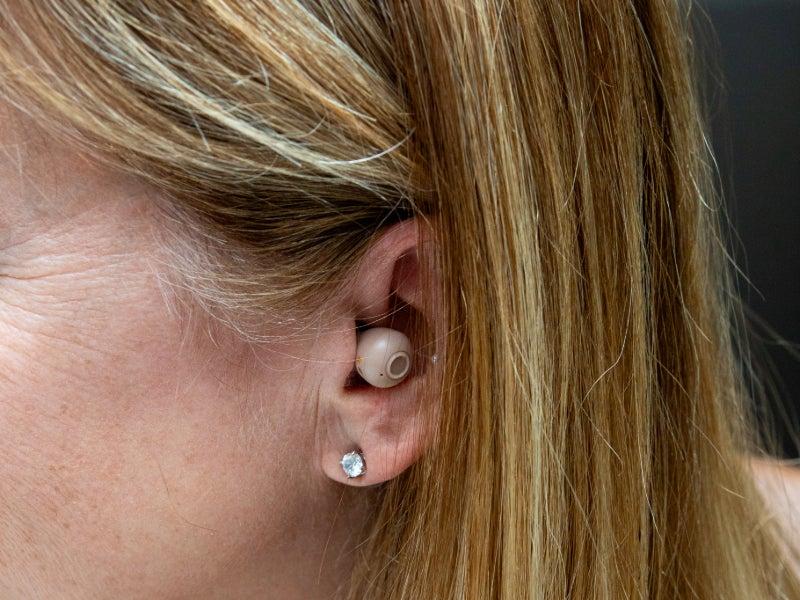
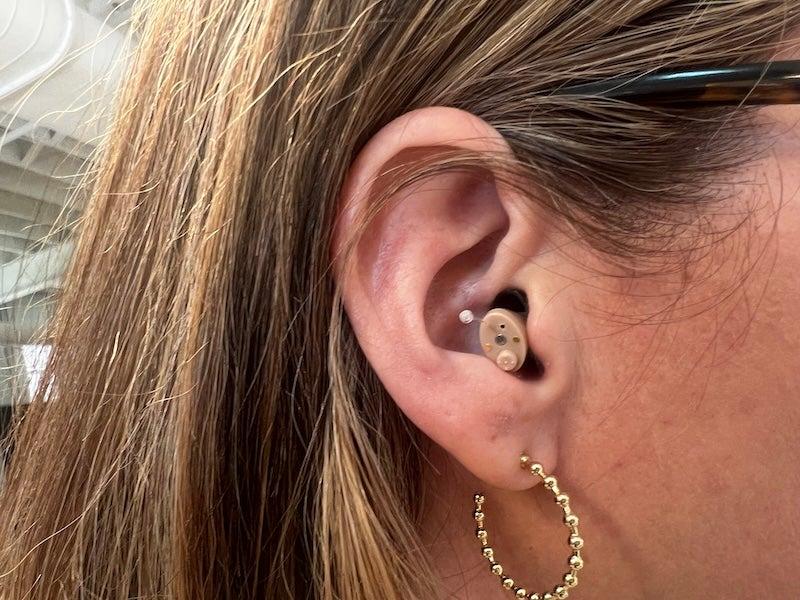
Invisible hearing aids fit neatly inside the ear canal. They come in varying sizes and are much less prominent than traditional behind-the-ear (BTE) models. “Invisible hearing aids may be a good option for someone who doesn’t want their hearing aids noticed, and also anyone who does not want, or cannot have, a BTE-style device,” said Sarah Lundstrom, AuD, FAAA, a board certified audiologist at HearCare Audiology & Tinnitus Center, in Sarasota, Florida.
Advances in miniaturized technology have improved the sound quality, comfort, and functionality of these discreet hearing aids. But with so many options, including over-the-counter invisible hearing aids, it can be tough to figure out which are the best invisible hearing aids to buy. We tested several of the top discreet models. Keep reading for the results and our picks for the best invisible hearing aids.
Best OTC
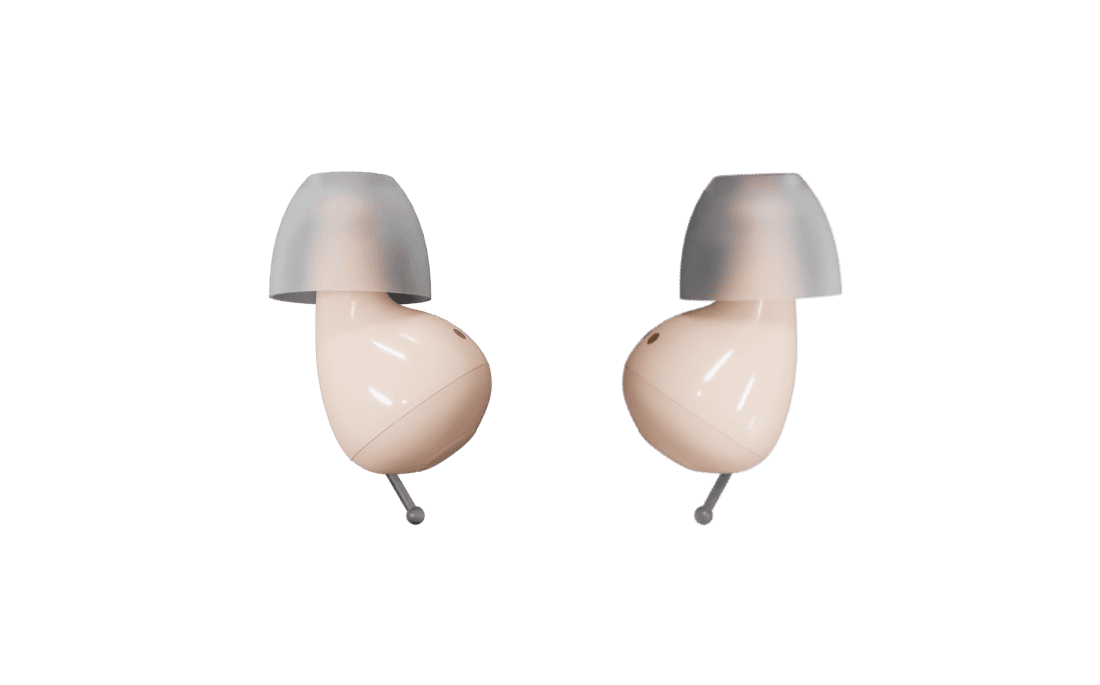
Audien Atom Pro 2
Compact, discreet design with strong battery life and clear sound for the price
Best Value
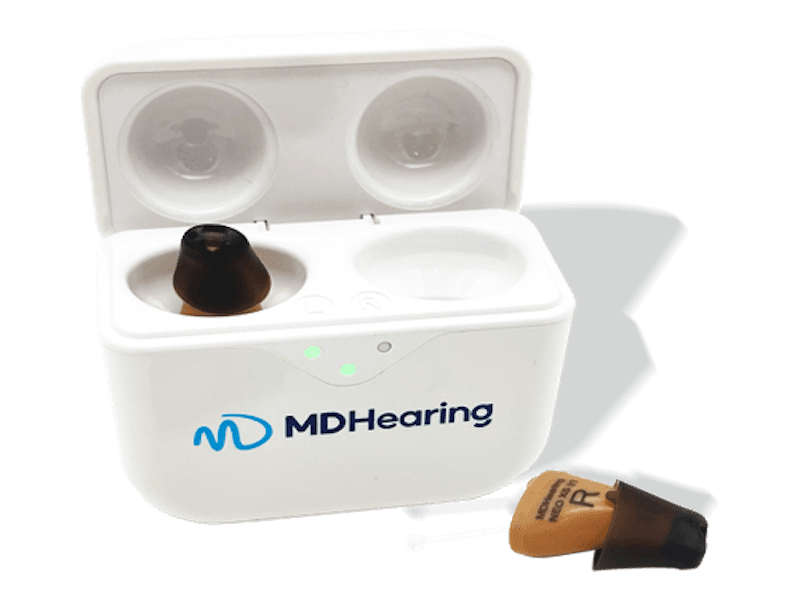
MDHearing NEO XS
Budget-friendly invisible hearing aids with a small, comfortable, secure fit

Most Comfortable
Audicus Mini 2
Features a secure, discreet fit, long battery life, and lifetime audiology support
Best invisible hearing aids in 2026
- Audien Atom Pro 2: Best OTC Invisible Hearing Aid
- MDHearing NEO XS: Best Value Invisible Hearing Aid
- Audicus Mini 2: Most Comfortable Invisible Hearing Aid
- Phonak Lyric: Best Invisible Prescription Hearing Aid
The best invisible hearing aids compared
| Comparison Features | ||||
|---|---|---|---|---|
| Our rating (out of 10)* | 9.7 |
9.2 |
9.4 |
9.6 |
| Rx or OTC | OTC |
OTC |
OTC |
Rx |
| Battery type | Rechargeable |
Rechargeable |
Rechargeable |
Disposable |
| Battery life (hours) | 24 |
18 |
18 |
Varies |
| Bluetooth | No |
No (only in the Volt Max) |
No |
No |
| Hearing aid type** | CIC |
CIC |
CIC |
CIC |
*Ratings reflect a brand's overall offering; the best overall pick doesn't necessarily have the highest score
**CIC: completely in the canal
How we tested to find the best invisible hearing aids
Each hearing aid we review goes through a 21-test process. We focus on the areas that have the biggest impact on everyday performance, including:
We use these findings to create reviews that help our readers make more confident decisions about hearing aids for daily life. Learn more about our testing methodology.
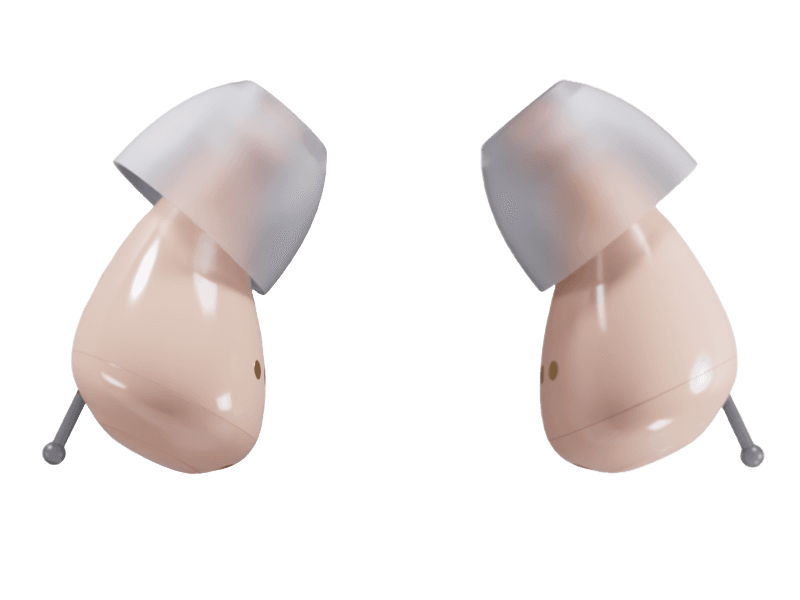
Audien Atom Pro 2: Best OTC Invisible
We chose the Audien Atom Pro 2 as the Best OTC Invisible Hearing Aid because it is discreet, comfortable, and has one of the longest battery lives (a full 24 hours) of any rechargeable hearing aid we tested.
- Audien Review
- Long battery life (24 hours)
- Discreet size and fit
- Clear sound quality and minimal background noise
- Type of hearing aid: CIC
- Type of hearing loss: Mild to moderate
- Battery type: Rechargeable
- Bluetooth compatible: No
- Trial period: 45 days
Pros
- Small, discreet fit
- Setup was simple and user-friendly
- Comes with lifetime customer support
- Filters out background noise
Cons
- Only comes in one color, which may not match skin tone
- You can only adjust volume using buttons on the hearing aids
- Limited one-year warranty
- No app or Bluetooth
MDHearing NEO XS: Best Value Invisible
We chose the MDHearing NEO XS as the Best Value Invisible Hearing Aid because it is the second-least expensive model on our list, one of the smallest and most discreet CIC options, and it has the second-longest battery life. The NEO XS doesn’t have an app or other frills, but testers rated it highly for comfort and ease of use.
- MDHearing Review
- Second-lowest price on this list
- Long battery life (18 hours)
- Small, discreet design
- Comfortable and secure fit
- Type of hearing aid: CIC
- Type of hearing loss: Mild to moderate
- Battery type: Rechargeable
- Bluetooth compatible: No
- Trial period: 45 days
Pros
- Very small and discreet
- Secure, snug fit
- Testers said wax guards were easier to change and clean
Cons
- Occasional static and beeping sounds
- No app or Bluetooth capability
- Volume button position is not ideal
Audicus Mini 2: Most Comfortable Invisible
We chose the Audicus Mini 2 as the Most Comfortable Invisible Hearing Aid because it earned perfect scores in our fit and comfort tests. These invisible hearing aids stayed securely in place even with hard use, and testers routinely described how lightweight they felt. The brand also has lifetime audiology support. Unlike other OTC hearing aid brands that you need to fit yourself, you can make a tele-audiology appointment to get expert support in finding your perfect fit. Audicus also offers the longest trial period (100 days) among the models we tested.
Audicus Mini 2
Most ComfortableNCOA Exclusive Discount:
Our readers receive $200 off Audicus hearing aids with code: NCOA200
NCOA Exclusive Discount:
Our readers receive $200 off Audicus hearing aids with code: NCOA200
- Audicus Review
- Comfortable, snug fit
- Lifetime audiology support
- Good battery life (18 hours)
- Longest trial period on this list (100 days)
- Type of hearing aid: CIC
- Type of hearing loss: Mild to moderate
- Battery type: Rechargeable
- Bluetooth compatible: No
- Trial period: 100 days
Pros
- Very small and discreet
- Comfortable and lightweight
- Lifetime audiology support/tele-audiology appointments on demand
- Stays in place even during intense movement
Cons
- No Bluetooth
- Volume control requires use of the app
- Higher cost
Phonak Lyric: Best Invisible Prescription
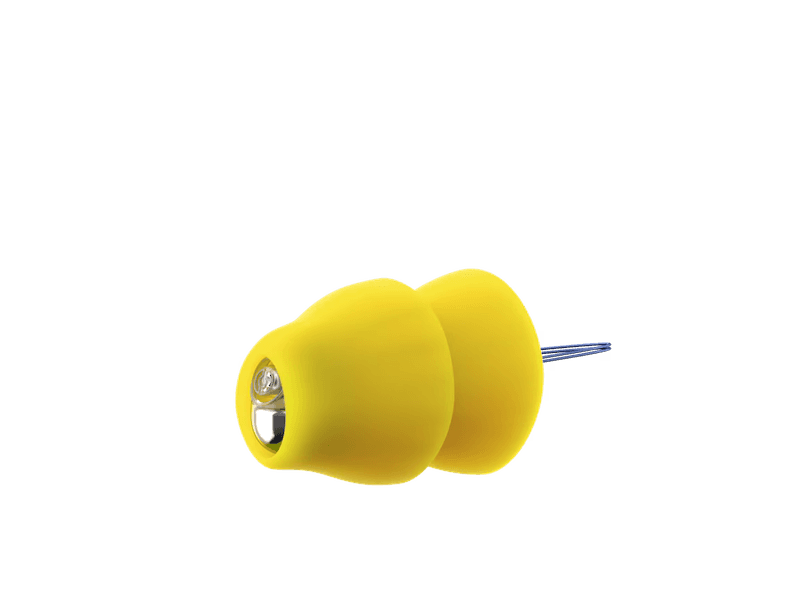
We chose the Phonak Lyric as the Best Invisible Prescription Hearing Aid because its unique design lets it stay completely concealed inside the ear canal. It must be placed there by an audiologist and replaced every six to eight weeks. Because it is available by prescription only and must be inserted by an audiologist or other hearing expert, we did not test the Phonak Lyric ourselves.
- Phonak Review
- Completely invisible hearing aid
- Is worn 24/7 (but has a sleep mode)
- No need to remove—audiologist replaces it every two months
- May help tinnitus
- Type of hearing aid: CIC
- Type of hearing loss: Mild to moderately severe
- Battery type: Disposable
- Bluetooth compatible: No
- Trial period: Depends on retailer
Pros
- Completely concealed inside ear canal
- No batteries to charge
- No need to remove (can be worn in the shower or around water as long as not submerged)
- Simulates natural hearing
Cons
- Need a prescription and ongoing audiology support
- Needs to be replaced regularly by trained expert
- Highest cost on this list
Types of invisible hearing aids
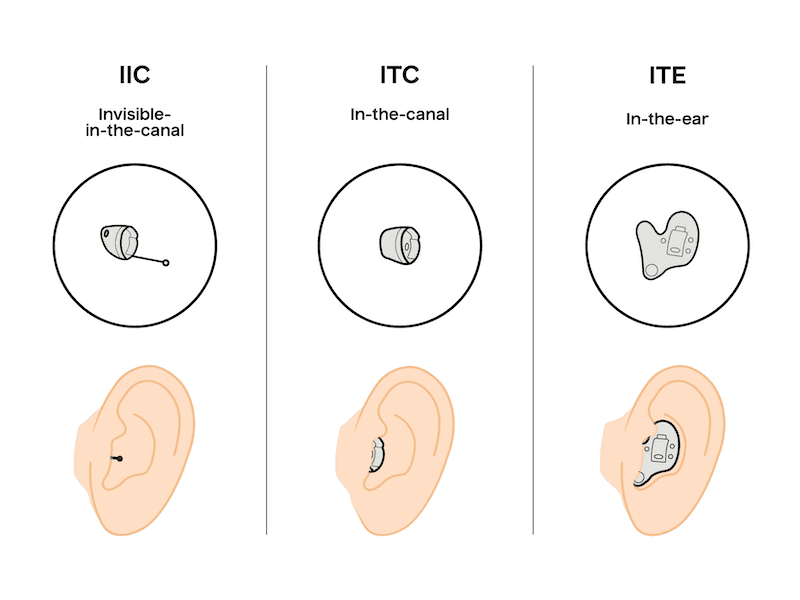
There are several types of so-called invisible hearing aids. “‘Invisible hearing aids’ typically refer to Completely-in-Canal (CIC) devices, which are custom-made to sit deep inside the ear canal,” said Leslie Soiles, the audiologist in Massachusetts.
“Because of their placement, they are nearly impossible for others to see when worn. Some brands may also market Invisible-in-Canal (IIC) devices, which fit even deeper in the canal and are the smallest style available.” These terms, CIC and IIC, are often used interchangeably with "invisible hearing aids.” But there are some key differences:
- In-the-Canal (ITC): This refers to a hearing aid designed to fit in the ear canal, similar to earbud-style headphones. They are visible but generally more powerful than smaller models, so they are able to address mild to severe hearing loss.
- Completely-in-the-Canal (CIC): These hearing aids are smaller than ITC and mostly sit inside the ear canal, although some parts may be visible in the outer ear. They can usually address mild to moderate hearing loss. In general, the smaller the hearing aid, the less severe hearing loss it’ll be able to address.
- Invisible-in-the-Canal (IIC): This is the smallest and most discreet style. They sit back in the ear canal and may only be noticeable by a plastic wire that sticks out to help with removal. They can usually support mild to moderate hearing loss. While they can have great sound quality, Lundstrom, the audiologist in Florida, says, “They do not typically have directional microphones which means they do not provide as much support in background noise.” Because of their small size, these devices can be more challenging for people with dexterity or vision issues when it comes to changing the batteries or other parts.
Compare hearing aid styles
"While in-the-ear styles of hearing aids are more discreet, they are not well-suited to everyone," said Lundstrom. Here are some of the ways they stack up to other kinds of hearing aids.
| Comparison Features | Invisible-in-canal (IIC) |
Behind-the-ear (BTE) |
In-the-ear (ITE) |
Receiver-in-canal (RIC) |
|---|---|---|---|---|
| Degree of hearing loss | Mild to moderate |
Mild to severe |
Mild to severe |
Mild to severe |
| Pros | Discreet; does a good job of simulating natural hearing |
More powerful amplification and features |
More features than IIC; designed for better background noise reduction |
More power and features than ITE; less noticeable than BTE |
| Cons | Small components can be challenging; often has limited power and features |
May be more difficult to wear if you are active |
More visible than IIC; may be less comfortable or secure than other types |
More potential maintenance needs |
Benefits and limitations of invisible hearing aids
Whether you prefer invisible hearing aids or another kind is largely personal preference, but it is good to know some of the advantages and potential limitations of the discreet devices.
Benefits of invisible hearing aids
While a lot of people are interested in invisible hearing aids because of their discreet appearance, there are other reasons you may want to consider them. Some of the benefits of invisible hearing aids include:
- Discretion: Visually, invisible hearing aids are the least noticeable option. Some people don’t like the look or feel of a behind-the-ear model, and some don’t like others to know they are wearing a hearing aid. This research found almost half (48%) of older adult participants said their decision to not wear hearing aids was due to the stigma of being perceived as old and disabled.2 And only about 16% of adults ages 20–69 who could benefit from hearing aids have ever used them.1
- Natural sound experience: Devices that sit outside the ear may feel foreign, like an extra component. Hearing aids that go inside the ear canal may feel more familiar. “Their deep placement in the ear canal allows the outer ear to naturally funnel sound, which can create a more natural listening experience,” said Soiles. Check out our Widex review for another hearing aid option with natural sound.
- Reduced wind noise: Because the microphone and receiver are all in one package inside the ear canal, invisible hearing aids tend to reduce the noise and sound interference from wind. That can make them a good option for outdoor activities, said Soiles.
- No external components: Having to deal with ear hooks, battery packs behind your ear, or ear molds to keep devices in place can be uncomfortable or impractical if you lead an active lifestyle. People who wear glasses or have long hair may also prefer the ease and comfort of an invisible hearing aid.
Limitations of invisible hearing aids
No hearing device is perfect. Invisible hearing aids may be discreet, but their small size and placement in the ear canal come with challenges. Some of the drawbacks of invisible hearing aids include:
- Shorter battery life: Many invisible hearing aids now have rechargeable batteries, but the battery life tends to be limited. The longest battery life on this list is 24 hours. Cases that charge the hearing aids can help extend battery life.
- Power limitations: Invisible hearing aids are generally best suited for mild to moderate hearing loss and may not be effective for more severe cases, said Soiles. They also have limited room for advanced features like Bluetooth streaming or directional microphones.
- Fit requirements: Ear canals come in different sizes and shapes. People who have very narrow or curved ear canals may have difficulty keeping ITC devices in place. Invisible hearing aids may also not be a good option for anyone prone to frequent ear infections or who has excessive wax buildup. Most invisible hearing aids come with different domes you can change to get a more custom fit. “A proper hearing aid fit isn’t just about comfort. It directly impacts how well you hear,” said Soiles. “The right fit allows people to remain physically active…without worrying about your hearing aids falling out or failing to keep up.”
- Maintenance challenges: “Because of their placement, they require more frequent cleaning and professional maintenance, and their tiny size can make them difficult to handle for people with dexterity or vision challenges,” said Soiles.
The cost of invisible hearing aids
In our 2025 hearing aid user survey, 41% of people said price was their top concern when considering over-the-counter hearing aids (behind only sound quality).3
The price of invisible hearing aids can vary a lot depending on quality, design, features, and other factors. You can expect to pay between a few hundred to several thousand dollars for invisible hearing aids. Often, prescription models cost much more. That’s because prescription hearing aids may include the cost of office appointments before and after you buy, as well as regular professional cleanings, adjustments, and upgrades. For other affordable options, check out our Soundbright review for more information on OTC hearing aids.
Comparing the cost of the best invisible hearing aid
| Comparison Features | Audien Atom Pro 2 |
MDHearing NEO XS |
Audicus Mini 2  |
Phonak Lyric |
|---|---|---|---|---|
| Cost (per pair) | $289 |
$297 |
$2,498 |
Around $4,000 |
| Trail period (days) | 45 |
45 |
100 |
Depends on retailer |
| Warranty (years) | 1 |
1 |
2 |
1 |
Caring for invisible hearing aids
Their placement inside the ear canal makes invisible hearing aids less noticeable, but it also means you need to clean them more. “Caring for invisible hearing aids requires extra attention because of their small size and deeper placement in the ear canal,” said Soiles. Here are some of her recommendations:
- Clean every day. “Daily cleaning is essential,” she said. “Use a soft, dry cloth or the provided cleaning tool to gently remove earwax and moisture.”
- Store properly. Always store the devices in a dry, protective case overnight, away from moisture, hairspray, or heat.
- Get professional cleanings. “Unlike larger devices, invisible aids are especially prone to wax buildup,” Soiles said. Regular professional cleanings every three to five months are strongly recommended.
Frequently asked questions
How much do invisible hearing aids cost?
Invisible hearing aids can range in cost from a few hundred to several thousand dollars depending on their quality, design, features, and other factors.
Do invisible hearing aids have Bluetooth capability?
Some invisible hearing aids have Bluetooth capability, but most do not because of their smaller size.
How often do invisible hearing aid batteries need to be changed?
The battery life for invisible hearing aids can vary depending on use, the specific hearing aid model, and other factors. In general, disposable batteries need to be changed every 4-8 days, and rechargeable batteries last between 16 and 24 hours on a single charge.
How long do invisible hearing aids last?
The lifespan of invisible hearing aids varies depending on use, care, and durability, but most will need to be replaced every 3-5 years.
Questions? Email us at reviewsteam@ncoa.org.