
Loneliness Is a Care Need: Why Human Connection Should Be Part of Home Care
5 min read
I remember walking into Mr. Knox’s house one afternoon. His radio was on, an old one, reading out the temperature and the chance of rain. The curtains were drawn against the afternoon light. He sat beside a table of pill bottles, and I thought he was listening to the weather.
He was crying. Quietly, the way people cry when they do not want to trouble the room. Nothing was wrong in any way a care plan could catch. No fall. No missed dose. The meals had come. The house was safe. Everything required was in place, and the man at the center of it all was in tears while the radio read the forecast.
I had come to change a light bulb he could no longer reach on his own. It was a small favor, the kind of thing that comes up when you spend enough time helping someone remain safely at home.
|
What is loneliness? |
|
Loneliness is the gap between the social connection a person has and the connection they want or need. An older adult can receive regular home care and still experience loneliness if their emotional and social needs aren't being met. |
What are the signs of loneliness in older adults?
I asked if he was okay. He said he was fine. Of course he did. “Are you okay?” is a small question, and people learn to give small questions small answers so that nobody worries. I finished the task. I stayed longer than the task needed. And I left knowing I had seen something the checklist had no line for.
Before returning to school to study psychology, I spent years working in home care, where moments like this became impossible to ignore. Living with early-onset Parkinson’s disease has deepened my understanding of how vulnerable it can feel to depend on others, and how much dignity can be found in feeling truly seen. Those experiences now shape both my work and my studies.
Loneliness rarely looks like an emergency. It looks like a radio playing to a room. It looks like a chair by the window and a life that has narrowed by inches, so slowly that no one, including the person living it, can point to the day it happened. That is what makes it so easy for care to miss. Home care is organized around what can be scheduled and checked off. Bathing, meals, medications, housekeeping, rides. Those tasks are real and they matter. But a visit can complete every one of them and still leave the person unreached.
Loneliness is not the same as being alone. It is the gap between the connection someone has and the connection they need, which is why someone can receive regular care and still feel profoundly alone.1 It is linked to depression, declining physical health, and a higher risk of early death.2,3,4 It deserves to be treated as a care need, not simply a feeling.5
Can an older adult feel lonely even when they receive home care?
Yes. Regular home care can meet important physical and practical needs without necessarily meeting a person's need for social and emotional connection. An older adult may receive help with meals, medications, housekeeping, and personal care while still feeling lonely or disconnected.
How can family members reduce loneliness for an older adult that's receiving home care?
If you are a family member arranging care for someone you love, three things are worth doing.
- Ask the agency for continuity. A rotating cast of caregivers makes building trust much harder, no matter how kind each one is. Relationships grow through familiarity, not introductions.
- Ask better than “How did it go?” Ask what they talked about. Ask what made them laugh. Small questions get small answers, from care agencies as surely as from lonely older adults. Asking about connection tells everyone it counts.
- Say it during care planning. Tell the agency that conversation and companionship matter to your family, and ask for them to be included in the care plan. What gets written down gets protected.
How caregivers can make the most of small moments
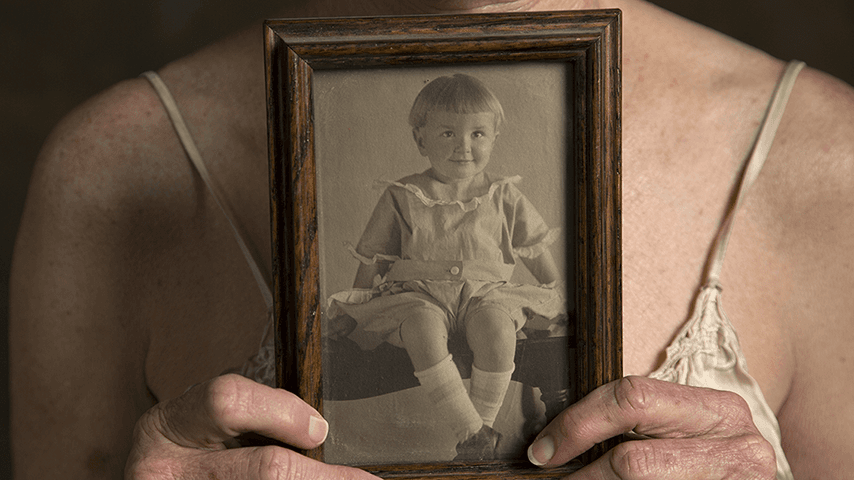
If you are a caregiver, you have been in that room. You know the visit where something opened up. Learn the stories, not just the routines. The daughter in the photograph. The job they retired from. The pipe they no longer smoke but still keep within reach. Asking about these things is not small talk. It is part of the work.
|
5 ways caregivers can help reduce loneliness |
|
Build continuity and familiarity |
|
Make time for meaningful conversation |
|
Learn the person's history and interests |
|
Include connection in the care plan |
|
Protect time for relationships beyond caregiving tasks |
Conversation grows naturally while preparing a meal, folding laundry, or changing a light bulb. You do not always need extra time. You need to make the ordinary minutes count.
And if you are caring for a parent, a spouse, or another family member yourself, everything above belongs to you, too, with one difference. When the caregiver is family, the tasks can quietly take over the relationship. You arrive as a daughter and find yourself working as a nurse, a pharmacist, and a scheduler. The care gets managed, and the person gets missed, even between people who love each other.
So protect a few minutes of each visit that have nothing to do with care. Ask a question you would have asked before the diagnosis. Watch the game together. Notice the questions you ask, too. “Did you take your pills?” cares for the needs. “Do you remember when?” cares for the person. Both matter, but only one of them can come from you and no one else, because no agency can send someone who shares fifty years of history.
Caregiving as human connection
Here is what gives me hope, and it comes from the research as much as from the living rooms. For many older adults receiving home care, the caregiver is the most consistent visitor they have, and sometimes the only one. Research consistently shows that regular, personal communication can reduce loneliness,6,7 and that the relationship between a caregiver and client carries emotional weight far beyond the tasks performed.8,9
The approaches that work best do not simply increase contact. They challenge the belief that no one is interested anymore.10 Ten minutes of real attention, repeated visit after visit, is evidence against that certainty.
Mr. Knox never told me why he was crying that afternoon, and he did not owe me an explanation. The forecast got read. The bulb got changed. By every measure we use, the visit was complete.
It was not complete. He was still somewhere no one had reached, and no one had been asked to reach him. That is not a failure of any caregiver, nor is it usually a lack of compassion. It is a system that measures what can be counted more easily than what can be felt.
The people are already in the room. The visits are happening every day. We do not need to invent a new service. Human connection is not an extra. It is part of care, and it should be treated that way.
Photo copyright Karen
Sources
1. Gardiner C, Geldenhuys G, Gott M. Interventions to Reduce Social Isolation and Loneliness Among Older People: An Integrative Review. Health & Social Care in the Community. 2018. Found on the internet at https://doi.org/10.1111/hsc.12367
2. Hawkley LC, Cacioppo JT. Loneliness Matters: A Theoretical and Empirical Review of Consequences and Mechanisms. Annals of Behavioral Medicine. 2010. Found on the internet at https://doi.org/10.1007/s12160-010-9210-8
3. Holt-Lunstad J, Smith TB, Baker M, Harris T, Stephenson D. Loneliness and Social Isolation as Risk Factors for Mortality: A Meta-Analytic Review. Perspectives on Psychological Science. 2015. Found on the internet at https://doi.org/10.1177/1745691614568352
4. Perissinotto CM, Stijacic Cenzer I, Covinsky KE. Loneliness in Older Persons: A Predictor of Functional Decline and Death. Archives of Internal Medicine. 2012. Found on the internet at https://doi.org/10.1001/archinternmed.2012.1993
5. Office of the Surgeon General. Our Epidemic of Loneliness and Isolation: The U.S. Surgeon General’s Advisory on the Healing Effects of Social Connection and Community. U.S. Department of Health and Human Services. 2023. Found on the internet at https://www.hhs.gov/sites/default/files/surgeon-general-social-connection-advisory.pdf
6. Tsai HH, Tsai YF, Wang HH, Chang YC, Chu HH. Videoconference Program Enhances Social Support, Loneliness, and Depressive Status of Elderly Nursing Home Residents. Aging & Mental Health. 2010. Found on the internet at https://doi.org/10.1080/13607863.2010.501057
7. Cotten SR, Anderson WA, McCullough BM. Impact of Internet Use on Loneliness and Contact with Others Among Older Adults. Journal of Medical Internet Research. 2013. Found on the internet at https://doi.org/10.2196/jmir.2306
8. Piercy KW. When It Is More Than a Job: Close Relationships Between Home Health Aides and Older Clients. Journal of Aging and Health. 2000. Found on the internet at https://doi.org/10.1177/089826430001200305
9. Stacey CL. Finding Dignity in Dirty Work: The Constraints and Rewards of Low-Wage Home Care Labour. Sociology of Health & Illness. 2005. Found on the internet at https://doi.org/10.1111/j.1467-9566.2005.00476.x
10. Masi CM, Chen HY, Hawkley LC, Cacioppo JT. A Meta-Analysis of Interventions to Reduce Loneliness. Personality and Social Psychology Review. 2011. Found on the internet at https://doi.org/10.1177/1088868310377394