
Can AI Help Older Adults Age Well? Benefits, Risks, and What Families Should Know
4 min read

Related Topics
At a senior living facility in the Bronx, New York, 83-year-old Marvin talks to Meela three times a week, engaging in lengthy conversations about sports, music, and memories from the 1950s and 1960s. Meela, however, is not a relative, friend, or caregiver; she is an AI companion powered by Generative Artificial Intelligence (GenAI), designed to help reduce loneliness, stimulate engagement, and support cognitive activity.
The benefits and promise are significant. But how can these advanced technology tools support older adults while preserving human connection, trust, privacy, and informed oversight?
How can AI support healthy aging?
Generative AI, or GenAI, refers to advanced artificial intelligence systems that use existing information to generate new content, respond conversationally, and continuously refine outputs based on the data and interactions they process.
GenAI tech tools, such as ChatGPT, are increasingly used by some older adults to plan travel, find health information, support writing, play sophisticated games, and engage in other interactive functions. An article in The Wall Street Journal last fall, "Afraid to Try AI? These Tech-Savvy Seniors Will Change Your Mind," highlighted the growing number of older adults who have embraced GenAI tools to enhance their daily lives.
AI for Older Adults at a Glance
| AI can help with | Examples |
|---|---|
| Companionship | AI companions, conversation |
| Medication reminders | Daily reminders |
| Brain health | Games and cognitive exercises |
| Organization | Appointments and calendars |
| Information | Health questions, writing, planning |
| Family connection | Video calls and messaging |
For older adults, AI companions and chatbots can offer companionship, comfort, and practical assistance for aging well at home. One example is ElliQ, a desktop digital companion that can interact with users and complete a range of tasks. ElliQ can help with medication reminders, search the internet for information, guide users through exercise routines, and offer games designed to help sustain cognitive skills. It can also initiate phone calls from a contact list and connect video calls with family and friends.
AI chatbots such as ChatGPT and Claude generally support information-seeking, conversation, reminders, writing, planning, and problem-solving, while AI companions such as ElliQ typically offer a more integrated set of functions, including video classes, family calls, wellness prompts, and telehealth connections. The distinction matters because the more personal and persistent the interaction becomes, the greater the need for safeguards around accuracy, privacy, dependency, and emotional attachment.
AI for companionship and caregiving
A wide range of AI robots, or “humanoid robots”, are transforming elder care in nursing homes and other senior living facilities.1 Although these tools have been adopted more actively in Japan, South Korea, and China, they are gaining ground in the United States.
Advances in AI have enabled robots to play an increasingly helpful role in senior living facilities, particularly as elder care workforce shortages continue. Robotic support can range from social and companion robots to tools for health and medical monitoring.
At the University of Houston’s ELARA Lab (Empathetic Lifespan AI & Robotics for Aging), researchers are developing robotic technology to help older adults with mobility challenges.2 The lab is “exploring how adaptive AI, companion robots and empathetic design are transforming how adults, people with disabilities, families and care teams interact with modern technology. Rather than treating aging as a technology problem to solve, the lab approaches it as a design challenge rooted in dignity, trust and human connection.”
At this point, AI-powered devices are unlikely to fully replace human support as people age, but caregivers are increasingly using advanced technology to help manage care. AARP’s most recent Tech Trends report found that 55% of caregivers use one or more forms of advanced technology to manage routines, coordinate care, or track health.3 These tools include motion sensors, remote patient monitoring devices, emergency response systems, medication dispensers, and “smart” pill bottles that use sensors to track medication use.
One of the most frequently cited uses of AI technology in aging is combating isolation and loneliness. One in three adults ages 55 to 75 lives alone; among those 75 and older, more than half live alone.4 This reality places many older adults at heightened risk of social isolation. Some research has found that loneliness and isolation, both serious threats to mental and physical health among older adults, may be reduced through advances in AI technology.5
The benefits are real, particularly for older adults facing loneliness, care coordination challenges, or cognitive changes.
Yet the central question is not whether AI companions and chatbots can help, but whether they can be introduced with enough transparency, human oversight, and guardrails to prevent unintended harm.
What are some potential problems with AI use?
Serious concerns have emerged about how advances in AI technology, including AI companions and chatbots, may contribute to unhealthy relationships among young people. For example, teens have turned to AI chatbots for personal relationships and emotional support. In some cases, these AI companionships can lead to unrealistic or manipulative “friendships,” and in others they have been linked to devastating results. These concerns have prompted legal cases against technology companies, state and federal action, and parental interventions. Protecting teens and young adults from potential harms tied to advanced AI relationships has become an urgent online safety issue.
For older adults, three risks require particular attention:
- Sustained AI interaction could create unhealthy dependency or make manipulative responses more difficult to identify.
- Loneliness and social isolation may make some users more likely to substitute AI interaction for human contact.
- Cognitive decline can heighten vulnerability to misinformation, privacy exposure, scams, or overreliance on advice that has not been validated by a caregiver, clinician, or trusted human source.
Returning to the Bronx senior living facility, Meela, the AI companion, is designed to speak with residents about topics that interest them most. Its goal is to engage individuals and stimulate them cognitively but not replace human contact. During these interactions, the AI companion is programmed to encourage older adults to participate in facility activities and interact with other people, rather than develop an isolating relationship. In other words, this AI companion was designed to enable positive engagement while reducing the risk of unhealthy attachment.
What safeguards are important for AI use?
AI companions and chatbots can be valuable tools for aging well. But they should be introduced through an intentional safety plan rather than treated as simple consumer gadgets. Families, caregivers, providers, and senior living organizations should consider the following safeguards before encouraging regular use:
- Make clear from the outset that the AI companion is a support tool, not a replacement for human relationships, caregiving, clinical advice, or community engagement.
- Choose tools that actively encourage real-world connection, such as reminders to call family, join facility activities, participate in nearby community programs, or attend virtual groups when in-person options are limited.
- Schedule regular check-ins to understand how the older adult is using the tool, whether they are becoming overly attached, and whether the information they receive is accurate and appropriate.
- Review privacy, data collection, and accuracy risks before use, including the possibility of AI “hallucinations,” in which a system presents false or fabricated information with confidence.
- Use trusted resources including guidance from the American Psychological Association,6 to support safe, responsible, and informed use of GenAI technology.
Advances in AI can help older adults access information, strengthen routines, manage appointments and medication reminders, sustain cognitive engagement, and reduce loneliness. But the highest-value use of these tools will come when they are paired with human relationships, caregiver awareness, privacy protections, and clear limits on what AI can and cannot safely provide.
As AI companions and chatbots become more common in aging services, families, providers, policymakers, and technology developers should treat safeguards as an essential component for responsible adoption.
Editor's note: Watch Exploring the Potential of AI session from NCOA's 2026 Age+Action conference for more on AI in supporting healthy aging. And check out our Direct Care Workeforce Strategies Center's AI and Caregiving reports.
Sources
1. Radica Maneva. Humanoid Robots in Elderly Care: 10 Robots Transforming Senior Living in 2026. Robozaps. Jan. 30, 2026. Found on the internet at https://blog.robozaps.com/b/humanoid-robots-in-elderly-care
2. Kelly Schafler. New AI-Powered Robots Could Combat Loneliness among Older Adult. University of Houston. May 20, 2026. Found on the internet at https://stories.uh.edu/2026-ai-robots-for-older-adults/index.html
3. AARP. 2026 Tech Trends and Adults 50-Plus. December 2025. Found on the internet at https://www.aarp.org/content/dam/aarp/research/topics/technology/internet-media-devices/2026-technology-trends-older-adults.doi.10.26419-2fres.01020.001.pdf
4. AARP. More Older Adults are Living Alone. Is That a Good Thing? Nov. 10, 2025. Found on the internet at https://www.aarp.org/family-relationships/solo-aging/
5. Julian D. Freitas, et al. AI Companions Reduce Loneliness. Harvard Business School. Working Paper 24-078. 2024. Found on the internet at https://www.hbs.edu/ris/Publication%20Files/24-078_a3d2e2c7-eca1-4767-8543-122e818bf2e5.pdf
6. American Psychological Association. APA guide to navigating AI-generated advice thoughtfully and safely. Found on the internet at https://www.apa.org/topics/artificial-intelligence-machine-learning/guide-navigating-ai
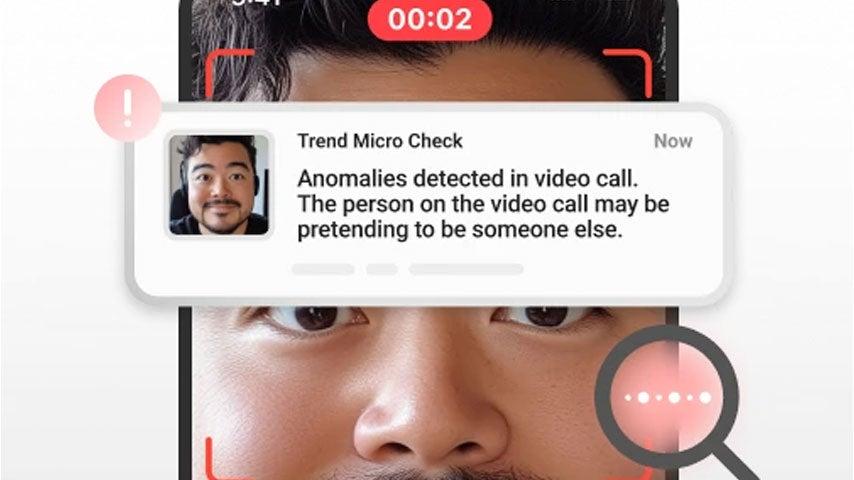
Detect AI Scams
Use Trend Micro Check to scan for AI face-swapping scams during video calls and get real-time alerts to a potential impersonation attempt. Stay ahead of deepfakes.