

Being mindful and practicing mindfulness has become more mainstream in recent years. Yet with the advent of technology and the continuous stream of entertainment, it can be challenging to “stop and smell the roses” sometimes.
Mindfulness At a Glance
| Question | Quick answer |
|---|---|
| What is mindfulness? | Paying attention to the present moment without judgment |
| What are the three components? | Intention, attention, and attitude |
| What are the benefits? | Mindfulness may help reduce stress, anxiety, and depression and support healthier behaviors. |
| How can I practice it? | Try breathing exercises, a body scan, mindful eating, meditation, or mindful art. |
Here's what it means to be mindful, why it’s important, and how to incorporate it into your daily life.
What is mindfulness?
Mindfulness is defined as the practice of being aware of your body, mind, and feelings in the present moment that creates a feeling of calm.1 The American Mindfulness Research Association further defines mindfulness as “the state, process, and practice of remembering to observe moment-to-moment experience with openness and without automatic patterns of previously conditioned thoughts, emotions, or behaviors.”2 In short, being mindful means you’re fully present in the moment and free from distractions.
Mindfulness takes practice and can sometimes feel overwhelming, especially if you find yourself easily distracted. Giving yourself grace can help you better incorporate the three components of mindfulness identified by The Mindful Leader:3
- Intention—making a conscious decision to be present
- Attention—bringing your awareness to the present moment, your sensations, and thoughts
- Attitude—being curious and non-judgmental of distractions and offering kindness
Why is mindfulness so important?
There is a significant body of research on the positive impact mindfulness can have on your physical and emotional health. For example, mindfulness practices have been linked to a reduction in stress, anxiety, and depression.4 Further research noted that clinical symptoms were reduced for those living with depression and pain, and smoking and/or addiction rate also decreased.5
The physical health benefits of mindfulness are also well documented. Individuals who engaged in mindful practices either enhanced or increased their health behaviors like getting regular checkups, being physically active, using seat belts, or avoiding nicotine and alcohol.6 For others their cardiovascular health and blood pressure may improve.7,8 For individuals who are overweight or diagnosed with obesity, mindfulness can help them lose weight and improve eating behaviors and attitudes.9
How can I practice mindfulness?
There are multiple ways to practice mindfulness. If you’re not sure how to get started, try some of these suggestions. As with any new habit this will take practice so give yourself some grace as you begin. Practice makes permeance, the more you do the behavior the easier it will become.
Square or box breathing10
- Find a comfortable position either standing, sitting, or lying on your back. Place one hand on your chest and one on your stomach. Breathe normally for a few minutes and observe how your belly and chest rise and fall. Take a deep breath and feel both hands rise away from your body.
- Breathe in for 4 counts, hold for 4 counts, breathe out for 4 counts, and hold for 4 counts. Repeat as many breaths as you desire.
- As you become more practiced, you can increase your counts to 6, 8, or 12.
5 Senses11
- Name 5 things you can SEE
- Name 4 things you can TOUCH
- Name 3 things you can HEAR
- Name 2 things you can SMELL
- Name 1 thing you can TASTE
Body scan12
- Find a comfortable position, close your eyes, and start with a few deep breaths. Then slowly move through the following steps.
- Start at the top of your body and ask yourself what sensations you feel (i.e., tension, lightness, etc.) Continue moving down your body slowly, focusing on the mid-body, lower body, and end with your feet. Bring your attention back to your surroundings and gently open your eyes.
Mindful eating13
We often eat with distractions and don't taste or enjoy the food. To practice mindful eating:
- Notice the smell, texture, appearance sound (crunch, squish, etc.), and taste of your food while eating.
- Pay attention to hunger and fullness signals.
- Notice any feelings or thoughts you're having about the foods as you're eating.
You may find the Mindful Eating script to be helpful.
Mindful art (coloring, painting, etc.)
Mindful coloring has increased in popularity over the years for good reasons. It’s been shown to improve attention and self-awareness and decrease heart rate and blood pressure.14 You can find free sheets online or visit your local bookstore to purchase a meditation coloring book.
Meditation apps, podcasts, recordings
You might be familiar with apps like Calm and Headspace. There are many additional options to choose from. A few that might be worth considering:
Start small and keep trying
While practicing mindfulness may not come naturally, continued practice can help you build this ongoing and important habit.
Start small, and try different methods until you find one that feels the most comfortable for you. The goal isn’t to completely clear your mind immediately but to give yourself grace as you learn to quiet your mind and focus on being present in the moment so you can “stop and smell the roses.”
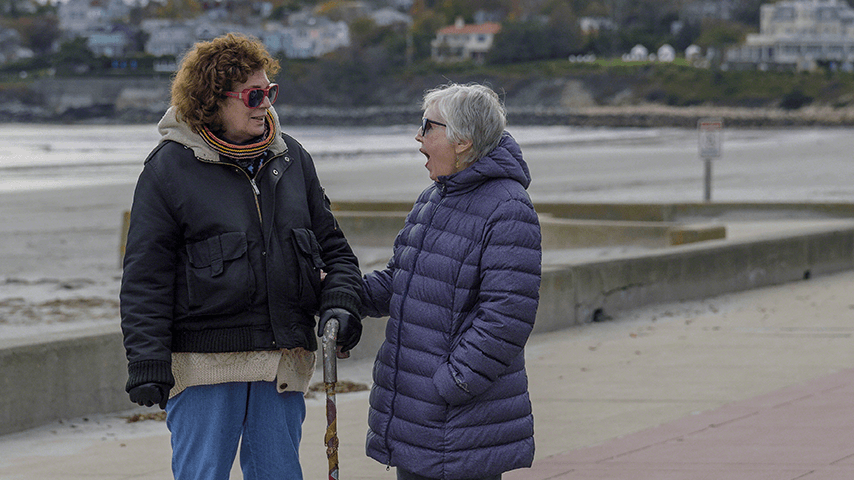
Photo copyright Debra Behr for NCOA use only
Sources
1. Cambridge Dictionary. Mindfulness. Found on the internet at https://dictionary.cambridge.org/us/dictionary/english/mindfulness
2. American Mindfulness Research Association. About Us. Found on the internet at https://www.mindfulleader.org/what-are-the-three-components-of-mindfulness
3. Mindful Leader. What Are the Three Components of Mindfulness? Found on the internet at https://www.mindfulleader.org/what-are-the-three-components-of-mindfulness
4. Bassam Khoury, et al. Mindfulness-based therapy: A comprehensive meta-analysis. Clinical Psychology Review. August 2013. Found on the internet at https://www.sciencedirect.com/science/article/abs/pii/S0272735813000731
5. Simon B. Goldberg, et al. Mindfulness-based interventions for psychiatric disorders: A systematic review and meta-analysis. Clinical Psychology Review. February 2018. Found on the internet at https://www.sciencedirect.com/science/article/abs/pii/S0272735817303847
6. Ingo Jacobs, et al. Mindfulness facets, trait emotional intelligence, emotional distress, and multiple health behaviors: A serial two-mediator model. Scandinavian Journal of Psychology. April 2016. Found on the internet at https://onlinelibrary.wiley.com/doi/10.1111/sjop.12285
7. Eric B. Loucks, et al. Positive Associations of Dispositional Mindfulness with Cardiovascular Health: the New England Family Study. International Journal of Behavioral Medicine. October 2014. Found on the internet at https://link.springer.com/article/10.1007/s12529-014-9448-9
8. Lianne M. Tomfohr, et al. Trait mindfulness is associated with blood pressure and interleukin-6: exploring interactions among subscales of the Five Facet Mindfulness Questionnaire to better understand relationship between mindfulness and health. Journal of Behavioral Medicine. June 2014. Found on the internet at https://link.springer.com/article/10.1007/s10865-014-9575-4
9. Jeffrey M. Rogers, et al. Mindfulness-based interventions for adults who are overweight or obese: a meta-analysis of physical and psychological health outcomes. Obesity Reviews. November 2016. Found on the internet at https://onlinelibrary.wiley.com/doi/10.1111/obr.12461
10. Square Breathing. Found on the internet at https://www.bsu.edu/-/media/www/departmentalcontent/counseling-practicum-clinic/pdfs-new-website/square-breathing.pdf
11. University of Rochester Medicine. 5-4-3-2-1 Coping Techniques for Anxiety. Behavioral Health Partners Blog. April 2018. Found on the internet at https://www.urmc.rochester.edu/behavioral-health-partners/bhp-blog/april-2018/5-4-3-2-1-coping-technique-for-anxiety
12. Cleveland Clinic. Body scan meditation for beginners: How to make the mind/body connection. Found on the internet at https://health.clevelandclinic.org/body-scan-meditation
13. The Fontaine Center University Health Center, University of Georgia. Mindful Eating. Found on the internet at https://healthpromotion.uga.edu/nutrition/mindful-eating/
14. Positive Psychology. What is mindful coloring? (+39+ creative mindfulness ideas). Found on the internet at https://positivepsychology.com/mindfulness-coloring-art/#8-benefits-of-practicing-mindfulness-through-art