

Alert1 Medical Alert Reviews 2026: Tested by Experts
Alert1 offers affordable, no-contract monitoring, but our testers found some key drawbacks. Learn the highs and lows of this medical alert system in our Alert1 review.
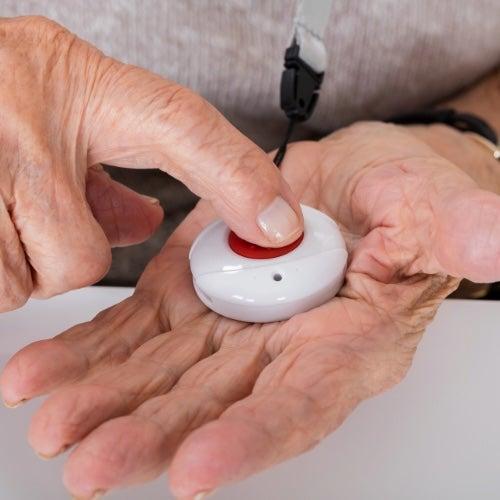
- Alert1 medical alert systems are competitively priced, and services are provided without equipment fees and long-term contracts.
- Monthly Alert1 fees start at $30 and go up to $45. Adding fall detection costs an extra $5/month.
- In-home systems have shorter ranges (about 400–600 feet) than many other medical alert system brands, which may not work well in larger homes.
- The monitoring center answered our testers’ button presses promptly, but they had issues with audio quality.
At NCOA, we take the time to research, test, and recommend products that aim to help you live a healthier life. We’ve spent more than 3,000 hours researching medical alert systems to give you the most accurate product reviews. To find the best medical alert systems, we:
- Consulted with doctors and licensed adult caregivers who specialize in working with older adults
- Put more than 35 devices through a series of 16 different tests at our in-house lab
- Mystery shopped more than 15 brands
- Surveyed more than 1,000 medical alert system users and caregivers
- Interviewed experts on older adults falls risk
- Worked with older adults to test medical alert systems and get their opinion
- Read thousands of verified customer reviews
We’re constantly testing new medical alert systems to give you the most accurate and up-to-date recommendations. Read more about our medical alert system review methodology.
The Alert1 medical alert is simple to unbox and set up, from its compact, simple-to-follow user guide to a lightweight necklace you can slip over your head. There’s no app you need to pair with, though you can connect your smoke and CO2 alarms to Alert1's In-Home EZ Care model.
This Alert1 review will compare and contrast the brand's two device types: the In-Home models and the LifeBeacon, Alert1's fall detection alert necklace. We'll also discuss add-on options like fall detection and take you through our testing experience.
Alert1

- Low-cost fall detection
- Long lanyard
- Simple to charge
Our thoughts on Alert1
Alert1 has no equipment fees, and there are no long-term contracts—you can pay monthly or annually. If at any point you decide you no longer want to use Alert1, you can initiate a return and refund via your help button. You can also donate the remaining time on your plan to an Alert1 user in need (more on that in our "How to save money on Alert1 devices" section below).
Alert1 lets you personalize your emergency response plan with its Command Center. For example, you can program it to notify a trusted neighbor of your emergency before out-of-town family members. Few medical alert systems let you customize like that.
Comparing Alert1 devices
| Comparison Features | |||
|---|---|---|---|
| Max. battery life | 3 years |
3 years |
10 days |
| Fall detection (yes/no) | Yes, $5/month |
Yes, $5/month |
Yes, $5/month |
| GPS tracking (yes/no) | No |
No |
Yes |
| Standout feature | Lightweight necklace |
Extended range |
Trendy wristband |
Alert1 reviews
LifeBeacon On-the-Go: Alert1's compact wearable
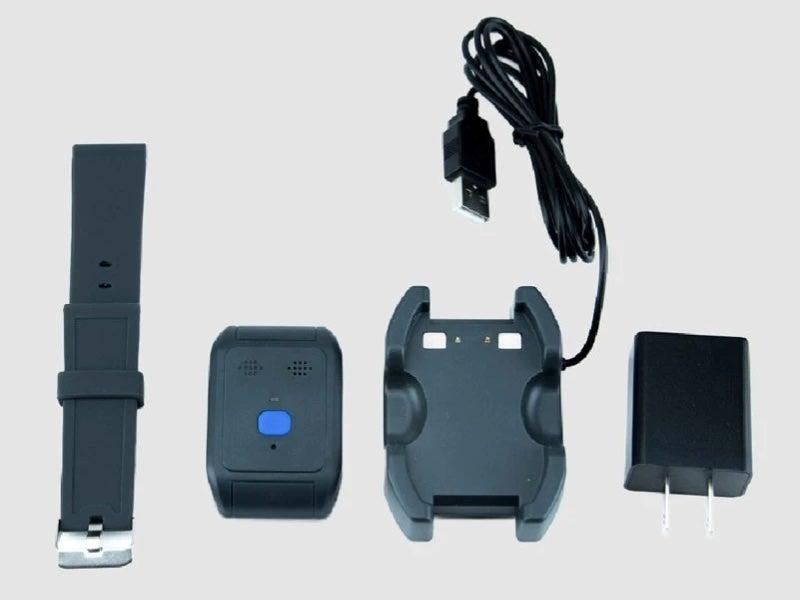
The LifeBeacon is Alert1's mobile device with built-in GPS. It arrives in a trendy box similar to the packaging for designer glasses, though the hardware nestled inside is pretty standard. It has a help button the size of a ring box, and it can be worn on a lanyard or wristband. Alert1 also includes a pin-pusher tool, which is necessary to convert the lanyard to a wristband. We found this process clunky. Most other medical alert system companies make it much easier to convert their two-in-one wearables.
LifeBeacon On-the-Go
- Stylish packaging
- Short instruction manual
- Straightforward setup for lanyard
- Device type: Wearable
- Fall detection: Yes
- Max. battery life: 10 days
- GPS tracking: Yes
- Caregiver alerts: No
- Connection type: Cellular
Pros
- Water-resistant
- Long, adjustable lanyard
- Simple charging setup
Cons
- Garbled audio
- Difficult to convert to wristband
- Hard to use with long fingernails
What’s different about Alert1's LifeBeacon On-the-Go
The LifeBeacon arrives attached to a thin, silky lanyard that is smooth and simple to adjust. It’s long enough to feel comfortable around your neck. Included in the box are sleek wristbands that could easily belong on a Fitbit or an Apple Watch. But in our testing, turning the LifeBeacon into a wristband instead of a necklace was not simple. Our testers found the wristband difficult to attach.
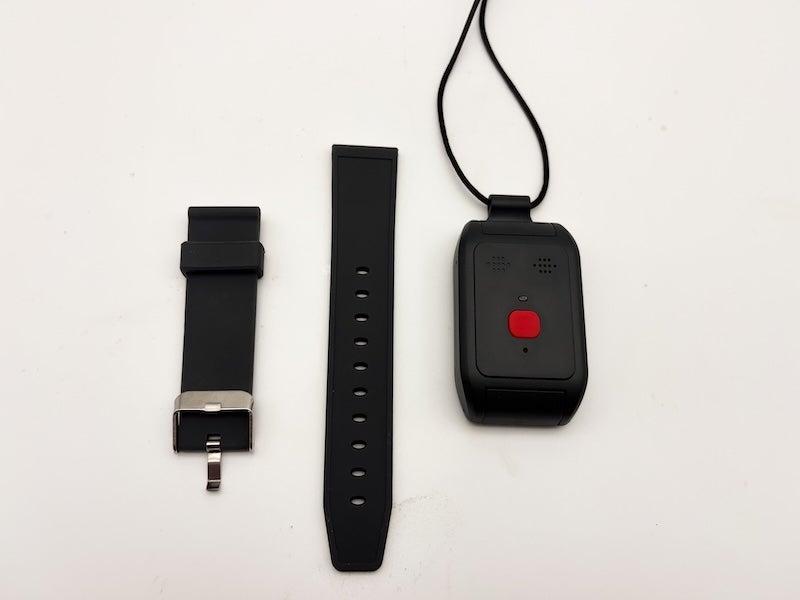
Unlike some of the best medical alert systems on the market, you can’t easily convert the LifeBeacon from a necklace to a wristband and back. Other MAS models allow you to “pop” the help button off the lanyard and click it into the wristband. LifeBeacon's bulky help button requires you to use the included screwdriver-like push tool to push a pin out of the necklace until it detaches from the lanyard, and push a second pin out until the necklace detaches from its own backing. You can then line the included wristband segments up with the side notches and push the removed pins back into place to secure the wristband.
Sound confusing? It was for our testers, who said the packaging lacked instructions for converting the LifeBeacon into a wristband. “The included instructions were very succinct, but it doesn’t give you all the information you need,” said one tester. They said they had to comb the internet until they pulled up a six-year-old Alert1 YouTube video walking them through the process.
Even if the video link were included in the setup guides, converting the necklace to a wristband is not accessible. Our testers noted that the pin-pusher process is not the best for those with dexterity or eyesight challenges. For this, we scored the LifeBeacon 2 out of 5 for setup.

Studies show that natural, frequent hand motions mean wrist sensors detect fewer falls.1 But a quarter of our survey respondents prefer to have their medical alert device on their wrists.2 If you, too, prefer to wear your help button on your wrist, we do not recommend the LifeBeacon On-the-Go (perhaps check out these medical alert smartwatches instead).
EZ Care In-Home: A landline-based option for less
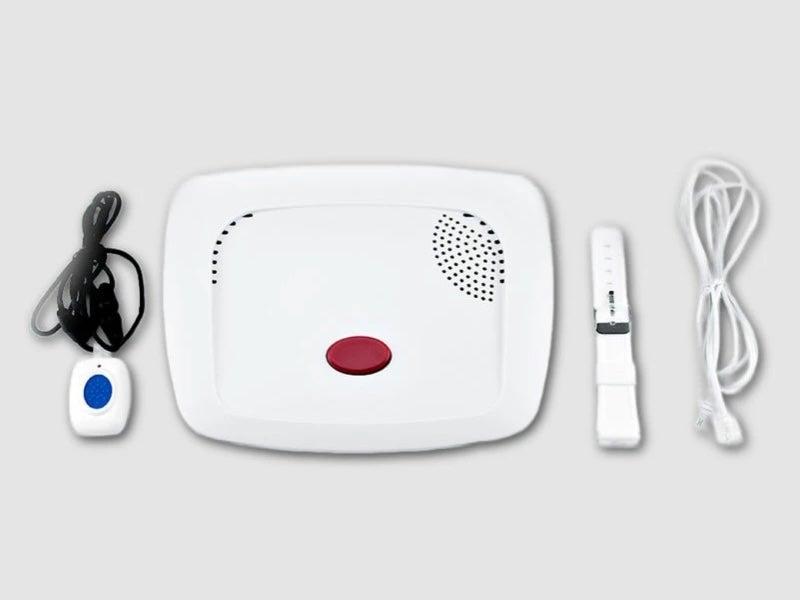
Alert1's lone landline-only offering, the EZ Care In-Home is the most affordable of the brand's medical alert systems. It also has a short range of just 400 feet (slightly longer than a football field), so it works best if you stay close to the base unit.
EZ Care In-Home
- Free shipping
- Can integrate with smoke alarms
- Device type: At-home
- Fall detection: Yes
- Max. battery life: 3 years
- GPS tracking: No
- Caregiver alerts: No
- Connection type: Landline
Pros
- Water-resistant
- Long battery life
- Customizable emergency plan
Cons
- Limited range of 400 feet
What’s different about Alert1's EZ Care In-Home
The first in-home base unit in the Alert1 family hooks up to your landline. It comes with a shower-proof (water-resistant) necklace that’s .4 ounces, similar in style to Medical Alert's home system lanyard.
You have the option to add your home’s CO2 and smoke alarms to your landline EZ Care In-Home Medical Alert. Your home base unit will inform Alert1’s Command Center if the smoke detector is tripped or if the CO2 alarm is triggered.
One of the biggest drawbacks we found in Alert1’s home device is its relatively short range. While most home medical alert devices offer a range of 800 feet from the base station or further, Alert1’s range is only 400 feet. So we only recommend this device for those in smaller homes.
EZ Care Plus In-Home: Alert1's cellular alternative
The EZ Care Plus is also a home-based unit, but unlike the EZ Care In-Home, it’s black, has more console buttons, and it connects via Alert1’s AT&T network. Like its landline counterpart, the EZ Care Plus comes with a necklace and wristband for its help button.
EZ Care Plus In-Home
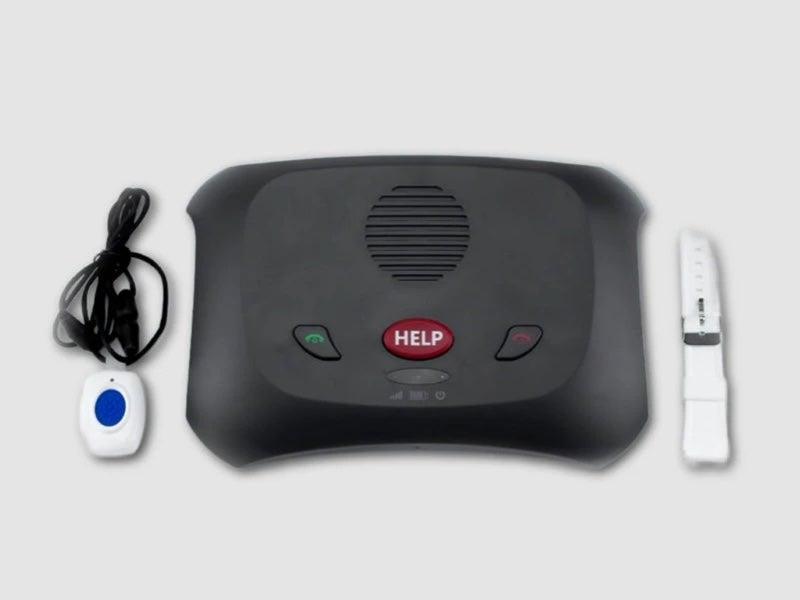
- Affordable fall detection
- CO2 and smoke alarm integration
- Automatic weekly connection
- Device type: At-home
- Fall detection: Yes
- Max. battery life: 3 years
- GPS tracking: No
- Caregiver alerts: No
- Connection type: Cellular
Pros
- Long battery life
- Water-resistant
- Customizable emergency plan
Cons
- Short, 600-feet range
What’s different about Alert1's EZ Care Plus In-Home
Alert1’s EZ Care Plus home base unit can connect wirelessly via cellular network, so you don’t need a landline. You don’t need your own AT&T plan—Alert1 works independently of your personal cell provider.
As with the EZ Care In-Home Medical Alert, you can hook CO2 and smoke alarms up to your home base unit. Other than console color (the Plus is black), the major difference between the EZ Care In-Home Medical Alert and the EZ Care Plus is range.
The EZ Care Plus gets the “plus” from the extra 200 feet of range it has on the landline-only EZ Care In-Home Medical Alert. The EZ Care Plus has a range of 600 feet to the EZ Care’s 400 feet. If you were hoping for a longer range for a home base, check out Medical Guardian or LifeFone, both of which have a range of 1,300 feet.
How much do Alert1 devices cost?
Alert1 medical alert system devices do not have an activation or equipment fee. And opting for the annual subscription plan can save you money in the long run. Annual subscriptions are billed upfront on your first payment—so don’t get sticker shock when the $30 EZ Care In-Home shows up as $240 in your cart.
Alert1 offers its fall detection for $5 a month. Other medical alert systems charge $8-$16 for fall detection. Given that 20% of our survey respondents said their fall detection “works as it should and has helped me during a fall,” it may be a feature worth including on your Alert1 medical alert system.2
Comparing the cost of Alert1 devices
| Comparison Features | EZ Care In-Home |
EZ Care Plus In-Home |
LifeBeacon On-the-Go Pendant/Wristband |
|---|---|---|---|
| Monthly Cost: | $30 |
$40 |
$45 |
| Equipment fee | NA |
NA |
NA |
| Annual protection plan | $60 |
$60 |
$60 |
| Fall detection | $5 |
$5 |
$5 |
How to save money on Alert1 devices
Alert1 runs a program that allows veterans and people with limited income to get Alert1 discounts if someone else donates the remaining time on their service plan. Other ways to save include opting for the annual subscription tier, waiving the $60 protection plan, and using flexible spending account (FSA) or health savings account (HSA) funds to cover your purchase. Note that Medicare does not cover medical alert systems. You can also use Alert1’s Refer a Friend, AAA, or veterans’ discounts to lower your costs.
Alert1 accessories and options
Our testers ranked Alert1 a 7.9 out of 10 for features. There’s no app, and there’s very little you can add onto your medical alert package if you opt for the LifeBeacon. Most of the bells and whistles are reserved for the In-Home EZ Care and EZ Care Plus systems. Your add-on options include:
- Bonus wearable: If another person in the home needs a wearable help button, Alert1 lets you add additional EZ Care buttons for a discounted price.
- Fall detection: For $5 per month, you can add fall detection to any of your Alert1 products, including LifeBeacon.
- Protection plan: The Alert1 protection plan costs $60 per year and includes free once-annual repairs, free shipping on replacements and/or new orders, and “full” coverage of damaged devices. Note that the included warranty also covers damage and destruction.
The Alert1 user experience
While our testers said Alert1 is simple to set up and charge, they reported that the help button on the LifeBeacon might be hard to activate if you have long fingernails. One of our testers also said that pressing and holding the help button (rather than pressing and releasing) to reach Alert1’s Command Center requires a decent amount of finger strength. This may be an obstacle if you’re experiencing dizziness or weakness after a fall, as some of our survey respondents report feeling.2
“I was really glad to have a medical alert system when a close family member had a sudden dizzy spell and almost fainted,” said one respondent.2 “They were alone at home, and without the system, getting help quickly would have been difficult. Thankfully, with just one press of the button, emergency responders were alerted, and help arrived fast.”
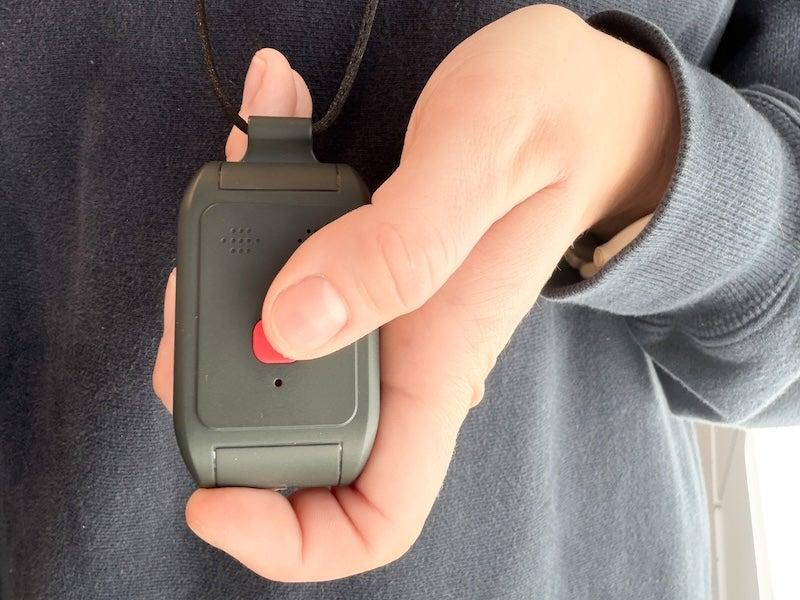
Dizziness alone is a perfectly good reason to own a medical alert system, regardless of age. “The medical alert system is most beneficial for people who have had frequent falls, but also for people who frequently experience dizziness, lightheadedness, or significant medical issues,” says Shauna Buchmoyer, occupational therapist and certified fall prevention specialist at United Disabilities Services.
Beyond the button, LifeBeacon’s fuzzy two-way audio gave our testers pause. “It cut in and out,” one tester said about the audio during test calls. The LifeBeacon did not show a poor connection for our testers, who believe the dropped audio connection was on the monitoring center’s side or a machinery issue.
Our testers ranked Alert1 a 2 out of 5 for help button testing, citing not only the hard-to-press button and garbled audio, but also a fairly curt experience with monitoring center staff for one of our three calls. “It felt more aggravating than helpful, and I was unsure whether help was coming or not,” said one tester, adding that the experience as a whole was “not very comforting or reassuring.” If you’re hoping for a friendlier chat with a monitoring center—one where you’ll be reassured of next steps and can hear clearly—we recommend Bay Alarm Medical.
Alert1 customer service and warranty
Alert1 scored a 9.7 out of 10 for its customer service, which runs Monday through Friday at normal working hours. You can contact Alert1 customer service at 877-579-9862, and there is no fee to cancel your Alert1 plan. You can initiate your device return by pressing the help button, and you’ll be refunded if your device is in its original condition. Warranty and activation fees are not refundable.
The warranty, called an Alert1 Advantage Plan, covers a free replacement if your system malfunctions. It applies to both monthly and annual plan tiers, and offers a free, total replacement if you spill something on your home unit or accidentally wash or back your car over your medical alert necklaces.
Are Alert1 devices right for you?
Just because the Alert1 audio quality was poor for our testers doesn't mean it will be poor for all users. Audio issues can differ based on Wi-Fi or cellular connection, the region-specific coverage of the cellular providers, or interference from a nearby electronic device. If Alert1 checks other boxes for your medical alert system needs, it may be worth trying.
The best way to find out whether Alert1 is right for you is to opt in to the system for a month and try it out yourself. There is no fee for cancelling your Alert1 device plans. Alert1 expects system tests and makes it a point to let you know they do not charge or raise your rate as a penalty for excessive button presses. We encourage you to test your Alert1 frequently to ensure you’re happy with your audio connection and Command Center interactions.
Those with larger homes may not find Alert1 offers the coverage they need. The maximum range of the In-Home EZ Care and EZ Care Plus systems is 400 feet or 600 feet, respectively. Other MAS offer ranges of 800 to 1,300 feet.
You’ll also want to consider how much extra weight you’re up for carrying around. Alert1’s mobile offering, the LifeBeacon, weighs a somewhat hefty 37 grams. For comparison, Alert1’s home necklaces for the EZ Care system are .4 ounces, or roughly 11 grams. One of our testers said the necklace “is slightly heavy when paired with the thin lanyard,” reporting that it dug into her neck more than a wider, shoelace-like lanyard would.
Frequently asked questions
Does Alert1 offer fall detection?
Yes. For $5 per month, you can add fall detection to your At Home help buttons or your LifeBeacon device.
How much does Alert1 cost per month?
How much Alert1 costs per month depends on which device you have, if you opted for the annual plan, and any add-ons. The most affordable arrangement is the EZ Care In-Home Medical Alert on an annual plan with no fall detection, totalling $20 per month. The most expensive option is the LifeBeacon with fall detection on a monthly plan, coming in at $45 per month.
Does Alert1 have an app?
No, Alert1 does not have an app.
What is Alert1's response time?
Alert1’s average response time in our testing was 36 seconds. We consider a response in under 60 seconds as “passing.”
Questions? Email us at reviewsteam@ncoa.org.