

Phonak Hearing Aids Review: A Comprehensive Guide
Phonak hearing aids is a trusted legacy brand well-known for clear sound and good streaming ability. We looked at their top models to see how they compare.

- Phonak hearing aids is a well-respected name and a pioneer in audio technology. The company makes a range of hearing aid styles and platforms that focus on making speech sound natural and clear in different environments.
- The Phonak prescription hearing aids in this brand review cost between $3,500–$10,000 per pair, on average. The over-the-counter pair costs between $599–$999.
- The OTC option is for mild to moderate hearing loss, and the prescription options cover mild to profound hearing loss. Most models are compatible with Bluetooth.
- Prices aren’t listed on the Phonak website and vary among distributors. For specific pricing, ask a hearing clinic in your area.
NCOA supports everyone’s right to age well. That’s why we test and recommend products we believe can help you live a healthier life. We’ve spent more than 5,000 hours researching hearing aids to give you the most accurate product reviews. To find the best hearing aids, we:
- Consulted with audiologists, hearing instrument specialists, and aging care experts
- Put more than 50 hearing aids through a series of 21 different tests
- Mystery shopped more than 20 brands
- Surveyed hundreds of older adults who use hearing aids
- Interviewed experts on hearing loss
- Sent hearing aids to our friends and family with hearing loss to provide long-term testing notes
- Read thousands of verified customer reviews
We’re constantly testing new hearing aids to give you the most accurate and up-to-date recommendations. Read more about our hearing aid review methodology.
Not every type of hearing loss requires prescription hearing aids. But if your hearing specialist has recommended looking into a pair, you’ve likely come across the name “Phonak.”
Phonak was founded in 1947 and has been a leading hearing aid manufacturer ever since.1 Today, Phonak hearing aids are still on the cutting edge with some of the first AI-powered programs and innovative wireless features. That’s partly why we named Phonak our Best Prescription pick in our review of the best hearing aids.
“Phonak hearing aids are a good quality hearing aid,” said Trisha A. Bents Muth, Au.D., CCC-A, an audiologist at Bay Area Audiology in Bel Air, Maryland. “They are one of the largest and best-known manufacturers in the world. The Sphere hearing aid that was released by them last year has been very well received by my patients.”
In this Phonak hearing aid review, we take a look at the company’s most recent platforms: the Sphere, the Virto Infinio, and the Lyric, a unique invisible hearing aid option. We also cover Sennheiser, an OTC brand from the makers of Phonak.
Phonak
- AI helps separate speech from background noise
- Automatically adjusts settings based on noise level
- Advanced Bluetooth streaming
Why Phonak is a top brand for prescription hearing aids
Phonak has set itself apart from other brands by pioneering technology that makes it easier to hear in noisy environments and increases the connectivity of its devices. “Phonak is the best at changing environments,” said Ron Binkley, a hearing instrument specialist at Charlotte Speech and Hearing Center, in Charlotte, North Carolina. “Think about when you go from a quiet environment into a noisy one, like a restaurant where people are loud. Traditionally, you would have to push buttons on your hearing aid to adjust.” But advancements in technology have allowed Phonak to make that process automatic and more seamless, he said.
Based on our research and conversations with hearing experts, Phonak is a leader in streaming technology and using AI to separate speech from background noise in real time. Its newest line, the Phonak Sphere, offers the most advanced version of Bluetooth (Auracast) to help make streaming audio clearer over longer distances. The Sphere line also uses Phonak’s most advanced AI technology, which the company says improves speech understanding and lessens your listening effort.
Because Phonak hearing aids are prescription, you can only get them from an audiologist or hearing clinic. While over-the-counter (OTC) hearing aids can work for many people by addressing mild to moderate hearing loss, prescription hearing aids like Phonak can address all degrees of hearing loss—from mild to profound.
“Prescription hearing aids offer a broader amplification range than OTC, more digital signal processing, noise reduction, and overall control of sound automation,” said Muth. More than 65% of the respondents to our survey purchased their hearing aids through an audiologist or hearing clinic.2 And Phonak users in our survey were about 20% more likely to say they were “very satisfied" with their hearing aids compared to all respondents.2
This guide to Phonak models and features can help provide some helpful things to consider as you go through the process.

Phonak users in our survey were about 20% more likely to say they were “very satisfied” with their hearing aids compared to all respondents.2
Comparing Phonak hearing aids
| Comparison Features | ||||
|---|---|---|---|---|
| Hearing aid type* | RIC, ITE, CROS |
ITE |
CIC |
RIC/earbud style |
| Battery type | Rechargeable |
Rechargeable or disposable |
Disposable (hearing aids replaced every four months) |
Rechargeable |
| Bluetooth | Yes (Auracast)** |
Yes |
No |
Yes |
| Hands-free calling | Yes |
Yes |
No |
Yes |
*RIC: Receiver-in-canal; ITE: In-the-ear; CROS: For single-sided hearing loss; CIC: Completely-in-canal
**Auracast is the most advanced version of Bluetooth
Understanding Phonak hearing aid models
Like many prescription hearing aid manufacturers, Phonak offers several technology platforms for its hearing aids. It may help to think of them like operating systems for your computer. Each platform can be used with different models of hearing aids.
We also took a look at the Phonak Lyric, a unique option that is implanted in the ear canal by a hearing professional and changed every four months or so.
An audiologist or other hearing specialist is the best resource to guide you through finding a prescription hearing aid that best suits your needs. “They will evaluate your hearing and listening needs to analyze which hearing aid options and or features are most appropriate for your hearing loss, lifestyle style, listening needs, and budget,” said Muth.
Phonak Sphere: The Flagship AI Model
The Phonak Sphere is the company’s newest and most advanced line. It uses AI and other technology to improve sound and streaming quality. The Sphere platform is designed to enhance speech in any environment by automatically adjusting to filter out background noise. It’s also the only Phonak line with Auracast, which is the most advanced version of Bluetooth. The Phonak Sphere line can pair with eight different Bluetooth-enabled devices (like your TV or phone) and stream from two at the same time.
Phonak Sphere
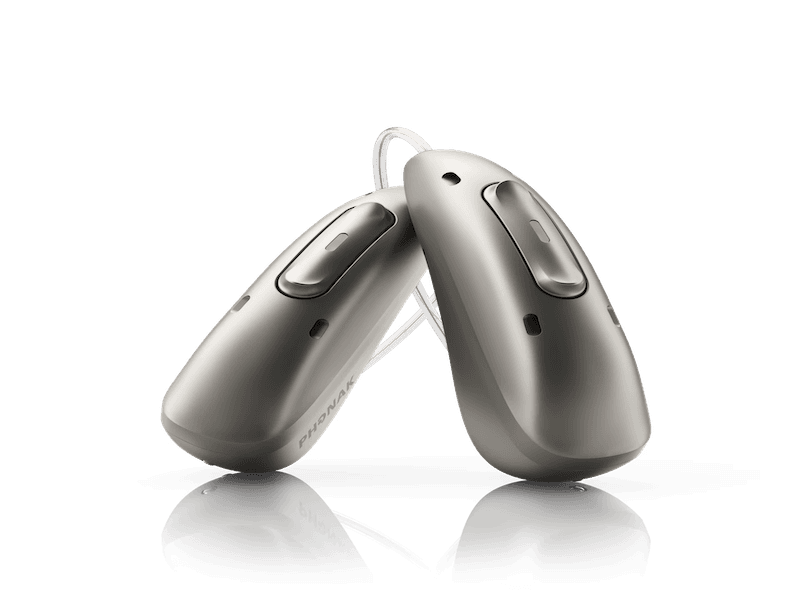
- Most advanced Bluetooth with the longest range
- AI-powered noise reduction for clearer speech
- Excellent sound quality
- Type of hearing aid: RIC, ITE, CROS (for single-sided hearing loss)
- Battery type: Rechargeable
- Bluetooth compatible: Yes
Pros
- Excellent, natural sounding speech even in noisy settings
- Can stream two Bluetooth devices at the same time
- Automatically adjusts settings depending on noise level
Cons
- One of Phonak’s most expensive lines
- Telecoil only available in ITE model
What’s different about the Phonak Sphere
The Phonak Sphere is the newest platform from the brand, released in August 2024. It is available in three styles: RIC, ITE, and CROS (contralateral routing of signal), which is designed for people with one-sided hearing loss.
Although we were unable to test any of these ourselves because they are only available with a prescription, we researched the major differences between the Sphere and past platforms and spoke with audiologists to understand what sets the Sphere apart.
Compared to past platforms, Phonak says the Sphere has the company’s best sound quality to date. It is especially well-suited for speech in loud settings. The Sphere series is equipped with an AI-powered feature called AutoSense 6.0 that automatically adjusts to sound in different places. It applies the appropriate settings as you change environments (like from quiet to loud), so you don’t need to manually adjust your hearing aids to get high-quality sound. This feature is intended to make hearing seamless as you move from a louder environment or one with a lot of background noise to a quieter one. According to experts we spoke with, Phonak is a leader in automatic sound adjustments.
Another major upgrade to the Sphere platform is that it has even better wireless connectivity than past models. The Sphere has a better range (Phonak claims up to 675 feet—twice the length of the Lumity platform) for Bluetooth streaming and allows you to connect eight devices at once and stream from two devices at the same time. That means you could be streaming audio from your TV to your hearing aids, and if you get a call you could answer it simply by tapping your hearing aid twice (a feature known as “tap control”). Your hearing aid would automatically pause the TV so you can accept the incoming call. And when you hang up, the TV automatically starts playing again. No need to connect and reconnect devices.
Phonak claims that the Sphere's more powerful microchip means you can get data faster and with fewer interruptions. The Sphere is also compatible with Auracast, a wireless system designed specifically for audio (it’s the most advanced form of Bluetooth). Auracast can be used similarly to a telecoil to transmit audio from public sound systems (such as TV or stadium announcers) directly to your devices. So if you enjoy using wireless technology with your hearing aids for streaming music or hands-free phone calls, the Sphere platform may offer clearer sound quality for those features.
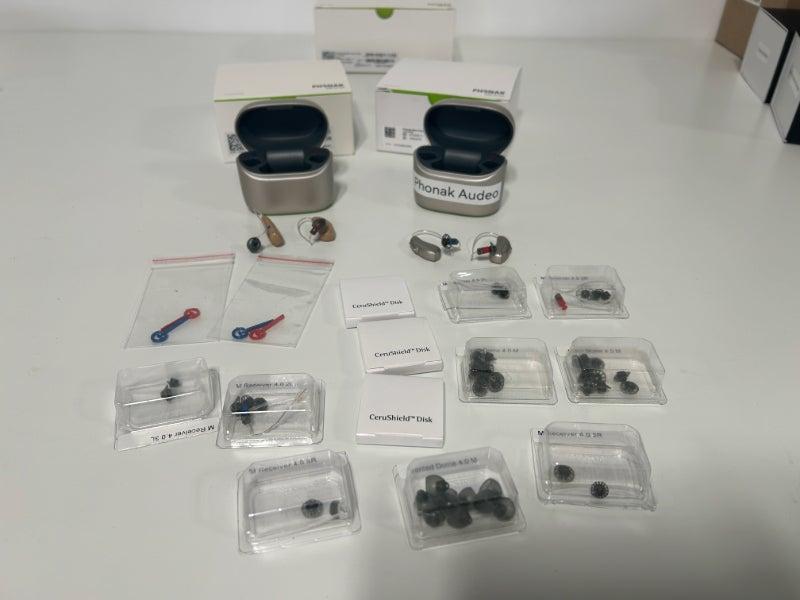
Although the Sphere is Phonak’s newest, flagship model, it’s not without its faults. Since it’s so new, the Sphere is one of Phonak’s most expensive lines. And because it has Auracast, it doesn’t have a telecoil. A telecoil is a small coil of wire inside a hearing aid that lets it become a wireless receiver for audio from a hearing loop. Hearing loops are systems that broadcast information in public places like airports to anybody with T-coils in their hearing aids so those people can hear important announcements. But you can think of Auracast as a newer version of a telecoil.
Phonak Virto Infinio: Clearer Hearing, Custom-Made
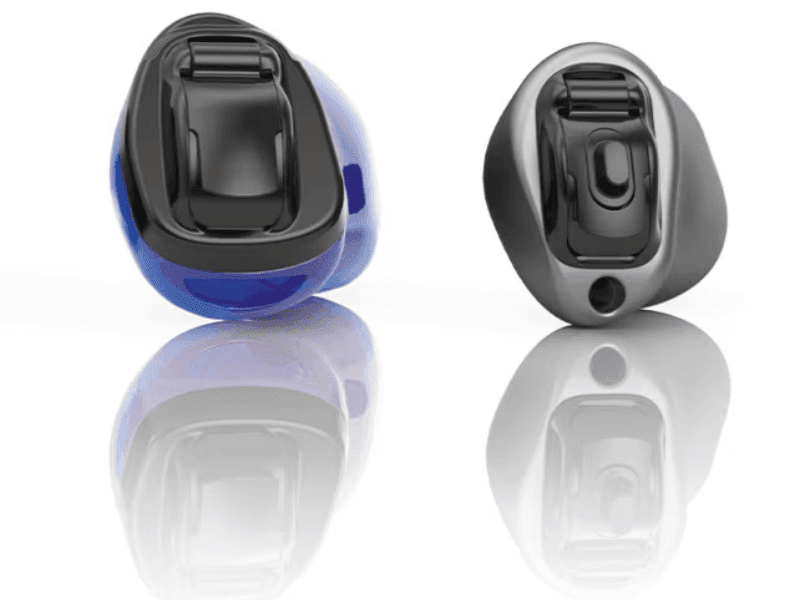
The Phonak Virto Infinio stands out for its impressive features. But it also features a fully custom construction. Phonak's Virto Infino hearing aids use a digital scan of the wearer’s ear to create a personalized fit. The result is a small, secure device that delivers clear hearing and comfort. Plus, the Virto Infinio still includes Phonak’s latest sound-processing technology and connectivity features.
Phonak Virto Infinio
- Custom-molded to fit the shape of your ear
- Advanced AI-powered sound processing
- Discreet in-the-ear design
- Bluetooth connectivity
- Type of hearing aid: ITE
- Battery type: Rechargeable or traditional (depending on model)
- Bluetooth compatible: Yes
Pros
- Custom fit designed specifically for your ear
- More discreet design than most behind-the-ear hearing aids
- Includes Bluetooth streaming and automatic sound adjustments
Cons
- Custom hearing aids can take longer to manufacture and fit
- Smaller size may limit battery capacity compared to larger models
- May cost more than some non-custom styles
What’s different about the Phonak Virto Infinio
The Phonak Virto Infinio combines advanced sound processing with a fully custom-built design. Most hearing aids that use standard ear tips or domes. But Virto models are created from a digital scan of the user’s ear. The scan captures the unique shape of the user’s ear canal to custom mold each device. The result is a low-profile, high-performance hearing aid like no other.
The Virto Infinio features two models, the first of which is the Phonak Virto I‑Titanium. It uses a titanium shell to create an ultra-durable yet small hearing aid. Because it sits deep in the ear canal, users often describe it as “truly invisible.” Its fit makes it appealing for people who want a discreet hearing solution.
The other model in the lineup is the Phonak Virto I‑10 NW O. This is a small, custom hearing aid powered by a size-10 zinc-air battery. Like its counterpart, it’s designed to be subtle without sacrificing performance. It also supports mild-to-severe hearing loss. The I-10 NW O offers a simpler, fully customized option for those seeking a discreet device.
As with all Phonak products, the Virto Infinio line incorporates a range of advanced technologies. These include automatic sound classification and speech-enhancement tools. These features help the hearing aid improve speech clarity in noisy settings.
The biggest distinguishing factor of the Virto Infinio line compared to other Phonak products is that it’s custom-built. Most hearing aids have a one-size-fits-most style. The Virto Infinio offers a hearing aid experience tailor-made for comfort. It also includes the features and technology that make Phonak a top brand. For clarity, subtlety, and security, the Virto Infinio line may be among the best.
Phonak Lyric: The Truly Invisible Option
The Phonak Lyric is a one-of-a-kind hearing aid that is placed by a hearing specialist completely inside the ear canal. It then stays in place for six to eight weeks, until it needs to be replaced. This prescription-only option is a truly invisible hearing aid.
Phonak Lyric
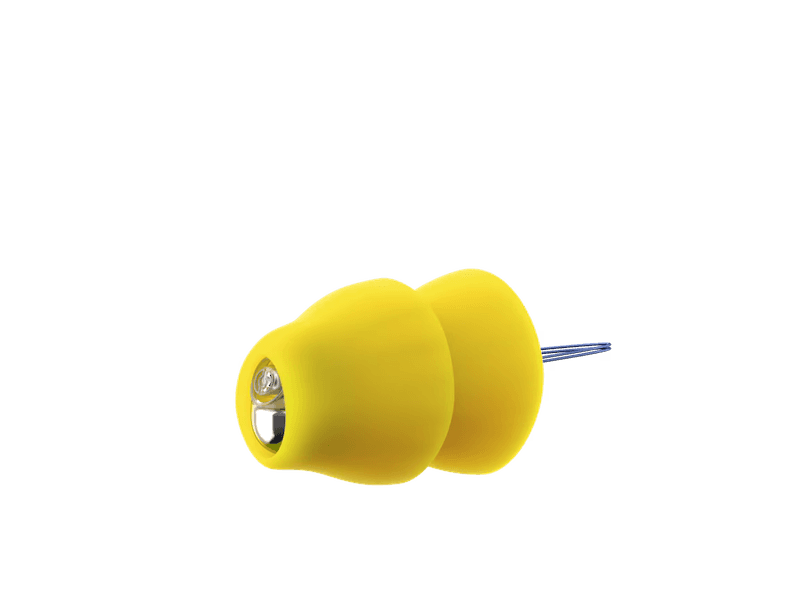
- Completely invisible hearing aid
- Is worn 24/7 (but has a sleep mode)
- No need to remove—an audiologist replaces it every four months
- Type of hearing aid: CIC
- Battery type: Hearing aid is disposable
- Bluetooth compatible: No
Pros
- Completely invisible
- Worn 24/7 and requires no maintenance
- Easy to wear with glasses and headphones
Cons
- Needs to be placed and replaced by a hearing specialist
- Cannot be submerged in water
- No Bluetooth streaming
What’s different about the Phonak Lyric
The Phonak Lyric is a unique kind of prescription hearing aid. It is the only kind that is completely concealed inside the ear canal because an audiologist places it there during an office visit. The device then stays in place 24/7 until its batteries run out, when it needs to be replaced by a hearing professional. The Lyric does have a sleep mode so users won’t be disturbed at night or other times they choose. Sleep mode turns the hearing aid off for the night. You insert a small magnet provided by Phonak into your ear (without touching the Lyric) and wait for the sound of two beeps. That means the Lyric has entered Sleep mode and your hearing aid is now turned off.
Because it is available by prescription only, we did not test the Phonak Lyric ourselves. The device typically lasts between two to four months before needing to be replaced. Phonak does offer the option of “self-replacement” every other time, which means you replace the device yourself at home using a provided tool. You must have worn the Lyric for at least three months before being a candidate for self-replacement. Your hearing care provider will train you in their office, after which you can decide if you’re ready to try replacing your Lyric yourself. Otherwise, you need to visit a hearing specialist so they can replace the Lyric every few months.
The Lyric might be a good choice for someone who doesn't want a visible device of any kind, or to deal with any batteries or other equipment or small parts. It could also be an option for someone who has health challenges that may make using traditional hearing aids more difficult, such as dementia. We included the Phonak Lyric in our roundup of best invisible hearing aids.
It’s worth noting that, with the small size, you’ll sacrifice some functionality. The Lyric doesn’t have Bluetooth and it can’t be submerged in water. But if ease and an invisible look are your top concerts, the Lyric could be a good option.
Sennheiser All-Day Clear: The OTC Option
Sennheiser All-Day Clear hearing aids are an OTC option from the Phonak brand. These RIC-style devices use similar internal technology for sound amplification and have Bluetooth streaming. They do not require a prescription or an audiologist to purchase or fit. They are much less expensive (by several thousand, on average) but have fewer advanced features like automatic sound adjustments.
Sennheiser All-Day Clear
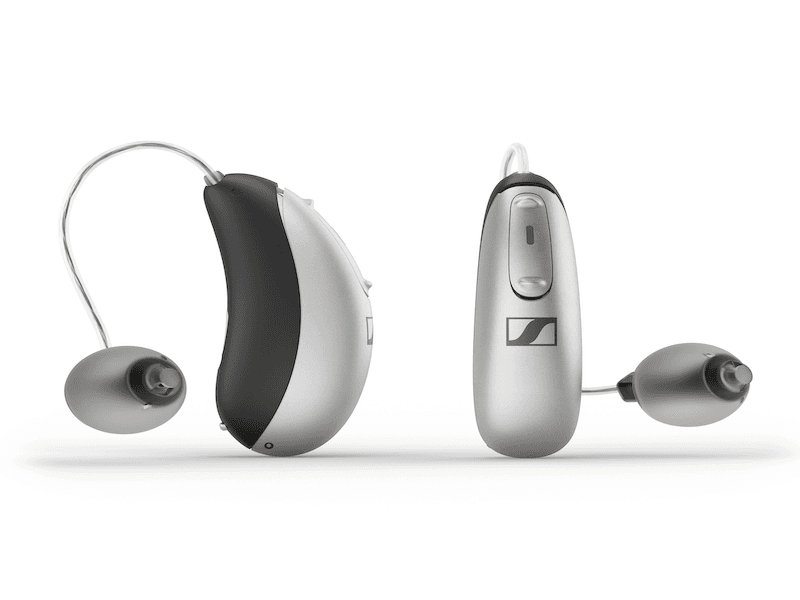
- For mild to moderate hearing loss
- Can purchase online
- Bluetooth streaming and hands-free calls
- Longer battery life (21–24 hours)
- Type of hearing aid: RIC and earbud style
- Battery type: Rechargeable
- Bluetooth compatible: Yes
Pros
- Can purchase online (no need to see audiologist)
- Least-expensive on this list
- Longer battery life (21–24 hours)
- Universal Bluetooth streaming
Cons
- Less advanced technology than prescription lines
- No on-the-go charging
- No ITE options
- Limited color palette

First time getting hearing aids?
Start with an in-person exam with a hearing professional. That can rule out any issues that hearing aids won’t solve (like impacted ear wax).
What’s different about the Sennheiser All-Day Clear
The Sennheiser All-Day Clear hearing aids are the only OTC option from Phonak (the parent company Sonova owns both brands). There are two models:
- All-Day Clear (a RIC-style hearing aid)
- All-Day Clear Slim (earbud style)
The All-Day Clear is a RIC-style hearing aid with a more discreet profile. It’s basically invisible from the front. The All-Day Clear Slim is less discreet. It looks like a normal earbud and has a smaller battery compartment than the All-Day Clear. Because of that, the All-Day Clear has a battery life of 24 hours, and the All-Day Clear Slim comes in slightly behind at 21 hours. But the All-Day Clear Slim costs 30% less, so the trade-off may be worth it.
We did not test either model, but research shows that they have similar features. Both have Bluetooth streaming for music and video and hands-free calling. Both use rechargeable batteries and a smartphone app for control. They are covered by a one-year manufacturer’s warranty with the option to purchase an additional year.
How much do Phonak hearing aids cost?
Phonak does not publish prices on its website. But the prescription hearing aids in this review range in cost from $3,500–$10,000 per pair, on average. The OTC hearing aids cost $699–$999. For specific pricing information, you need to speak with a local hearing care professional who sells Phonak hearing aids.
In our February 2025 survey of 300 hearing aid users, 75% of respondents who bought Phonak hearing aids paid between $1,000–$6,000 for their pair.2
Even among prescription hearing aids, Phonak tends to be on the pricier side. But their devices include a lot of tech-forward features and are known for their quality, so it may be worth the higher upfront cost depending on your needs.
Most insurance plans, including Medicare Part A and Part B, do not cover the full cost of hearing aids. Medicare Advantage (Part C) may cover some of your hearing aid costs.3 For more information, see our articles on Medicare and hearing health.
If you have a health savings account (HSA) or flexible spending accounts (FSA), you may also be able to use that money to buy hearing aids. Check with your insurance provider to see what’s covered.
Phonak hearing aids come in a range of technology levels. As the technology of the hearing aids gets more complex, the price of the devices rises. See a general range of prescription hearing aid prices by technology level below.
| Prescription hearing aid technology level | Price range per pair* |
| Premium | $10,000–$6,000 |
| Advanced | $9,000–$5,500 |
| Standard | $7,500–$4,500 |
| Essential | $5,800–$4,000 |
| Base | $5,500–$3,500 |
*These prices are a general range when buying prescription hearing aids at full price. To obtain exact pricing, you’ll need to visit your local hearing care professional.
Phonak smart features and connectivity
Phonak has a reputation as a leader in devices with forward-thinking technology and universal connectivity. Most of their devices have Bluetooth capabilities. Its most recent platforms all have the ability to connect with up to eight Bluetooth devices and stream two simultaneously.
Phonak also has these other features (not available in all lines):
- Auracast. This wireless tech is available only on the Infino platform for now. It operates similarly to a telecoil, connecting to public sound systems (such as TV or announcers in stadiums) to send sound directly to your hearing aids. Auracast has some advantages over telecoils because it was designed for audio and uses a wireless network, not electromagnets. The tech is still emerging.
- Roger™ wireless technology. Phonak’s Roger wireless microphones transmit audio directly from the microphone to your hearing aids. Roger microphones are about the size of a small smartphone. You place them anywhere you want to hear better, whether that’s right next to you or across the room. They can help make it easier to hear in crowded or noisy situations.
- myPhonak app functionality. You can use the brand’s free app with Android and iPhone devices to control your hearing aids. The app is straightforward and walks through how to pair and operate your devices in clear steps. It also connects remotely to your hearing care professional, who can make adjustments to your hearing aids over video call. That’s a big benefit for people who want the advanced technology of prescription hearing aids but prefer the convenience of meeting virtually, like you would with OTC hearing aids.
Phonak hearing aid accessories
Whether you’re looking at prescription or OTC hearing aids, you’ll find most manufacturers offer optional hearing aid accessories that can help enhance your experience. Phonak hearing aids (except for the Lyric) come with a charging station and cleaning kit. You can purchase other accessories for them through your hearing specialist, depending on your needs.
- TV connector. This accessory streams audio from the television or other devices directly to your hearing aids, so they function like wireless earbuds. This can be useful when there is other noise in the room, or for listening without disturbing others around you.
- Roger™ microphone. This discreet cordless microphone can attach to one person and stream speech directly to your hearing aids. That may be useful for lectures or one-on-one conversations where the speaker is far away or there is background noise that may interfere.
- Remote control. For those who prefer not to use their smartphone to operate their hearing aids, or just want a secondary option, you can purchase a remote control. The remote control is smaller than a normal TV remote and has only three buttons to keep things simple. You’re able to adjust the volume and toggle between audio programs.
Are Phonak hearing aids right for you?
Phonak makes prescription hearing aids for people with mild to profound hearing loss. The brand largely focuses on RIC-style hearing aids with rechargeable batteries but has other styles. Based on our research and conversations with hearing experts, Phonak has a reputation for excellent sound quality and cutting-edge AI technology. They also tend to make devices with great connectivity. When deciding whether to purchase Phonak hearing aids, consider the following:
- How severe is your hearing loss? Phonak hearing aids are designed to treat mild to profound hearing loss. They require a prescription from a hearing specialist to purchase. If your hearing loss is mild or you have trouble only in certain environments, you may want to consider one of the products in our best OTC hearing aids roundup instead.
- How important is sound quality? If you spend a lot of time in noisy environments or go between noisy and quiet environments, Phonak’s auto-adjust technology may be useful for clear sound in any setting. If you typically frequent the same places, you may not need (or want to pay for) that kind of more advanced feature.
- How much do you stream? Most Phonak devices can stream audio and deliver high-quality sound, but that does affect battery life. If you want a great streaming experience, though, Phonak has a good reputation.
- What is your budget? Prescription hearing aids tend to be pricier than OTC ones, but even so, Phonak is on the higher end. It offers a lot for the price, but if you prefer a simpler hearing aid, there are other options. People with mild to moderate hearing loss may be interested in our guide to the best affordable hearing aids.
- Are you OK with doctor’s visits? Prescription hearing aids require trips to a hearing specialist. OTC hearing aids don’t require in-person visits and tend to be more hands-off.
For more information, see our hearing aid buyer’s guide.
Frequently asked questions
How much do Phonak hearing aids cost?
Phonak does not publish prices on its website, but its products range from $3,500–$10,000 per pair, on average. For specific pricing information, you need to speak with a local hearing care professional who sells Phonak hearing aids.
Does Phonak make good hearing aids?
Phonak is a brand known for quality prescription hearing aids with high-end and tech-forward features. The brand backs its products with a one-year manufacturer’s warranty.
How do Phonak hearing aids compare to other leading brands?
Phonak hearing aids are a leader in sound quality and wireless connectivity among prescription hearing aid brands. Phonak has a range of styles and features to choose from but may be at a slightly higher price than some other brands.
Do Phonak hearing aids have tinnitus features?
Yes, Phonak offers a tinnitus-balancing noise generator option on some devices. This feature provides background noise that may help mask tinnitus symptoms.
Questions? Email us at reviewsteam@ncoa.org.