
Tips for Engaging Local Health Departments in Falls Prevention
8 min read

Related Topics
Local Health Departments (LHDs) are essential falls prevention partners. State Falls Prevention Coalitions play a vital role in coordinating statewide efforts to prevent falls and mitigate fall-related injuries among older adults. These coalitions enable partners across the state to align strategies, share resources, and expand evidence-based interventions.
Strategically engaging LHDs in state falls prevention coalitions can strengthen community engagement, ensure local needs are represented at the state level, and enhance the sustainability of falls prevention efforts. This article provides practical guidance to illustrate the role LHDs play in preventing falls and participating as engaged coalition members.
Role of local health departments in falls prevention
LHDs are governmental public health agencies that operate at the city, county, or regional level. They play a central role in protecting and improving community health and well-being, including supporting older adults. While they all share a common mission, LHDs vary widely in structure, size, and capacity.
While LHDs may directly contribute to falls prevention by supporting evidence-based falls prevention programs, home safety initiatives, or community education efforts, they also indirectly support other factors that contribute to falls risk. For example, a LHD may offer:
- A diabetes management or nutrition program that helps older adults maintain strength and overall health
- Outreach efforts and community events to address social isolation and foster connection among older adults
- Behavioral health or substance use prevention initiatives that reduce alcohol use and associated risk of injury
- Mobile outreach or community health programs that help older adults improve medication management
Falls prevention is not always a separate program or function within LHDs. In some departments, it may sit within injury prevention or healthy aging, while in others it’s embedded in broader work like chronic disease management or home visiting programs. In these situations, coalitions can provide education to help LHDs recognize how their existing programs already contribute to falls prevention.
LHDs also play a critical systems-level role in injury prevention, including:
- Collecting and analyzing local data (e.g., fall-related injuries, emergency department visits)
- Conducting community health assessments and identifying priority populations or issues
- Serving as a convenor across sectors, with existing partnerships across healthcare, aging services, first responders, and community-based organizations
The National Association of State & City Health Officials (NACCHO) published Developing the Capacity to Support Clinical Older Adult Fall Prevention as a guide to help LHDs engage in falls prevention work. Coalitions can use this guide to better understand the role LHDs play in addressing falls, identify opportunities to support LHD efforts, and inform outreach to prospective LHD partners.
Why engage LHDs in your coalition?
Engaging LHDs can strengthen your state falls prevention coalition in several key ways:
- Credibility and reach: LHDs are a trusted public health authority and can open doors to other partners and decision-makers.
- Data and local insight: LHDs often have access to more granular local data that can help target interventions and tell a compelling story.
- Sustainability: Embedding falls prevention into LHD public health services and systems can help ensure the work continues beyond individual grants or funding cycles.
How to initially engage local health departments in falls prevention
Successful outreach starts with understanding your audience. Begin by identifying LHDs across your state and prioritizing a small number for initial engagement. Use NACCHO’s Directory of Local Health Departments to help search for LHDs in your state. Focusing your efforts makes it easier to tailor your approach and build meaningful relationships.
Do your research
Take time to learn about each LHD’s priorities and context:
- Review Community Health Assessments (CHAs) and Community Health Improvement Plans (CHIPs), if available, and look for mentions of older adults, injury prevention, or healthy aging. CHAs describe a community’s key health needs and supporting data, whereas CHIPs outline the priorities and strategies the LHD is working on to address these needs. Some states have a centralized webpage from which you can access completed CHA/CHIPS for each county. However, most often these documents are posted individually on the LHD’s website.
- Explore other sources such as their website, reports, or press releases to better understand their current public health priorities or identify points-of-contact.
- Talk to existing coalition members who may have relationships or contacts at the LHD that can be leveraged.
This preparation will help you enter the conversation informed and intentional.
Be clear about your value proposition
LHDs are often balancing competing priorities with limited staff. Being clear and specific about your ask, as well as the benefit of their participation, is critical to getting traction.
Before outreach, be prepared to answer two key questions:
- “What are you asking us to do?”
- “What’s in it for us?”
Frame coalition participation as a way to support or enhance existing work, not add new burdens. Coalition benefits that may be especially attractive to LHDs include:
- Access to ready-made materials or messaging that can be implemented or used at the local level
- Opportunities to share or receive data to inform their work
- Connections to partners and possible funding opportunities
- Training opportunities and continuing education credits
When possible, lead with data from their community to make your pitch more relevant and compelling.
Identify the right person and entry point
Finding the right contact at a local health department can take time, especially since roles vary widely across LHDs. The person doing falls-related work at a LHD may not have a title that clearly reflects it. In many LHDs, staff who support falls prevention often work across multiple health-related issues. These roles may include health educators, nurses, program managers, or community paramedics. You can also look for staff working in areas such as injury prevention, chronic disease, healthy aging, community health, or outreach.
If possible, identify a potential champion, someone who is already interested and willing to engage. A strong champion can help open doors internally or regionally to connect you to other prospective members.
Set realistic and flexible expectations
Not every LHD will be able to engage in their state coalition at the same level, and that's okay. Recognizing this and setting realistic expectations helps build stronger and more sustainable partnerships with LHDs.
Meet LHDs where they are by offering flexible options for participation—some LHDs may only have capacity to occasionally attend full membership meetings; others will be able to consistently engage in workgroups and lead projects. For those LHDs with less capacity to engage, conducting personalized outreach and recommending opportunities for LHD staff to participate in specific tasks or events that intersect with their goals can enable LHDs to see the value of the coalition and increase their engagement over time.
Creating strategic ongoing falls prevention participation
Set mutually beneficial goals
Sustained engagement relies on shared value. Partnerships are most successful when both the coalition and the LHD can clearly see the benefit of working together. Meet with prospective or current LHD members and clearly describe what the coalition can offer them while simultaneously exploring what the LHD hopes to gain from participating. Conversations and check-ins help ensure the partnership stays aligned, mutually beneficial, and responsive to changing needs or capacity.
Start with short-term wins
Early successes can help demonstrate the value of participation. Small, visible efforts can go a long way in building trust and momentum.
Examples of short-term wins include:
- Sharing LHD data in coalition reports or presentations
- Coordinating messaging during Falls Prevention Awareness Week
- Cross-promoting programs or resources
- Making new partner connections
Work toward longer-term impact
Over time, partnerships can evolve into more strategic and systems-level work. This is where coalitions and LHDs can make lasting change together.
Examples of long-term goals include:
- Integrating falls prevention into CHIPs or strategic plans
- Expanding access to evidence-based falls prevention programs
- Strengthening referral pathways between clinical and community partners
- Aligning data and surveillance efforts
Common challenges and how to overcome them
Challenge: Our LHD does not address older adult falls. How can we still engage them in our falls prevention coalition?
Workaround: Start by meeting the LHD where they are. Even if falls prevention is not a named priority, it often connects to work they are already doing to support older adults. You can open the door by:
- Framing falls prevention as part of existing priorities, particularly those identified in a LHD’s CHA, CHIP, or other strategic plans
- Using local data to make the issue visible, particularly data related to risk and protective factors for older adults in their community
- Positioning the coalition as a resource, not a request
Begin with small, low-lift opportunities to build awareness and interest over time.
Challenge: Several of our LHD coalition members would like us to coordinate offering evidence-based falls prevention programming in their region, but this is not within our coalition’s scope.
Workaround: In these moments, it’s important to clarify roles while maintaining the relationship. Being transparent about what the coalition can and cannot do helps set realistic expectations. If program implementation is not possible, consider how you can still support:
- Connecting LHDs to program providers or partners
- Sharing implementation tools, resources, or guidance
- Helping identify funding opportunities
- Convening partners to plan or map services
When possible, reframe the request into something aligned with your role (such as coordination, facilitation, or strategy) rather than direct program delivery.
Examples of local health department falls prevention engagement
Many state falls prevention coalitions are already strategically engaging LHDs in their coalition initiatives. Examples help to illustrate how these mutually beneficial relationships function:
- Through their membership in Falls Free CT, the Hartford Department of Health & Human Services in Connecticut learned of a funding opportunity that enabled them to launch an innovative project that provides smart home devices to older adults to prevent falls. The Hartford Health Department continues to participate in Falls Free CT’s Home Safety Modifications & Falls Prevention Technology Working Group to stay up to date on trends and best practices for integrating smart technology to prevent falls.
- In Wisconsin, a local health department presented during the Falls Free WI coalition’s data workgroup meeting to discuss their local falls data. The workgroup is currently developing a guide for local and tribal health departments to promote local health department falls data access and use.
- The Iowa Falls Prevention Coalition is providing technical assistance to support three local health departments across the state to establish regional falls prevention coalitions. These regional coalitions will play an important role in creating a robust falls prevention ecosystem throughout the state.
- In Connecticut, Farmington Valley Health District learned of a grant opportunity through Falls Free CT to implement Bingocize®
There is no one-size-fits-all approach to engaging LHDs. but intentional, relationship-driven efforts can go a long way. By working together, state falls prevention coalitions and LHDs can create meaningful and lasting change in the lives of older adults.
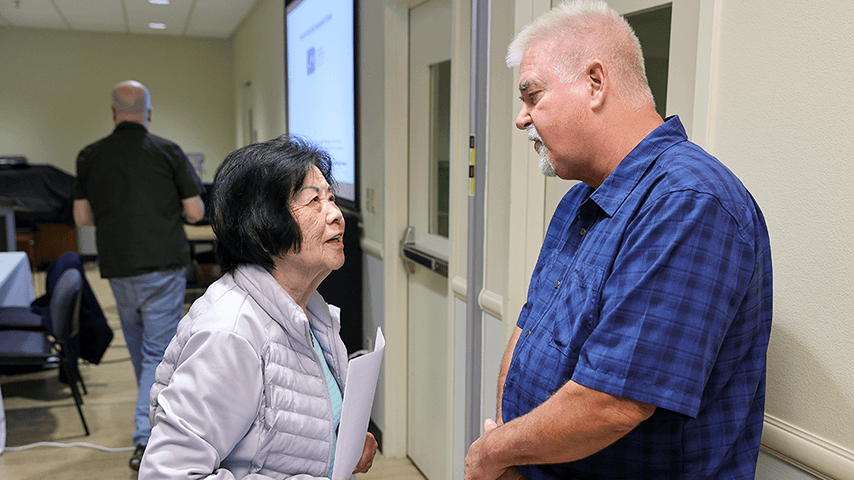
Photo by Matt Hayward/Getty Images for NCOA use only
This project is supported by the Administration for Community Living (ACL), U.S. Department of Health and Human Services (HHS) as part of a financial assistance award totaling $2,500,000 with 100 percent funding by ACL/HHS. The contents are those of the author(s) and do not necessarily represent the official views of, nor an endorsement, by ACL/HHS, or the U.S. Government.