
Related Topics
Sleep apnea is a disorder that repeatedly causes you to stop breathing while you sleep.
It’s common enough that you might have it yourself. And it’s serious enough that getting diagnosed—and getting proper treatment for it—is crucial. That’s because interrupted sleep affects your health in ways that increase the risks for certain chronic diseases, emotional issues, and falls, among other things.
In this article, we share helpful sleep apnea statistics that help you better separate facts from myths, understand the dangers of sleep apnea, and make informed decisions about your own risks and health.
What are the types of sleep apnea?
There are three types of sleep apnea: obstructive, central, and mixed.1
Obstructive sleep apnea (OSA) happens when the muscles and soft tissues in your throat relax and physically block your airway. Central sleep apnea (CSA) occurs due to a “short circuit” in the communication system between your brain and respiratory (breathing) system. Mixed sleep apnea (also called “complex sleep apnea”) is a combination of both.
Most people with sleep apnea have the obstructive form.2 Commonly, obesity and sleep position contribute to the obstruction. Continuous positive airway pressure (CPAP) therapy is the standard treatment. Doctors recommend losing weight and switching your body position, too. (Simple changes—like trying the best mattress for sleep apnea and the best pillow for sleep apnea—can make it easier to adjust).
What are the degrees of sleep apnea?
No matter the type, sleep apnea can be mild, moderate, or severe.
Sleep specialists score the severity based on a measurement called AHI.3 AHI stands for “apnea-hypopnea index.” It shows the average number of times your sleep is disrupted during a one-hour period. Apneas last for 10 seconds or more and decrease airflow to your lungs by at least 90%. Hypopneas last for 10 seconds or more and decrease airflow to your lungs by at least 30%. Both cause your blood oxygen levels to drop.4
To be “counted” as an apnea or hypopnea, Medicare rules say that blood oxygen must drop by at least 4%.5 Many sleep specialists support using 3% instead. This can help uncover and treat mild sleep apneas before they cause major health issues (You may hear this called the “3% rule”).
How common is sleep apnea?
If you don’t have sleep apnea yourself, chances are high you know someone who does.
Worldwide, the condition affects nearly one billion people.6 In some countries, as many as half the population has it.6 While this isn’t true here in America, prevalence is still high. Current estimates indicate that 83.7 million (32.4%) of U.S. adults age 20 and over have obstructive sleep apnea.7
Interestingly, sleep apnea rates can vary by geography. Some regions may reflect higher or lower rates due to factors like obesity prevalence, race and ethnicity, and treatment compliance. More studies are needed to better understand and prove these connections, though.
How common is sleep apnea by age?
Sleep apnea in older adults is much more common than in younger people.8
This counters a widely held stereotype about overweight men in mid-life. In fact, one study found that 56% of people age 65 and older have a high risk of developing obstructive sleep apnea.9 Further, while sleep apnea is more common in men before the age of 50, it occurs at about the same rate in men and women after age 50.10
Are men or women more at risk of developing sleep apnea?
According to recent research, sex is not a unique risk factor for sleep apnea anymore—if it ever was.11 Still, there are differences in rates and prevalence.
Sleep apnea in women
Approximately 6% of women in the U.S. have sleep apnea.8
While this sounds low, OSA is highly prevalent among older women. One study found that nearly 51% of women with a mean age of 68 had moderate sleep apnea.8 Ohers suggest a strong correlation between menopause and OSA. This is especially true among women who aren’t treated with hormone therapy (MHT).8 Research continues to better understand the relationships between female hormones and sleep apnea.
Sleep apnea in men
Approximately 13% of men in the U.S. have sleep apnea.8
Researchers still aren’t sure exactly why these rates are more than double when compared to women. But they have some ideas. For instance, it’s possible that differences in upper airway structure can explain some of it. That’s because men typically have narrower airways, larger tongues, and “floppier” soft palates.11 Certain risk factors that may be more common in men, such as alcoholism, may also play a role.
Sleep apnea risk factors
Speaking of risk factors: whether you develop sleep apnea can depend on one or more biological, physiological, behavioral, or environmental elements. Some of these you can change; others, you can’t. Risk factors include:
- Age. The prevalence of OSA increases with age, especially among post-menopausal women.11 In many ways, the aging process itself causes physiological changes that can lead to sleep apnea. These include hormonal fluctuations and more easily collapsible airways.11
- Sex. As mentioned, sleep apnea rates are higher in men than in women. But the rising prevalence among women age 50+ erases the difference. Some studies say that among older people, the male-to-female ratio for sleep apnea is 1:1.11
- Lifestyle. Certain behaviors—such as smoking, excessive alcohol consumption, and even your sleeping position—can influence your risk for OSA.12 Often, changing these behaviors can eliminate your risk or reduce sleep apnea severity if you have it.
- Other health conditions. Stroke, heart disease, uncontrolled high blood pressure, and obesity all contribute to your sleep apnea risk.1 But it’s a common sleep apnea myth that only people who live with obesity develop the condition.
Conditions linked to sleep apnea
When you have sleep apnea, you’re more likely to have certain other health conditions, too. These may include:1,13
- Type 2 diabetes
- Heart disease
- Stroke
Sleep apnea and cardiovascular risk
There’s a strong link between sleep apnea and heart and lung disease. In particular, OSA is associated with cardiovascular complications including heart arrhythmias (irregular beats), high blood pressure, coronary artery disease, pulmonary hypertension, and sudden cardiac death.14 Consider these sleep apnea stats:14
- Up to 50% of people with high blood pressure also have OSA
- As many as 58% of people with pacemakers previously had undiagnosed OSA
- Between 40%–60% of people with heart failure have OSA, CSA, or both
- People with OSA are nearly twice as likely to suffer a cardiovascular event
- Among people who have suffered a stroke, 71% have OSA
- Up to 80% of people with pulmonary hypertension also have OSA
How many people have undiagnosed sleep apnea?
Today in the U.S., a staggering 80% of sleep apnea cases remain undiagnosed.15 Often, lack of awareness among health care providers and patients is to blame. Symptoms can be hard to recognize or separate out from associated conditions. And people who live alone may not realize their sleep disruptions.
What risks are associated with untreated sleep apnea?
Left untreated, sleep apnea dangers and risks are significant. In addition to the cardiovascular complications mentioned above, these include:16
- Increased motor vehicle and workplace accidents
- Depression
- Alzheimer’s
- Sexual dysfunction
- Eye disease
- Premature death
Effectiveness of CPAP machines
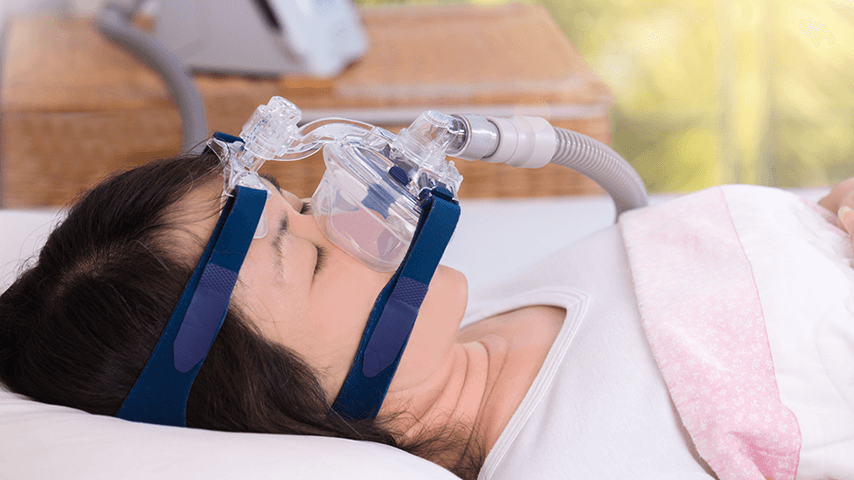
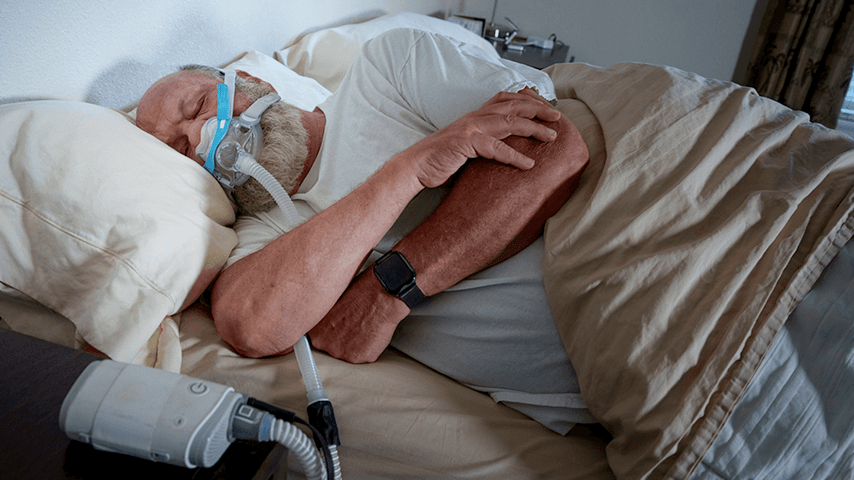
Continuous positive airway pressure (CPAP) machines are the gold-standard treatment for sleep apnea. An estimated 5 million people in the U.S. with diagnosed sleep apnea use them.16
CPAP machines work by delivering a constant, forceful stream of air through a mask worn over the nose and mouth. This stream physically keeps the airway open during sleep without the need for medications or surgery. And they’re remarkably effective. Research shows that consistent CPAP use can reduce the risk of heart attack, stroke, and cognitive decline.8 It also can improve sleep and mood.17
Still, CPAP therapy can be challenging to get used to. While it’s impossible to know the true numbers, many people give up on using their machines before they can fully benefit from treatment. Comfort settings, including CPAP ramp time, can help you stick with your treatment.
FAQ
What is the 3% rule for sleep apnea?
The 3% rule is a guideline doctors use to decide whether or not to “count” a particular episode of shallow breathing when scoring the results of a sleep study. It refers to how much your blood oxygen levels drop during an episode of apnea or hypopnea. The 3% rule can help uncover mild sleep apnea and encourage early treatment.
What level of sleep apnea requires a CPAP machine?
The American Academy of Sleep Medicine recommends continuous positive airway pressure (CPAP) therapy for all people with moderate to severe sleep apnea.18 Consensus is less clear for mild cases. If you have mild sleep apnea, talk with your doctor about other treatment options and whether trying CPAP therapy makes sense for you.
How do you safely stop using a CPAP device after you start?
In short: consult with your sleep specialist. While there are several valid reasons for discontinuing CPAP therapy, it’s best to do it under close medical supervision.
Are there alternative treatments for sleep apnea other than CPAP?
Yes. Depending on its type and severity, your doctor may recommend one or more of the following: making lifestyle changes like losing weight and cutting out alcohol; wearing a custom-fit dental appliance to keep your airway open; trying a procedure called upper airway stimulation therapy; and/or undergoing surgery to widen or unblock your airway.
Sources
1. Cleveland Clinic. Sleep Apnea. Jan. 15, 2025. Found on the internet at https://my.clevelandclinic.org/health/diseases/8718-sleep-apnea
2. Lucas M. Donovan, M.D. et al. Prevalence and Characteristics of Central Compared to Obstructive Sleep Apnea: Analyses from the Sleep Heart Health Study Cohort. Sleep. July 2016. Found on the internet at https://academic.oup.com/sleep/article-abstract/39/7/1353/2453936?redirectedFrom=fulltext
3. Audra Sarver, MHS, PA-C. Apnea-Hypopnea Index. SleepApnea.Org. April 29, 2026. Found on the internet at https://www.sleepapnea.org/diagnosis/ahi-apnea-hypopnea-index/
4. Amber Garnett. Hypopnia. SleepApnea.Org. Jan. 13, 2026. Found on the internet at https://www.sleepapnea.org/hypopnea/
5. Farnaz AbbasiMoradi et al. Age related disparities in sleep apnea diagnosis using a wearable device: Implications of 4% vs. 3% hypopnea scoring criteria. Sleep Medicine. June 2024. Found on the internet at https://www.sciencedirect.com/science/article/abs/pii/S1389945724001515
6. Adam V. Benjafield, PhD et al. Estimation of the global prevalence and burden of obstructive sleep apnoea: a literature-based analysis. The Lancet Respiratory Medicine. August 2025. Found on the internet at https://www.sciencedirect.com/science/article/abs/pii/S2213260019301985
7. Ibrahim Sönmez et al. Unmasking obstructive sleep apnea: Estimated prevalence and impact in the United States. Respiratory Medicine. November 2025. Found on the internet at https://www.sciencedirect.com/science/article/abs/pii/S0954611125004111
8. David Brower et al. Obstructive Sleep Apnea and Aging: A Narrative Review. Sleep Medicine Research. September 29, 2025. Found on the internet at https://sleepmedres.org/journal/view.php?doi=10.17241/smr.2025.02964
9. American Academy of Sleep Medicine. Study Finds High Rate of Undiagnosed Sleep Apnea in Older Adults. May 11, 2018. Found on the internet at https://foundation.aasm.org/aasm-foundation-study-published-jags/
10. Cleveland Clinic. Sleep Apnea. January 15, 2025. Found on the internet at https://my.clevelandclinic.org/health/diseases/8718-sleep-apnea
11. Caterina Antonaglia et al. Walking the fine line between OSA and aging. Sleep and Breathing. May 23, 2025. Found on the internet at https://link.springer.com/article/10.1007/s11325-025-03343-x
12. Yosef Yayan et al. A Systematic Review of Risk Factors for Sleep Apnea. Preventive Medicine Reports. June 2024. Found on the internet at https://www.sciencedirect.com/science/article/pii/S2211335524001657#s0045
13. Johns Hopkins Medicine. The Dangers of Uncontrolled Sleep Apnea. Found on the internet at https://www.hopkinsmedicine.org/health/wellness-and-prevention/the-dangers-of-uncontrolled-sleep-apnea
14. Yerem Yeghiazarians, MD, FAHA et al. Obstructive Sleep Apnea and Cardiovascular Disease: A Scientific Statement From the American Heart Association. Circulation. June 21, 2021. Found on the internet at https://www.ahajournals.org/doi/10.1161/CIR.0000000000000988#sec-6
15. American Academy of Sleep Medicine. New national indicator report details importance of prompt sleep apnea diagnosis and treatment. April 4, 2023. Found on the internet at https://aasm.org/new-national-indicator-report-details-importance-prompt-sleep-apnea-diagnosis-treatment/
16. Indira Gurubhagavatula, MD, MPH et al. Obstructive Sleep Apnea Indicator Report. American Academy of Sleep Medicine. Found on the internet at https://sleepeducation.org/wp-content/uploads/2023/03/obstructive-sleep-apnea-indicator-report.pdf
17. Cleveland Clinic. CPAP Machine. July 11, 2024. Found on the internet at https://my.clevelandclinic.org/health/treatments/22043-cpap-machine
18. Melanie Pogach, MD. Treating mild sleep apnea: Should you consider a CPAP device? Harvard Health Publishing. June 15, 2020. Found on the internet at https://www.health.harvard.edu/blog/treating-mild-sleep-apnea-should-you-consider-a-cpap-device-202006152210