
Partnering with Injury and Violence Prevention Agencies on Falls Prevention
4 min read
Even though falls are a leading cause of traumatic brain injuries, injury prevention partners often lack dedicated funding for falls prevention. They often focus instead on areas like transportation-related traumatic brain injuries.
Some efforts are beginning to bridge the gap. For example, the Rhode Island Department of Health (RIDOH)—a 2024 Administration for Community Living (ACL) Falls Prevention grantee—uses statewide data showing that many traumatic brain injuries, especially among older adults, stem from falls, highlighting the need to prioritize falls prevention.
Within RIDOH, the Center for Health Promotion, including the Violence and Injury Prevention team, plays a key role in this work. RIDOH offers insights on how partnering with injury and violence prevention teams can strengthen falls prevention efforts.
Falls prevention through an injury and violence prevention perspective
Falls prevention works best when multiple, complementary strategies are used. One approach focuses on direct services, enrolling participants in programs that strengthen muscles, improve balance, and reduce risk.
At the same time, injury and violence prevention (IVP) professionals take a broader public health perspective, tackling community-level risk factors. This can involve:
- Engaging health care providers
- Partnering with local organizations
- Improving home safety by removing hazards like loose rugs, adding grab bars, and encouraging the use of assistive devices.
By combining these efforts, falls prevention extends beyond workshops to address safety in diverse, practical ways.
Collaborating across the IVP network
IVP work often intersects with other initiatives already happening locally. For example, RIDOH highlighted its collaboration with the Brain Injury Association of Rhode Island. People who have experienced a concussion are more likely to experience another one1 which, for older adults, often ties directly into falls prevention. By connecting these individuals to fall prevention programs, RIDOH helps them engage in workshops that improve balance and mobility, reducing the risk of repeat injuries.
Joining IVP calls can open unexpected doors. The connections you make and the insights you gain often become apparent only by participating and observing the discussions. Even if you do not have extra funding to contribute, small actions such as cross-promoting events or sharing flyers can make a meaningful difference in building partnerships and expanding impact.
RIDOH and Safe States Alliance partnership
RIDOH’s membership in Safe States Alliance connects the department to a nationwide network of over 700 professionals and students focused on injury and violence prevention.2 This collaboration ensures RIDOH stays informed of evidence-based strategies, emerging trends, and best practices in the field.
The network spans federal, state, and local agencies, hospitals, non-profits, and academic institutions, enabling collaboration on program development, evaluation, and policy initiatives. RIDOH also utilizes Safe States’ tools (webinars, toolkits, training opportunities, etc.) to strengthen its programs and staff expertise. This partnership not only helps RIDOH maintain alignment with national standards but also allows them to contribute to advancing IVP across the public health community.
Partnering with EMS
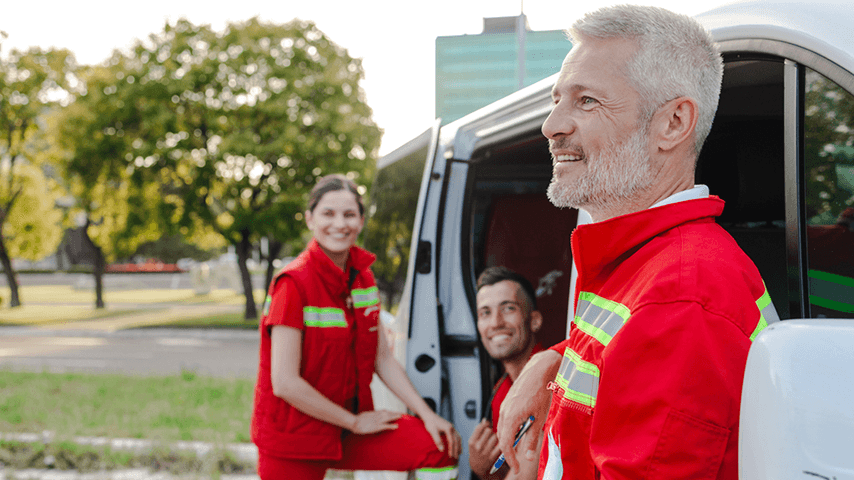
EMS data provides a clear picture of where fall prevention resources are most needed. RIDOH used this data to identify communities with the highest fall-related calls and partnered with EMS departments to distribute program flyers and resources.
Of the top 10 high-call areas, only two had dedicated fall prevention funding, creating opportunities for RIDOH to fill gaps. EMS personnel can also be trained as program leaders, and the data serve as a valuable tool for securing funding and influencing decision-makers.
See also NCOA’s article: Partnering with Fire and Emergency Medical Services to Prevent Falls.
Sources
1. American Association of Neurological Surgeons. Concussion. Found on the Internet at https://www.aans.org/patients/conditions-treatments/concussion/
2. Safe States Alliance. Who We Are. Found on the Internet at https://www.safestates.org/page/WhoWeAre
This project was supported by the Administration for Community Living (ACL), U.S. Department of Health and Human Services (HHS) as part of a financial assistance award totaling $5,000,000 with 100 percent funding by ACL/HHS. The contents are those of the author(s) and do not necessarily represent the official views of, nor an endorsement, by ACL/HHS, or the U.S. Government.