
Is Shingles Contagious? What Older Adults Need to Know
6 min read


Related Topics
Odds are you’ve heard of shingles, a common viral illness known for its fiery and painful rash. While shingles itself is not contagious, a person with an active, blistering shingles outbreak can spread the varicella-zoster virus to someone who is not immune. If exposed, that person will develop chickenpox, not shingles.
If you or someone you know has shingles, you may have questions about how the varicella-zoster virus spreads, when a person is contagious, and how to protect family members and others. Here's what you need to know about shingles transmission, including who is at risk and when it's safe to be around someone with shingles.
What is shingles?
Also known as herpes zoster, shingles is a viral infection that causes a blistery skin rash. This condition affects millions of older adults every year, and roughly 1 in 3 Americans will develop shingles in their lifetime.1 It’s more likely occur in people age 50 and older. But younger people—even children—can still get it, especially if they have weakened immune systems due to illness or medications.
The culprit behind shingles is the varicella-zoster virus (VZV)—the same virus that causes chickenpox. If you’ve had chickenpox in the past—like more than 99% of Americans born before 19801—the virus stays dormant in your body, hiding in nerve tissues. It can stay dormant for many years, or even a lifetime. As our immune system weakens with age, the virus can reactivate in some people, leading to an active case of shingles.
Shingles Transmission at a Glance
| Question | Answer |
|---|---|
| Is shingles contagious? | No |
| Can shingles spread the virus? | Yes |
| What disease can it spread? | Chickenpox |
| Who is at risk? | People who have never had chickenpox or the chickenpox vaccine |
| When is it contagious? | While blisters are present |
| When does it stop being contagious? | After the rash crusts over |
“Basically, as you get older, the chance of you getting shingles increases. So, most people who get shingles are age 50 and above,” Florida-based physician Ankush Bansal, MD told the American Medical Association (AMA). “And every 10 years above that, your chance of getting shingles increases.”
Early-stage shingles symptoms often include tingling, burning, or itching in a specific area, followed by the appearance of a rash that turns into painful blisters (usually on one side of the body). The pain can range from mild to severe.
Leticia, whose shingles infection began as abdominal discomfort, recalls the "unbearable" pain of shingles in her story on the Vaccinate Your Family website. She was unable to sleep and experienced no relief from the strong pain medication she was prescribed. "I wouldn’t wish this pain on anyone," she writes.
Is shingles dangerous?
In some cases, debilitating pain can persist for months or even years after a shingles rash clears up. This is a condition known as postherpetic neuralgia (PHN), and it affects about 10% to 18% of people who have shingles.2
The Centers for Disease Control and Prevention (CDC) shares a candid personal story from a 63-year-old musician who can no longer play the harp due to chronic shingles symptoms: "Five years later, I still take prescription medication for pain. My shingles rash quickly developed into open, oozing sores that, in only a few days, required me to be hospitalized. I could not eat, sleep, or perform even the most minor tasks. It was totally debilitating. The pain still limits my activity levels to this day."
Other shingles complications include infection and vision loss. In rare cases, it can lead to hearing issues, brain inflammation, and even death. A new study has also linked shingles with a 20% higher long-term risk of cognitive decline.3
Is shingles contagious?
The short answer is that shingles itself is not contagious, meaning you cannot catch shingles from someone who has it. But, the varicella-zoster virus that causes shingles can be spread from a person with an active shingles rash to someone who has never had chickenpox (or has not been vaccinated against it). In these cases, the person exposed to the virus will develop chickenpox, not shingles. Note: People with active chickenpox are more likely to spread the shingles virus than people who have shingles.
How long is shingles contagious for?
Once a shingles rash has crusted over, which takes about seven to 10 days, the risk of transmission is greatly reduced.
Can shingles be spread by scratching?
Scratching does not directly cause the shingles virus to spread, but it can cause infection and scarring and spread the virus to other parts of your body. Rather, the varicella-zoster virus is spread through direct contact with fluid from the blisters of the shingles rash. This is most likely to happen when the rash is in the blister phase, since blister fluid is filled with virus particles. The shingles virus can also be spread when a person breathes in virus particles that come from the blisters of someone with an active shingles infection.
Who is most at risk for getting infected with the shingles virus?
Is it safe being around someone with shingles? Is it ok to hug someone who has shingles? Those most at risk for getting chickenpox from someone with shingles include people who have never had chickenpox and have not received the chickenpox vaccine.
Avoid close contact with someone who has shingles if you:
- Never had chickenpox
- Never received the chickenpox vaccine
- Are pregnant and not immune
- Have a weakened immune system
- Are caring for a premature newborn
If you already had chickenpox when you were a child, being exposed to someone with shingles does not mean you will get it. Shingles results from the reactivation of the virus that’s already in your body—not from being exposed to someone else with the condition.
How can I avoid spreading the shingles virus?
If you have shingles, there are steps you can take to protect others, especially those who may be at higher risk for serious complications from chickenpox:
- Cover the rash: Keep your shingles rash clean and covered with clothing or a bandage to reduce the risk of contact with fluid from the blisters.
- Avoid high-risk people: Stay away from pregnant women, newborn babies, and people with a compromised immune system until your rash has crusted over.
- Practice good hygiene: Wash your hands frequently (for at least 20 seconds). Avoid scratching your shingles rash, since this can spread the virus to other areas or to other people.
- Do not share personal items: Avoid sharing items like clothing, towels, or bed linens with others while you have an active shingles rash.
Can the shingles vaccine help?
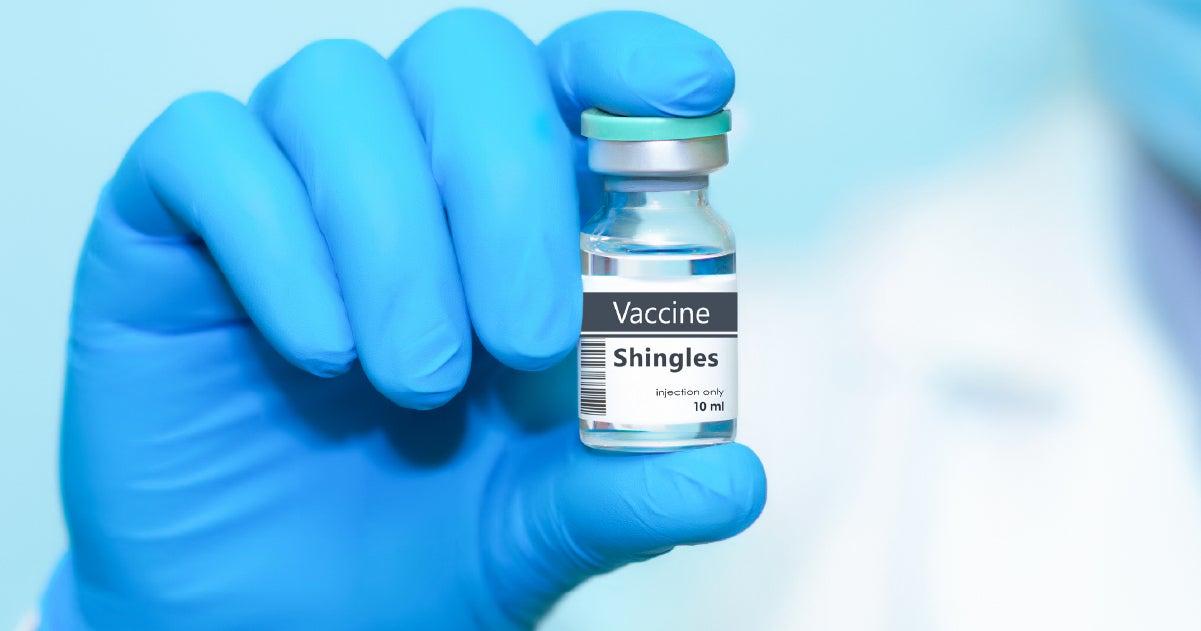
There is one vaccine approved by the U.S. Food and Drug Administration (FDA) to protect against shingles: a recombinant zoster vaccine called Shingrix (RZV). This vaccine is recommended by CDC and has been shown to be 90% effective at preventing shingles and PHN in healthy adults age 50 and older.4
The Shingrix vaccine is given in two doses, usually two to six months apart.
What is the shingles vaccine age recommendation?
CDC recommends the two-dose shingles vaccine for:
- Adults age 50 and older
- Adults age 19 and older who have weakened immune systems due to disease or medication/therapy
If you’re age 50 or older and have not yet received the shingles vaccine series, talk to your health care provider about getting vaccinated. It’s the only way to protect yourself against shingles and its potentially devastating complications.
Even if you received the prior shingles vaccine—Zostavax, which was discontinued in November 2020—it is still recommended for you to get the Shingrix shot. Talk to your health care provider about the best timing to get the two-dose shingles vaccine.
What’s another good reason to get the shingles shot? UK researchers recently published some eye-opening study findings: They discovered older Americans who received the Shingrix shingles vaccine series exhibited a 17% lower rate of developing dementia compared to those who received the since-discontinued Zostavax vaccine.5 Women were more likely than men to experience this protective effect. This evidence was supported by a more recent study, which found that older adults who received the Shingrix vaccine after entering a skilled nursing facility were 24% less likely to be diagnosed with dementia over the next four years than those who were not vaccinated.6
The two-dose shingles vaccine joins several others linked to a reduced dementia risk, including the flu vaccine and Tdap vaccine.
I think I might have shingles. What should I do?
Shingles symptoms typically start with pain, itching, or a tingling sensation on your skin. This can happen several days before a rash appears. In most cases, the shingles rash emerges as a stripe around the right or left side of your body and looks similar to a chickenpox rash. Sometimes, it may show up on one side of your face. Along with the telltale shingles rash, you may have a fever and/or chills, a headache, or gastrointestinal issues.
If you suspect you have shingles, it’s important to seek medical care right away. When started within 72 hours of the appearance of the rash, shingles treatment with antiviral medications like acyclovir, valacyclovir, or famciclovir can help reduce the severity of your symptoms, shorten the duration of your illness, and prevent complications like postherpetic neuralgia.
"As we age, the risk of shingles rises, along with the chance of experiencing serious complications such as painful postherpetic neuralgia. These complications can greatly affect an older adult’s quality of life, making prevention especially important,” said Dorothea Vafiadis, NCOA Senior Strategist for Healthy Aging.
Getting vaccinated is one simple but powerful action you can take to protect your health,” Vafiadis said.
Find a shingles vaccination site near you
Use this shingles vaccine locator to locate a pharmacy vaccination site near you and schedule an appointment online. You’ll be glad to know Medicare covers the full cost of Shingrix for certain beneficiaries, and most state Medicaid programs also cover the vaccine for adults age 50 and older. Most private health insurance plans cover Shingrix as well, so many people pay little or nothing out of pocket.
Sources
1. Centers for Disease Control and Prevention (CDC). About Shingles (Herpes Zoster). Found on the internet at https://www.cdc.gov/shingles/about/index.html
2. Centers for Disease Control and Prevention (CDC). Shingles Symptoms and Complications. Found on the internet at https://www.cdc.gov/shingles/signs-symptoms/index.html
3. Tian-Shin Yeh, et. al. Herpes zoster and long-term risk of subjective cognitive decline. Alzheimer's Research & Therapy. August 14, 2024. Found on the internet at https://alzres.biomedcentral.com/articles/10.1186/s13195-024-01511-x
4. Centers for Disease Control and Prevention (CDC). Shingles Vaccination. Found on the internet at https://www.cdc.gov/shingles/vaccines/index.html
5. Maxime Taquet, et al. The recombinant shingles vaccine is associated with lower risk of dementia. Nature Medicine. July 25, 2024. Found on the internet at https://www.nature.com/articles/s41591-024-03201-5
6. Kaleen N. Hayes, PharmD, PhD, et. al. Dementia Risk After Recombinant Herpes Zoster Vaccination in Older Adults With a Recent Skilled-Nursing Facility Stay. Annals of Internal Medicine. June 16, 2026. Found on the internet at https://www.acpjournals.org/doi/10.7326/ANNALS-25-04689
Funding for This Resource Made Possible By Our Partner
Protect Yourself from Shingles
If you’re 50 or older, you may be eligible to get the shingles vaccine at no cost through Medicare, Medicaid, or private insurance. Use the locator tool to find a vaccination site near you and schedule your appointment.