
How Long Does the Shingles Vaccine Last?
7 min read

Related Topics
Are you nearing (or over) age 50? If so, you may be wondering how long the shingles vaccine lasts and whether you need another dose after completing the two-dose series.
Shingrix provides strong protection against shingles for many years, and research shows that protection remains high for at least 10 years after vaccination. You generally need two doses to complete the vaccine series, but you don't currently need a booster after completing the series.
Shingles Vaccine at a Glance
| Question | Quick answer |
|---|---|
| What is the shingles vaccine? | Shingrix is the only shingles vaccine currently used in the U.S. |
| Who should get it? | CDC recommends 2 doses for healthy adults age 50 and older and certain adults age 19+ with weakened immune systems. |
| How many doses do I need? | Two doses are needed to complete the series. |
| How long does it last? | Protection remains high for many years, with research showing strong protection up to 11 years after vaccination. |
| Do I need a booster? | No booster is currently recommended after completing the two-dose series. |
| Can I get it if I've had shingles? | Yes. Having shingles does not eliminate the need for vaccination. |
| Is it covered by Medicare? | Shingrix is covered under Medicare Part D and Medicaid when recommended. |
Here's what older adults should know about how long Shingrix lasts, how effective it is, when to get vaccinated, and whether you need another shot.
What is shingles?
Shingles (herpes zoster) is a painful, blistery rash that develops when the varicella-zoster virus—the same virus that causes chickenpox—reactivates in your body. If you’ve had chickenpox, the virus stays dormant in your nerve tissue and can reactivate later in life, causing a shingles episode. The infamous shingles rash often resembles a single stripe of blisters that often wraps around the left or right side of the torso. Shingles can affect other parts of the body, including the head and face.
Is shingles dangerous? Beyond causing an uncomfortable skin rash, this illness can lead to complications such as postherpetic neuralgia (PHN). PHN is a condition characterized by severe nerve pain that lasts even after the shingles rash has fully healed. Shingles in the eye can cause burning pain, redness, and sensitivity to light. In some cases, it can lead to vision impairment, including blindness, if left untreated.
Is there a shingles vaccine?
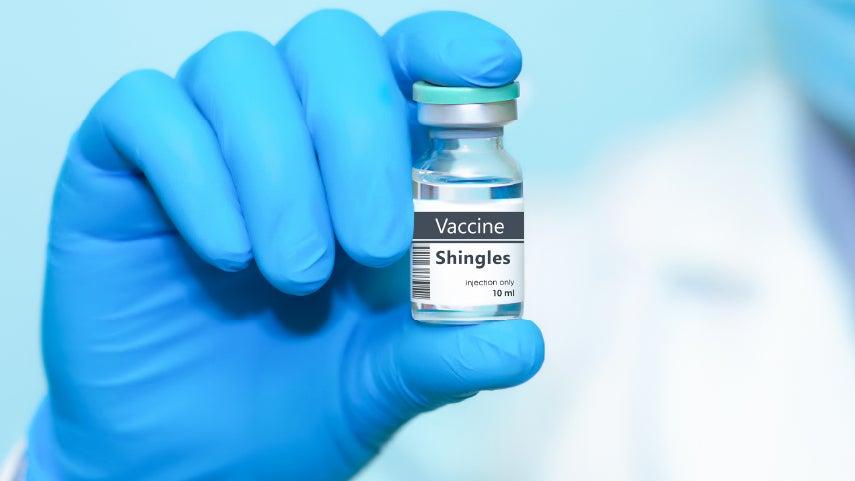
Yes, there is a vaccine available to help prevent shingles and decrease the severity of symptoms if you do get it. The only shingles vaccine used in the United States is Shingrix, approved in 2017 by the U.S. Food and Drug Administration (FDA). It works by boosting your body’s natural immunity, reducing the chances of the varicella-zoster virus reactivating and causing the shingles rash.
In terms of effectiveness, Shingrix is considered a significant improvement over the older Zostavax vaccine. Zostavax is no longer available in the U.S. after being discontinued in 2020.
What's the best age to get a shingles shot?
The Centers for Disease Control and Prevention (CDC) recommends two doses of Shingrix separated by two to six months for healthy adults age 50+.
Vaccination is also recommended for some adults age 19 and older who have weakened immune systems. People who are immunocompromised can receive their second dose of Shingrix one to two months after the first dose.
Some things to keep in mind when considering Shingrix:
- You don't need to know whether you've had chickenpox before getting Shingrix. Many adults who had chickenpox as children don't remember having it.
- You should get the two-dose shingles vaccine even if you were previously vaccinated with Zostavax.
- What if you’ve already had shingles? Even if you’ve suffered an episode previously, you can still benefit from getting vaccinated since you can get shingles more than once.
How effective is the shingles vaccine?
According to research reported by CDC, this two-dose shingles vaccine was 97% effective in preventing shingles in adults age 50 to 69 with healthy immune systems. In people age 70 and older, the vaccine was 91% effective.1 In adults with weakened immune systems, Shingrix was 68% to 91% effective in preventing shingles, depending on underlying medical conditions.1
Zostavax, on the other hand, provided strong effectiveness against shingles in the first year (67%), but dropped to just 50% efficacy the second year.2
How long does the shingles vaccine last?
Shingrix is highly effective, with protection lasting for several years. But this protection may not last for your entire life. Immunity from the shingles vaccine series lessens over time, but it does so very gradually.
Studies have shown that among people age 70 and older, Shingrix provides at least 85% protection against shingles for up to four years after completing the two-dose series,3 and remains high for at least seven years.3
Newer research offers even better news: Researchers followed clinical trial participants for several years after initial vaccination with Shingrix. They found that this shingles vaccine had nearly 80% efficacy in participants age 50 and older for up to 11 years after vaccination.4
It’s important to remember there are a variety of factors that affect vaccine efficacy for each person, such as age and overall health. “All vaccines are most effective just after they have been given,” Linda Yancey, MD, an infectious disease specialist at Memorial Hermann Health System in Houston, told Verywell Health.
There is no one answer to the question of how long a vaccine is effective. It is going to vary from person to person,” Yancey said.
Do you need a shingles vaccine booster?
No. Until further research suggests otherwise, older adults generally only need to get the two-dose shingles vaccine once. No Shingrix vaccine booster is currently available. Recommendations and the availability of boosters could change as scientists learn more about how long protection from the shingles vaccine lasts.
Why is the shingles vaccine important for older adults?
For older adults, the two-dose shingles vaccine provides several critical benefits in addition to lasting protection:
- Prevents a painful condition: The shingles rash can cause severe discomfort, with symptoms ranging from itching and burning to intense pain. This pain can last for months or even years, especially in cases of PHN, which is caused by damage to nerve fibers during an active shingles infection. PHN affects roughly 10% to 18% of people who have shingles.5 Shingles pain often requires the use of over-the-counter or prescription pain relievers, which can be a concern for some older adults with other health conditions, leading to drug interactions and side effects. Also, pain can impact our ability to carry out daily activities and impact our quality of life.
- Decreases the chances of shingles spreading: Is shingles contagious? While the illness itself is not contagious in the same way a cold or the flu is, the virus that causes shingles is transmissible. Someone with shingles can spread the virus that causes shingles to someone who has never had chickenpox or has never vaccinated against chickenpox. Getting the two-dose vaccine is your best strategy for shingles prevention.
- Reduces the risk of other complications: In addition to long-term nerve pain from PHN, complications from shingles can include skin scarring and vision problems (if the shingles rash occurs near the eyes). Shingles can also lead to serious infections in rare cases, which may require hospitalization.
- May help prevent dementia: Older adults who received at least one dose of the Shingrix vaccine after leaving a skilled nursing facility had a 24% lower risk of being diagnosed with dementia over the next four years than those who were not vaccinated.6 These findings from a 2026 study add to growing scientific evidence that shingles vaccine components may hold promise for preventing or slowing cognitive decline.
- May help prevent heart attack and stroke: A 2026 study found that adults with heart disease who received the shingles vaccine had almost half the risk of serious heart-related events over the next year compared with those who remained unvaccinated.7 This echoed the findings of a previous study, which showed that adults who received the two-dose shingles vaccine had a lower risk of stroke and heart attack compared to those who didn’t.8
- May help slow biological aging: Researchers studied health data from more than 3,800 adults age 70 and older. They found that people who received a shingles vaccine showed slower biological aging than those who were not vaccinated, even after accounting for differences in age, health, and other factors.9
The benefits of the two-dose shingles vaccine far outweigh the minimal risks for older adults. Plus, unlike an annual flu or COVID vaccine, a two-dose Shingrix shot offers solid protection that can last a good decade or more.
What are the side effects of the shingles vaccine?
FDA-approved Shingrix is well-tested and shown to be safe, with few side effects reported. Common shingles shot reactions may include soreness at the injection site, fatigue, or mild flu-like symptoms for a day or two after vaccination. These side effects usually go away in a couple of days, says healthy aging expert Dorothea Vafiadis.
“Shingles can be incredibly painful and even lead to long-term complications that disrupt daily life,” said Dorothea Vafiadis, NCOA Senior Strategist for Healthy Aging. “A brief moment of discomfort from a vaccine is a small price to pay for the peace of mind and protection it provides as we age.”
Where can I get the shingles vaccine?
The two-dose shingles vaccine is widely available in doctor's offices and pharmacies. To find a shingles vaccine provider near you and schedule an appointment, use this shingles vaccine locator tool.
Good news: Shingrix is 100% covered if you have Medicare (Part D) or Medicaid, since it’s recommended for older adults by the Advisory Committee on Immunization Practices (ACIP). This means you won't have to pay a copayment or apply a deductible. The shingles vaccine series is covered by most private insurance plans as well.
Sources
1. Centers For Disease Control and Prevention (CDC). Shingles (Herpes Zoster) - Shingles Vaccination. Found on the internet at https://www.cdc.gov/shingles/vaccines/index.html
2. Kaiser Permanente Division of Research. Study confirms significant waning of original shingles vaccine over 10 years. November 8, 2023. Found on the internet at https://divisionofresearch.kaiserpermanente.org/blog/2023/11/08/waning-original-shingles-vaccine/
3. Immunize.org. Ask the Experts - Zoster (Shingles). Found on the internet at https://www.immunize.org/ask-experts/topic/zoster/
4. GSK. New long-term data show Shingrix continues to provide high protection against shingles in adults aged 50 and over for more than a decade. April 17, 2024. Found on the internet at https://www.gsk.com/en-gb/media/press-releases/new-long-term-data-show-shingrix-continues-to-provide-high-protection-against-shingles-in-adults-aged-50-and-over-for-more-than-a-decade/
5. Centers For Disease Control and Prevention (CDC). Shingles (Herpes Zoster) - Shingles Symptoms and Complications. Found on the internet at https://www.cdc.gov/shingles/vaccines/index.html
6. Kaleen N. Hayes, PharmD, PhD, et. al. Dementia Risk After Recombinant Herpes Zoster Vaccination in Older Adults With a Recent Skilled-Nursing Facility Stay. Annals of Internal Medicine. June 16, 2026. Found on the internet at https://www.acpjournals.org/doi/10.7326/ANNALS-25-04689
7. American College of Cardiology. Shingles Vaccine Drastically Cuts Risk of Serious Cardiac Events. March 17, 2026. Found on the internet at https://www.acc.org/about-acc/press-releases/2026/03/16/19/33/shingles-vaccine-drastically-cuts-risk-of-serious-cardiac-events
8. University of Minnesota CIDRAP. Shingles vaccine linked to lower heart attack, stroke risk. August 28, 2025. Found on the internet at https://www.cidrap.umn.edu/misc-emerging-topics/shingles-vaccine-linked-lower-heart-attack-stroke-risk
9. Jung Ki Kim, PhD, et. al. Association between shingles vaccination and slower biological aging: evidence from a US population-based cohort study. The Journals of Gerontology Series A. January 20, 2026. Found on the internet at https://academic.oup.com/biomedgerontology/article/81/3/glag008/8430804?login=false#google_vignette
Funding for This Resource Made Possible By Our Partner
More Ways to Manage Your Health
Get information on prevention and how to manage ongoing health conditions focused on physical and mental health. From exercise tips to diet and nutrition, this is your one-stop shop for caring for yourself and loved ones.