
The Best Mattresses Without Fiberglass in 2026
Fiberglass is a common fire-resistant material in mattresses. Learn why some people avoid it and see our top picks for the best mattresses without fiberglass.
- The best mattress overall without fiberglass and other harsh chemicals is the Bear Elite Hybrid because it’s well-made and supportive. Bear mattresses are made in a U.S.-based, fiberglass-free factory
- The mattresses in this guide range from $998–$2,499 for a queen size (before discounts).
- Third-party certifications do not guarantee that a mattress is free of fiberglass.
- The best fiberglass-free mattresses combine material transparency with strong support, pressure relief, and cooling.
- Fiberglass-free mattresses are available in both budget-friendly and premium options, including all-foam and hybrid designs.
NCOA supports everyone’s right to age well. We take the time to research, test, and recommend products that can help you live a healthier life. We’ve spent more than 2,500 hours researching and testing mattresses to give you the most accurate product reviews. To find the best mattresses, we:
- Consulted with sleep specialists like doctors, occupational therapists, and physical therapists for guidance on choosing the best mattress
- Put more than 130 models through a series of 19 different tests at our in-house lab
- Mystery-shopped more than 40 brands
- Surveyed more than 2,000 older adults on their sleep quality
- Interviewed experts on the importance of good sleep for older adults
- Worked with older adult testers to evaluate mattresses and get their opinion
- Read thousands of verified customer reviews
We’re constantly testing new mattresses and sleep products to give you the most accurate and up-to-date recommendations. Read more about our mattress review methodology.
Most of us think of our beds as sanctuaries, not hidden home hazards. You may not know it, but mattresses must legally meet product safety standards. One of these standards is that beds must be made with fire-resistant materials, such as fiberglass.
This is important for older adults. According to the U.S. Consumer Product Safety Commission, older Americans are more than three times as likely to die in a home fire compared to the rest of the population.1
Recently, concerns about the safety of this material have led some shoppers to look for the best mattresses without fiberglass. A mattress might have fiberglass in its foam, cover, or both. “Fiberglass mattresses are generally affordable and safe,” said Michael Chary, MD, PhD, assistant professor in emergency medicine at Weill Cornell Medicine and co-director of Poison Control.
But poorly made mattresses that lack quality controls or are not properly cared for can release fiberglass fibers into the air. Even short-term exposure can irritate the skin, eyes, and upper respiratory tract, which is one reason California has banned mattresses made with fiberglass (starting in January 2027). While well-constructed fiberglass mattresses can still meet safety standards, some people might prefer to avoid the material altogether.
If you want to minimize your risk, there are mattresses made with alternative fire-safe materials, such as wool, thistle pulp, or silica-coated rayon, said Dr. Chary. Our guide explores these options and highlights the top mattresses that are completely fiberglass-free.
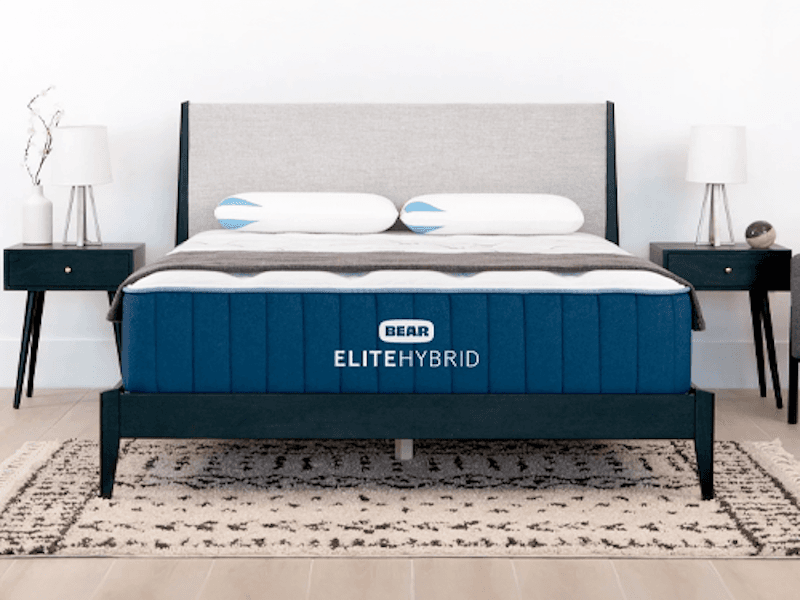
Best Overall
Bear Elite Hybrid
U.S.-made construction process verified as fiberglass-free; uses CertiPUR-US and Greenguard Gold certified foams
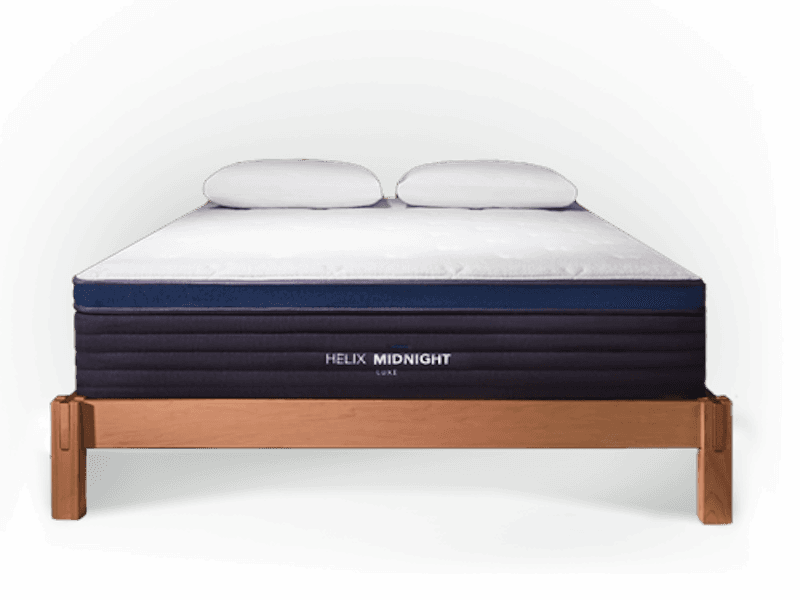
Best Hybrid
Helix Midnight Luxe
All Helix foams are Greenguard Gold certified for low VOC emissions; fiberglass-free, using a rayon-based fire barrier instead
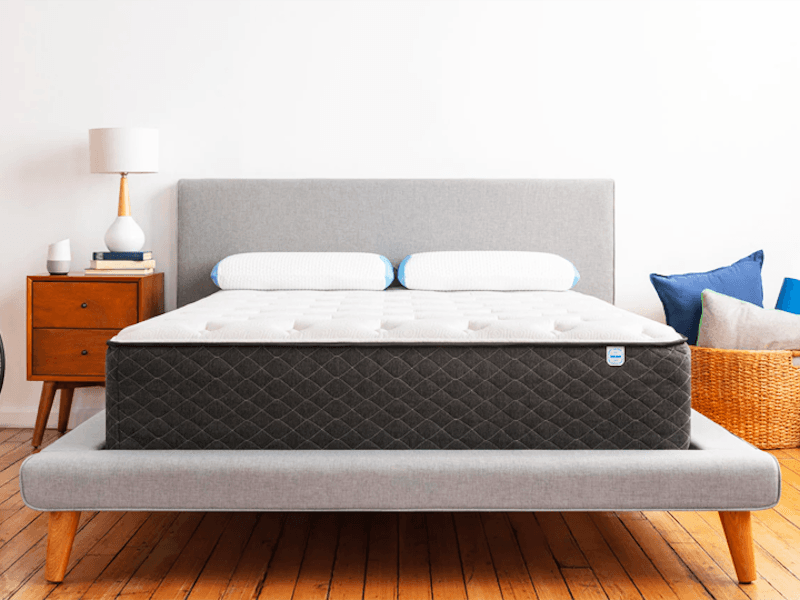
Best Affordable
Bear Original
Uses firm and supportive memory foam for contouring and motion isolation; made in a U.S.-based, fiberglass-free facility
Best mattresses without fiberglass in 2026
- Bear Elite Hybrid: Best Overall
- Helix Midnight Luxe: Best Hybrid Mattress Without Fiberglass
- Bear Original: Best Affordable Mattress Without Fiberglass
- Nolah Evolution: Best Mattress Without Fiberglass for Couples
- Birch Natural: Best Mattress Without Fiberglass for Side Sleepers
Need help picking out the right mattress?
Answer 3 simple questions to find a mattress that meets your needs.
The best mattresses without fiberglass compared
| Comparison Features | |||||
|---|---|---|---|---|---|
| Score (out of 10) | 7.9 |
9 |
8.5 |
9.2 |
9.2 |
| Best for | Best Overall |
Hybrid |
Most Affordable |
Couples |
Side Sleeping |
| Brand firmness rating | 6/10 |
6/10 |
7.1/10 |
6.5/10 |
6.5/10 |
| Trial period (nights) | 120 |
120 |
120 |
120 |
120 |
*Ratings reflect a brand's overall offering; the best overall pick doesn't necessarily have the highest score

Understanding accessibility and pain relief scores
Based on our testing, surveys, and focus groups with older adults, we created these two scores:
- Accessibility score: The higher the score, the easier it is to get in and out of the bed and change positions.
- Pain relief score: The higher the score, the more likely it can help relieve pain.
How we tested the best mattresses without fiberglass
We assessed the following features when testing the best mattresses without fiberglass:
Bear Elite Hybrid: Best Overall Mattress Without Fiberglass
The Bear Elite Hybrid Firm is our pick for the Best Overall Mattress Without Fiberglass because of its quality construction, transparency about materials, and solid performance in our testing. The Bear Elite Hybrid feels soft and luxurious while still being supportive, cool, and eco-friendly.
- Bear Review
- Assembled in a fiberglass-free factory in the United States
- Uses CertiPUR-US and Greenguard Gold certified materials
- Available in a choice of three firmness options
- Our pain relief score: 3.53/5
- Accessibility score: 3.54/5
- Mattress type: Hybrid
- Brand’s firmness rating 6/10
Pros
- Website is very transparent about materials used
- CertiPUR-US and Greenguard Gold certified
- Copper-infused fibers and heat-wicking material help regulate temperature
- Equal pressure relief for back, side, and stomach sleepers
- Responsive support adapts to changes in position
Cons
- Light sleepers may wake up when a partner moves
- Edges could be more stable
- Mattress is taller than average (14 inches)
Helix Midnight Luxe: Best Hybrid Mattress Without Fiberglass
The Helix Midnight Luxe is our pick for the best hybrid mattress without fiberglass because it earned top scores in our tests for comfort, pressure relief, and support. Instead of fiberglass, Helix uses a fire-resistant foam barrier made from rayon, a plant-based fiber that provides safety without synthetic additives. Helix also makes its mattresses in the United States.
- Helix Review
- Three firmness options
- Strong edge support can help prevent falls
- High pain and pressure relief in all sleeping positions
- Our pain relief score: 4.2/5
- Accessibility score: 4.1/5
- Mattress type: Hybrid
- Brand’s firmness rating: 6/10
Pros
- Great scores for back support (especially with ErgoAlign)
- Promotes spinal alignment
- Excellent temperature regulation and consistent comfort throughout the night
- Customizable firmness and cooling upgrade options
Cons
- No white glove delivery available
- Shorter trial period (100 days) than some other brands
- May be less supportive for people with a higher-than-average body weight
Bear Original: Best Affordable Mattress Without Fiberglass
The Bear Original is our pick for the Best Affordable Mattress Without Fiberglass because it offers great comfort, cooling, and support at a lower price. A queen-size costs less than $1,000, and Bear runs frequent sales of up to 30% off. It can be hard to find a fiberglass-free memory foam mattress, but Bear makes it clear—their U.S. factory is completely fiberglass-free, and the company clearly lists all the materials used in their beds.
- Bear Review
- Assembled in a fiberglass-free factory in the United States
- Exceptional cooling ability
- Supportive of all sleeping positions
- Our pain relief score: 3.4/5
- Accessibility score: 3.5/5
- Mattress type: Memory foam
- Brand’s firmness rating 7.1/10
Pros
- Most affordable mattress on this list
- Superior cooling technology
- Foam contours to support the spine
- Compatible with adjustable beds
Cons
- May not work well for those with limited mobility
- Firmer than other mattresses on this list
- Lack of bounce may make standing from a seated position more difficult
Nolah Evolution: Best Mattress Without Fiberglass for Couples
We chose the Nolah Evolution as the best mattress without fiberglass for couples because it offers exceptional motion isolation, strong pressure relief, and a safe fiberglass-free construction. When you’re trying to find the best mattress without fiberglass for two people, those are key features to keep in mind.

- Nolah Review
- Excellent at containing motion
- Great all-around pressure relief
- Limits heat buildup
- Our pain relief score: 4.31/5
- Accessibility score: 3.96/5
- Mattress type: Hybrid
- Brand’s firmness rating: 6.5/10
Pros
- Excellent motion absorption
- Relieves pressure in all sleeping positions
- Stays cool throughout the night
Cons
- Edges could be firmer for better mobility support
- Memory foam topper may make switching positions difficult
- White glove delivery costs extra
Birch Natural: Best Mattress Without Fiberglass for Side Sleepers
The Birch Natural is our pick for the Best Mattress Without Fiberglass for Side Sleepers because it provides outstanding pressure relief, stable edge support, and uses entirely natural, certified-safe materials. This latex hybrid mattress combines eco-friendly construction with the firm support that side sleepers need to stay comfortable.

- Birch Review
- Balances support and comfort
- Uses natural, eco-friendly materials
- Has stable edges for increased durability
- Good choice for people with allergies or sensitivities
- Our pain relief score: 4.6/5
- Accessibility score: 4.5/5
- Mattress type: Hybrid
- Brand’s firmness rating 6.5/10
Pros
- Stable edges for even weight distribution
- Natural materials wick moisture and help regulate temperature
- Relieved joint pain during side-sleeping tests
Cons
- Does not fully absorb motion from a partner
- May be too firm for some sleepers
- Shorter than average trial period (100 days)
How to verify a mattress is fiberglass-free
It may not always be obvious when a mattress contains fiberglass—or where it’s located. “Probably the best thing to do is look on the tag for two things,” said Dr. Chary. “It should have a blanket statement about it being fire-retardant.” By law, all mattresses sold in the United States must meet federal flammability standards.
The tag should also specify what specific fire barrier material is used. “Avoid terms that include the word ‘glass’ or ‘silica,’” Dr. Chary said. If the tag or label is missing, or if the manufacturer refuses to provide details, that’s a red flag to look elsewhere.
If the label or materials list doesn’t include this information, check the manufacturer’s website or FAQ section; many brands publish full material disclosures online.
Third-party certifications such as Oeko-Tex, GOTS, Greenguard Gold, and CertiPUR-US are valuable, but they do not guarantee that a mattress is fiberglass-free. Instead, these labels indicate that a product meets certain standards for chemical safety, emissions, or environmental sustainability.
Who should consider a fiberglass-free mattress
There’s no evidence that mattresses containing fiberglass are unsafe when used and maintained properly. But some people may want to minimize their risk of exposure because fiberglass is a known irritant. Fiberglass fibers can irritate the skin, eyes, or lungs if they become airborne or come into direct contact with the body. You may want to choose a fiberglass-free mattress if you:
- Have asthma, allergies, sensitive skin, or underlying lung issues since fiberglass particles can aggravate these conditions
- Share a bed with children or pets, because a damaged mattress cover could release fibers, and younger lungs and skin are more sensitive to irritation
- Prefer natural or sustainable materials, such as wool, organic cotton, or latex, which can serve as alternative fire-barrier materials
- Plan to remove or wash your mattress cover frequently (Repeated handling increases the risk of exposing fiberglass layers in certain mattresses)
Who might not need a fiberglass-free bed
In many cases, fiberglass mattresses are safe for typical use and may be a fine choice. You may not need to worry about fiberglass if you:
- Have a limited budget: Fiberglass is often used because it’s affordable and meets safety standards. Fiberglass-free mattresses generally cost more due to the use of alternative materials and the required certifications.
- Keep your mattress cover intact and move or unzip it only rarely: If the cover remains sealed, the odds of fiberglass escaping are very low.
- Value a low-maintenance option: Once set up, fiberglass mattresses typically require no special care.
The best choice depends on your health, household, and budget priorities. If you have respiratory sensitivities or young family members at home, avoiding fiberglass may give you extra peace of mind. Otherwise, a well-made mattress that uses fiberglass safely can still be a sound option.
How much do the best mattresses without fiberglass cost?
The mattresses in this guide range from $998–$2,499 for a queen size (before discounts). A number of factors affect price, including mattress size, materials, certifications, and any additional comfort or cooling features.
| Comparison Features | Bear Elite Hybrid |
Helix Midnight Luxe |
Bear Original |
Nolah Evolution Luxury Firm |
Birch Natural |
|---|---|---|---|---|---|
| Cost for a queen* | $2,284 |
$2,499 |
$998 |
$2,277 |
$1,865 |
| Shipping costs | None |
None |
None |
None |
None |
| White glove delivery available? | Yes, $175 for mattress install and old mattress removal |
No |
Yes, fee list here |
Yes, free for orders $1,500 and more, $199 for orders under $1,500 |
Yes, $199 for mattress install and old mattress removal |
| Warranty length | Limited lifetime |
Limited lifetime |
Limited lifetime |
Limited lifetime |
Limited lifetime |
| Return fees | None |
None |
None |
$99 return fee |
$99 return fee |
*Most mattress brands run frequent or ongoing promotions. Sale prices are typically lower and may change often.
Maintenance and care for mattresses made with fiberglass
Generally, mattresses containing fiberglass are low risk when properly handled, especially if the fiberglass is sealed inside the mattress cover and not exposed to the skin or air. “The data to date indicate that fiberglass is more of an irritant than an allergen,” said Dr. Chary.
If a mattress or its cover is damaged by a cut, tear, or burn, it’s safest to replace it rather than try to repair it. Fiberglass fibers can escape, and repeated exposure may cause irritation to the skin, eyes, or upper respiratory tract.
“Like breathing any dust,” Dr. Chary said, “exposure to fiberglass may trigger mild coughing, throat irritation, or worsen asthma symptoms in sensitive individuals.”
To keep any mattress in good condition, fiberglass-free or otherwise, you can follow these care tips:
- Use a mattress protector or encasement to reduce wear and tear and prevent dust buildup.
- Vacuum your mattress surface periodically using a handheld or upholstery attachment to remove dust and debris.
- Spot-clean stains only as directed by the manufacturer. Avoid saturating the surface or using harsh chemicals that may break down protective materials.
- Avoid removing or machine washing a mattress cover unless the label explicitly says it’s removable and washable.
- Rotate your mattress every 3–6 months to evenly distribute wear.
If you’re concerned that your mattress may contain fiberglass, a mattress cover or topper can add an extra barrier of safety and comfort.
Frequently asked questions
How do I know if a mattress has fiberglass?
To learn if a mattress contains fiberglass, check the product tag or the manufacturer’s materials list online. Look for any mention of “fiberglass,” “glass fiber,” or “silica.” If the tag or description is missing, contact the company directly for clarification before purchasing.
Are fiberglass-free mattresses safer?
Fiberglass-free mattresses are not automatically safer, but they can reduce the risk of irritation if a mattress cover is damaged. All mattresses sold in the U.S. must meet federal fire safety standards, whether they use fiberglass or an alternative barrier.
What fire barrier materials are used instead of fiberglass?
Common alternatives include wool, rayon blended with silica, thistle pulp, and other plant-based or inherently fire-resistant fabrics. These materials meet safety standards without using glass fibers.
Can I remove my mattress cover to wash it?
Always read the care label first. If the tag says “do not remove,” keep the cover on to avoid exposing internal fire barriers. For washable covers, follow the manufacturer’s directions carefully and avoid high heat or harsh detergents, as they can damage protective layers.
Do certifications prove a mattress is fiberglass-free?
No. Certifications like CertiPUR-US, GOTS, or Greenguard Gold confirm that a mattress meets specific chemical or environmental standards, but they don’t guarantee the absence of fiberglass. Check the product’s label or manufacturer’s materials disclosure for confirmation.
Questions? Email us at reviewsteam@ncoa.org.