
Medical Guardian Review 2026: Tested for Wearability and Response Time
Our testers liked Medical Guardian’s fast response times, trusted fall detection, and long battery life.
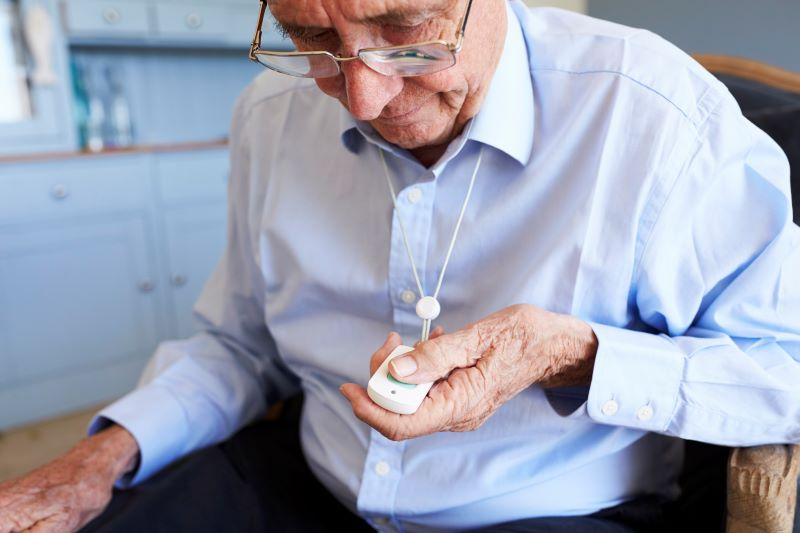
- Medical Guardian is NCOA’s top pick for medical alert systems, earning a 9.9/10 in testing for its fast response times, helpful features, and ease of use.
- Medical Guardian devices range from $31.95–$49.95 a month, though you can lower your monthly fee by purchasing a quarterly or annual subscription.
- With four devices available—including in-home systems, mobile, and smartwatch-style models—Medical Guardian offers options for different lifestyles and care needs.
- The main drawbacks are cost and flexibility: Medical Guardian is pricier than some competitors and does not offer a trial period.
- Medical Guardian is a strong choice for those seeking a user-friendly system with premium features, but the higher total cost may be a drawback for budget-conscious shoppers.
At NCOA, we take the time to research, test, and recommend products that can help you live a healthier life. We’ve spent over 3,000 hours researching medical alert systems to give you the most accurate product reviews. To find the best medical alert systems, we:
- Put each medical alert system through our rigorous testing process at our in-house lab
- Consulted doctors and licensed adult caregivers who specialize in working with older adults
- Mystery shopped more than 15 brands
- Surveyed over 1,000 medical alert system users
- Tested 35 medical alert systems
- Read thousands of verified customer reviews
We’re constantly testing new medical alert systems to continue to share the most accurate and up-to-date recommendations.
Read more about our medical alert system review methodology.
Medical Guardian is our pick for the best medical alert system. It has a unique range of safety features, a large selection of features and prices, and the highest overall score from our firsthand testing.
The company offers four devices: The MGHome Landline, MGHome Cellular, the Guardian Flex, and the MGMove. In this Medical Guardian review, we’ll show you how these devices performed in our testing, which features we recommend, and what you should consider when choosing a medical alert system.
Why Medical Guardian is our top pick
We chose Medical Guardian as our best overall medical alert system because it has one of the fastest average response times, a long battery life, a great mix of helpful features, and a variety of device types and styles. When we evaluated features and tested the devices ourselves, we gave Medical Guardian a score of 9.9/10.
Top Pick
Medical Guardian
Fast response times and the longest in-home device range
NCOA exclusive discount
Free equipment with the code: NCOAFREE
Medical Guardian devices compared
| Comparison Features | ||||
|---|---|---|---|---|
| Device type | At-home |
At-home |
Mobile |
Mobile |
| Max. battery life | N/A |
N/A |
5 days |
24 hours |
| Charging time | N/A |
N/A |
2 hours |
1–2 hours |
| GPS tracking | No |
No |
Yes |
Yes |
| Standout feature | Landline-based, least expensive |
LTE-based, syncs with necklace or wristband |
Smallest and lightest device |
Smartwatch with touch screen |
Our Medical Guardian video review
If you're interested in learning more about Medical Guardian, check out our video review below. You can see how the brand's devices work, who can benefit most, and why we recommend them. What you see in this article may be slightly different from what we've reviewed on video. Details like pricing can change over time, and our team is always testing new models.
How we tested Medical Guardian devices
When testing medical alert systems, we did hands-on research. We also looked at customer reviews and sought expert guidance. Our process focuses on what matters most: managing fall risk and a speedy response time. We examined how medical alert features work with mobility and dexterity challenges and chronic illnesses.
Our testing includes more than 60 data points across factors like:
Medical Guardian reviews by device
MGHome Landline
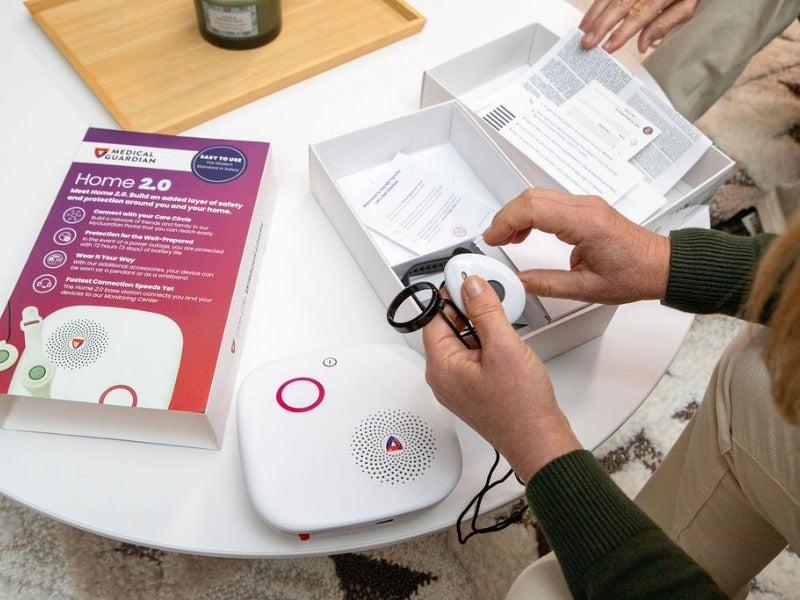
The MGHome Landline is the most affordable, base-level option Medical Guardian offers. It uses a landline to connect to the monitoring center. The MGHome Landline comes with a wristband or necklace help button that connects to the in-home base unit. If you’re looking for a reliable, basic, and cost-effective medical alert device and have a landline, the classic MGHome Landline device could be a good choice.
MGHome Landline
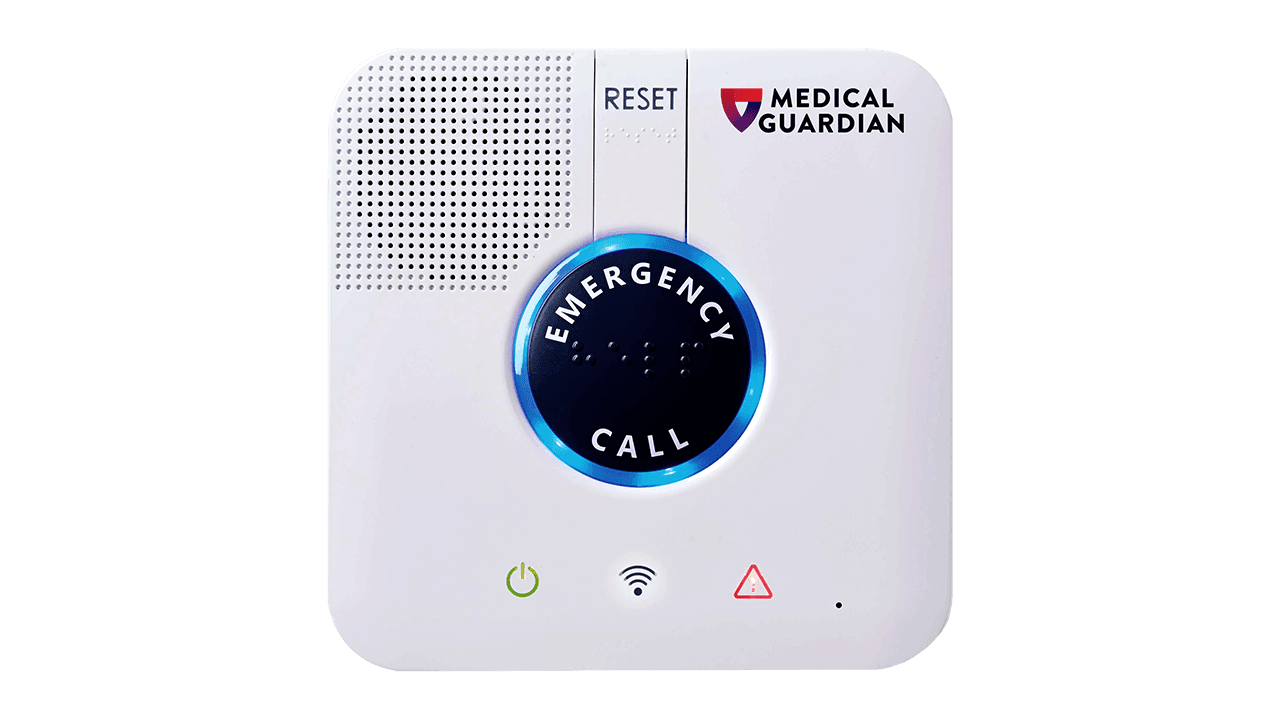
- Device type: At-home
- Device range: 1,400 feet
- Fall detection available: Yes
- Average response time: 36 seconds
- Max. battery life: Plugs in, but backup battery lasts 32 hours in a power outage
- GPS tracking: No
- Caregiver alerts: Yes, for an extra fee
- Connection type: Landline
- Water-resistant button can be worn in the shower
Pros
- Strong backup battery life
- Fast monitoring center response time
- Voice Assist compatibility
- Long in-home device range
Cons
- Hefty $149.95 equipment fee
- Canceling calls can be tricky
- More expensive than some competitors
MGHome Cellular
The MGHome Cellular is another in-home model offered by Medical Guardian, but instead of a landline connection, it runs on cellular service. It also includes Voice Assist technology. The MGHome is $7 more per month than the MGHome Landline, but the extra features (and the LTE connection) may be worth it.
MGHome Cellular
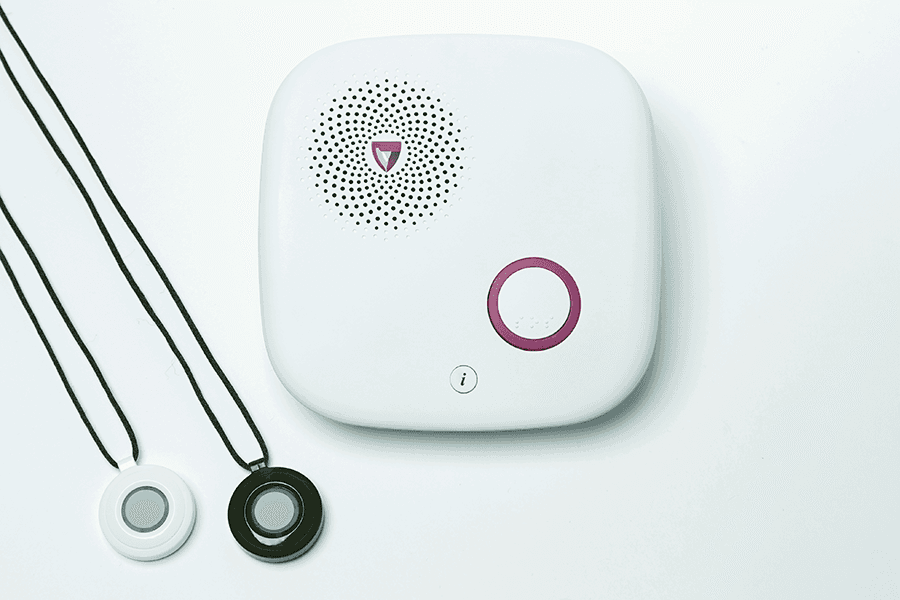
- Device type: At-home cellular
- Device range: 1,400 feet
- Fall detection available: Yes
- Average response time: 36 seconds
- Max. battery life: Plugs in, but backup battery lasts 32 hours in a power outage
- GPS tracking: No
- Caregiver alerts: Yes, for an extra fee
- Connection type: LTE and Wi-Fi
- Water-resistant button can be worn in the shower
Pros
- Works on 4G network
- Voice Assist capability
- Swap between a wristband and a necklace
- Testers loved the simple setup
Cons
- $7 more per month than the MGHome Landline
- $149.95 equipment fee
- App registration may be clunky for some
Guardian Flex
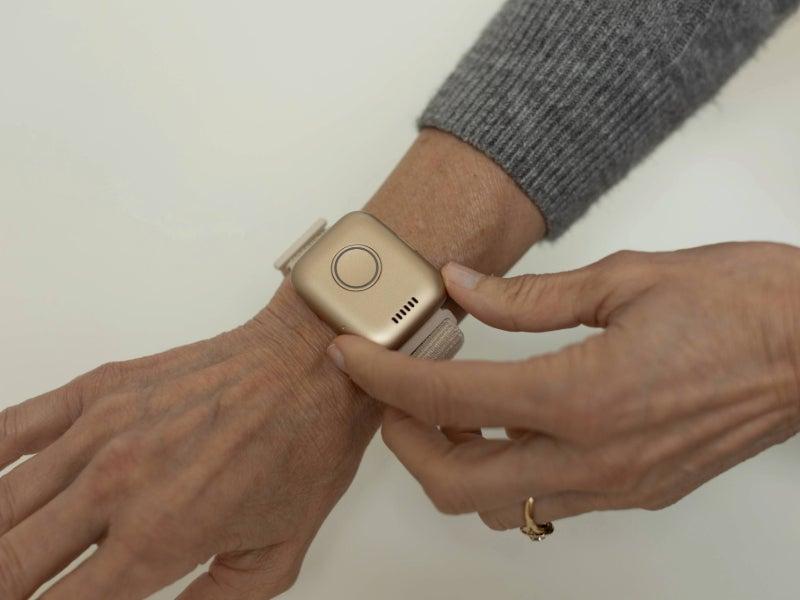
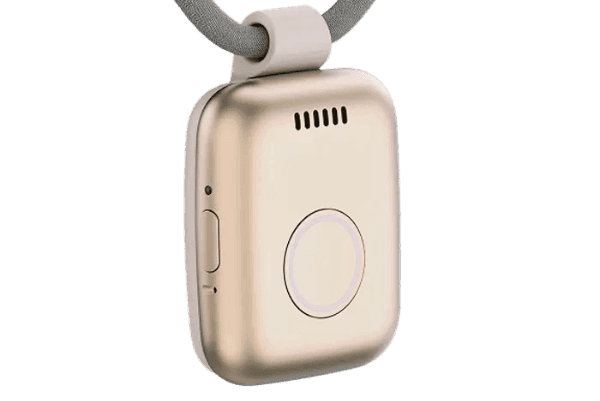
The Guardian Flex is the GPS-enabled Mobile device in the Medical Guardian lineup. It’s a sleek, small square that replaces both the MGMini and the MGMini Lite. The Flex lacks a screen, but doubles as a pedometer. Our testers were impressed by the range of personalization options. The Guardian Flex comes in three colors, with two choices each for wristbands and lanyards.
Guardian Flex
- Device type: GPS mobile
- Max. battery life: 5 days
- Fall detection available: Yes
- Average response time: 15 seconds
- Device range: Unlimited
- GPS tracking: Yes
- Caregiver alerts: Yes, for an extra fee
- Connection type: LTE and Wi-Fi
- Wristband, lanyard, and belt clip options
Pros
- Fast response time
- Clear audio quality
- Discreet and stylish
- Dexterity-friendly
Cons
- No official help button testing mode
- Testers found it hard to tell battery level
- One of the less affordable Medical Guardian offerings
MGMove
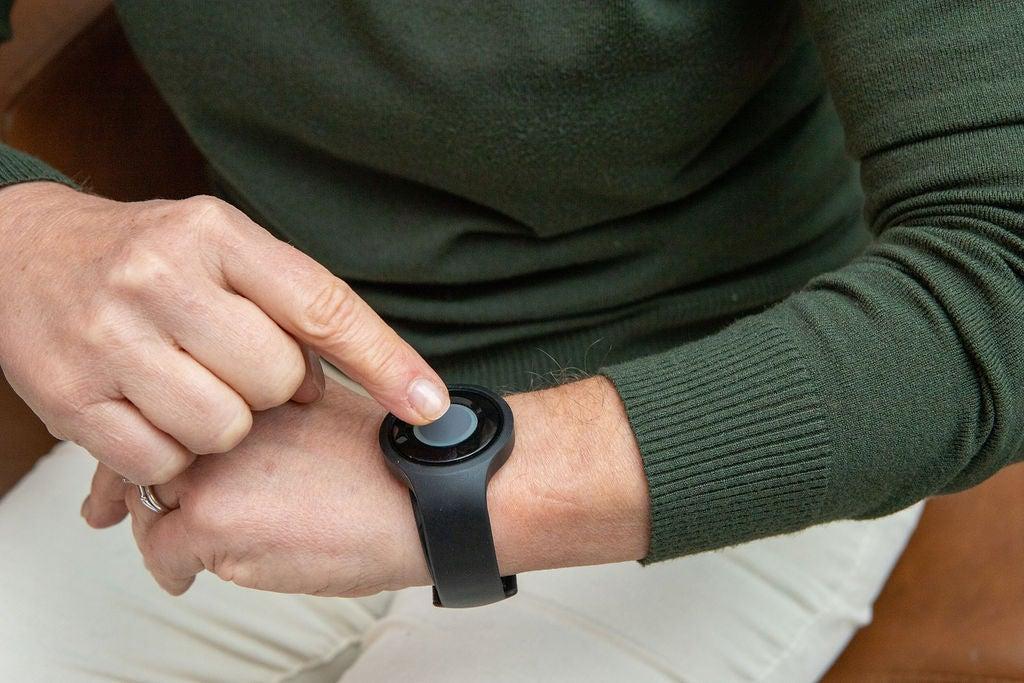
The MGMove is Medical Guardian’s only smartwatch. For active users, it includes apps to track your steps, monitor the weather, and more. It’s Medical Guardian's most advanced device and the only one with a touchscreen. It's also one of our picks for the best medical alert watches.
MGMove
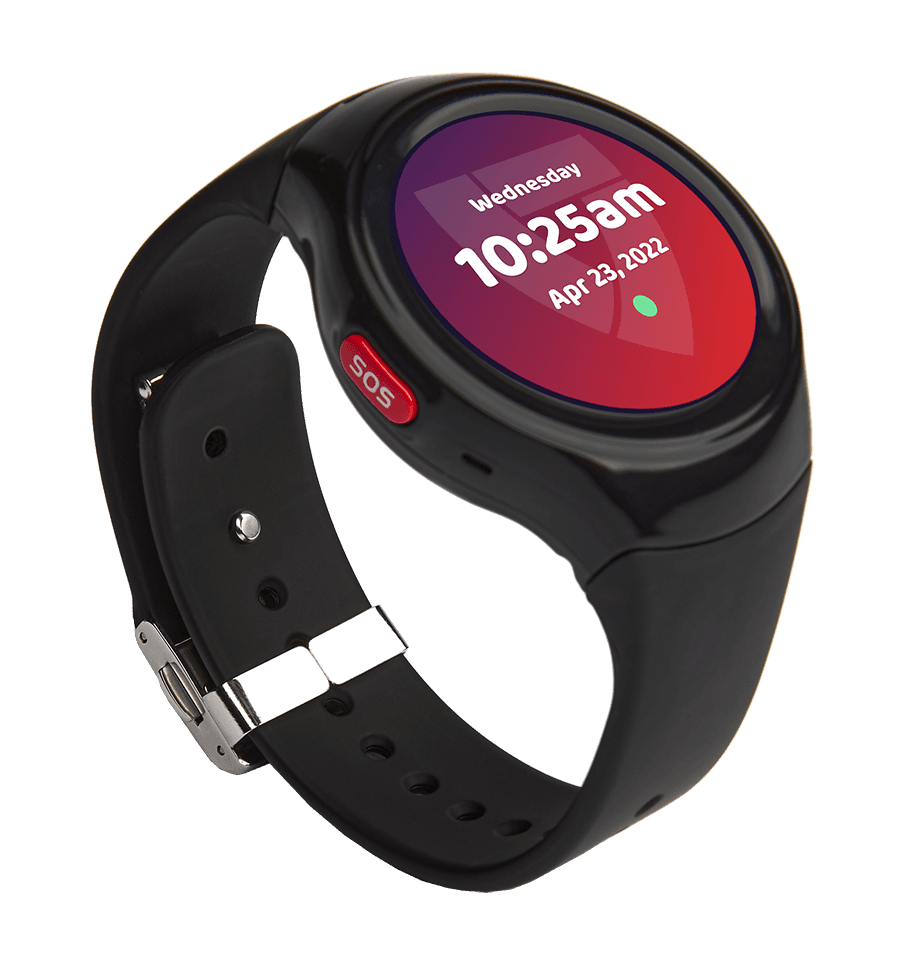
- Device type: GPS smartwatch
- Max. battery life: 24 hours
- GPS tracking: Yes
- Average response time: 20 seconds
- Device range: Unlimited
- Connection type: LTE, GPS, and Wi-Fi
- Extra features: Weather, step, and activity tracking
- Water-resistant device that can be worn in the shower
Pros
- Fast response time
- Charges fast
- Includes pedometer and weather app
- Separate testing button
Cons
- No Velcro wristband option
- Shorter battery life (24 hours)
- Expensive
Medical Guardian vs. Life Alert
You may know Life Alert from its famous commercials with the tagline, “Help! I’ve fallen and I can’t get up!” While it’s one of the most recognizable brands in the medical alert space, our team does not recommend it.
Life Alert tends to be more expensive and offers fewer features compared to Medical Guardian. For example, Life Alert does not provide automatic fall detection, even as an add-on. Its base system range also maxes out at 1,000 feet, which is shorter than what many competitors now offer.
Another drawback is accessibility. Life Alert’s website provides limited information about its products, and orders cannot be placed online. Instead, you’ll need to call to request a brochure and then order over the phone. Plus, Life Alert requires a three-year contract with very few cancellation options, locking customers in long-term.
Medical Guardian, on the other hand, offers more clarity and flexibility. You can view product details and order directly online, and there are no long-term contracts—meaning you can cancel at any time without penalty. Check out our Medical Care Alert vs Medical Guardian comparison or our Medical Alert vs Medical Guardian review to see Medical Guardian compared to another top competitor.
Comparing Life Alert to Medical Guardian
| Medical Guardian | Life Alert | |
| Starting monthly fee | $31.95 | $69 |
| Device range | 1,400 feet | 800 feet |
| Battery life | Up to 5 days | Up to 10 years |
| Fall detection | Yes | No |
| Location tracking | Yes | No |
How much do Medical Guardian devices cost?
Medical alert system costs include any initial fees, monthly subscription fees, and add-on fees. Medical Guardian's starting monthly cost ranges from $31.95–$49.95, depending on the system and your subscription.
Service fees are separate from equipment fees. The one-time equipment fee for the Guardian Flex is $149.95. This number does not lower when you select the annual payment plan, but the monthly price will be less expensive if you opt for a quarterly or annual subscription
| Comparison Features | MGHome Landline |
MGHome Cellular |
Guardian Flex |
MGMove |
|---|---|---|---|---|
| Starting monthly cost | $31.95 |
$38.95 |
$44.95 |
$49.95 |
| One-time equipment fees | $149.95 |
$149.95 |
$149.95 |
$199.95 |
How to save money on Medical Guardian devices
You can save money on Medical Guardian alert systems by choosing annual plans instead of monthly subscriptions. Most companies offer discounts for upfront payments. For instance, the MGHome Landline alert system costs $31.95 for a monthly subscription. But if you pay in full—$335.40—it works out to $27.95 a month, saving you $48 a year.
“Look into discounts through community organizations, veterans' groups, senior centers, or local agencies on aging to also help lower medical alert system costs,” said Celina Hawthorne, OTR, OTD, OTA, a doctor of physical therapy and founder and director of Grace in Motion Rehab in Nacogdoches, Texas.
Medical Guardian and other medical alert systems aren’t typically covered under Medicare or Medicaid. Some private insurance does provide full or partial coverage, including some Medicare Advantage (Part C) plans. You also may be able to pay for a medical alert system with your health savings account (HSA) or flexible spending account (FSA). Medical Guardian runs occasional promotions that may lower costs.
Medical Guardian accessories and options
Medical Guardian offers a range of accessories and services for an additional monthly fee. These options can be used to customize your system to better suit your needs. When looking through reviews of Medical Guardian, we found many customers were pleased with the add-on options, features that also impressed our testers. Some of Medical Guardian’s optional services and devices include:
Fall detection
A fall detection necklace can detect a fall and alert the monitoring center if you are unable to press the help button. Medical Guardian's fall detection costs an extra $10 a month.
The longer a fall goes unattended the greater the risk of a serious medical condition, a head bleed, a broken bone, a seizure, a stroke, etc.”
—Karl Knopf, MA, Ed.D, author, founder and former president of the Fitness Educators of Older Adults
Wireless wall buttons
Medical Guardian users can add wireless wall buttons to their plan for $2.99 a month, or $5.00 a month for the voice-activated wall button. This option works well for those who don't want to wear a button at home. If you feel you only need wall buttons for your home, check out our GetSafe review for a less expensive option with voice-activated wall buttons.
Caregiver alerts
Medical Guardian's alert system, On-Guard, can also reach out to your emergency contacts in real time, 24/7. This caregiver feature is available through the app. Users can expect to pay $2.99 a month for this feature.
Social Circle App
Only available on the MGMove smartwatch, the Social Circle app lets you chat with family and caregivers directly from the watch. This feature is similar to how nonmedical smartwatches let you text off your wrist. Social Circle costs $5 a month.
Protection plan
Medical Guardian includes a one-year manufacturer's warranty covering product defects. Users can purchase a monthly protection plan for an extra fee. This covers you if your devices are misplaced, damaged, or stolen. It costs users an extra $6.99 a month.
Lockbox
A lockbox allows emergency services to enter the code given by the monitoring company when you need help. It lets emergency workers into the home without breaking down your door or breaking a window if you can’t get to the door. Adding a lockbox to your plan costs $2.99 per month, but it’s free with an annual subscription.
The Medical Guardian user experience
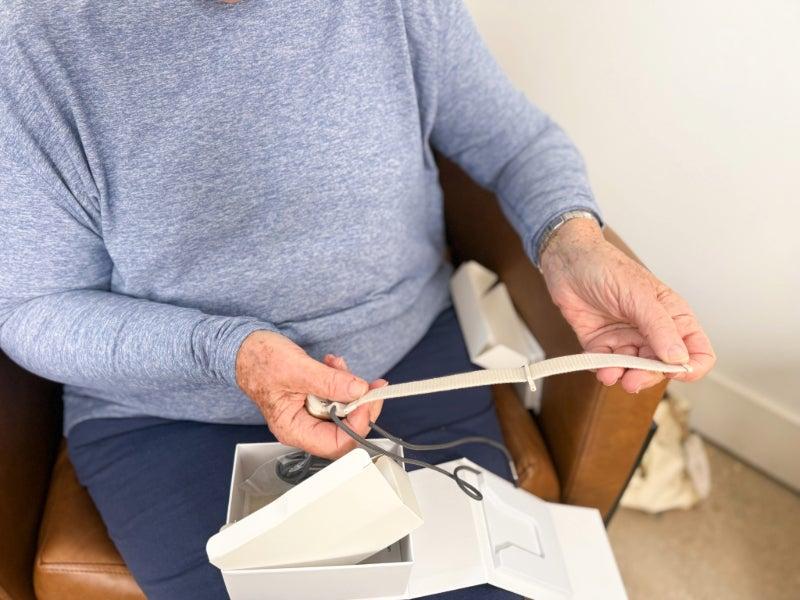
Overall, the setup process was straightforward and mostly intuitive for our testers. We liked that some models included images in the user manual. The devices were easy to use, and we found the monitoring center operators responsive and friendly. The reviews of Medical Guardian we scoured online agree: the majority of customers say they were happy with their devices and services.
“The whole unboxing and setup process was simple and straightforward,” one of our testers said. While the MGHome units might be a bit tougher to connect, our testing team gave the Medical Guardian GPS wearables 5s across the board for setup.

Who benefits most from using a medical alert system?
“I have found that they are useful to almost anyone who is at risk of falling or has a medical concern or mobility issue. Even if you don't live alone, you might at some point be alone while your spouse or significant other is out shopping or on a trip. Thus, if you can't make it to the phone, you might be lying in a dangerous or uncomfortable position, and you could definitely benefit from the medical alert system.”
—Karl Knopf, MA, Ed.D, author, founder and former president of the Fitness Educators of Older Adults
Battery life varies by device. In the on-the-go systems, battery life ranged from 24 hours in the MGMove to up to 5 days in the Guardian Flex before needing to be recharged. The MGMove smartwatch is intuitive, with simple bubbles on the watch face that you can use to call for help, test the device, or use the apps.
The Guardian Flex and MGMove use GPS for location tracking. The home devices offer a range of 1,400.
Medical Guardian’s customer service and warranty
- Warranty and trial period: Medical Guardian’s one-year manufacturer’s warranty will replace your device if it’s defective. The warranty doesn’t cover spills, drops, or normal wear and tear damage. Medical Guardian doesn’t offer a free trial period.
- Returns: You can cancel your service anytime with no cancellation fees. If you cancel an annual plan, the company will prorate your refund for the months you didn’t use, with a possible restocking fee. You’ll need to return any unpurchased equipment to Medical Guardian when you’re no longer using the service.
- Customer service: Visit the Medical Guardian customer support page to fill out an online contact form, call, or send an email.
- Phone: 800-313-1191, Monday through Friday from 8 a.m to 8 p.m. ET, and Saturday through Sunday from 9 a.m. to 5 p.m. ET (Technical support only)
- Email: info@medicalguardian.com
- Chat: Found in the lower right-hand corner of the website to answer your questions or provide resources. It’s automated, so you can’t directly chat with a live person right away.
Who should consider a Medical Guardian device?
You can choose from four Medical Guardian devices. Each device is worn differently and offers its own features. Think about your lifestyle: Do you like to be at home? Are you searching for a basic device where you can call for help when it’s needed most? Or are you looking for a device that blends in seamlessly as you’re out and about, at the gym, or shopping?
You’ll also want to consider your budget and any special concerns you may have. Do you have health conditions that could increase your risk for a fall? Are you comfortable with technology? Considering these factors will help you choose the right option for your needs.
Before purchasing a medical alert system like Medical Guardian, ask yourself:
- How much do I want to spend on a medical alert system?
- Am I more of a homebody, or do I like to be on the go?
- What features are important to me?
- What features would my loved ones find important?
- How much technology do I want to have?
- What type of signal coverage do I have in my home or area?
If you’re buying a medical alert for someone you care for, see our guide for how to talk about medical alert systems.
Frequently asked questions
What are the upfront costs of a Medical Guardian System?
Depending on the system, you’ll pay between $31.95–$49.95 a month for a Medical Guardian subscription. The subscription pays for 24/7 professional monitoring. You'll also pay a one-time equipment fee of $149.95–$199.95, depending on the Medical Guardian device you choose.
How long is the response time for Medical Guardian?
The Guardian Flex had the fastest response time, at 15 seconds. When we test medical alert devices, anything below 60 seconds is a “good” response time. The Medical Guardian family of devices connects to the monitoring center in an average of 30 seconds.
How does Medical Guardian work?
If you need help, such as after a fall, you can press your help button on your Medical Guardian device, alerting the monitoring center, which is staffed 24/7. A professionally trained staff member will speak with you through the device to determine the level of help you need. Then, they will contact the appropriate help for you.
If you choose a fall detection device, it can automatically detect your fall and call for help. If you cannot communicate with the monitoring center, they will send out help to ensure you’re safe.
Will Medicare or insurance cover a medical guardian alert?
Medicare doesn’t cover Medical Guardian or any medical alert devices. But you may be able to get some coverage with private insurance, including Medicare Advantage (Part C) plans.
Is Medical Guardian worth it?
Medical Guardian can be worth it for peace of mind. It’s reassuring to know help will come if needed during an emergency such as a fall. It’s a little more expensive than other medical alert brands, such as MobileHelp. Medical Guardian costs less than other brands, like Life Alert, which is more expensive and has questionable practices. Medical Guardian provides a range of devices from home systems to on-the-go watches.
Questions? Email us at reviewsteam@ncoa.org.