
Linner Hearing Aids Review
Linner hearing aids are known for their low prices and discreet designs. Our testers put Linner's Saturn and Mercury models through real-world listening tests. Learn what they discovered.

- Linner OTC hearing aids are known for their low cost, simple function, and discreet profile.
- The models in this Linner hearing aids review range in price from $200–$400 per pair before any discounts or promotions.
- The company worked in acoustics before switching to hearing aids, so many of their devices are earbud style.
- Linner offers free shipping, a 45-day trial, and a one-year warranty on all its products.
We’ve spent more than 5,000 hours researching hearing aids to give you the most accurate product reviews. To find the best hearing aids, we:
- Consulted with audiologists, hearing instrument specialists, and aging care experts
- Put more than 50 hearing aids through a series of 21 different tests
- Mystery shopped more than 20 brands
- Surveyed hundreds of older adults who use hearing aids
- Interviewed experts on hearing loss
- Sent hearing aids to our friends and family with hearing loss to provide long-term testing notes
- Read thousands of verified customer reviews
We’re constantly testing new hearing aids to give you the most accurate and up-to-date recommendations. Read more about our hearing aid review methodology.
Five years ago, the idea of buying hearing aids during a Walmart run would have sounded strange. But now, over-the-counter (OTC) brands are among the best affordable hearing aids you can find. Linner is one of the brands you might see in large retail chains. The company is known for its ultra-low-cost devices. Some models sell for less than $300. This price is closer to what you might expect to pay for wireless earbuds than traditional prescription hearing aids. As you’ll read in this Linner hearing aids review, that makes sense because the brand got its start making earbud-style acoustic devices in 2021. It shifted focus to hearing aids after the FDA began permitting the sale of OTC devices the following year.1
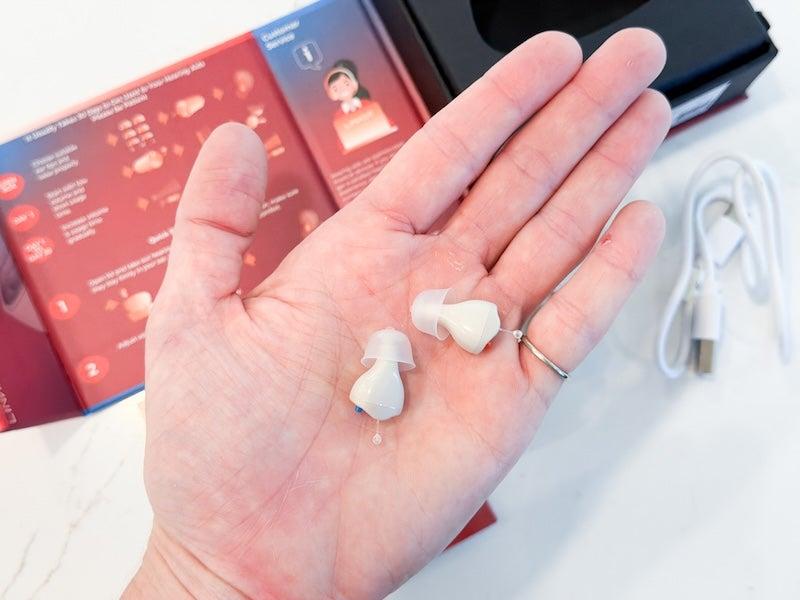
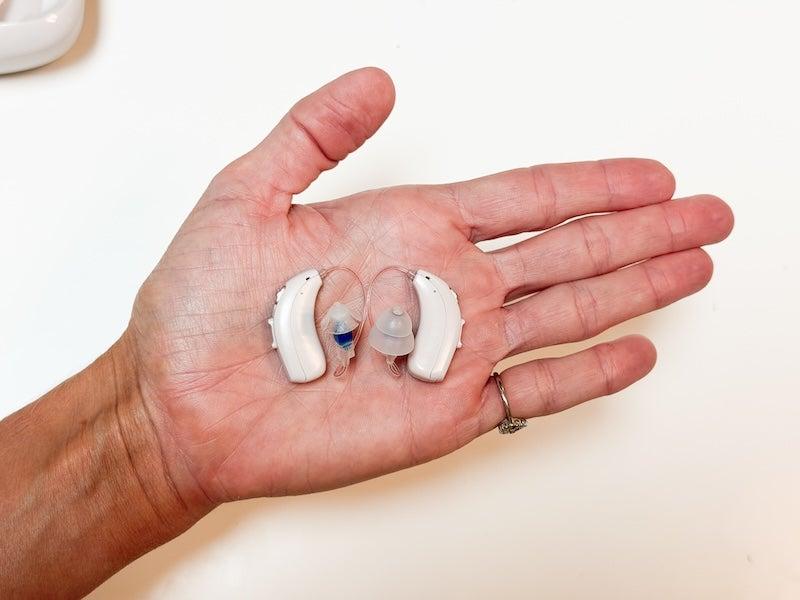
Linner is owned by EPHA, a California-based healthcare and wellness company. The company first gained attention with the Linner Nova. The Nova launched in 2022 on the crowdfunding site Indiegogo with support from more than 700 backers. That model has since been discontinued, but Linner now has several others. They are all named after planets in our solar system. In this Linner hearing aids review, we take an in-depth look at two devices. We reviewed the Mercury, a receiver-in-canal model, and the Saturn, a compact, completely-in-canal style.

If you are considering purchasing any kind of hearing aids, schedule an appointment with an audiologist or hearing care professional to get your hearing tested first. Doing so can tell you whether you need OTC or prescription hearing aids and give you an idea of what other factors to consider before you buy.
Why Linner is a popular brand for over-the-counter hearing aids
Linner isn’t among the top six hearing aid brands, such as Starkey and Eargo. But it has established itself as a brand with extremely affordable pricing. You can purchase Linner OTC hearing aids for $200–$300 per pair before discounts. And they ship free in the United States. The brand also offers a 45-day trial on Linner hearing aids and a one-year warranty.
Linner is also known for its discreet, earbud-style designs. Even the Mercury line, which is a receiver-in-canal (RIC) style, is smaller and lighter than average (a micro RIC). You can find more discreet styles in our Best Invisible Hearing Aids roundup. Because Linner got its start in acoustics, some users may find its hearing aids fit and look more like earbuds than medical devices. They tend to feel comfortable and lightweight, and are designed with everyday convenience in mind.
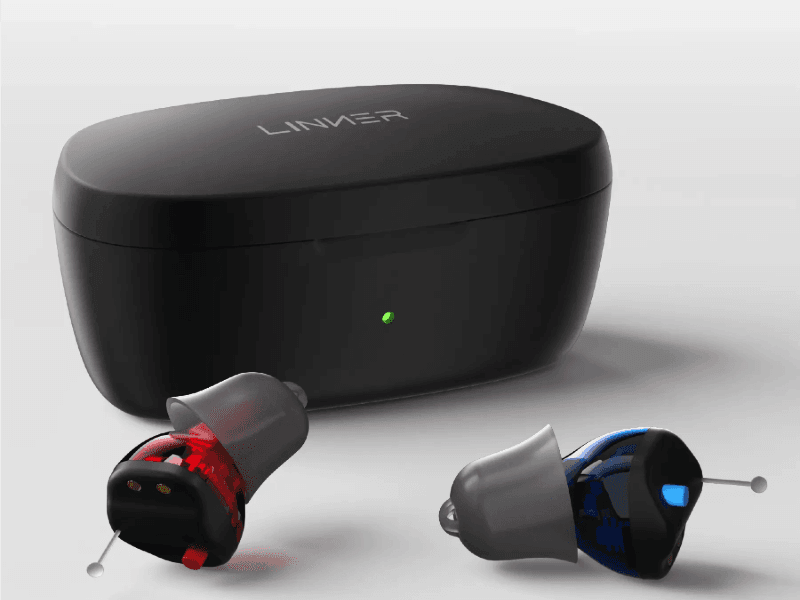
Linner hearing aids are rechargeable, with a 20-hour battery life and an on-the-go charging case. The case has magnetic docking, so the hearing aids snap into place for easy charging. But they do make some trade-offs for affordability. The two current lines, Saturn and Mercury, do not support Bluetooth streaming of calls or music. And the sound quality can be mixed, according to some of our testers. The clarity may vary depending on whether you are in a quiet or noisy room.
Linner hearing aids compared
| Comparison Features | |||
|---|---|---|---|
| Hearing aid type* | CIC |
CIC |
Mini RIC |
| Battery type (disposable or rechargeable) | Rechargeable |
Rechargeable |
Rechargeable |
| Bluetooth | No |
No |
No |
| Hands-free calling? | No |
No |
No |
*CIC="completely in canal"; RIC="receiver in canal"
Understanding Linner hearing aid models
Linner offers several models with different levels of technology. In this Linner hearing aid review, we take an in-depth look at the Saturn 1 and 2 CIC models and the Mercury micro RIC model.
Linner Saturn: Clear Sound, Discreet Fit
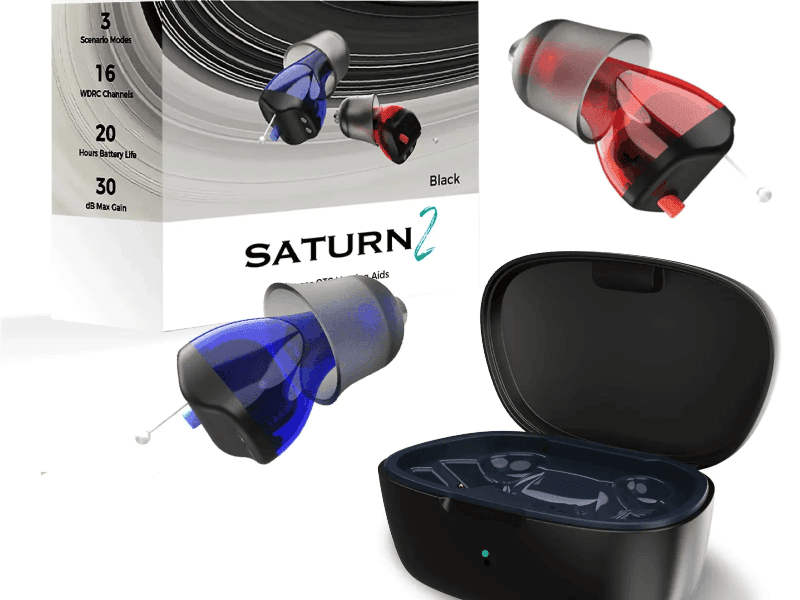
The Linner Saturn hearing aids are a solid option for people looking for a good basic hearing aid at an affordable price. The earbud-style design is discreet, and testers said voices sounded sharp and easy to follow in most everyday settings.
Linner Saturn
- Rechargeable battery with a 20-hour charge
- Discreet design
- Manual controls
- Type of hearing aid: CIC
- Battery type: Rechargeable
- Bluetooth compatible: No
Pros
- Strong speech clarity in quiet spaces
- Comfortable fit with a lightweight design
- Affordable price
Cons
- No Bluetooth streaming or full app controls
- You can’t customize settings
- Can be hard to tell which volume or mode is active
Linner Mercury: Mastering Background Noise
The Linner Mercury hearing aids are simple OTC devices that focus on speech clarity and comfort over advanced tech features. They performed well in busy places like restaurants. But some testers felt the sound was too amplified and wished the controls were easier to understand.
Linner Mercury
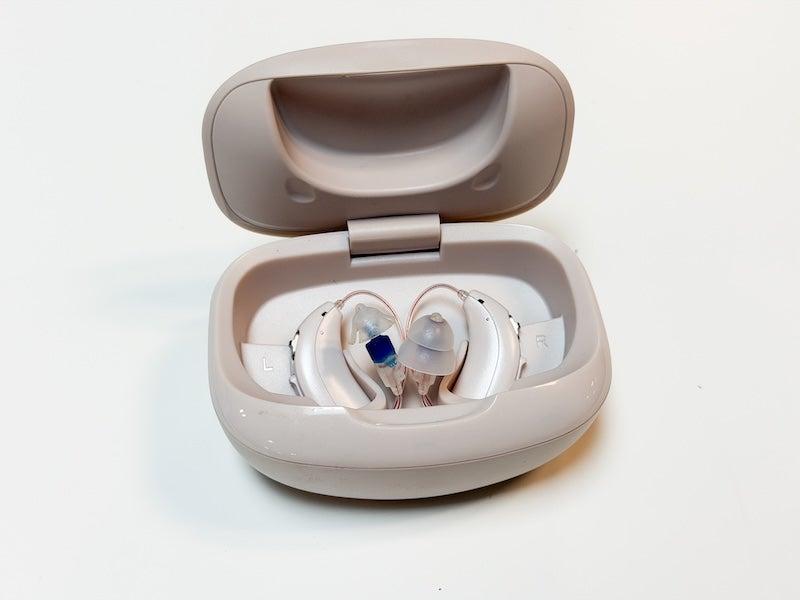
- On-the-go charging case with magnetic charging slots
- Multiple listening modes for different environments
- Lightweight behind-the-ear design
- Type of hearing aid: RIC
- Battery type: Rechargeable
- Bluetooth compatible: No
Pros
- Comfortable and discreet fit for daily wear
- Affordable price and free shipping
- Helped muffle background noise well during testing
- Onsemi™ chip 16-channel Wide Dynamic Range Compression adaptive sound processing
Cons
- No ability to tell exactly what volume or mode is active
- No app control or Bluetooth streaming
- Some testers said voices sounded unnatural or robotic
How much do Linner hearing aids cost?
The Linner hearing aids in this review range in price from $200–$400 per pair before any discounts or promotions. That’s on the very low end of what the best hearing aids generally cost. Linner hearing aids are also HSA/FSA eligible.
| Model | Price per pair |
| Linner Saturn 1 | $200 |
| Linner Saturn 2 | $400 |
| Linner Mercury | $300 |
Linner hearing aid features
Linner hearing aids are designed for people who want a simple, lower-cost option. In many Linner hearing aids reviews, buyers mention that the brand keeps things basic. You will not find advanced extras like Bluetooth music streaming or hands-free phone calls that other brands like Cearvol have. Still, Linner hearing aids do include a few helpful features that make daily use easier. This is especially true for people who are new to hearing aids or trying to stay on a budget.
Rechargeable battery with on-the-go charging
Most Linner devices come with a charging case that stores extra power while you travel. This can be helpful for long days out, though battery life may not last as long as premium hearing aids.
Discreet design
Linner hearing aids are designed to sit comfortably in or behind the ear and be less noticeable than some other brands. They are lightweight, so you can almost forget you’re wearing them.
Simple, manual controls
Instead of relying on an app, many Linner models use simple push-button controls for volume and settings. This can feel easier for less tech-savvy users, though it also means fewer custom sound adjustments.
Linner Hearing Aid app with self-test
The Linner app includes a hearing self-test that helps users adjust settings at home. It is convenient for beginners, but it does not replace a full hearing exam from an audiologist.
Free shipping and 45-day trial period
Linner gives buyers time to test the hearing aids before fully committing. This helps reduce some of the risk of buying online, especially for first-time hearing aid users.
How we tested hearing aids
We work closely with audiologists, hearing specialists, and older adults to learn how hearing aids perform in real-world settings. We also read thousands of verified customer reviews and surveyed older adults about their experiences. Our goal is to focus on hearing aids that are affordable, easier to find, and helpful for different levels of hearing loss. Here are some of the qualities we test when evaluating hearing aids:
Each of these areas helps us understand how well a hearing aid may work in everyday situations. You can read more about how we test hearing aids.
Who should consider Linner hearing aids
Linner hearing aids may work best for adults with mild to moderate hearing loss who want a lower-cost option. The brand focuses on affordability to appeal to shoppers overwhelmed by the cost of traditional hearing aids. But there are other reasons to consider beyond cost. Some questions to ask yourself if you are considering Linner hearing aids:
- Is my hearing loss mild or moderate? Like most OTC hearing aids, Linner is not for people with severe hearing loss.
- Am I looking for a budget-friendly hearing aid? Linner hearing aids cost under $500 per pair.
- Do I prefer simple controls over lots of technology? Models like the Linner Mercury and Linner Saturn hearing aids are often easier for beginners because they avoid overly complicated technology.
- Am I comfortable setting up devices on my own? Buyers who are comfortable doing basic setup through an app may appreciate the self-test and simple adjustments.
- Would I rather avoid frequent office visits? Prescription hearing aids may require routine maintenance with a hearing specialist.
- Am I okay without Bluetooth streaming features? Most Linner hearing aids lack streaming capabilities.
- Do I prefer that people not know I’m wearing hearing aids? The Linner Saturn line can barely be seen. The Mercury is a micro-RIC, so it's very tiny.
Who should not consider Linner hearing aids
Linner hearing aids may not be the best choice for people with severe hearing loss or complicated hearing needs. Those cases need prescription hearing aids fitted by an audiologist. They can provide the necessary sound quality and support. In some Linner hearing aid reviews, users also mentioned that background noise handling is not very advanced.
People who want premium technology may also feel limited by Linner devices. The brand keeps costs down by omitting features such as Bluetooth audio streaming and advanced automatic sound adjustments.
Linner customer experience
- Trial period: 45 days
- Shipping: Free standard shipping within the U.S.
- Warranty: 1-year limited warranty
Customer service
You can reach Linner customer service by:
- Email: support@linnerlife.com
- Chat: Live chat available via the website during business hours
- Online form: Fill out the form on the company website: https://www.linnerlife.com/pages/contact-us
Frequently asked questions
What are some alternatives to Linner hearing aids?
People shopping for Linner hearing aids often compare them to brands like Jabra Enhance, Audien, and ELEHEAR. All of these brands focus on affordable OTC hearing support.
What models of Linner hearing aids are there?
Linner has released several OTC models, including the Linner Mercury hearing aids and the Linner Saturn hearing aids. Discontinued models include the Linner Nova and the Linner Mars, the only Linner hearing aids to have Bluetooth streaming.
Do Linner hearing aids have Bluetooth?
The Linner Mars could stream via Bluetooth, but that model has since been discontinued. The two current lines, Saturn and Mercury, do not support Bluetooth streaming of calls or music.
Questions? Email us at reviewsteam@ncoa.org.