

Related Topics
If you hear the word “hydrotherapy” and immediately think, “expensive spa treatment,” you might be forgiven. The word itself sounds luxurious—like one you’d use while lounging on a yacht off the coast of Santorini.
Yes, hydrotherapy can be luxurious. No, it’s not just for people with boundless budgets. In fact, in its most basic form, hydrotherapy (from the Greek words for “water” and “treatment”) can be as simple as taking a hot bath in a jetted tub in your own home.
“For centuries, health and wellness practitioners have pointed to the soothing and healing powers of water,” explained Gretchen Dueñas-Tanbonliong, Associate Director of Health and Wellness at NCOA. “From the early Roman baths to Japanese hot springs and beyond, people all over the world, and from of all walks of life, have enjoyed the many benefits of hydrotherapy.”
People of all ages, too. And, as you’ll learn in this article, hydrotherapy can be particularly helpful for those of us who are dealing with the many aches, pains, and illnesses that come with getting older. Medicare may even pay for it if a doctor says your hydrotherapy is medically necessary.
That said, it’s important to know that hydrotherapy is a naturopathic (alternative) treatment that isn’t regulated by the U.S. Food and Drug Administration. And there are some key safety considerations to be aware of, too.
We cover it all below.
What is hydrotherapy?
Simply put, hydrotherapy uses water to address a variety of health conditions and symptoms. You might see other words for it, like “aquatic therapy” or “pool therapy.”
Does hydrotherapy work?
Yes, it can. A lot depends on what you’re using it for—and how you personally judge its effectiveness. Hydrotherapy treatment won’t cure you of anything. But it can help you feel better, physically and mentally.
“I like to advise people to be realistic about it and to set their expectations accordingly,” Dueñas-Tanbonliong said.
For example: let’s say you get your knee replaced. Hydrotherapy won’t magically erase your need to do intensive physical therapy. When it’s used as part of your overall care plan, however, it might help you recover more quickly between sessions or help you progress faster and with less discomfort.
Or: perhaps you have low back pain that keeps you from sleeping well. There are many potential causes for your pain—like a slipped disc; osteoporosis; poor spinal alignment; diminished core strength; and even chronic stress. Hydrotherapy will not address these underlying issues. On the other hand—much like upgrading to the best mattress for back pain would—it can ease the associated aches, soreness, and spasms. It can also help you relax. And both of these things can help you sleep better.
“Ask your doctor, licensed physical or occupational therapist, or other trusted health care provider whether hydrotherapy can benefit you,” said Dueñas-Tanbonliong. “If the answer is ‘yes,’ then you can move forward with a treatment plan under their supervision. This increases your chances for a positive outcome.”
Which leads to a final point: be wary of claims about hydrotherapy that seem outlandish. They probably are.
“Because the FDA doesn’t regulate the treatment or its practice, there are a lot of questionable wellness influencers out there who are eager to make a buck off false promises,” Dueñas-Tanbonliong warned. “Hydrotherapy won’t regrow your hair, restore your virility, or repair your gut. You can protect your wallet, health, and peace of mind by checking any shady-sounding claims with your physician.”
How does hydrotherapy work?
Alone or together, hydrotherapy takes advantage of four principles:
- Water temperature—to soothe inflammation, ease stiffness, and promote relaxation.
- Water pressure—to target specific areas of the body that are sore or tight.
- Buoyancy—to provide additional support and ease strain on joints and muscles.
- Resistance—to help build strength, coordination, and balance.
Depending on the situation, hydrotherapy may use hot water, cold water, or both. You might stand under or in front of the water (as in a shower or hose)—or you might get into it (as in a tub or pool). During hydrotherapy, you might be completely still and relaxed—or you might perform gentle movements on your own or with a trained facilitator. It all depends on your individual needs and goals.
The most typical forms of hydrotherapy use:
- Soaking tubs
- Jetted whirlpools
- Specially equipped therapy pools
Hydrotherapy benefits
With a few exceptions (more on this below), hydrotherapy is available to nearly everyone. In contrast to prescription or over-the-counter drugs and devices—which may cause negative interactions—it’s often easily paired with treatments you’re currently using. And if you can’t get to or afford the cost of paid sessions, you can even do some forms of hydrotherapy at home.
Its many benefits include:
- Pain relief: Cold water can soothe inflamed muscles and promote their repair. Hot water can help relax and loosen sore muscles and joints. And pressurized jets can offer targeted massage for cramped, tight, or spasming areas.
- Improved mobility: For many of the same reasons listed above, hydrotherapy can promote easier movement. This can be especially helpful if you’re recovering from joint replacement surgery or have a neurological condition that affects your gross motor function.
- Improved balance: If you’ve had a surgery or a medical event that affected your balance, adding aquatic therapy to your rehabilitation plan may be a good idea. Building up your strength in the pool allows you to focus on control and stability without the fear or risk of falling and injury.
What conditions can hydrotherapy help?
If you live with an illness or injury that causes pain, affects your balance, or reduces your mobility, you likely can benefit from hydrotherapy. These conditions include—but certainly aren’t limited to:
- Arthritis: There are more than 100 different types of arthritis. Most involve inflammation, swelling, and tenderness in the joints and surrounding tissues. Arthritis can make it difficult to move around and nighttime pain can interfere with sleep. (See also: The Best Mattress for Arthritis)
- Fibromyalgia: Fibromyalgia is a chronic condition most often experienced as “everywhere pain.” Muscles, joints, and soft tissues throughout your body seem always to ache, which leads to fatigue, poor sleep, and other disturbances. (See also: The Best Mattress for Fibromyalgia)
- Parkinson’s disease: Parkinson’s disease (PD) is a progressive brain disease that affects movement and coordination. Common symptoms include muscle stiffness, difficulty walking, loss of balance, tremors, insomnia, and depression.
- Stroke: Physical therapy is crucial for regaining function after a stroke. Thanks to water’s buoyancy and resistance, doing these exercises in a pool can help patients more safely and confidently work on their strength, balance, and coordination.
What to expect from hydrotherapy
Knowing what to expect largely depends on the type of hydrotherapy you’re doing and for what reason.
Types of hydrotherapy
- Aquatic therapy: This type of hydrotherapy typically happens in a specialized pool that can accommodate and support people with a range of abilities. For instance, the pool may have an assistive lift to help you into and out of the water; grab rails to support your balance; and a variety of exercise equipment to help you build strength and stamina. You may work one-on-one with a licensed physical therapist or in a group as part of an exercise class. Aquatic therapy is helpful for people recovering from surgery or injury, as well as for those who want to stay fit and need a low-impact way to do it.
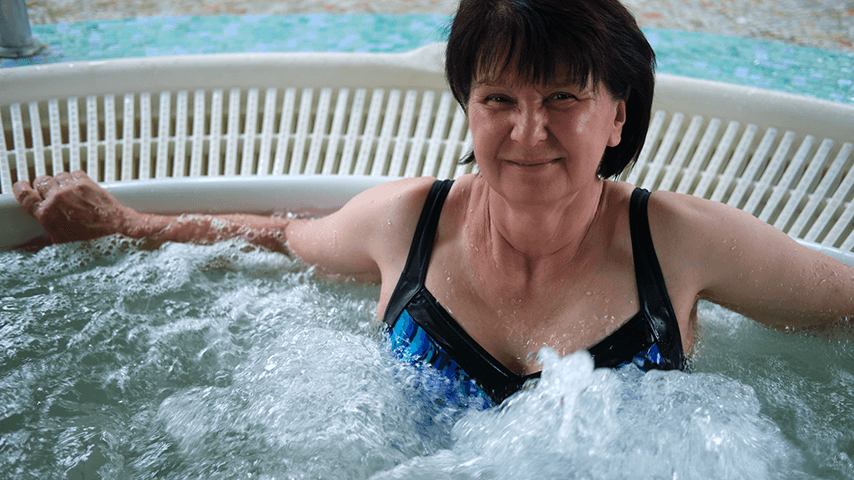
- Immersion therapy: This type of hydrotherapy can happen anywhere there’s a tub—whether at home, at the gym, in a physical rehabilitation center, or somewhere else. You can use a regular bath tub, a deep soaking tub, or a jetted whirlpool. The water can be hot or cold; you might add Epsom salts or a scented “bath bomb.” A therapist or doctor may help you design a program, though it’s not necessary. Immersion therapy is helpful for people seeking relief from joint and muscle pain, inflammation, or overall soreness. Because it can promote relaxation and a sense of calm, it also may improve sleep.
Preparing for hydrotherapy
Before starting a hydrotherapy program, the most important thing you can do is talk to your doctor. That way, you’ll know in advance whether you should take any precautions—like avoiding water that’s too hot, cold, or forceful—that may be particular to you. Otherwise, you won’t need to do anything special. If you’re going to a public facility, you’ll of course want to bring a comfortable bathing suit.
During hydrotherapy
A typical hydrotherapy session may last between 30–60 minutes. If you are participating in a formal rehabilitation program, you will attend a specific number of sessions determined by your physician and physical therapist. If you’re doing aquatics classes or immersion therapy, you get to decide how often and for how long.
One popular immersion therapy practice—sometimes called a “hydrotherapy circuit” or “Nordic circuit”—involves alternating between a cold plunge, a hot tub, and a sauna and/or steam room. You can do one or multiple circuits in a single session.
How can I access hydrotherapy?
“The easiest way is to do it at home,” NCOA’s Dueñas-Tanbonliong suggested. “And the most affordable way is to do it at home, using a tub you already have in your bathroom. You can use ice cubes or packs to get the water really cold; you can fully open the tap and blast water on sore feet and lower legs; you can add scents. And the tub is always there—you don’t have to travel to enjoy its benefits.”
Still, standard home tubs can be limited. Maybe you want or need deeper water, whirlpool jets, or both. If your space and budget allow, you might consider upgrading your bathroom. Many of the best walk-in tubs include hydrotherapy features; this might be a smart investment if you live with arthritis or chronic pain. (Keep in mind, however: Medicare does not cover walk-in tubs).
If home hydrotherapy isn’t practical, you can type “hydrotherapy near me” into your internet search engine for a list of gyms, aquatic centers, and other locations that offer sessions for the general public. Prices can vary widely, so it pays to shop around before signing up.
Finally, if you’d like a structured rehabilitation program, ask your doctor for advice and a referral. Your local hospital may include or contract with a hydrotherapy facility specifically for this purpose. If not, some physical therapy clinics may offer it in-house or send their certified practitioners to community-based aquatics centers where they conduct sessions with their patients. And Medicare may even cover it. If your doctor says your hydrotherapy is medically necessary, Part B will pay for a set number of sessions as outlined in your policy.
Hydrotherapy safety and other considerations
Is hydrotherapy safe? For most people, yes—and side effects from treatment are rare.
But because hydrotherapy happens in and around water, it’s important to take some common-sense precautions. Be aware of slippery surfaces; never enter a pool or tub without someone else present; and avoid unsanitary facilities (look for a posted chart of water testing results or ask a manager about their cleaning protocols).
Overly hot water can cause dehydration and dizziness; and overly cold water can cause hypothermia (body temperature that’s too low). That’s why it’s a good idea to limit the time you spend in heated or chilled tubs.
Are there certain people who shouldn’t do hydrotherapy?
Yes. Some people may be at higher risk for side effects like dizziness, shortness of breath, or infections. Talk to your health care provider before trying hydrotherapy if you:
- Recently had a joint replacement
- Have an open cut, wound, or incision
- Have asthma or lung disease
- Have high or low blood pressure
- Have vertigo
- Take medications that make you drowsy or lightheaded
- Are sensitive to chlorine or other common pool chemicals
Still, many of these restrictions are temporary. Others may simply require an accommodation to make sure you can safely take part in hydrotherapy.
When should I see my health care provider?
If you notice any of the following issues after hydrotherapy, check in with your doctor right away:
- Skin rash
- Dizziness or fainting
- New or unexplained joint pain
- Fever
- Any sudden symptom that worries you
Frequently asked questions
How often should I do hydrotherapy?
If you’re doing hydrotherapy to help recover from surgery or treat a medical condition, you will work with your therapist to design a personalized program. You can expect to have 1–3 sessions per week lasting about 30–45 minutes each. How long you continue depends on your therapist’s assessment of whether the hydrotherapy treatment is benefitting you. If you join group aquatic therapy classes to improve strength, mobility, and fitness—or use a jetted tub at home to soothe your muscles and reduce pain—the frequency is up to you.
How much does hydrotherapy cost?
What you pay for hydrotherapy depends on where you go; how often you participate; and whether you’re working with a licensed aquatics therapist, a group facilitator, or “doing your own thing.” In 2025, the average national cost for a single hydrotherapy session at a physical therapy practice, health clinic, or therapeutic center is just over $100.1 A group hydrotherapy exercise class at a gym or senior center may cost significantly less; some offer price incentives for repeat visits. Walk in tubs cost a much as $17K with hydrotherapy jets.
Does Medicare cover hydrotherapy?
Yes—with an important caveat. Medicare will not cover hydrotherapy in general. However, it will cover a specific subset of hydrotherapy known as “aquatic physical therapy.” Your doctor must refer you for this treatment and certify that it’s medically necessary (to help you recover from surgery or an injury, for example). In that case, Medicare Part B will cover it.2 You will want to make sure that your therapist “accepts assignment” (is registered with Medicare) and takes Medicare as payment before scheduling your first appointment.
What is colon hydrotherapy?
Also known as “colon cleansing,” this treatment uses warm water to rinse the large intestine. In certain specific instances, your doctor may prescribe a colon cleanse (enema) before you have a medical procedure to look at your intestine. More often, non-medical health practitioners suggest colon hydrotherapy as a way to “detox” (remove harmful chemicals from) your digestive system and improve your energy and mood. These claims generally lack scientific proof and can be harmful for certain people.
Sources
1. MDsave. Aquatic Therapy. Found on the internet at https://www.mdsave.com/procedures/aquatic-therapy/d286ff
2. Medicare.gov. Physical therapy services. Found on the internet at https://www.medicare.gov/coverage/physical-therapy-services