Best Creatine Supplements for Men in 2026
Learn more about the best creatine supplements for men and what ingredients, dosages, and prices to look for.

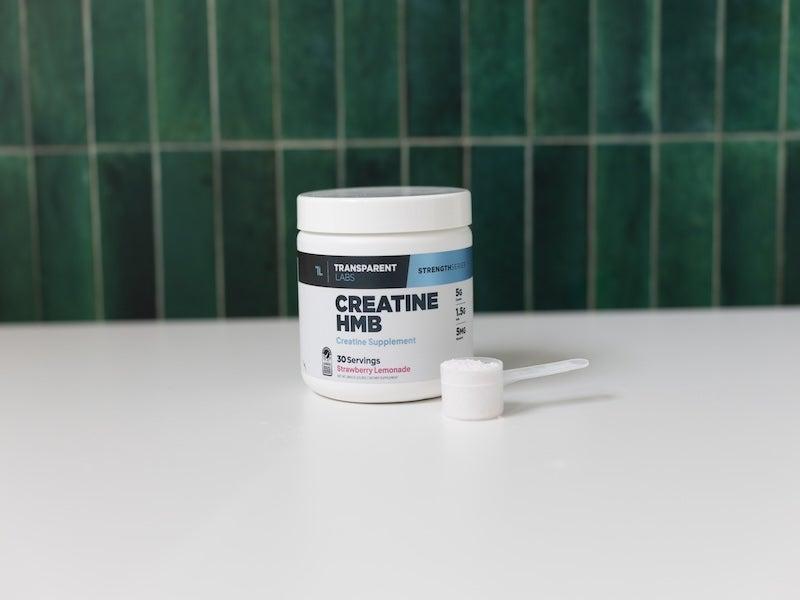
- Our Best Creatine for Men Overall is Transparent Labs Creatine HMB. This creatine powder is Informed Choice certified, and our testers liked its taste and how well it mixed with water.
- The best creatines for men on our list cost 42 cents to $2.43 per serving.
- Creatine helps supply energy to your muscles and may help you build and retain muscle mass. Some research suggests creatine may also support memory and other aspects of brain function.
- Creatine comes in gummies, powders, and capsules. It's often available in a variety of flavors. Some flavors contain added sugars, but not all.
- Every product on this list is third-party tested. But not all creatine supplement manufacturers disclose which labs tested the products.
NCOA supports everyone’s right to age well. So we take the time to research, test, and recommend products that can help you live a healthier life. We’ve spent more than 2,000 hours researching and testing supplements to give you the most accurate product reviews. To find the best health supplements, we:
- Consulted health specialists, including doctors and registered dietitians. Received guidance on choosing the best supplements
- Put more than 100 supplements through more than a dozen different tests at our in-house lab
- Mystery-shopped more than 20 brands
- Surveyed more than 250 older adults on their supplement use
- Interviewed experts on the nutritional needs of older adults
- Worked with older adult testers to evaluate supplements and get their opinions
- Read thousands of verified customer reviews
We’re constantly testing new supplements to give you the most accurate and up-to-date recommendations. Read more about our supplement review methodology.
Our bodies naturally make creatine, and we also get it from foods such as meat and fish. Age-related changes in muscle mass may affect how much creatine our muscles store. Not only do we often lose muscle mass as we age, but we also may not maintain creatine at the levels we used to.1 That’s where creatine supplements come in.
Beyond replacing lost creatine stores, the best creatine for men may help support energy production during short bursts of high-intensity exercise.2 In September of 2026, we surveyed older adults about why they took creatine supplements. Most respondents selected either “reducing age-related muscle loss” or “staying strong enough for everyday activities” as a reason for taking creatine.3
To find the best creatine options, we asked a group of older men to test top creatine gummies and powders. They reported on mixability, taste, chewability, and side effects. We also evaluated creatine supplement ingredients, third-party testing, value, and more. Read on for the results and our pick for the best creatine for men.
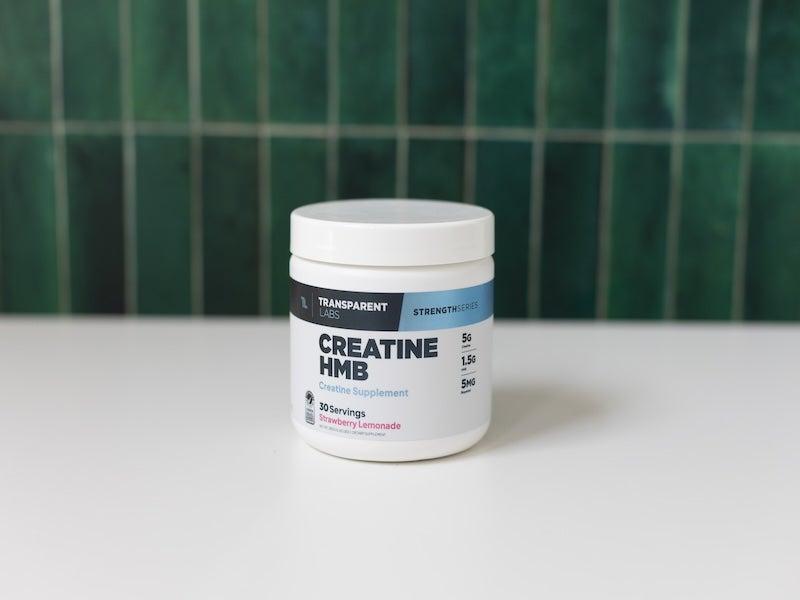
Transparent Labs Creatine HMB
Contains HMB, vitamin D, and calcium
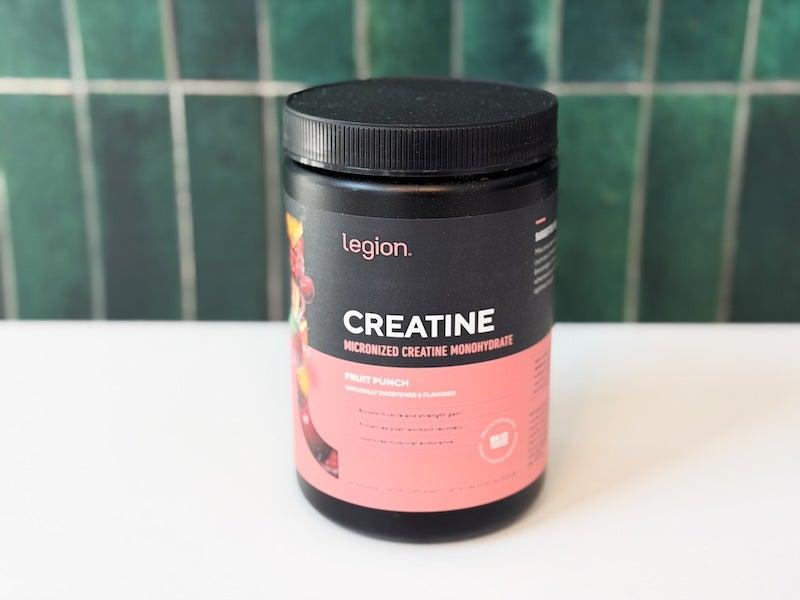
Legion Micronized Creatine Monohydrate
User-friendly container and tester-approved flavor
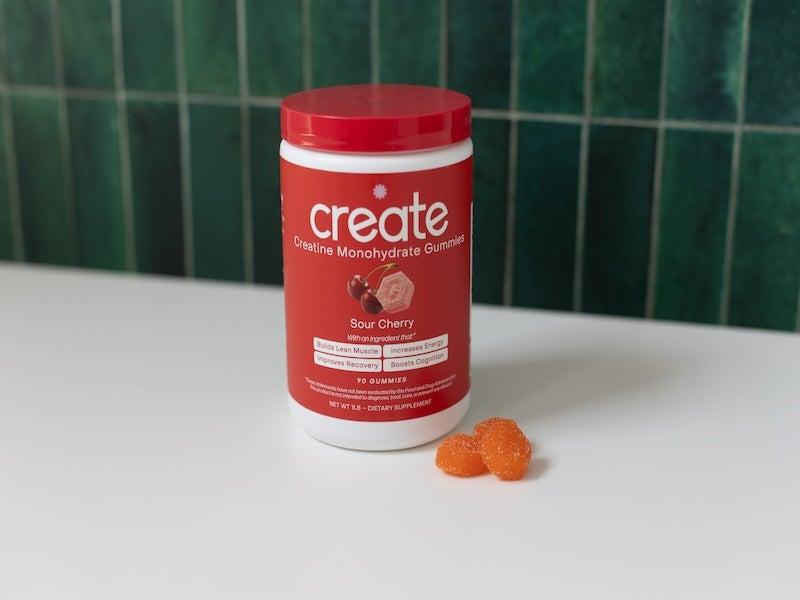
Create Creatine Monohydrate Gummies
NSF-certified creatine gummies with a great taste
Best creatine for men in 2026
- Transparent Labs Creatine HMB: Best Creatine for Men Overall
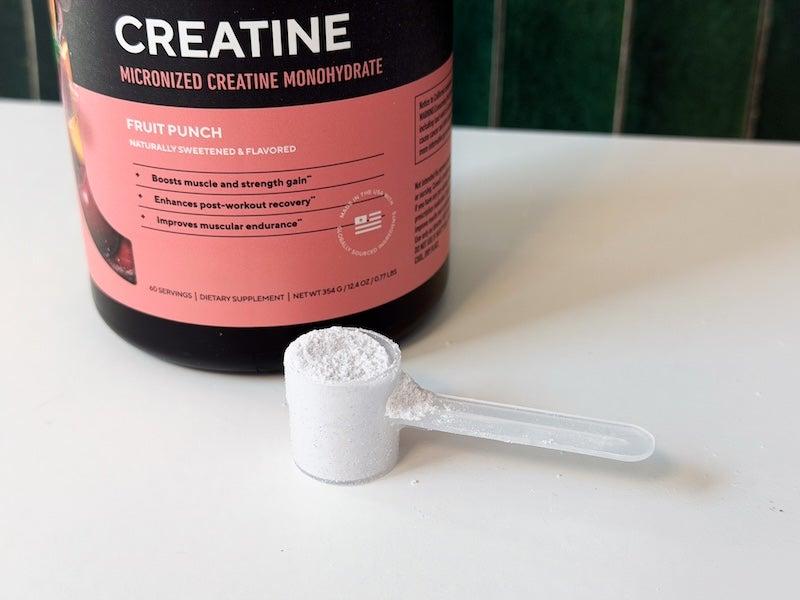
- Legion Micronized Creatine Monohydrate: Best Creatine Monohydrate for Men
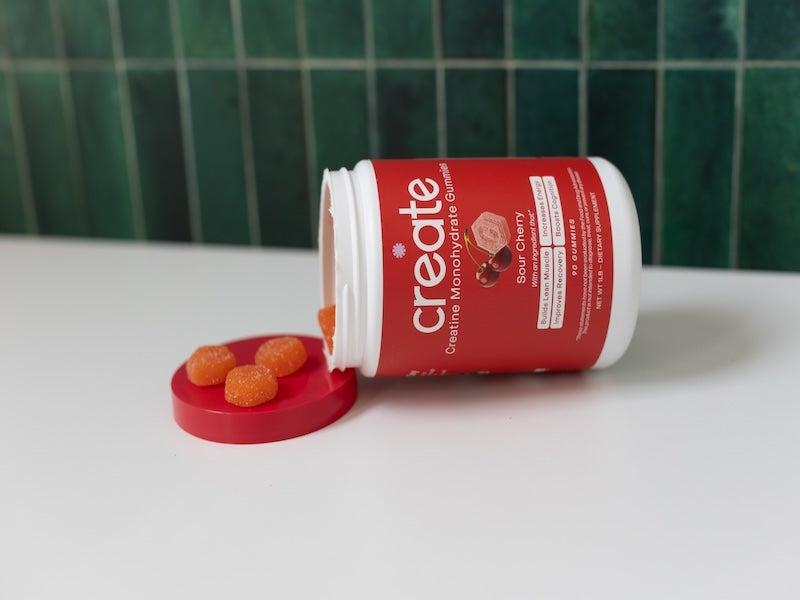
- Create Creatine Monohydrate Gummies: Best Creatine Gummies for Men
- Nutricost Creatine Monohydrate: Best Affordable Creatine for Men
The best creatine for men in 2026 compared
| Comparison Features | ||||
|---|---|---|---|---|
| Our rating (out of 10)* | 9.1 |
9.6 |
8.9 |
8.6 |
| Dosage per serving | 5,000 mg |
5,000 mg |
4,500 mg |
5,000 mg |
| Serving size | 1 scoop |
1 scoop |
3 gummies |
4 capsules |
| Third-party testing | Informed Choice |
Labdoor |
NSF Certified for Sport |
Undisclosed accredited lab |
| Best for | Overall |
Monohydrate |
Gummies |
Affordable |
*Ratings reflect a brand's overall offering; the best overall pick doesn't necessarily have the highest score
How we tested the best creatine for men
Our older adult testers evaluated each creatine supplement for formula, taste, third-party testing, and side effects. We also considered ease of use and price when choosing our top picks. Here are some of our testing practices:
Transparent Labs Creatine HMB: Best Creatine for Men Overall
Transparent Labs has 5,000 milligrams (5 grams) of creatine monohydrate per serving. This dosage falls within the 3–5 g daily range recommended by the registered dietitian we interviewed. The creatine powder contains vitamin D, calcium, and HMB to support muscle growth and recovery. Our testers liked the taste and found that the powder mixed well with water.
- Can be taken with or without food
- Contains added nutrients like vitamin D and calcium
- Clear instructions on when and how to take it
- Creatine per serving: 5,000 mg
- Creatine type: Creatine monohydrate
- Form: Powder
- Added sugar: No
Pros
- Third-party tested by Informed Choice
- Testers said it wasn't overly sweet
- Mixes well with water
- Container is simple to open and close
Cons
- Stevia aftertaste may not be for everyone
- Pricier than some of our other picks
- Small text on label may be harder to read
Legion Micronized Creatine Monohydrate
Each serving of Legion’s Micronized Creatine has 5,000 mg of creatine monohydrate. This is similar to Creatine HMB from Transparent Labs. Testers gave it a 5/5 for taste. They also liked the container's sleek look and the instructions’ large font.
- Testers enjoyed the flavor
- No artificial dyes
- Contains 60 servings per container
- Creatine per serving: 5,000 mg
- Creatine type: Creatine monohydrate
- Form: Powder
- Added sugar: No
Pros
- Affordable cost per serving
- No added sugar
- Transparent allergen information
- Testers enjoyed the fruit punch flavor
Cons
- Powder doesn’t mix in completely
- Scoop might get lost in the powder
Create Creatine Monohydrate Gummies: Best Creatine Gummies for Men
Create is the only creatine supplement on our list that’s NSF Certified for Sport. It’s also the only gummy to make our list. Each serving has 4,500 mg of creatine monohydrate. Testers liked the jar's design, readable label, and sour cherry flavor.
- Testers found the jar easier to open
- Largest label print of any creatine our testers tried
- Testers enjoyed the sour cherry flavor
- Creatine per serving: 4,500 mg
- Creatine type: Creatine monohydrate
- Form: Gummy
- Added sugar: 2 g
Pros
- Clear, straightforward instructions
- NSF-certified
- Pleasant flavor
- Military, first responder, and teacher discounts available
Cons
- Priciest supplement on this list
- Testers reported a lingering aftertaste
- Contains added sugar
Nutricost Creatine Monohydrate
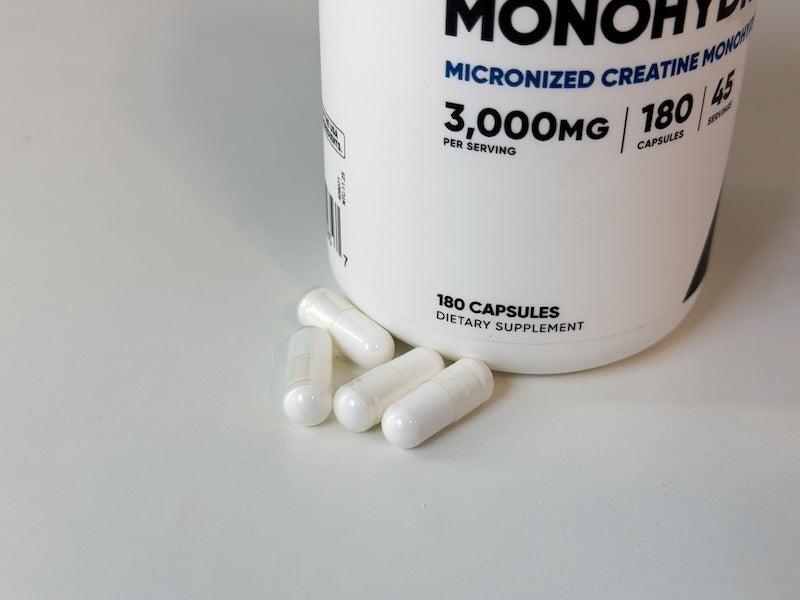
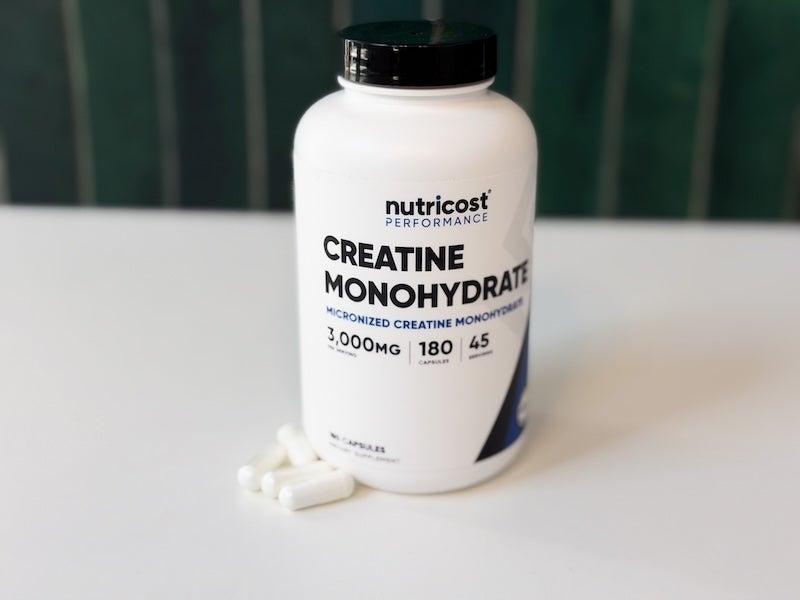
At 42 cents per serving, Nutricost is the most affordable creatine supplement on our Best Creatine for Men list. This earned it a 5/5 for price. Our testers gave high marks to the flavorless taste of these capsules.
- More servings per container than many brands
- Only capsule to make our list
- No added sugars or flavors
- Creatine per serving: 5,000 mg
- Creatine type: Creatine monohydrate
- Form: Capsule
- Added sugar: No
Pros
- Affordable
- No flavor
- Straightforward instructions
Cons
- Each serving is four capsules
- Third-party testing lab is not named
- Gelatin capsule ingredients are not fully explained
What is creatine?
Creatine is an organic compound. About 95% of the creatine stored in our bodies is found in our muscles.2 “The body naturally produces creatine from proteins that break down into amino acids. It is not a hormone or steroid,” said Reema Kanda, a registered dietitian at Hoag Orthopedic Institute in Irvine, California.
But we lose muscle mass as we age, and that’s where creatine supplementation may help. Creatine can help build or retain muscle mass. It can also boost short-term energy and prevent muscle fatigue.5 This is why you most often see creatine mentioned in regard to fitness. Adult men of any age can take creatine. And it may offer many benefits, especially when combined with regular resistance training.

Of the older adults we surveyed, more than three in four (78%) were concerned about losing muscle mass and strength as they aged.3
What to look for when choosing a creatine supplement for men
Finding the best creatine supplement for men requires weighing a few factors. Consider price, added ingredients, the amount of creatine per serving, and third-party testing. Here's what else may affect choosing a creatine supplement:
Type of creatine
- Creatine Monohydrate. Creatine monohydrate is creatine combined with one water molecule. It is the most widely researched form of creatine. It has the strongest evidence for benefiting muscle and strength performance. It's also the form of creatine present in all the supplements in this article.
- Creatine anhydrous. Creatine anhydrous is a form of creatine that does not contain water. It contains slightly more creatine by weight than creatine monohydrate. But no strong clinical evidence shows it to be more effective or safer than creatine monohydrate.6
- Creatine salts. Creatine hydrochloride dissolves in water, making it a good option for powdered supplements. But studies haven't found that this improves absorption. Creatine salts have no demonstrated benefits over creatine monohydrate.6
- Buffered creatine. This is creatine processed to be less acidic. The idea behind buffered creatine was to make it easier to digest. But not enough research shows whether buffering works as intended.
Creatine dosage
“For healthy older adults, a practical dose of 3–5 g (3,000–5,000 mg) per day—combined with resistance training—is preferred,” said registered dietitian Matey. All products on our list have a creatine dosage of 4,500–5,000 mg per daily serving.
You can start at this serving and stay at this serving. Brands like Create and Transparent Labs specifically advise against a “loading phase." A loading phase means taking a larger amount of creatine each day for a short period before switching to a lower daily dose. Instead, they recommend a “routine daily dose.” Still, you should talk to your doctor before starting creatine supplementation.
Third-party testing and certification
The FDA doesn’t approve supplements before they’re sold. When you’re choosing supplements, try to choose one tested by an independent organization rather than relying on the brand’s own testing. Look for a certification seal on the supplement label.
“Supplements do not require pre-market approval for safety and efficacy, so there can be variances to their quality,” said Katie Whitson, MS, RD, LD, a registered dietitian based in Thornton, Colorado. “I like to look for GMP, NSF, USP, or other labeling that demonstrates that third-party testing has been involved.”
Third-party testers you may see include:
- NSF
- USP
- Informed Choice
- Labdoor
Some brands say their products are tested by an “ISO-accredited” lab. ISO doesn’t test supplements itself. It sets international standards that testing labs can earn accreditation for meeting.
Ingredients and additives
Check the product's label. The section beneath the supplement facts table should list additives, fillers, and preservatives. Supplement manufacturers often add these things as binding agents, or to extend shelf life. Sometimes additives affect taste, texture, or sweetness. If you’re vegan, watch this section for gelatins, honey, dairy, or animal-based capsule ingredients.
Some common additives are:
- Antimicrobials (potassium sorbate)
- Binding agents (starch, cellulose, magnesium stearate)
- Gelatin or plant-based capsule ingredients
- Preservatives (citric acid, sodium benzoate)
- Sweeteners and carbohydrate additives (maltodextrin, sorbitol)
Form
Powders make up half of the picks on this list. They may contain fewer additives than gummies or capsules. When taking a powder supplement, follow the mixing instructions closely. The amount and type of liquid you use can change the supplement’s taste. You have less control over how a gummy supplement tastes. Gummies may contain added sugar or sweeteners to make them taste more appealing. Some gummies use gelatin for texture, while others use plant-based alternatives. The other type of supplement on our list is capsule supplements. Capsules may use gelatin or plant cellulose for the casing.
Taste and mixability
Creatine powders, like the ones we tested from Legion and Transparent Labs, tend to have fewer additives. Our testers found that some powdered supplements wouldn’t mix fully. Adding more liquid is not the answer to mixability issues, though. Follow the mixing instructions closely, since the amount of liquid affects the taste.
Brand reputation and transparency
Some brands make only creatine supplements. Others offer a creatine line alongside other supplements, such as protein powders and probiotics. It’s fine to stick with brands you already know. If you’re vetting a new brand, check for:
- Ingredient red flags. The U.S. Anti-Doping Agency (USADA) offers guidance on ingredients that may signal a hidden stimulant. NSF Certified for Sport also indicates a supplement is free of stimulants.
- Consistent labeling. Look for certifications on both the brand’s website and individual products.
- Third-party testing disclosure. Merely saying “tested by a third party” is not enough. Brands can earn your trust by naming the lab that conducted the third-party tests and showing the results.
- Claims that sound too good to be true. Phrases like “quick fix,” “newest scientific breakthrough,” or “used for thousands of years” are red flags.
Benefits of creatine for men
How creatine may benefit older adults
“Creatine supplements have been widely researched in the sports and fitness arena for decades for their use in strength, power, and muscle mass,” said Kanda, a registered dietitian. “Emerging data suggests it may help older adults.”
There are three main benefits of creatine:
- More energy during a workout
- Building or maintaining muscle
- Improved brain health
“Older adults can include creatine supplements in addition to a healthy regimen that includes optimal protein, hydration, and strength training several times per week,” Kanda said. You can take a creatine supplement without exercising. Many brands encourage you to take the supplement daily whether you work out or not. But without exercise, creatine won’t have the same muscle-building effect.
Creatine supports your energy stores by giving you more short-term energy. Many people use that energy to complete a workout. Creatine can also improve resistance training by helping skeletal muscles contract.2 Muscle contraction during exercise increases the connection between your muscles and your brain.7
Creatine can also boost your brain function, according to some studies.5 You'll sometimes see "less brain fog" or "improved cognition" as potential benefits on the packaging. Creatine has been shown to specifically benefit memory and information processing. Researchers suggest this may be because creatine boosts brain energy reserves.8
Potential side effects of creatine for men
Research suggests creatine monohydrate is generally well tolerated by healthy adults at recommended doses, although some people may experience side effects.9 You should still always talk to your doctor before taking a new supplement, in case your medications interact negatively with it. One of our testers noted he gets a little nauseous if he takes creatine on an empty stomach.
Research shows that creatine doesn’t negatively affect kidney function.10 But it may not be worth the risk for those with concerns. “Individuals with kidney disease or poor kidney function should avoid creatine supplementation,” said Matey. There was one reported case of renal failure related to creatine supplementation. But most studies agree that staying within the recommended serving size doesn’t lead to adverse reactions.11
For women using creatine, weight gain is rare. But men may be more likely to experience weight gain. If you start your creatine journey with what’s known as a “loading dose,” you may gain water weight as your cells hydrate.12,13 Some creatine manufacturers, like Create and Transparent Labs, advise against a loading dose. If temporary weight gain is a concern, adding creatine to your daily routine and staying consistent is more effective.
Best creatine costs for men in 2026 compared
The best creatine for men costs between 42 cents and $2.43 per serving. Many creatine brands offer a discount if you sign up for a subscription. Create and Transparent Labs both offer military and first-responder discounts.
| Comparison Features | Transparent Labs Creatine HMB |
Legion Micronized Creatine Monohydrate |
Create Creatine Monohydrate Gummies |
Nutricost Creatine Monohydrate |
|---|---|---|---|---|
| Cost per serving | $1.67 |
$0.50 |
$2.43 |
$0.42 |
| Shipping cost | Free over $99 and with subscriptions |
Free on first order and subsequent orders over $80 |
Free on first order and subscription orders |
Free over $59 |
| Return policy | 45-day money-back guarantee |
365 days after purchase, first time only |
No returns |
60-day money-back guarantee |
| Subscription savings | $5, or 10% per order |
30% |
Save $56 on a 90-day supply |
Save 20% with recurring subscription |
Pricing and policies as of November 2026.
Frequently asked questions
How much creatine should a man take per day?
Registered dietitians recommend 3–5 g (3,000–5,000 mg) of creatine per day. Follow the recommended serving size on your creatine supplement’s label. And ask your doctor what’s right for you.
Is creatine safe for older men?
Creatine monohydrate is widely studied and generally considered safe when taken at recommended doses. There are many benefits for older men. These include increased energy during workouts, muscle mass retention, and improved brain function.1,2 Studies don’t list any major negative side effects. Still, talk to your doctor before starting creatine to make sure it interacts safely with any medications you may be taking.
What are the benefits of creatine for men over 50?
Creatine can provide energy during workouts and help preserve muscle mass. It can also boost brain function.1,5,8
Does creatine help men build muscle?
Creatine monohydrate, when combined with strength training, may help men prevent age-related muscle loss.1,2
Questions? Email us at reviewsteam@ncoa.org.