
The Best Pulse Oximeters for Home Use in 2026
We researched the best pulse oximeters for home use. The Oxiline Pulse XS Pro is our top pick.
- We selected the Oxiline Pulse XS Pro as the Best Overall Pulse Oximeter because it paired accurate readings with a clear display and app-based tracking over time.
- The pulse oximeters on this list cost between $29–$298. All of them are available without a prescription.
- If you want a more affordable medical-use option, the Baseline Finger Pulse Oximeter stood out as the Best Value pick at $29.
- The Masimo MightySat is the best fit for people who want more detailed tracking, including trend charts, reminders, and extra health metrics.
- Pulse oximeters can be especially useful for adults managing chronic lung or heart conditions, recovering from illness, monitoring oxygen overnight, or checking levels during activities like high-altitude exercise.
- We tested six top pulse oximeters to identify the most accurate and user-friendly options, with a focus on quick setup, display clarity, and reliability.
To support our mission of helping everyone age well, we research, test, and recommend products and services, like home health monitoring devices, that you can trust. We’ve spent more than 50 hours conducting in-depth and hands-on research and testing. Here’s what we did to find the best pulse oximeters:
- Examined and mystery-shopped the top home health monitor brands and products, including pulse oximeters.
- Consulted registered nurses and board certified doctors to fully understand the importance and process of monitoring your oxygen saturation
- Personally tested pulse oximeters, comparing them in key factors such as ease of use, fit, display, accuracy, and data tracking
- Combed through verified customer reviews on the company and third-party seller websites
We’re constantly testing new home health devices to continue to share the most accurate and up-to-date recommendations. Read more about our home health device review methodology.
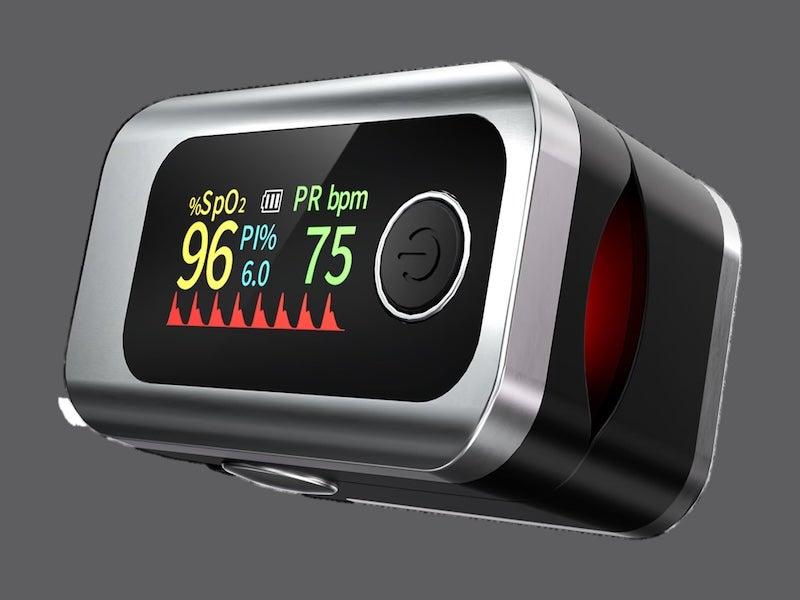
Best Overall
Oxiline Pulse XS Pro
Clear, multicolored display and mobile app for tracking results
Many of us gain peace of mind by being well-informed. Digital health products designed to monitor your health at home can provide the information necessary to recognize the early warning signs of a growing health concern. These tools can be especially important when managing chronic conditions or recovering from illness. One important metric you can track at home is SpO₂, or blood oxygen saturation, which measures the percentage of hemoglobin in your blood that is saturated with oxygen.
If these oxygen levels drop too low, it can signal a serious problem, especially for people living with COPD, asthma, heart disease, or long-term effects of COVID-19. In these situations, a pulse oximeter provides a quick way to check oxygen levels and determine when it’s time to seek medical help. According to our survey of people who use home health monitoring devices, 57% of respondents reported buying one of these products at a doctor’s recommendation or to manage an existing condition.1

“I feel like I have a great tool to monitor my temperature and blood oxygen to monitor my sickness and let me know if I need to go to see an MD, PA, or NP. Empowered is a great word.”
—Respondent to our 2025 home health survey.1
In this guide to the best pulse oximeters, we explain the top models, highlight standout features, and help you choose a product that’s accurate, comfortable, and easy to use at home.
Best pulse oximeters in 2026
- Oxiline Pulse XS Pro: Best Overall
- Oxiline Pulse 9S Pro: Best Display
- Masimo MightySat Pulse Oximeter: Most Advanced Tracking
- ADC Advantage 2200 Fingertip Pulse Oximeter: Best Travel
- Baseline Finger Pulse Oximeter: Best Value
- Wellue Sleep U: Best for Overnight Use
The best pulse oximeters of 2026 compared
| Comparison Features | ADC Advantage 2200 Fingertip Pulse Oximeter Visit Sitefor ADC Advantage 2200 Fingertip Pulse Oximeter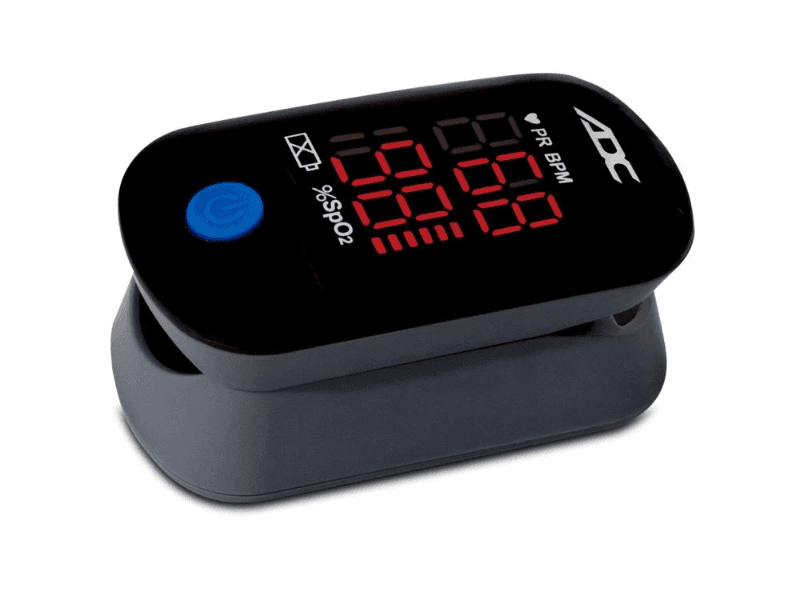 |
|||||
|---|---|---|---|---|---|---|
| Our rating | 9.9 |
9.5 |
9.6 |
9.2 |
9.3 |
9.7 |
| Best for | Overall |
Display |
Most Advanced Tracking |
Travel |
Value |
Overnight Use |
| HR Monitor (yes or no) | Yes |
Yes |
Yes |
Yes |
Yes |
Yes |
| App (yes or no) | Yes |
No |
Yes |
No |
No |
Yes |
Our reviews of the top pulse oximeters for home use
Oxiline Pulse XS Pro: Best Overall
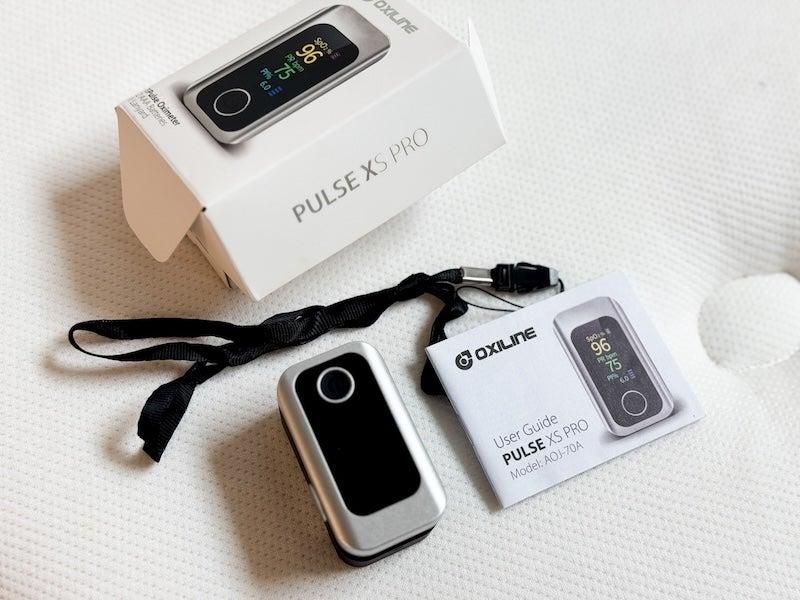
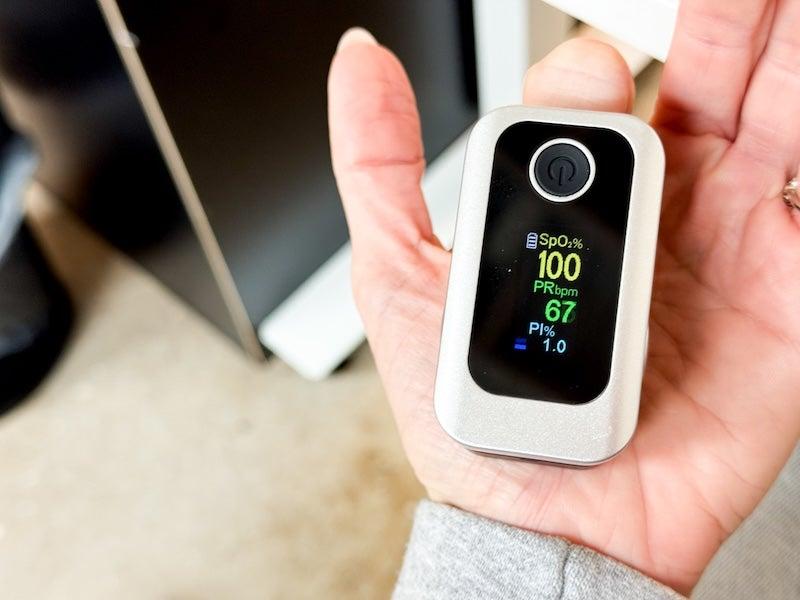
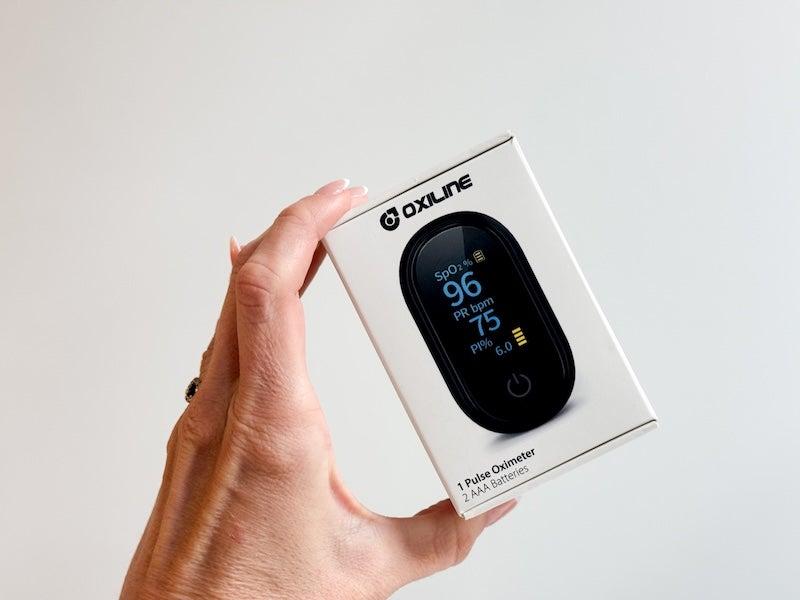
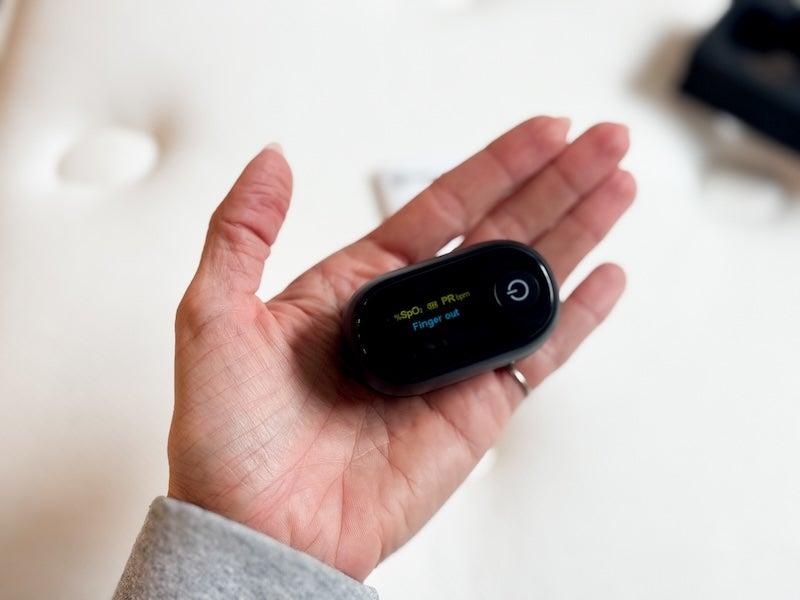
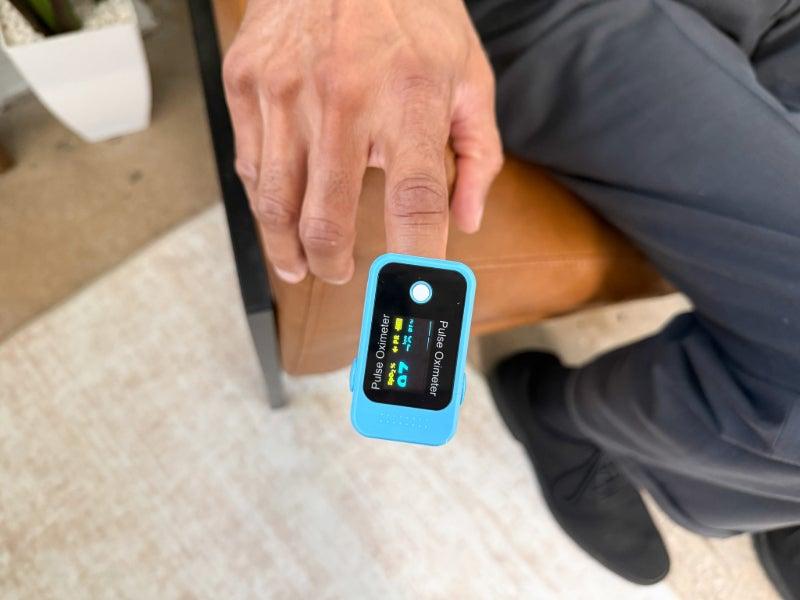
We named the Oxiline Pulse XS Pro our Best Overall pulse oximeter for its accuracy, reliability, and ease of use. Its VTEC AX sensor consistently delivers precise readings, detecting even small changes in your oxygen saturation. And the companion app helps users with long-term tracking.
- Oxiline Review
- Colorful, easier-to-read screen
- App to track results over time
- VTEC AX Sensor for accurate readings
- Display: Multicolored, multidirectional, large text
- Battery type: Disposable
- Monitoring: SpO₂, pulse rate, plethysmograph, perfusion index
- Certifications: FDA 510(k)
Pros
- User-friendly interface
- Color-coded results
- Reminder options
- Connects to an app for data tracking and sharing
Cons
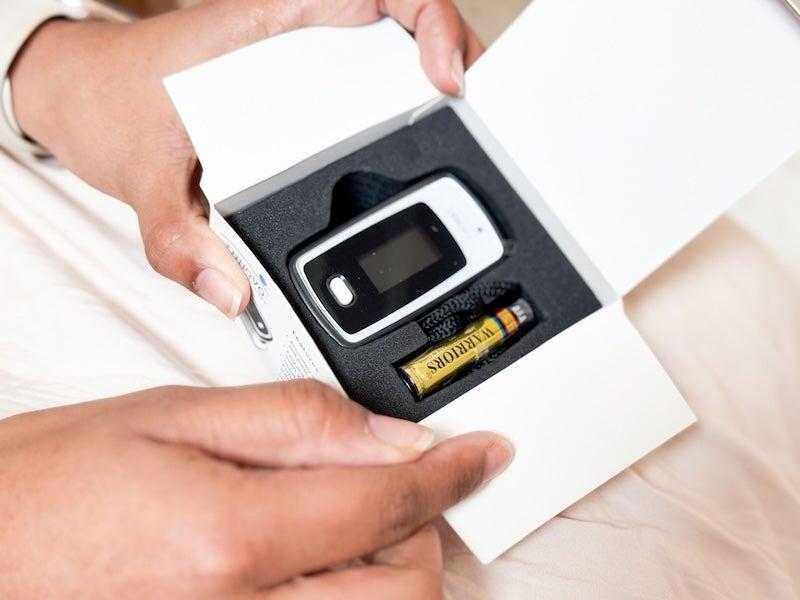
- Battery compartment is difficult to open
- Testers thought the 55-page manual was overwhelming
- No QR code for the app
Oxiline Pulse 9S Pro: Best Display
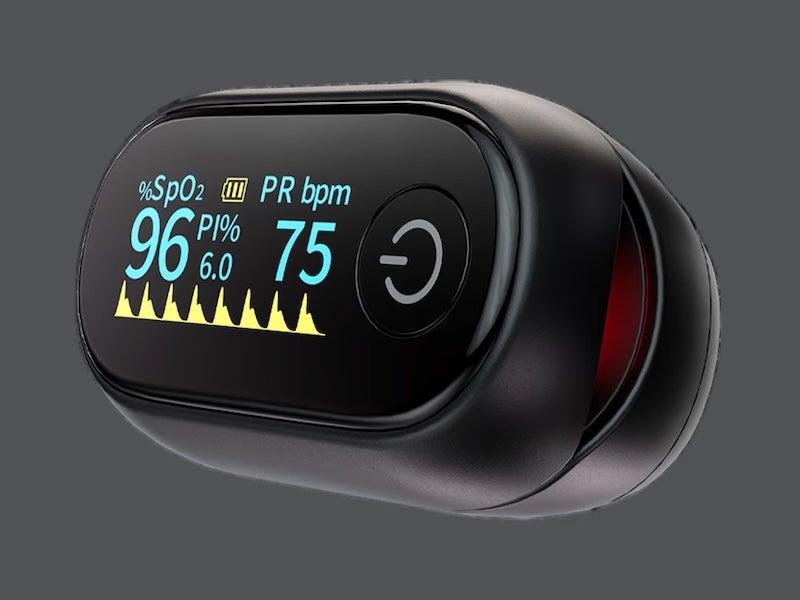
We chose the Oxiline Pulse 9S Pro as our Best Display pulse oximeter because its crisp screen and clear text make readings fast and low-effort. The screen rotates, so you can view it easily from any angle. And because the 9S Pro doesn't use an app, it costs about $30 less than the XS Pro. If you don't want to connect your pulse oximeter with your smartphone, you'll benefit from the 9S Pro's simple, clear design.
- Oxiline Review
- Clear, bold display
- Color-coded results
- VTEC sensors for more accurate testing
- Display: Multicolored, multidirectional, large text
- Battery type: Disposable
- Monitoring: SpO₂, pulse rate, plethysmograph, perfusion index
- Certifications: FDA 510(k)
Pros
- Easy-to-read display
- Small, sleek design
- Can set an alarm for consistent use
Cons
- No app for automatic tracking
- Slightly more expensive than other app-less brands
Masimo MightySat: Most Advanced Tracking
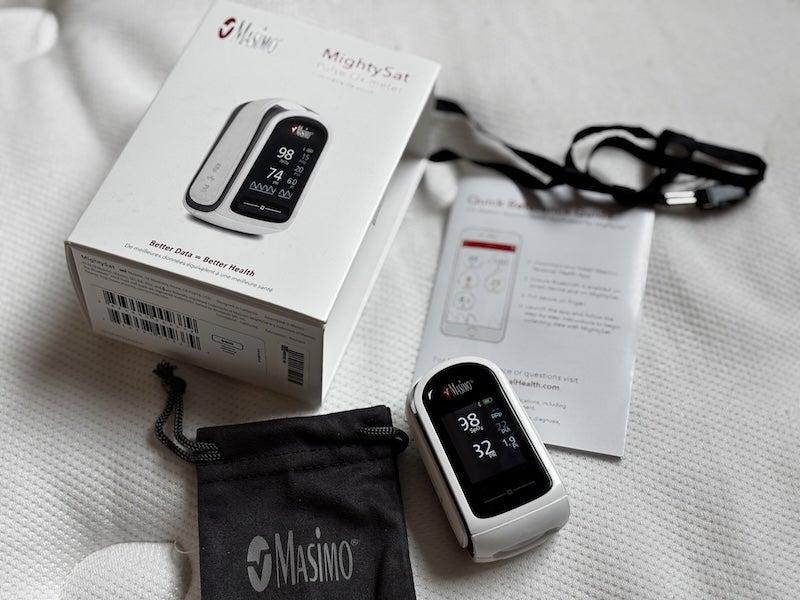
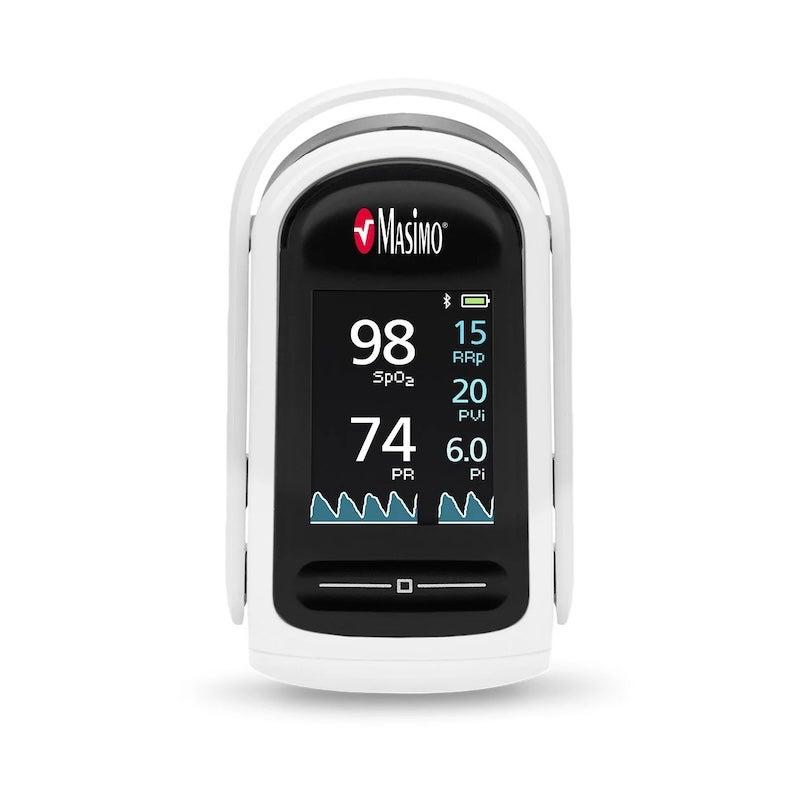
We chose the Masimo MightySat as our Most Advanced Tracking pulse oximeter for its impressive app and precision. The app offers advanced tools, such as trend charts, past readings, reminder settings, and sound alerts for easy tracking of your oxygen and pulse data. The Masimo MightySat was also the first pulse oximeter to earn FDA clearance for home use.
- Advanced app with multiple tracking abilities
- Comfortable and easy to use
- FDA-cleared
- Display: Multicolored, large text
- Battery type: Disposable
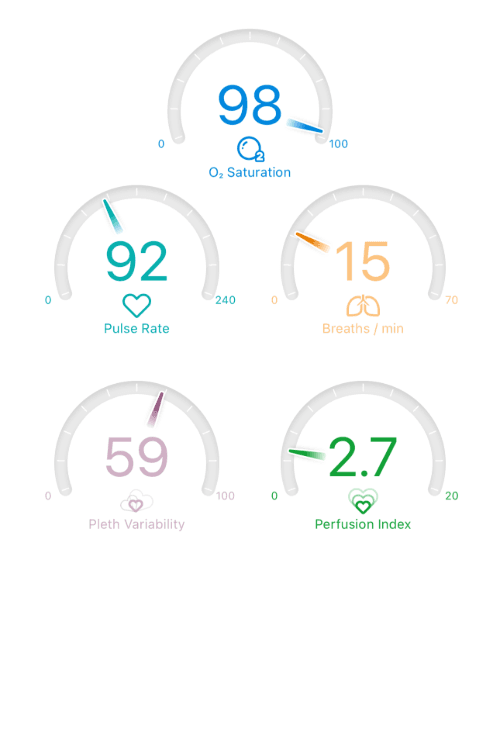
- Monitoring: SpO₂, pulse rate, plethysmograph, perfusion index, respiration rate, pleth variability
- Certifications: FDA-cleared
Pros
- Advanced app
- Easy to use
- Comfortable
Cons
- Most expensive device on the list
- Can’t buy directly from the manufacturer
- The manual is overwhelming
ADC Advantage 2200 Fingertip Pulse Oximeter: Best Travel
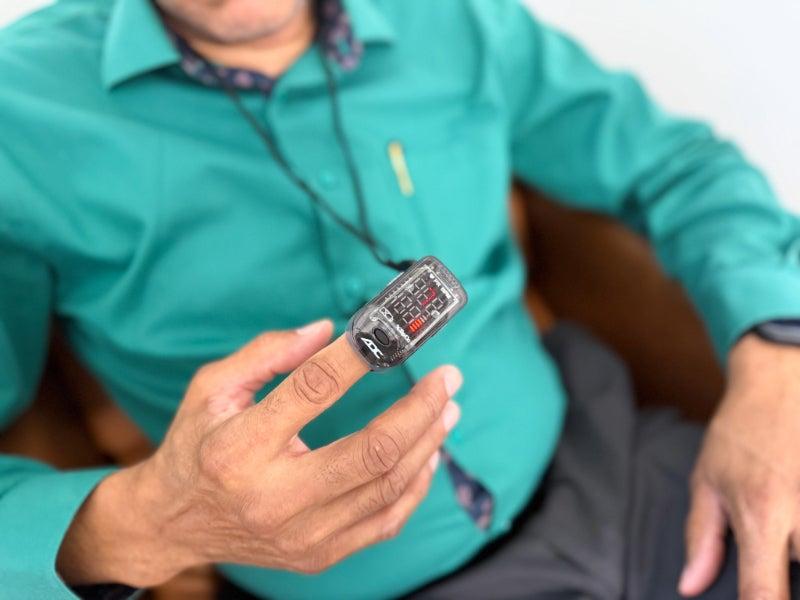
We chose the ADC Advantage 2200 Fingertip Pulse Oximeter as our Best Travel pulse oximeter. It’s the smallest, most portable option on this list. It's about the size of a pack of gum and comes with a lanyard for on-the-go use.
- Smallest device on the list
- Simple, straightforward readings
- Budget-friendly
- Display: Multidirectional, large text
- Battery type: Disposable
- Monitoring: SpO₂, pulse rate
- Certifications: None
Pros
- Small and easy to transport
- Comes with a lanyard
- Most affordable device on the list
- High-contrast display
Cons
- Limited data shown
- Not designed for medical use
Baseline Finger Pulse Oximeter: Best Value
We chose the Baseline Finger Pulse Oximeter as our Best Value pulse oximeter. It’s the most affordable model on our list at $29. We like that this device is appropriate for medical use and within reach for people on a tighter budget.
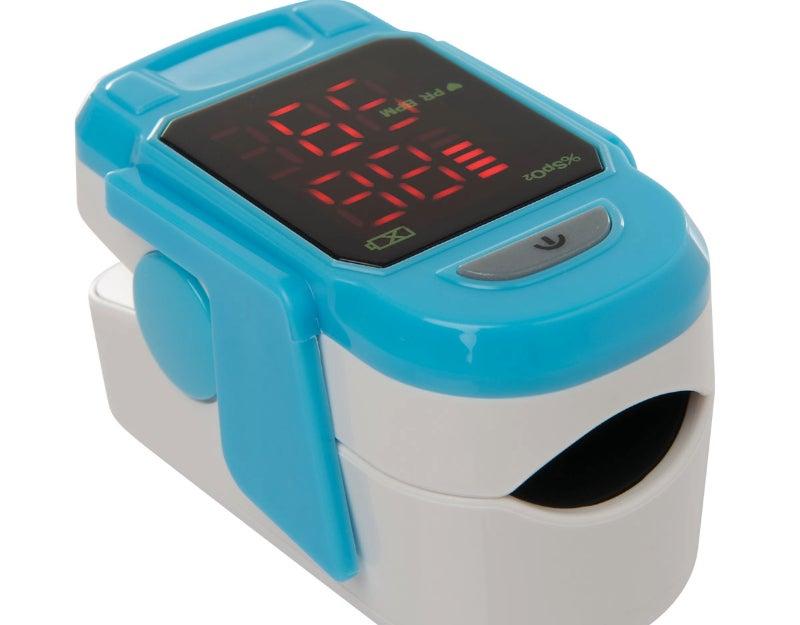
- Most affordable on this list
- Offers readings found on higher-priced options
- Comfortable setup and use
- Display: Color-coded, multidirectional
- Battery type: Disposable
- Monitoring: SpO₂, pulse rate, plethysmograph, perfusion index
- Certifications: FDA 510(k)
Pros
- Budget-friendly
- Similar readings to advanced models
- Arthritis-friendly components
Cons
- Bulky, loose fit
- Manual and display text can be hard to read
- No app or data storage
Wellue SleepU: Best for Overnight Use
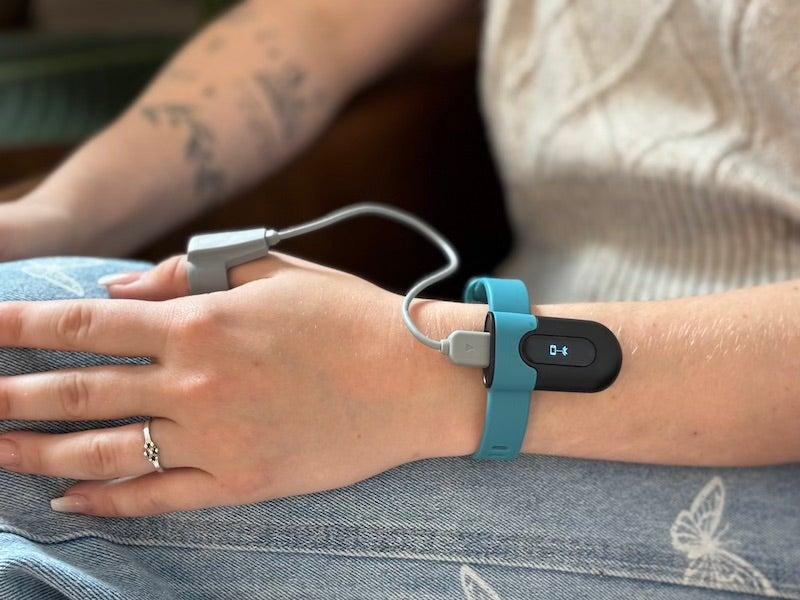
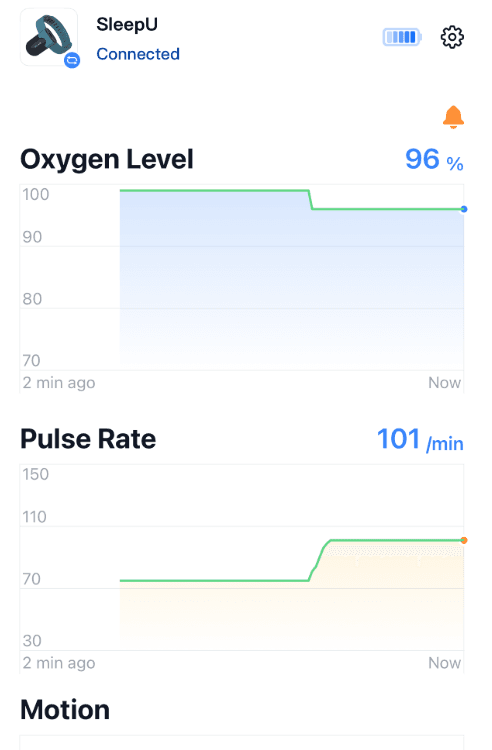
We chose the Wellue SleepU as our Best for Overnight Use pulse oximeter because it’s the only one on our list designed to monitor oxygen levels while you sleep. Its comfortable wristband design keeps the sensor secure throughout the night, and its vibrating alarm alerts you if your oxygen levels drop, while being quiet enough not to disturb a sleeping partner. If you have sleep apnea or are interested in overnight oxygen-tracking, the SleepU may be a good fit for your needs.
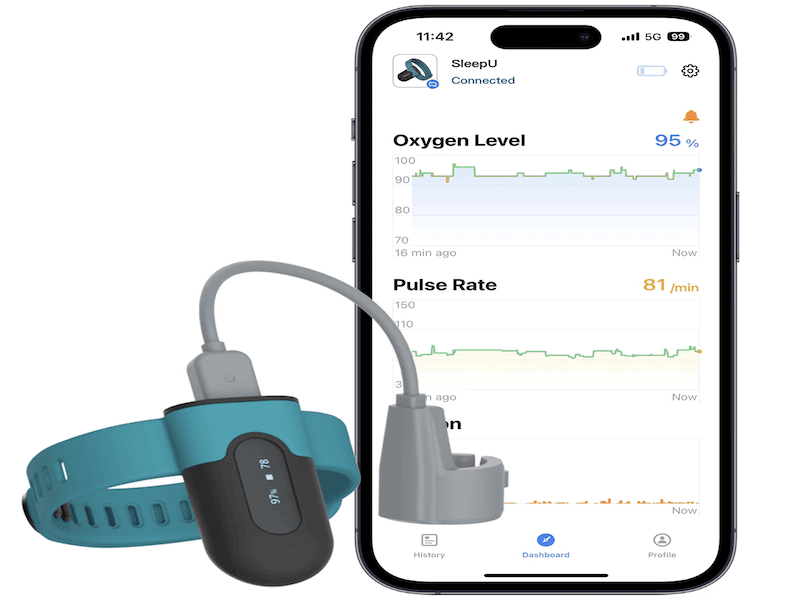
- Designed specifically for overnight use
- Comfortable and easy to wear
- Will buzz if it detects an oxygen level issue
- Display: Large text
- Battery type: Rechargeable
- Monitoring: SpO₂, pulse rate
- Certifications: None
Pros
- Tracks oxygen levels while you sleep
- Will buzz if an oxygen level issue is detected
- Comfortable
Cons
- Not for use during the day
- Sometimes had to be readjusted for readings
- Testers thought app was “bare bones”
How we tested the best pulse oximeters
We chose pulse oximeters from reputable brands and focused our testing on devices designed to measure blood oxygen saturation quickly and accurately. Before testing, we read customer reviews, researched FDA clearance or certification when applicable, and prioritized devices with third-party testing.
In our research and testing, we looked at factors like:
- Warranty coverage
- Support responsiveness
- App connectivity
- Real-time monitoring
- Display readability
- Ease of setup
- Data tracking and sharing
We also considered each pulse oximeter's overall value, prioritizing devices that balance price, performance, and quality.
How do pulse oximeters work?
Pulse oximeters work by using red and infrared light to monitor the oxygen saturation of your blood. The device itself is small, painless, and clips onto the tip of your finger. The amount of oxygen in your blood affects how much of the light is absorbed. The pulse oximeter measures this amount, called the SpO₂, as well as your heartbeat. It then displays those results as a percentage. Most healthy people have a SpO of 95-100%. If you have a chronic illness like COPD, asthma, or live at a higher altitude, your SpO₂ may be lower.5

“For those with chronic illnesses, home monitoring can also provide peace of mind and transform health management from reactive to proactive. To note, these devices don’t replace medical care but they act as a complement to care to give patients and doctors clearer insights between visits, improving patient satisfaction and quality of life.”
– Michael Genovese, MD, Chief Medical Advisor at Ascendant New York
How to use a pulse oximeter
Using a pulse oximeter is typically straightforward—you clip the device to your fingertip and wait for it to display the results. But there are some key things to keep in mind to ensure the results are as accurate as possible. These include:
- Removing any jewelry or nail polish from your testing finger
- Keep your hand relaxed and below the level of your heart
- Keep the device on until it’s been able to fully read your SpO₂
Understanding your pulse oximeter readings
Understanding your pulse oximeter readings can provide you and your medical team with valuable insights into your health. A healthy person at sea level would expect to have a reading between 95–100%. If you live at a higher altitude or have a chronic illness like COPD, you may have a lower reading. But if your reading ever drops below 92%, you should call your health care provider. Readings this low can be a sign of serious conditions like hypoxia, in which not enough oxygen reaches your blood, or hypoxemia, in which not enough oxygen reaches your tissues. Readings below 88% may indicate the need for immediate medical care.6, 7
It’s important to remember that your specific SpO₂ range is influenced by where you live, especially the altitude, and what chronic illnesses you may have. Your doctor can provide you with a personalized target range for your SpO₂ readings.
What to look for when buying a pulse oximeter
Choosing the right pulse oximeter depends on several factors, including your intended use and the reason you need it. For instance, if you need a device that tracks readings over time, consider the Oxiline XS Pro, which comes with an app that logs results. Or, if you have sleep apnea, consider the Wellue SleepU, which is designed for overnight wear. Your doctor can help you decide the most important features for your specific health goals.
Overall, we recommend choosing a pulse oximeter that’s either FDA 510(k) cleared or FDA-approved. This is because these labels indicate that the devices have been independently vetted and tested to ensure they provide accurate, consistent SpO₂ readings. Some over-the-counter brands aren’t tested at all, so you risk wasting money and time on a device that might not work as reliably.
“When managing chronic illness, home health devices empower patients to take a more active role in their care, whether those actions be tracking blood pressure, glucose levels, monitoring oxygen, or heart rhythms. Regular use of these tools can improve patient adherence to treatment, reduce emergency room visits, and help physicians adjust patient treatment.”
– Dr. Michael Genovese, Chief Medical Advisor at Ascendant New York
Key features to look for
When choosing a pulse oximeter for home use, you’ll want to consider two different types of features. First, ensure you choose a device that tracks the vital signs most relevant to your needs. Those can include:
- SpO₂ readings: Monitors the oxygen saturation in your blood. This gauges how effectively the body moves and uses oxygen. When your oxygen saturation is too low, your cells may lose the ability to perform their vital functions.
- Heart rate: Measures your heart rate in beats per minute. Your heart rate is a key indicator of your cardiovascular health. Abnormal heart rates can signal a potential heart condition, like an arrhythmia, where the heart beats irregularly.
- Perfusion index (PI): Measures the strength of your pulse (safe ranges are between .02% and 20%). The PI indicates the health of your blood circulation and can be a key tool in early detection of health concerns like blood clots or arterial disease.8
- Respiratory rate (RR) monitoring: Measures the number of breaths you take per minute. This is a vital sign that assesses overall health. A normal respiratory rate is 12–16 breaths per minute.9
You’ll also want to consider a pulse oximeter’s usability. These devices can have several key features that make them valuable for home health care management, including:
- Real-time sync: Uploads your results as they occur, usually to an app
- Data storage: Saves your results to an accessible app
- Export: Allows you to download and share your results, like with your doctor
- Display visibility: Bold, clear, easier-to-read numbers and results
- Finger sizes: Works for a variety of finger sizes
- One-button use: Makes it easier to take your own readings, especially with dexterity issues
How much do pulse oximeters cost?
The pulse oximeters on this list range in price from $31–$279. When choosing how much to pay for a pulse oximeter, consider what features are most important to you and whether you believe they are worth the cost. If you're looking for a robust app with easy data storage and sharing, it may be worth spending more on a pulse oximeter that comes with those features, such as the Masimo MightySat. Or if you just want something straightforward that doesn’t have too many bells or whistles, then you can opt for the travel-friendly ADC Advantage 2200 Fingertip Pulse Oximeter or affordable Baseline Finger Pulse Oximeter. Typically, the more features a pulse oximeter has, the more expensive it will be.
Comparing costs of pulse oximeters
| Comparison Features | Oxiline Pulse XS Pro |
Oxiline Pulse 9S Pro |
Masimo MightySat |
ADC Advantage 2200 Fingertip Pulse Oximeter |
Baseline Finger Pulse Oximeter |
Wellue Sleep U |
|---|---|---|---|---|---|---|
| Price | $119 |
$79 |
$279 |
$69 |
$31 |
$169 |
| Return window | 30 days |
30 days |
60 days if unused and unopened |
30 days |
30 days |
30 days |
| Warranty | Lifetime |
Lifetime |
None |
1-year |
1-year |
1-year |
Who should consider a pulse oximeter?
People should use a pulse oximeter if they need to know their blood oxygen levels. If you have a chronic illness or participate in activities like high-altitude hiking, it’s important to have accurate SpO₂ level readings to make sure you’re in a healthy range. If the readings fall outside a specific range and you’re experiencing hypoxemic symptoms, you may need to stop and rest. If those low readings and symptoms persist, you’ll know to seek out medical attention.
Some people who might need to use a pulse oximeter include:
- People with chronic illnesses like asthma or COPD
- People recovering from COVID-19
- Caregivers for older adults who are responsible for monitoring health measurements
- Endurance athletes or people participating in high-altitude sports
- People with sleep apnea
How skin color affects pulse oximeters
Recently, studies have shown that a pulse oximeter’s results can be affected by skin color: darker skin tones absorb more infrared light than lighter skin tones, potentially leading to less accurate readings for those with darker skin tones, such as those of Asian, Black, and Hispanic descent. Over time, this has resulted in a disparity of care for non-white populations.10 Consider any symptoms alongside the pulse oximeter readings, and to check with your health care provider if you have questions.
Other factors that can impact pulse oximeter readings
Some other factors that can impact pulse oximeter readings include:
- Wearing nail polish
- Cold hands
- Health conditions that cause impaired circulation
- Holding your hand above your heart while measuring
- Calluses or thicker skin on your testing finger
Frequently asked questions
What is a normal SpO₂ reading?
A normal SpO₂ reading is between 95% and 100%.
Are pulse oximeters accurate?
Yes, pulse oximeters can be accurate, especially if they have been tested or vetted by the FDA.
When should pulse oximeters be used?
Pulse oximeters should be used whenever you have a concern about your oxygen levels.
Can I use a pulse oximeter while sleeping?
Yes, some pulse oximeters are designed for use while sleeping. You’ll want to make sure the brand you’re using is designed for overnight use.
What finger is best to use in a pulse oximeter?
The index finger or the thumb is best for pulse oximeters.
Questions? Email us at reviewsteam@ncoa.org.