
The Best Home Blood Pressure Monitors of 2026
We tested the best at-home blood pressure monitors on the market, looking at factors like ease of use, accuracy, and data tracking.

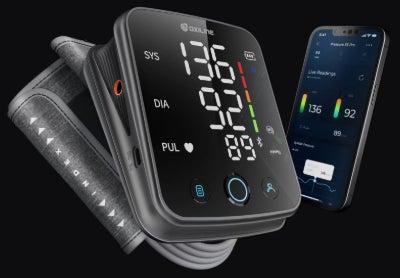
- We chose the Oxiline Pressure XS Pro as the best overall blood pressure monitor for home use for its simple data sharing, advanced features, and accuracy.
- Blood pressure monitors in this review range from $46–$289.
- We tested 12 home health monitoring devices from 11 brands and compared them for ease of use, fit, display, accuracy, and data tracking.
- Over time, high blood pressure can increase the risk of stroke, heart disease, and kidney problems. Regularly checking your blood pressure is one of the best ways to stay on top of your health.
- At-home blood pressure monitors are affordable, user-friendly, and make staying on top of your health accessible for everyone.
- Wrist and finger blood pressure monitors are not included in our top picks because the American Heart Association does not recommend them.
To support everyone’s right to age well, we research, test, and recommend products so you can find the right options to help you live your healthiest life. We’ve spent over 50 hours conducting in-depth, hands-on research and testing eight home health monitoring devices from seven brands to help you make an informed decision. To find the best home blood pressure monitors, we:
- Examined and mystery-shopped the top home health monitor brands and products, including blood pressure monitors
- Consulted registered nurses and board-certified doctors to fully understand the importance and process of monitoring your blood pressure from home, and determine key features to look for in a device
- Personally tested blood pressure monitors, comparing them in key factors such as ease of use, fit, display, accuracy, and data tracking
- Researched and reviewed articles and guidelines from reputable health organizations, such as the American Heart Association, to learn about the risk factors related to high blood pressure, lifestyle changes to lower blood pressure, and the importance of understanding and tracking blood pressure
- Combed through verified customer reviews of blood pressure monitors on the company and third-party seller websites
We’re constantly testing new blood pressure monitors to continue to share the most accurate and up-to-date recommendations. Read more about our blood pressure device review methodology.
High blood pressure, or hypertension, is a common condition affecting nearly half of adults nationwide.1 Uncontrolled or undetected high blood pressure increases the risk of having a stroke, heart attack, vision loss, and kidney disease.2 In most cases, hypertension does not cause symptoms. So regular blood pressure monitoring can help you stay on top of your health.
If you’ve already been diagnosed with hypertension, using a home blood pressure monitor can help you get more accurate readings and track your response to treatment. When used with methods to lower your blood pressure, a home-use monitor can help protect your health. But not all devices are created equal. When choosing the best home blood pressure monitor for your needs, prioritize accuracy while considering factors such as ease of use, additional features, and comfort. Read on to see which systems our team recommends.

Wrist and finger blood pressure monitors aren’t included in our top picks because the American Heart Association does not recommend them.
Best Overall
Oxiline Pressure XS Pro
User-friendly while providing accurate, consistent readings
Health Awareness discount
Up to 50% off sitewide
Our picks for the best blood pressure monitors of 2026
- Oxiline Pressure XS Pro: Best Overall
- CONNEQT Pulse: Best for Advanced Monitoring
- Renpho Blood Pressure Monitor+: Best for Beginners
- Etekcity TMB-1583-BS Smart: Best App
- Omron Series 3: Best Value
- VitalTrack Pro: Easiest to Use
The best blood pressure monitors of 2026 compared
| Comparison Features | ||||||
|---|---|---|---|---|---|---|
| Our rating (out of 10) | 9.9 |
9.7 |
9.7 |
9.9 |
9.5 |
9.8 |
| Power options | Battery and USB-C |
Battery and USB-A |
Battery and AC adapter |
Battery and AC adapter |
Disposable batteries |
Battery and USB-C |
| Number of users | Unlimited |
1 |
2 |
2 |
1 |
2 |
| Number of readings stored | Unlimited |
Unlimited |
Unlimited |
100 |
14 |
100 per user |
| Simple data sharing | Yes |
Yes |
Yes |
Yes |
Yes |
No |
| Irregular heartbeat detection | Yes |
Yes |
No |
Yes |
Yes |
Yes |
| Average reading time (in seconds) | 34 |
60 |
40 |
40 |
33 |
28 |

Blood pressure monitors and pacemakers
The American Heart Association (AHA) notes that electromagnetic waves emitted by certain devices may interfere with implantable cardioverter-defibrillators (ICDs) and pacemakers. While the risks are limited, you should consult your physician before using a BP monitor that connects to Bluetooth or Wi-Fi if you have an ICD or a pacemaker.
How we tested to find the best blood pressure monitors
We ordered and tested eight of the leading home blood pressure monitors, identifying several important factors in the process. Here are some ways we tested blood pressure monitors:
Oxiline Pressure XS Pro Blood Pressure Monitor: Best Overall
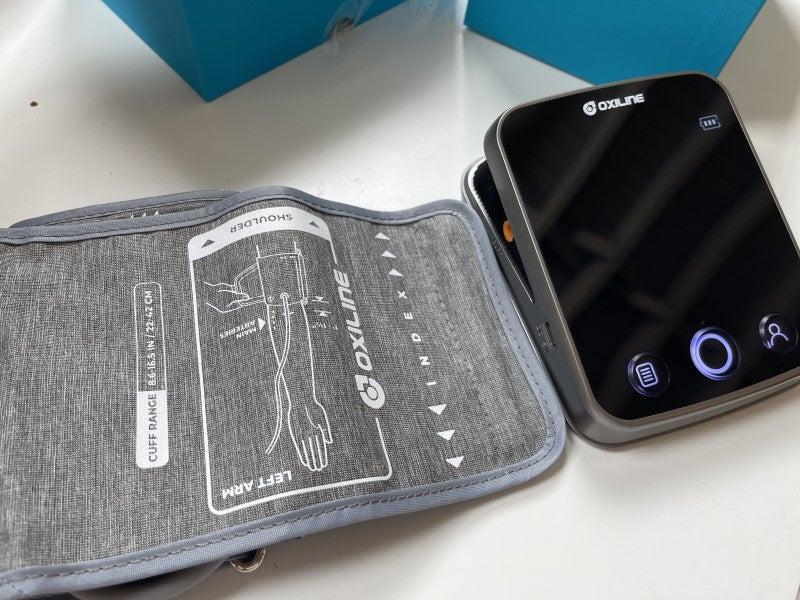
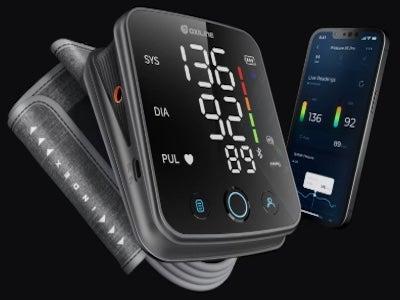
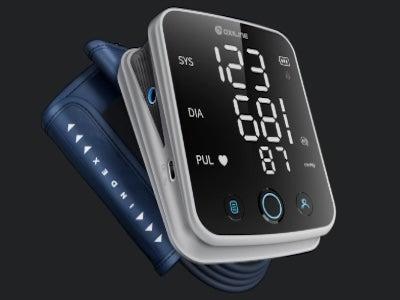
We selected the Oxiline Pressure XS Pro as Best Overall Blood Pressure Monitor for its advanced features, including Bluetooth connectivity and a personal health app. The device is straightforward to use and features Oxiline’s VIBRA™ TX Sensor, the brand’s latest technology.
Oxiline Pressure XS Pro
Best OverallHealth Awareness discount
Up to 50% off sitewide - no code needed
Health Awareness discount
Up to 50% off sitewide - no code needed
- Oxiline Blood Pressure Monitors Review
- Power source: Battery and USB-C
- Number of users stored: Unlimited
- Warranty: Lifetime
- Reading memory: 99 per user (unlimited storage in the app)
- App available: Yes
- Health metrics measured: Blood pressure, pulse, and irregular heartbeat
- Weight: 13 oz
- Cuff size: 8.7–16.5 inches (standard); 8.6–18.9 inches (XL)
Pros
- A user-friendly app allows you to see different data views
- Unlimited users and reading storage through the app
- Can export data to a PDF via the app
- Irregular heart rate detection
- In-app blood pressure reminders
Cons
- Sometimes syncing the app with the device’s readings is delayed
- Slightly bulky
CONNEQT Pulse: Best for Advanced Monitoring
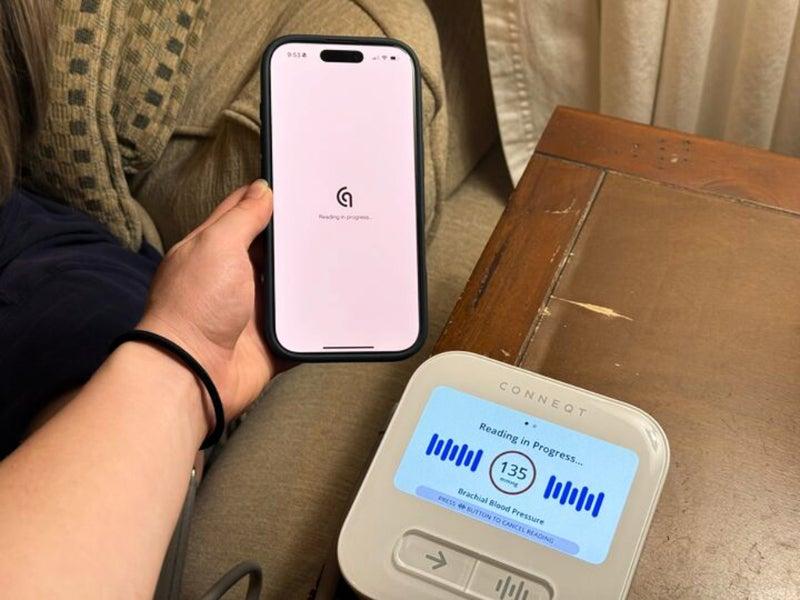
The CONNEQT Pulse is our Best Blood Pressure Monitor for Advanced Monitoring. It tracks cardiovascular metrics such as central blood pressure, arterial stiffness, and blood pressure. It also has a simple setup and a user-friendly app.
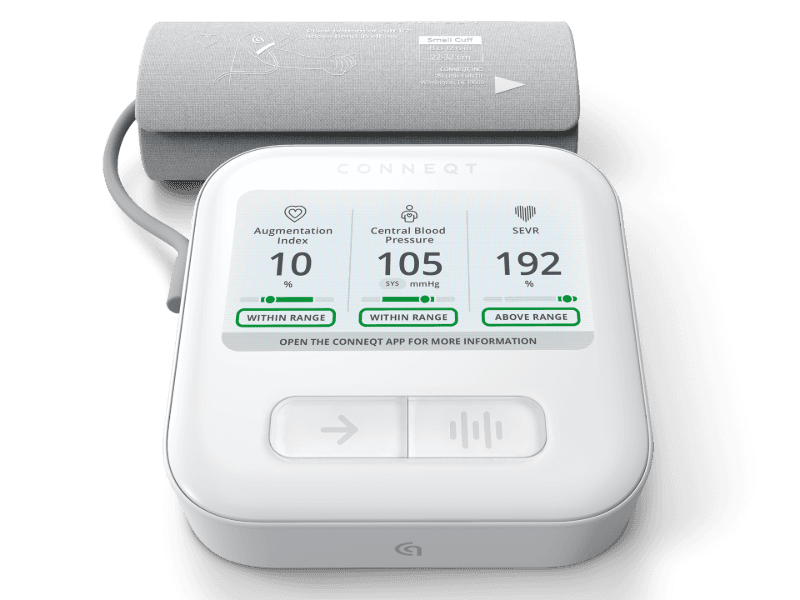
- Power source: Battery and USB-A
- Number of users stored: 1
- Warranty: 1 year
- Reading memory: Unlimited
- App available: Yes
- Health metrics measured: Blood pressure, arterial stiffness, irregular heartbeat
- Weight: 12.03 oz
- Cuff size: 8.6–12.5 inches (small); 12.6–16.5 inches around (large)
Pros
- Provides comprehensive metrics
- Easy-to-read display
- Uses FDA-cleared SphygmoCor® hospital-grade technology
Cons
- More expensive at $289
- Some features tied to an additional paid subscription
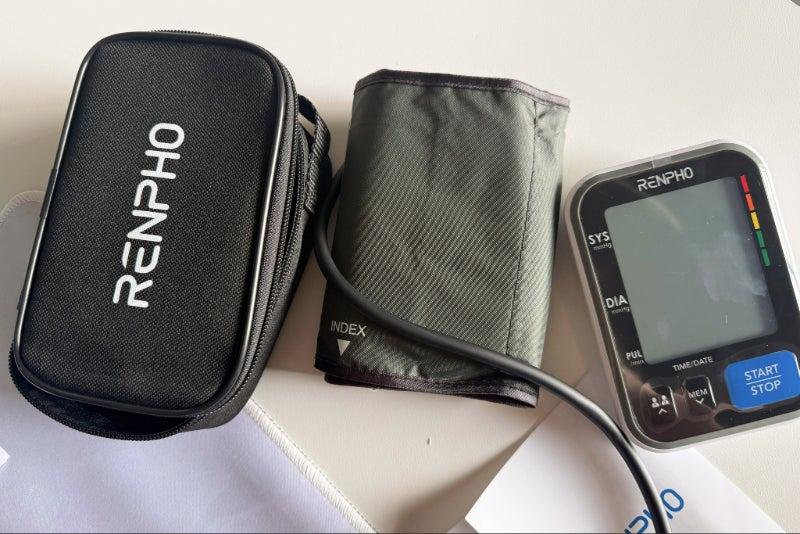
Renpho Blood Pressure Monitor+: Best for Beginners
Renpho earned our title of Best Blood Pressure Monitor for Beginners. Our testers liked its affordability, simple setup, and effortless at-home or on-the-go blood pressure monitoring.
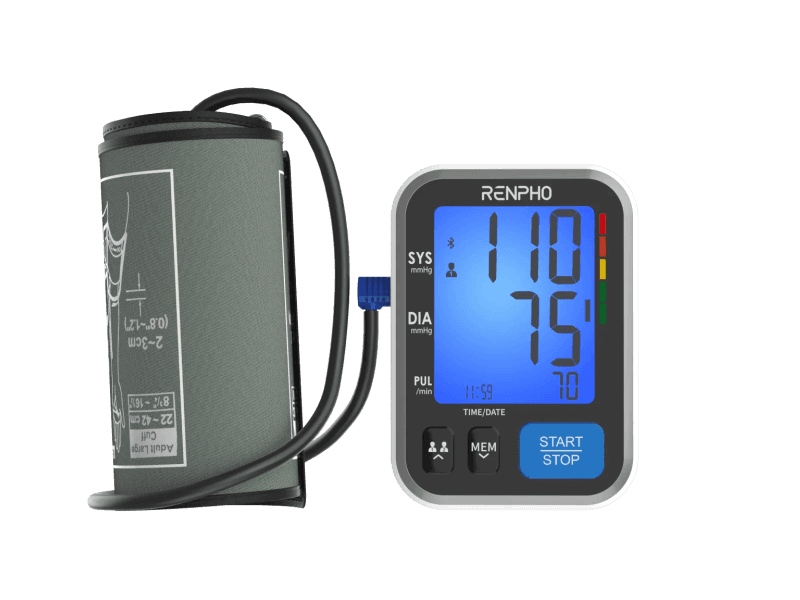
- Power source: Battery and AC adapter
- Number of users stored: 2
- Warranty: 18 months
- Reading memory: Unlimited
- App available: Yes
- Health metrics measured: Blood pressure
- Weight: 6.4 oz
- Cuff size: 8–16 inches around
Pros
- Affordable
- Simple, quick-start setup
- Compact and lightweight design
- Automatically stores readings for easy tracking
Cons
- Only measures blood pressure and heart rate
- App requires users to input a lot of personal information
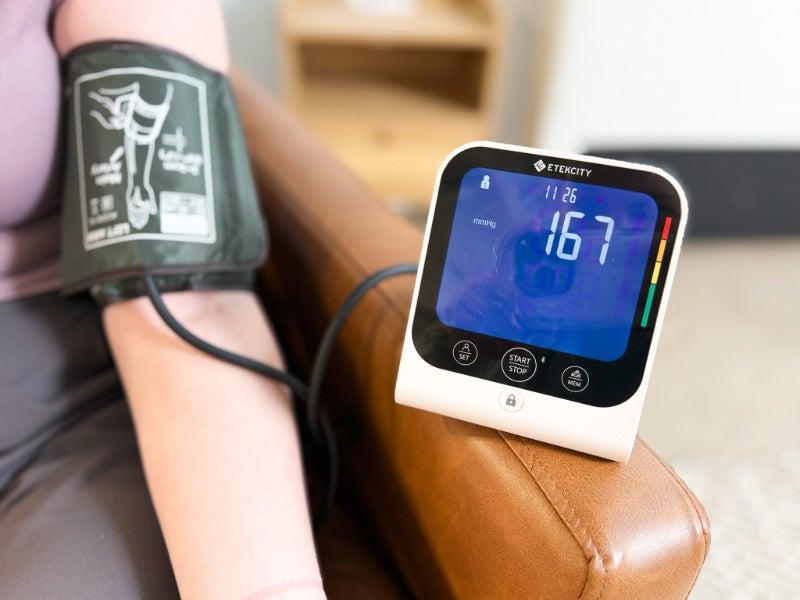
Etekcity TMB-1583-BS Smart: Best App
We chose the Etekcity TMB-1538-BS for having the best app because it is user-friendly (our testers set it up in mere minutes). It also displays stored data in a variety of helpful formats, including clear, simple-to-read graphs. Readings are customizable, downloadable, and shareable with your provider.
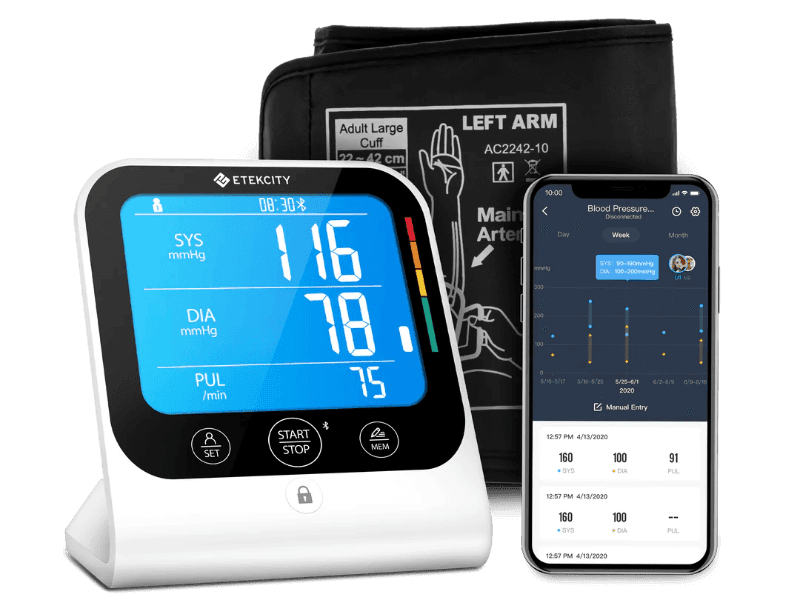
- Power source: Battery and AC adapter
- Number of users stored: 2
- Warranty: 2 years
- Reading memory: 90 readings
- App available: Yes
- Health metrics measured: Blood pressure, pulse, irregular heartbeat
- Weight: 8.8 oz
- Cuff size: 8–16.5 inches around
Pros
- Affordable
- Batteries included
- User-friendly app with trend tracking and reports
- Fast Bluetooth pairing and easy setup
Cons
- Larger and less portable than other models
- Long term tracking relies on app (monitor stores only 90 readings)
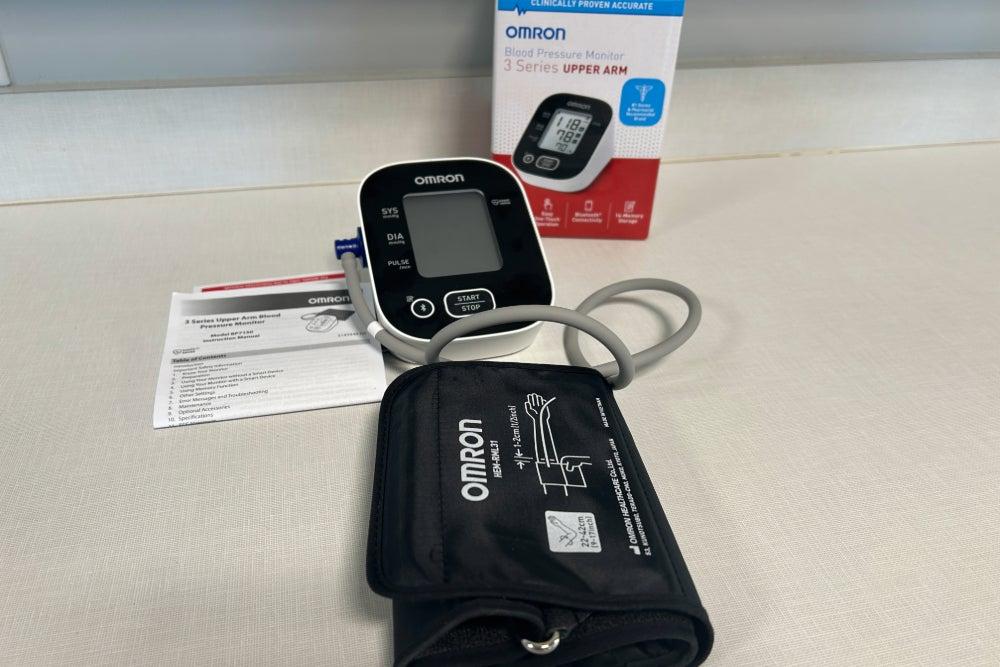
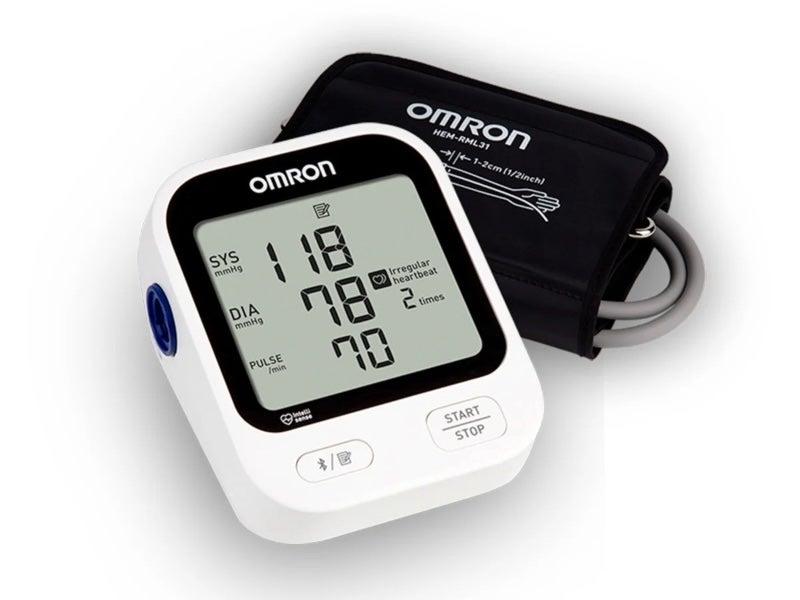
Omron 3 Series Upper Arm Blood Pressure Monitor: Best Value
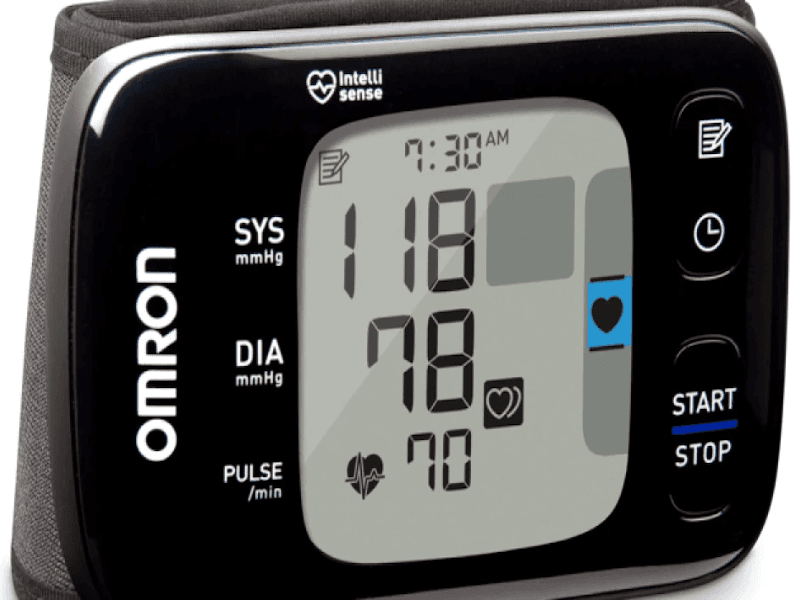
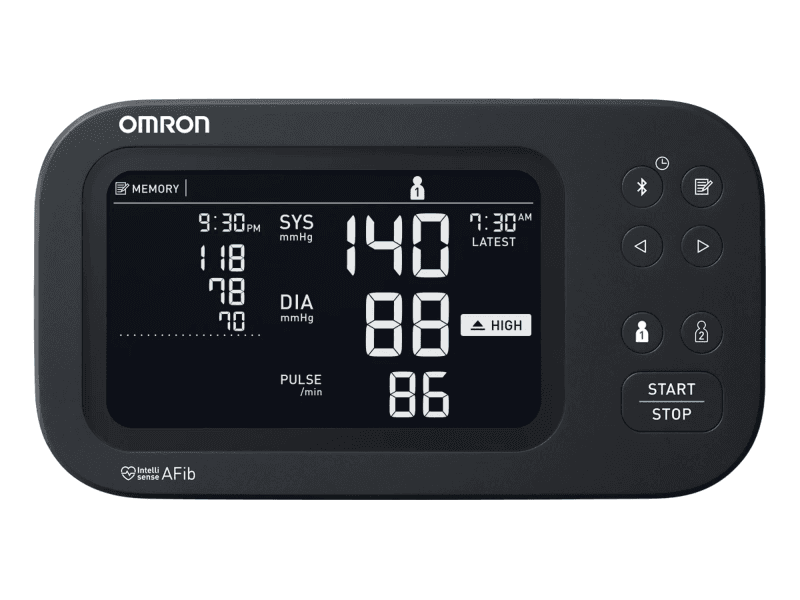
Starting at $70 before discounts, the Omron 3 Series stands out as our Best Value Blood Pressure Monitor. The device has a simple, readable display. It includes features such as Bluetooth connectivity and a companion app, typically found in higher-end models.
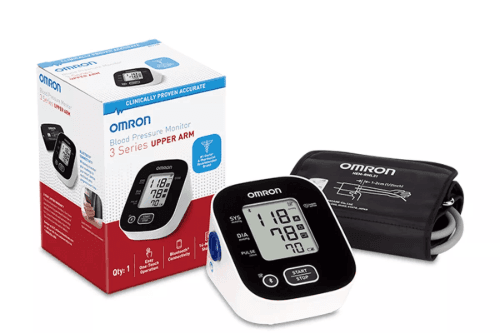
- Power source: Disposable batteries
- Number of users stored: One
- Warranty: One year for cuff, two years for monitor
- Reading memory: 14 on device
- App available: Yes
- Health metrics measured: Blood pressure, pulse, and irregular heartbeat
- Weight: 8.8 oz
- Cuff size: 9–17 inches
Pros
- Easy to use
- Large display
- Can connect to a mobile app
- Blood pressure reminders
Cons
- Must pay for full access to the app
- Only tracks readings for one user
- Difficult to wrap the cuff around the arm
- Limited 14-day return window
VitalTrack Pro Blood Pressure Machine: Easiest to Use
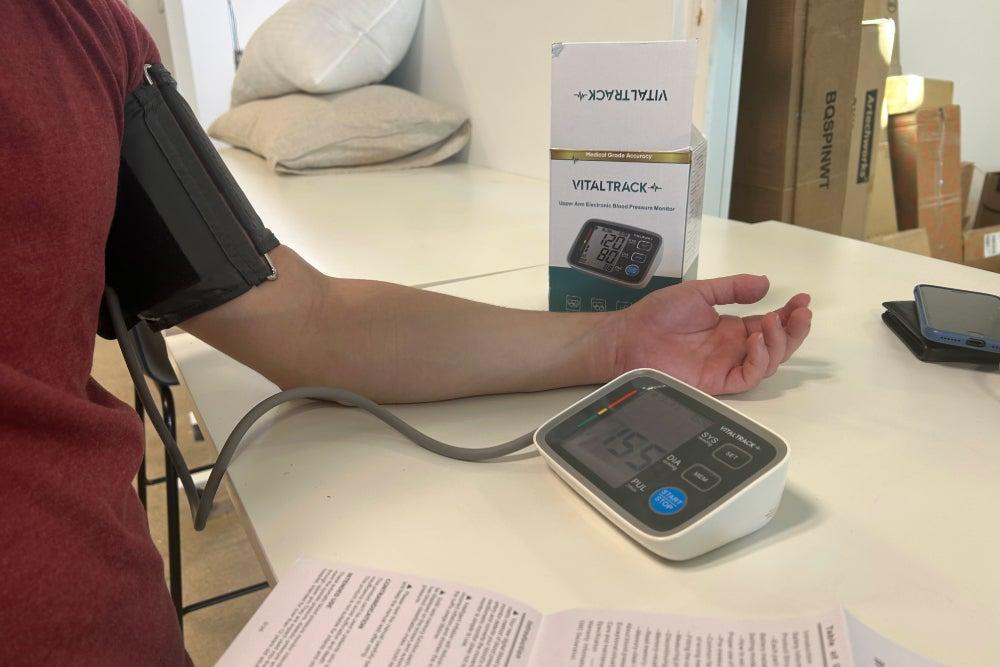
We chose the VitalTrack Pro as our Easiest-to-Use Blood Pressure Monitor because of its clean, simple design. It gave us accurate readings during testing and comes with a generous 90-day trial period.
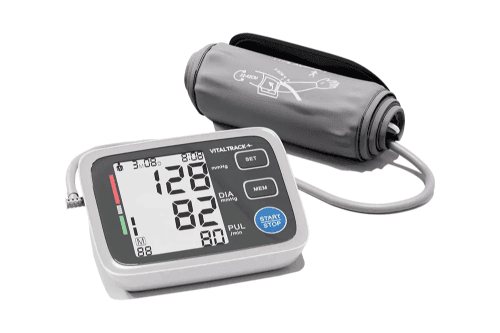
- Power source: Battery and AC adapter
- Number of users stored: Two
- Warranty: 10 years
- Reading memory: 90 per user
- App available: No
- Health metrics measured: Blood pressure, pulse, and irregular heartbeat
- Weight: 14 oz
- Cuff size: 8.7–16.5 inches, stretchable
Pros
- Basic design is easy to use
- Long warranty and trial period
- Stores up to 90 readings for two users
- Voted best blood pressure cuff by testers
Cons
- No back-lit display
- No option to export data
Who should use a blood pressure monitor?
Anyone can buy an over-the-counter blood pressure monitor (OTC). As Stephen Yeh, MD, a board-certified emergency physician in Charlotte, North Carolina, explained, “BP monitoring at home allows for a more consistent record of readings (i.e., similar position, time of day, conditions) and comfortable environment. These readings can then be interpreted as a whole by your clinician to manage your hypertension.”
The American Heart Association recommends home blood pressure monitoring for anyone diagnosed with high blood pressure. Checking your blood pressure at home helps you and your doctor know whether your medication is working and whether your readings remain within a healthy range.
People who haven’t been diagnosed with hypertension but are at higher risk may also benefit from monitoring their blood pressure at home. Risk factors include older age, a family history of high blood pressure, diabetes, and regular alcohol use.4, 5 Tracking your readings over time can help identify changes early, before blood pressure reaches unsafe levels.
Monitoring your blood pressure is especially important because high blood pressure often has no noticeable symptoms. Many people don’t realize their blood pressure is elevated until it becomes severe. Readings at or above 180/120 mm Hg are considered a medical emergency and require immediate care.6 Regular home monitoring can help catch rising blood pressure sooner and support long-term heart health.

Do blood pressure monitors expire?
Yes, blood pressure monitors technically expire. The internal sensors can break down, and the cuff can wear out. This can affect the device's accuracy. Blood pressure monitors generally last between three and five years. Higher-quality devices may provide accurate results for longer.
7 tips for using a blood pressure monitor
To use a home blood pressure monitor correctly, start by making sure you’re using the correct cuff size. Measure the circumference of your upper arm at its midpoint.7 The cuff bladder should cover about 75%–100% of your arm circumference for accurate readings.
Once your cuff fits properly, follow our tips, as recommended by the American Heart Association and the US Centers for Disease Control and Prevention.3, 8 Here are seven tips for taking your blood pressure accurately:
- Plan ahead: Avoid caffeine, food, exercise, or smoking for at least 30 minutes before taking your blood pressure. Use the restroom beforehand, as a full bladder can affect readings.
- Choose the proper space: Sit at a table or desk where you can rest your arm comfortably at heart level.
- Expose your upper arm: Remove clothing from the arm where you’ll place the cuff. The cuff should sit directly on your skin.
- Sit quietly for five minutes: Rest without talking, moving, or using electronics. You could use this to practice mindfulness or meditation to reduce stress. You can also take a couple of deep breaths to help relax.
- Place your feet flat on the floor: Keep your legs uncrossed and your back supported.
- Position the cuff correctly: Wrap the cuff snugly around your upper arm, about 1 inch above the elbow. Your arm should be supported at heart level, using a pillow or folded towel if needed.
- Take multiple readings and record the results: Take two readings, one minute apart, each time you measure your blood pressure. Record the results or sync them to your app.
After purchasing a blood pressure monitor, bring it to your next doctor’s appointment. Your provider can observe your technique, confirm accuracy, and help you feel confident using the device correctly.
A normal systolic blood pressure (top number) is less than 120 mm Hg. A healthy diastolic pressure (bottom number) is less than 80 mm Hg. High blood pressure is defined as a consistent systolic reading of 130 mm Hg or higher or a diastolic reading of 80 mm Hg or higher.9
See our blood pressure chart below for a visual to understand your blood pressure readings.
Blood pressure chart
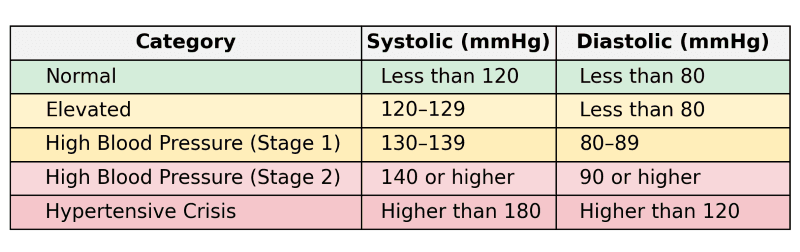
Sometimes, blood pressure readings can be higher than normal because of nervousness or fear. Data shows that 1 in 3 people with high readings at the doctor’s office may have regular readings at home.10 This is called white coat syndrome. But it's important to balance home blood pressure monitoring with readings taken during medical appointments.
Best time to take your blood pressure
According to the American Heart Association (AHA), you should check your blood pressure twice a day. First, take a reading in the morning before taking your medications, then in the evening before going to bed. Each time you take your blood pressure, take two readings 1 minute apart.3 You can use the AHA’s downloadable log to track your daily blood pressure readings.

From our medical advisory board:
The average traditional blood pressure reading takes about 1 minute. Most home monitors take about half that time.
How to choose a blood pressure monitor
Several factors may determine whether a blood pressure monitor is the right fit. Here are some key things to consider:
Accuracy and clinical validation
While the FDA has cleared many pressure monitors as safe, this does not mean they are all accurate.
The FDA does not validate the blood pressure devices it clears for sale. This makes it essential to choose a reliable, tested device. You can also check your monitor’s accuracy by comparing its readings with those of another trusted device. For example, during the device’s warranty period, take it to your doctor’s office and compare readings. We also recommend doing this when you purchase a pulse oximeter or other home health devices.
Ease of use and display readability
Some blood pressure monitors are easier to use than others. If you’re shopping for the best blood pressure monitor for seniors, look for devices with clear displays and large, readable numbers. Screens crowded with symbols or too much data can be confusing, especially for people new to these devices.
Cuff size and comfort
The number one mistake people make when measuring their blood pressure is using an incorrect cuff that’s too big or too small. This can lead to falsely elevated or depressed blood pressure readings. To determine your arm size, use a cloth measuring tape to measure the circumference of your upper arm.
Memory storage and multi-user functionality
Many of the best blood pressure machines store readings, which can be helpful for tracking data over time. If more than one person in your household will be using the device, look for a model that supports multiple users.
Smart features and connectivity options
Some devices use Bluetooth to sync your measurements with a smartphone app. This provides detailed data you can download and share with your health care provider. Other useful features to consider include irregular heartbeat detection and color displays that make results easier to understand.

Portability
If you travel often or are away from home, you'll want to consider factors like size and battery life.
Price considerations
Before shopping for a blood pressure monitor, set a budget and identify features that are important to you. Many devices are both accurate and affordable.
Costs of home blood pressure monitors
The blood pressure monitors in this review cost $46–$289, but prices can vary. In some cases, Medicare will cover the cost of an ambulatory blood pressure monitor (a cuff you wear during the day and night for 24/7 monitoring).11 This typically happens if your readings at the doctor’s office are consistently higher or lower than at home.
Cost comparisons for blood pressure monitors
| Comparison Features | Oxiline Pressure XS Pro |
CONNEQT Pulse |
Renpho Blood Pressure Monitor+ |
Etekcity TMB-1583-BS Smart |
Omron Series 3 |
VitalTrack Pro |
|---|---|---|---|---|---|---|
| Cost | $169 |
$289 |
$56 |
$46 |
$59 |
$149 |
| Warranty | Lifetime |
1 year |
18 months |
2 years |
1 year for monitor, 2 years for cuff |
10 years |
Blood pressure monitors may also be covered under specific Medicaid plans. According to the American Academy for Family Physicians, 41 state Medicaid plans (and Washington, D.C.) now cover home blood pressure monitors.12
If you have a flexible spending account (FSA) or health savings account (HSA), you can use it to pay for a home blood pressure monitor.
Frequently asked questions
Does Medicare cover blood pressure monitors?
Original Medicare typically doesn’t cover home blood pressure monitors. But there are exceptions, such as when your doctor recommends a 24-hour monitor, or you're receiving home dialysis.13 Medicaid now covers blood pressure monitors in 41 states and Washington, D.C. Check with your insurance provider to see what is covered.
What is the best blood pressure monitor?
The best at-home blood pressure monitor depends on your budget and which features are important to you. We chose the Oxiline Pressure XS Pro as the best overall due to its user-friendly design, accurate results, and excellent data tracking.
How can I get a free blood pressure monitor?
Some primary care and hypertension programs allow you to borrow a blood pressure monitor for a set period. Depending on your insurance plan, you may also receive a free blood pressure monitor through your insurance.
How often should I check my blood pressure?
The American Heart Association recommends taking your blood pressure twice daily, in the morning and the evening.
What is the most accurate type of blood pressure monitor?
According to the American Heart Association, the best blood pressure monitors for home use are automatic, cuff-style models made to wrap around your upper arm.3 Upper arm monitors use the brachial artery. This location measures blood pressure at the heart’s level and is less likely to cause errors due to movement or positioning.
How do I know if my blood pressure monitor is accurate?
After you purchase your device, you can bring it to your doctor to have it checked for accuracy. A good rule of thumb is to have it checked every year.14 You can also visit www.validatebp.org to see whether your device has been clinically validated for accuracy.
Factors that can affect the accuracy of your home blood pressure readings include using the wrong cuff size, placing the cuff in the wrong position, holding your arm incorrectly during the reading, taking your measurement over too much clothing, and not resting before measuring.
Questions? Email us at reviewsteam@ncoa.org.