
Can Spironolactone Help Hair Loss? Benefits, Risks, and Results
Learn what board-certified dermatologists have to say about spironolactone for hair loss.
- Spironolactone is an FDA-approved diuretic. But it’s now used off-label to treat female pattern hair loss by blocking DHT, the hormone that shrinks hair follicles.
- It's one of the few treatment options for women, alongside topical minoxidil. Research shows it works best when combined with other hair loss treatments.
- Oral spironolactone has more research behind it than the topical form. But both can take six months to a year to show results.
- Side effects range from mild issues like nausea and headaches to more serious risks like high potassium. Older adults with kidney disease or diabetes face added risk.
- Certain blood pressure medications, like beta-blockers and ACE inhibitors, can raise the risk of high potassium when combined with spironolactone.
- Spironolactone stops hair loss from progressing. But it doesn't regrow hair the way minoxidil does, so hair loss may resume if treatment stops.
NCOA connects people with tools and resources to support a healthy life. To review hair loss products, we researched and tested for over 200 hours before making our first recommendation. To find the best hair loss treatments, we:
- Consulted with dermatologists, trichologists (hair and scalp specialists), psychologists, and primary care physicians
- Ordered a product and tested it for 2-4 weeks before moving it into the next round for consideration—with testing ongoing for one calendar year
- Interviewed long-time users of these brands
- Used the products as directed on an ongoing basis—they’re now staples in our testers’ showers and medicine cabinets
- Read thousands of verified customer reviews
We’re constantly testing new hair loss treatments to give you the most accurate and up-to-date recommendations. Read more about our hair loss treatment methodology.
Noticing a wider part and general thinning across your scalp? You may have female pattern hair loss, also called androgenetic alopecia, which affects up to half of all women during their lives.1
Spironolactone, also called Aldactone and Carospir, is one of the few medications for women with hair loss.2 This medication was first used as a diuretic, or water pill.3 But researchers have also found it can reduce hormone-related hair shedding.4
More women and clinicians are turning to spironolactone for hair loss. Below, we explain how this medication works, what results to expect, and where you can find it.
Can spironolactone be used for hair loss?
The U.S. Food and Drug Administration (FDA) has approved spironolactone to treat cardiovascular disease and several other serious conditions.5 It’s also prescribed off-label to treat hair loss in women. Using a medication off-label means the medication is used for a reason other than its approved purpose.
Viktoryia Kazlouskaya, MD, dermatologist and owner of Dermatology Circle PLLC in New York City, said using a medication off-label is common. “Doctors can prescribe medications off-label if there’s enough scientific evidence backing their use. Many effective treatments are used this way,” she said.
Women don’t have many treatment options for hair loss. Topical minoxidil (foam or serum) is the only FDA-approved treatment for women’s hair loss. But it isn’t effective or safe for everyone.4 Spironolactone is well-researched and is one possible alternative. For other options, see our review of the best hair loss treatments for women.
How spironolactone works for hair loss
Spironolactone blocks the effects of androgens, important hormones for your development. These hormones also help control organs and tissues around the body, including your skin and hair.6
One type of androgen, called dihydrotestosterone (DHT), can build up in your body and cause hair follicles to shrink. When hair follicles are too small, they can’t grow hair. Spironolactone is believed to block DHT from shrinking hair follicles and causing hair loss.4 This process is different from minoxidil, which stimulates blood flow at the follicles to trigger hair growth.7
What types of hair loss can spironolactone treat?
Spironolactone is studied extensively and is mainly used to treat female pattern hair loss, explained Dr. Kazlouskaya.
The risk of developing female pattern hair loss increases with age.1 During perimenopause, a woman’s estrogen (female hormone) levels naturally drop, which can affect the hair cycle. A drop in estrogen can also affect the body’s sensitivity to androgens, like DHT, which could lead to female pattern hair loss.8
See our best treatments for menopause hair loss for more information.
Can men use spironolactone for hair loss?
Men can use spironolactone, but they have better alternatives for hair loss. Dr. Kazlouskaya noted that blocking androgens can lead to unwanted side effects in men, like erectile dysfunction. Doctors often prescribe spironolactone for FDA-approved uses in men when the health benefits are greater than the risks.
Other spironolactone uses
Spironolactone is FDA-approved to treat the following conditions:
- Congestive heart failure
- Resistant high blood pressure
- Primary hyperaldosteronism (adrenal gland condition causing high blood pressure)9
- Liver or kidney-related swelling
- Hypokalemia
Off-label, this medication is often used to treat other conditions related to hormone levels. These include acne and hirsutism, a condition that causes abnormal hair growth in women. Spironolactone helps treat hirsutism by reducing testosterone production and increasing the metabolic clearance of testosterone.5
Spironolactone usage and dosage
Spironolactone for hair loss is available as a topical treatment or as a pill taken orally (by mouth). Dr. Kazlouskaya usually prescribes the oral form because it has the best evidence of being effective.
Topical spironolactone can only be found through compounding pharmacies that create custom formulas. Drugs from these pharmacies aren’t approved by the FDA but may be useful when people can’t take other FDA-approved options.11 Dr. Kazlouskaya believes early studies of topical spironolactone show promise, but experts aren’t sure about its effectiveness.
What is the typical dosage for hair loss?
The usual dose for oral spironolactone is between 100 and 200 milligrams (mg) daily. Many health care providers prescribe lower doses, especially when combining treatments. Dr. Kazlouskaya typically starts with 25 to 50 mg daily and adjusts the dose based on the person’s response.3 Topical spironolactone is available in up to 5% concentrations in a 1 milliliter (mL) dose.3
What results can you expect?
Results vary with either topical or pill forms of spironolactone. People using the pill can expect to see less shedding and more stable hair density after six to eight months, according to Dr. Kazlouskaya. The limited research studying topical spironolactone shows similar results within a year.3
Research shows that spironolactone is most effective when combined with other therapies.3 “In my experience, spironolactone works best when combined with other treatments. This includes topical minoxidil, low-level laser therapy, and other hair restoration treatments,” Dr. Kazlouskaya said.
Best products for hair loss with spironolactone
The best products for hair loss with spironolactone include the Happy Head Topical Rx Solution, Happy Head Oral Medication, and Strut Women’s Hair Growth Formula + StrutVite. You can buy these spironolactone hair loss products online through telehealth platforms. A dermatologist will qualify you for a prescription, and if eligible, they’ll send the medication to your door.
Note that the hair loss products below are compounded medications, which means they’re not regulated by the FDA.10 Talk to a dermatologist or hair loss specialist to see which medications might be right for you.
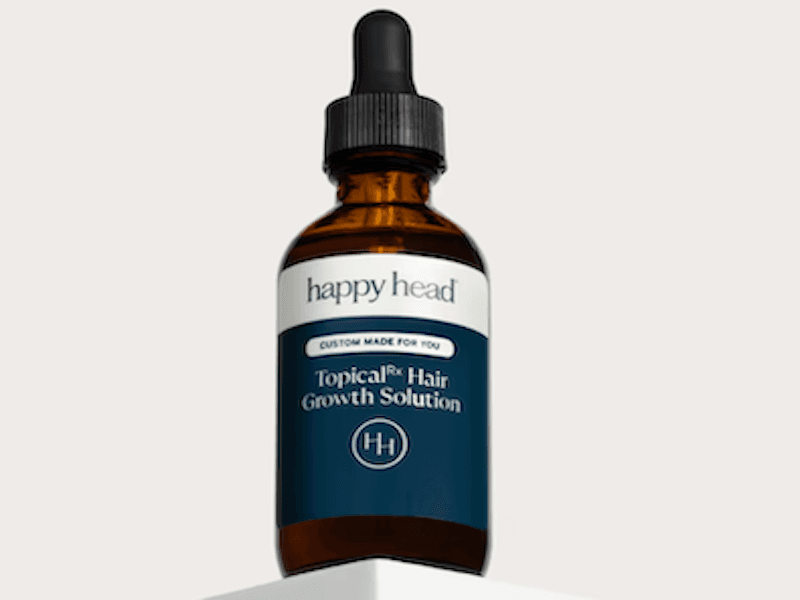
Happy Head Topical Rx Solution
The Happy Head Topical Rx Solution combines spironolactone and minoxidil to stop shedding and promote hair regrowth. This serum uses a dropper to better target the problem areas on your scalp.
Happy Head Topical Rx Solution
Who we recommend this for
Women who want the combined benefits of spironolactone and minoxidil directly to the scalp while minimizing whole-body side effects linked to the pill form.
- Price: $79 per 25-day supply
- Dose: 1.0 mL applied twice per day
- Formula: 0.5% spironolactone, 6% minoxidil, 0.01% retinoic acid, and 1% hydrocortisone
Pros
- Targeted topical treatment
- Combined formula of spironolactone and minoxidil
- Includes hydrocortisone to reduce skin irritation
Cons
- Twice-daily serum can be messy
- Topical spironolactone lacks research
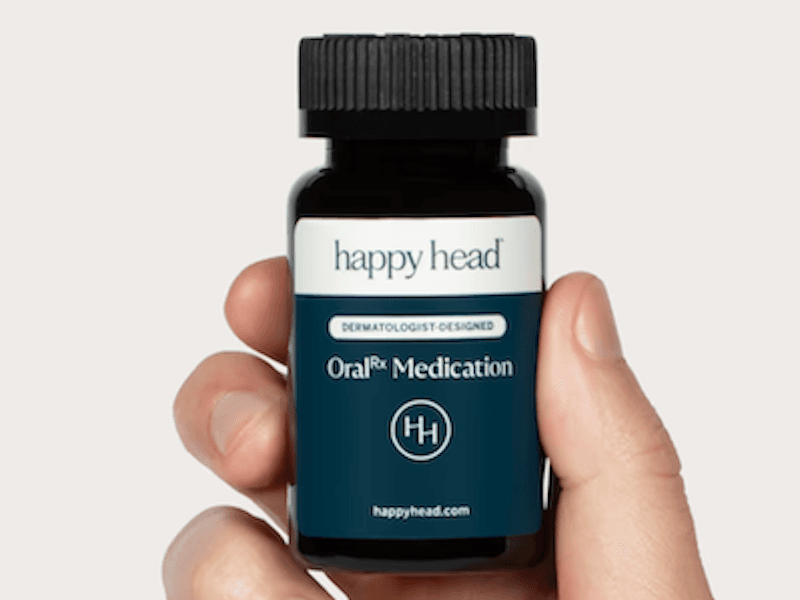
Happy Head Oral Medication
Happy Head Oral Medication is the brand’s oral spironolactone option to prevent female pattern hair loss. Each bottle comes with 120 tablets, or a four-month supply.
Happy Head Oral Medication
Who we recommend this for
Women who want to block DHT-driven hair loss and maintain hair density.
- Price: $199 for a four-month supply
- Dose: 50 or 100 mg taken once per day
- Formula: Spironolactone
Pros
- Research-backed oral spironolactone
- Two dosage options to customize treatment
- Each purchase contains a four-month supply
Cons
- More likely to have side effects than topicals
- High up-front cost
Strut Women’s Hair Growth Formula + StrutVite
The Strut Women’s Hair Growth Formula is a customizable topical treatment made for your specific hair loss. It comes with StrutVite, a supplement to support healthy regrowth.
Strut Women’s Hair Growth Formula + StrutVite
Who we recommend this for
Women who want a topical treatment carefully chosen to target thinning areas while supporting a healthy hair environment through supplements.
- Price: $75 for a 30-day supply
- Dose: As directed
- Formula: 1% spironolactone, 0.25% finasteride, 0.0 to 7.5% minoxidil, 0.0 to 0.025% tretinoin, 0.01% fluocinolone, and/or biotin
Pros
- Clinically tailored ingredients for hair loss needs
- Topical formula for exact application
- Comes with a daily hair, skin, and nail supplement
Cons
- Recommended timing is inconvenient
- Little research backing topical spironolactone
Spironolactone side effects
Dr. Kazlouskaya said spironolactone is generally considered very safe when prescribed appropriately. Research suggests that topical spironolactone may cause fewer side effects than oral versions.3
Below are potential side effects:5
- Gynecomastia (breast growth) and low sex drive in men
- Irregular period in premenopausal women
- Hyperkalemia (high potassium levels)
- Dehydration
- Hyponatremia
- Digestion issues, like nausea or diarrhea
- Brain and nerve issues, like headache, drowsiness, and confusion
- Skin rashes
Risks for older adults
Some older adults are more likely to develop side effects or complications when taking spironolactone. Conditions like kidney disease and diabetes, which can become more common with age, raise the risk of high potassium. Older adults with these conditions may not be able to safely take the medication. Complications can include irregular heartbeats or heart attack.5, 16
Dr. Green noted that spironolactone can cause more frequent urination. She often recommends drinking more water to offset dehydration. But more fluids isn’t always recommended for people taking the drug for serious conditions like congestive heart failure.17 Talk to your doctor about your own risks and how to manage them correctly before taking spironolactone.
Drug interactions to know about
Some medications commonly used to treat high blood pressure and heart failure can also increase the risk of high potassium. These medications should be used cautiously, if at all, with spironolactone. These include:
- Beta-blockers
- Angiotensin-converting enzyme (ACE) inhibitors
- Angiotensin receptor blockers
Spironolactone vs. minoxidil
Spironolactone and minoxidil can both treat hair loss, but they work in different ways. Spironolactone blocks DHT to prevent hair loss, while minoxidil stimulates blood flow to the scalp to promote hair growth. “Minoxidil pushes hair into the growth phase of the hair growth cycle and restores inactive hair follicles,” said Dr. Green. For this reason, many health care providers use them together for maximum benefit, and some research says this strategy can work well.3
See our review of the best hair loss medications to compare more options.
Frequently asked questions
How long does it take for spironolactone to work?
When taking oral spironolactone, you may see less shedding after 6–8 months. Topical spironolactone may take up to one year, but less is known about it.3
Is spironolactone a diuretic?
Yes, spironolactone is a potassium-sparing diuretic medication. This means it helps keep potassium while flushing fluids.3
What foods should you avoid while taking spironolactone?
While taking spironolactone for hair loss, talk with your health care provider about how much potassium is appropriate. Avoid potassium supplements and ask your doctor how much high-potassium food is safe for you, including avocados, bananas, and sweet potatoes.18 You may also want to limit alcohol.19
What happens if you stop taking spironolactone for hair loss?
According to Dr. Kazlouskaya, your underlying hair loss will continue if you stop taking spironolactone for hair growth. You may see the benefit of treatment go away over time.
Does spironolactone regrow hair or just stop hair loss?
Spironolactone can sometimes stop the underlying cause of female pattern hair loss. It doesn’t stimulate hair regrowth like minoxidil.7 For this reason, many clinicians pair spironolactone with minoxidil to get the best results.3 Your doctor will prescribe the right treatment plan for the best outcome.