
Best Products for Menopausal Hair Loss
We tested treatments and talked to experts to find the best products for menopausal hair loss. Learn more about Hers, Happy Head, Ro, and Nutrafol.
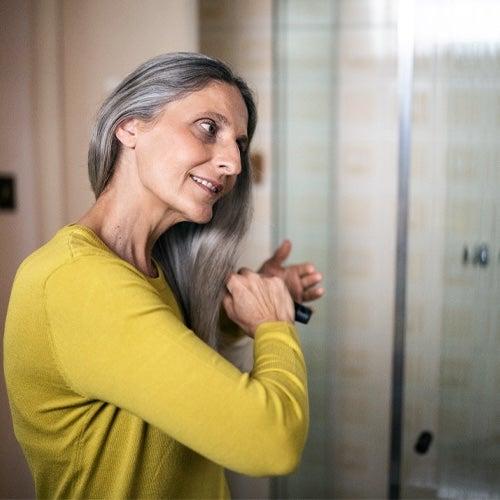
- Our team’s research points to Hers telehealth platform as the Best Overall Menopausal Hair Loss Treatment.
- The best products for menopausal hair loss include oral supplements, oral medications, and topical treatments. All hair loss treatments require 3–6 months to start showing results.
- The treatment options we recommend here range in cost from $40–$90 per month.
- Our recommendations include treatments for different preferences, from daily supplements to topical sprays and prescription oral medications.
- Each of these products includes clinically proven ingredients, but the right choice for you will depend on your lifestyle, budget, and specific hair loss needs.
NCOA connects people with tools and resources to support a healthy life. To review hair loss products, we researched and tested for over 200 hours before making our first recommendation. To find the best hair loss treatments, we:
- Consulted with dermatologists, trichologists (hair and scalp specialists), psychologists, and primary care physicians
- Ordered a product and tested it for 2-4 weeks before moving it into the next round for consideration—with testing ongoing for one calendar year
- Interviewed long-time users of these brands
- Used the products as directed on an ongoing basis—they’re now staples in our testers’ showers and medicine cabinets
- Read thousands of verified customer reviews
We’re constantly testing new hair loss treatments to give you the most accurate and up-to-date recommendations. Read more about our hair loss treatment methodology.
For women in perimenopause and menopause, it can be discouraging to notice a thinner ponytail, more shedding, or a widening part. The reassuring truth is that menopausal hair loss is both common and manageable.
Hormonal shifts, like declining estrogen and progesterone, can disrupt the hair growth cycle, leading to thinning, reduced density, slower growth, and, yes, more hair in the shower drain. But menopausal hair loss doesn’t mean you can’t have healthy hair.
With a combination of lifestyle adjustments and targeted treatments containing clinically proven ingredients, many people see meaningful improvements in hair thickness and growth. In this guide, our team breaks down the best products for menopausal hair loss. We help you understand which treatments are clinically proven to work, and help you choose an option that’s right for you.
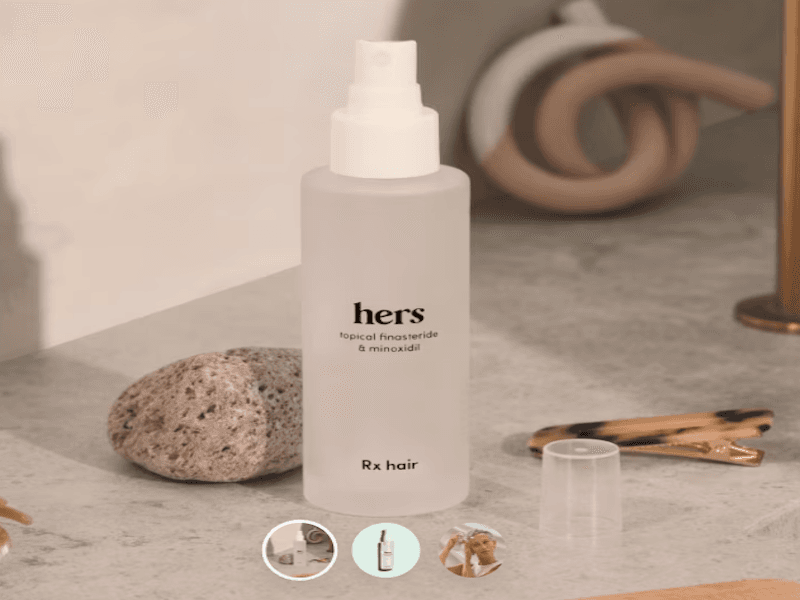
Best Overall
Hers Postmenopausal Hair Loss Spray
Contains both minoxidil and finasteride; users noticed an improvement in hair growth within 3 months
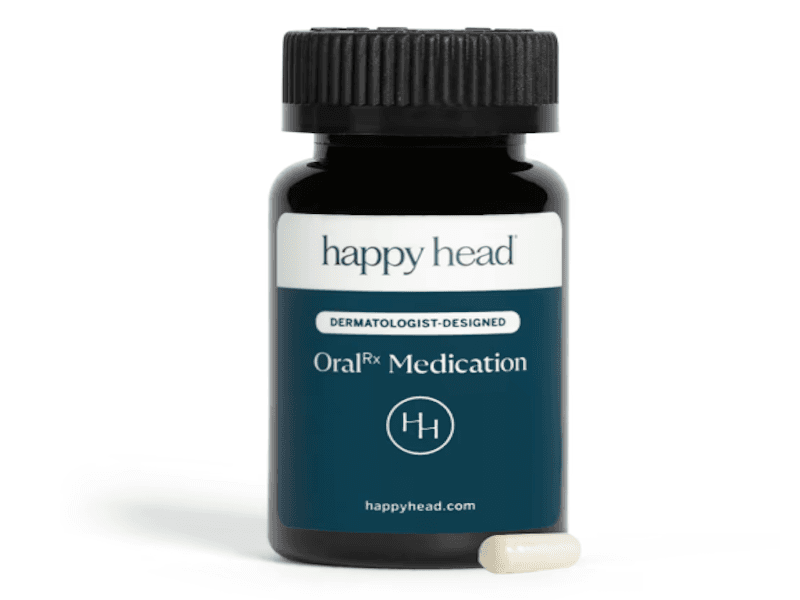
Best Personalized Treatment
Happy Head custom medications
Hair growth treatments tailored to your specific needs; users saw new growth in 3 months or less
Our picks for the best products for menopausal hair loss
- Hers Postmenopausal Hair Loss Spray: Best Overall
- Happy Head Custom Oral Rx Medications: Best Personalized Treatment
- Ro Hair Solution Rx: Best Prescription Treatment
- Nutrafol Women’s Balance: Best Supplement
The best products for menopausal hair loss in 2026 compared
| Comparison Features | ||||
|---|---|---|---|---|
| Our rating | 9.9 |
9.8 |
9.7 |
9.6 |
| Billing cycles | 3-Month |
3-Month |
3-Month |
Pay-as-you-go |
| Starting Cost | $50/month |
$70–90/month, depending on ingredients |
$40/month |
$70–$79/month, depending on your subscription |
| Prescription required? | Yes |
Yes |
Yes |
No |
| Cruelty-free? | Yes |
Yes |
Yes |
Yes |
How we tested hair loss treatments for menopause
To evaluate hair loss treatments for menopause, our team begins by reviewing current clinical guidance on hair loss and consulting experts, including dermatologists and trichologists, about the hormonal changes that can contribute to hair thinning during menopause. We use that research to better understand which ingredients, treatment types, and support services may be most helpful.
We then test hair-loss brands from the perspective of everyday shoppers, evaluating how easy it is to browse products, complete purchases, understand treatment directions, and get help from customer service or medical providers when needed. We also consider whether brands offer a range of treatment options, clear educational resources, and ongoing support for people using products over time. Our testing focuses on the following areas:
- Ease of using the website and ordering products
- Variety of treatments and product types available
- Cost of products, prescriptions, and subscriptions
- Overall product quality and treatment experience
- Customer service and access to professional support
What to look for when buying products for menopausal hair loss
We asked board-certified dermatologists who treat menopausal hair loss to identify the best ingredients to look for in hair treatments. Here’s what to look for:

An expert's take on ingredients in menopausal hair loss products:
“Minoxidil is still the MVP—it helps keep hair in the growth phase longer. It’s not magic, but it does help with density if you stick with it. Spironolactone can help for some women, too, especially if there’s a hormonal pattern to their hair loss or if you're getting unwanted hair on your chin or upper lip. Some supplements can be useful, like ones with saw palmetto or marine collagen, and vitamin D can be helpful if you are low.”
—Mary Alice Mina, MD, Board-Certified Dermatologist at The Skin Real in Serenbe, Georgia
Our reviews of the best products for menopausal hair loss
Hers Postmenopausal Hair Loss Spray: Best Overall
Our team stands by Hers as the Best Overall Treatment for Menopausal Hair Loss due to its use of clinically proven ingredients and high user satisfaction. In our November 2025 survey of women experiencing hair loss or shedding due to menopause, over 39% of respondents who tried Hers were satisfied with their results, and over 15% were very satisfied.3
- Hers Hair Review
- Active ingredients: Finasteride and minoxidil
- Subscription: Required
- Type: Topical spray
- FDA-approved: Yes
- Prescription required: Yes
- Bottle size: 2 fluid ounces
- How to use: Spray solution directly onto dry scalp daily; gently massage into scalp. Wash hands after application.
Pros
- Simple application
- Clinically proven ingredients
- Our testers saw results within 3-6 months
- More affordable than other hair loss treatments
Cons
- Must use daily
- Results take time
- May cause itching or dryness of scalp
- Not safe for women who are pregnant/considering pregnancy
Happy Head: Best Personalized Treatment
For a more personalized approach to your menopausal hair loss treatment, consider Happy Head for custom oral prescription medications. This telehealth company focuses exclusively on hair loss treatments, and its dermatologist-created custom blends of active ingredients can help you identify hormonal causes of hair loss.
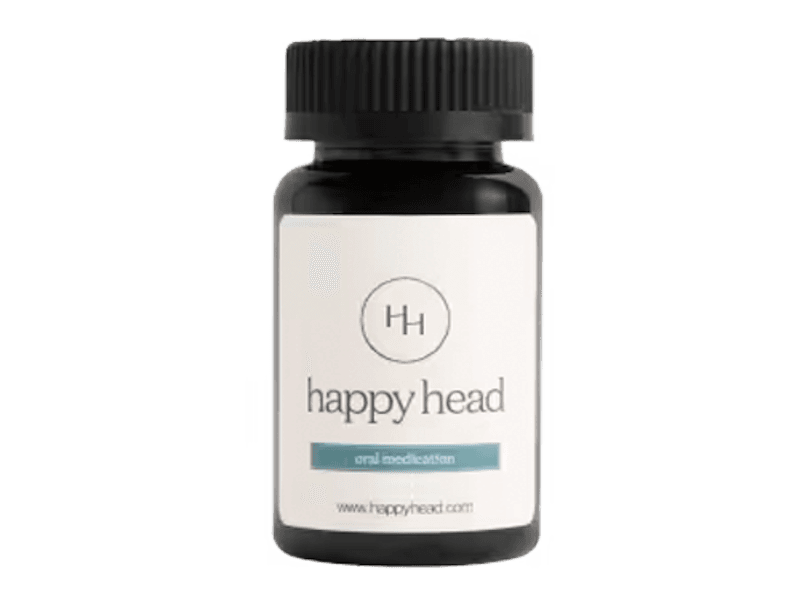
- Happy Head Review
- Active ingredients: Minoxidil, finasteride, dutasteride, spironolactone, and vitamin D
- Subscription: Recommended but not required
- Type: Oral medication
- FDA-approved: Yes, though hair loss may be an off-label use for some ingredients
- Prescription required: Yes
- Bottle capacity: One-month supply per bottle (30 prescription tablets)
- How to use: Take orally once daily
Pros
- Just one pill daily
- No messy foams, sprays, or serums
- Dermatologist-led customization of treatment
Cons
- Complex product lineup
- More expensive than other treatments
- Higher risk of systemic side effects than with topical treatment
Ro: Best Prescription
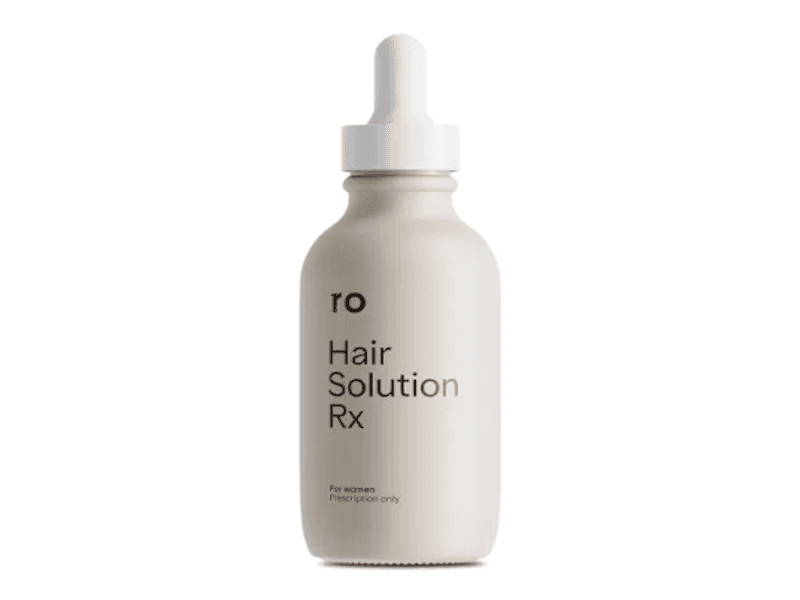
We recommend Ro’s prescription Hair Solution Rx treatment for perimenopausal and menopausal women who want to go a step further than over-the-counter treatments or supplements for shedding and thinning. This telehealth brand offers a broad range of hair-loss products at affordable prices, all under medical oversight from a dermatologist.
- Ro Hair Loss Review
- Active ingredients: Minoxidil, tretinoin (a retinoid), and melatonin
- Subscription: Required
- Type: Topical serum
- FDA-approved: Minoxidil is FDA-approved, but compounded drugs cannot get FDA approval
- Prescription required: Yes
- Bottle size: 2 fluid ounces
- How to use: Use dropper to apply serum to scalp at least once daily; massage into scalp after application, then wash hands.
Pros
- Clinically proven ingredients
- More affordable than other hair loss treatments
- Less chance of systemic side effects with topical treatment
Cons
- Could be messy to apply
- May cause itching or dryness of scalp
- Fewer overall products for women than for men
Nutrafol: Best Supplement
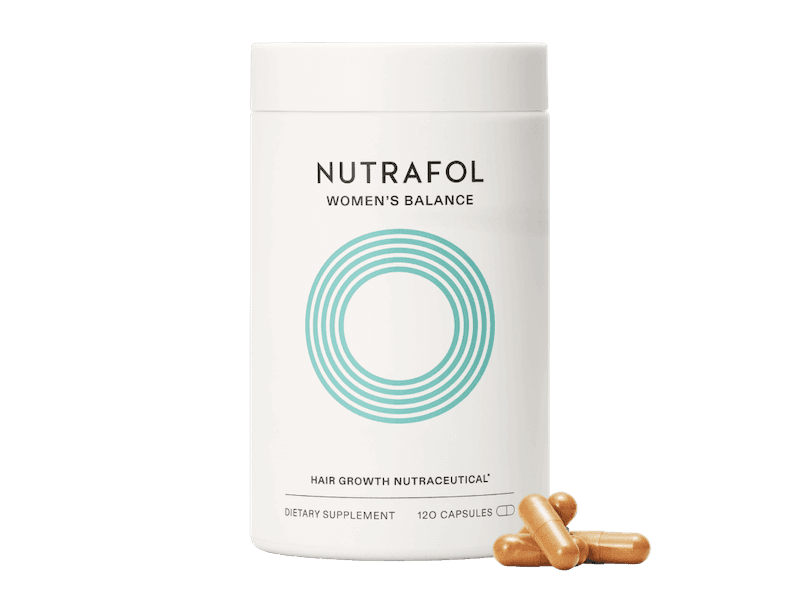
Nutrafol is our top pick for a drug-free supplement intended for perimenopausal or postmenopausal hair loss. Its Women’s Balance Hair Growth supplement is a great option for women who want to address the hormonal causes of their hair loss without committing to a prescription-grade medication.
- Nutrafol Review
- Active ingredients: Saw palmetto, ashwagandha, marine collagens, vitamin D, and zinc
- Subscription: Available but not required
- Type: Oral supplement
- FDA-approved: No
- Prescription required: No
- Servings per container: 120 capsules (1-month supply)
- How to use: Take four capsules once daily with a meal
Pros
- Take just once daily
- No prescription needed
- Formulated to address hormonal causes of thinning
Cons
- Daily dose is four pills
- More expensive than other treatments
- Pills are large and could be hard to swallow
Understanding menopausal hair loss
Many women notice thinning hair or increased shedding during perimenopause and menopause. “These shifts start because estrogen levels fall and androgens become relatively more dominant,” Dr. Yadav shared. “Estrogen normally keeps hair in the growth phase for longer, so when it drops, the growth phase shortens, and more hairs enter the resting and shedding phase. Over time, this can lead to smaller, finer hairs and reduced density.”
It can be difficult to distinguish age-related thinning from hair changes that may be due to menopause. “Age-related thinning tends to be slow and even across the whole scalp,” Dr.Yadav said, while “menopause-related thinning is often more patterned. The most common pattern is female-pattern hair loss, where density decreases along the part, crown, or temples.” Every woman’s experience will be different, and it’s important to check in with a dermatologist to learn the root causes of your hair changes. “A dermatologist can examine the scalp and, if needed, use dermoscopy or a biopsy to confirm whether follicles are miniaturizing or being scarred,” said Yadav.

Prescription vs. non-prescription solutions
Products with active ingredients like minoxidil and finasteride require a prescription, particularly when used off-label. For minoxidil, a prescription is required for concentrations above 8%, but you can find products containing 2% to 5% minoxidil over the counter. The online telehealth platforms we’ve identified as the best hair loss treatments for women are supported by licensed medical professionals who can screen users, write prescriptions, and answer clinical questions. Supplements containing vitamins and botanicals do not require a prescription, though medical oversight is key to any hair loss treatment.
What are the symptoms of menopausal hair loss?
Experts like Dr. Mina, the dermatologist in Georgia, point to clear signs of menopausal hair loss that many women notice, such as “their part widening, more scalp showing through, or that their ponytail isn’t as thick.” Women may see any of the following hair changes during perimenopause and menopause:
- Dryness or brittleness
- A widening part
- Diffuse thinning and overall decreased volume
- Textural changes, such as hair feeling more coarse
- Increased shedding (seeing more hair in the shower drain)
Tips for hair care during menopause
While it's possible to see reduced shedding and even increased growth with prescription hair treatments and hair loss supplements, lifestyle choices also impact your hair’s health. “Daily habits play a big role in how hair behaves during and after menopause because the scalp and follicles become more sensitive to stress, inflammation, and nutrient gaps as estrogen declines,” Dr. Yadav said.
She shared her tips for helping to reduce hair loss naturally, with or without additional hair loss treatments:
- Eat a balanced diet: Fruits, vegetables, and protein-rich foods high in iron, vitamin D, zinc, and B vitamins will support healthy hair growth and help prevent deficiencies that can worsen shedding.
- Manage stress: “Gentle lifestyle practices matter,” Yadav said. Regular exercise, good sleep, and stress management improve overall well-being and indirectly support the hair cycle.
- Use gentle hair styling: Aim to reduce heat styling, avoid tight or high-tension hairstyles, and treat hair gently to prevent breakage and protect strands.
- Take care of your scalp: Try regular scalp massage and consistent, gentle cleansing with non-irritating products to support circulation that stimulates growth.
How long does it take to see results from hair growth products?
The experts we spoke to agree: results from hair loss treatments take time and patience. With the menopausal hair loss treatments reviewed in this guide, including prescription medications and drug-free supplements, most people will see visible changes after 3 to 6 months. Results are dependent on daily use, though. Also, because there is no cure for hair loss, you must continue using the treatment to maintain your results.
The degree to which you see results from a hair loss treatment will also depend on the severity of your hair loss and its underlying causes. Adding supportive habits—a balanced diet, good sleep hygiene, stress management, and healthy scalp care—will likely help make any hair loss treatment more effective.
Frequently asked questions
Will hair loss from menopause grow back?
With the proper lifestyle changes and treatment plan, hair loss from menopause can grow back. Talk to your doctor about medications such as minoxidil and spironolactone to promote hair growth, and find ways to reduce stress and to eat a more balanced diet.
What is the best product to help with menopausal hair loss?
The best product for menopausal hair loss depends on your specific symptoms and treatment goals. Minoxidil is typically considered a frontline treatment. Nutrafol supplements are often recommended as a drug-free option.
Are prescription treatments safe during perimenopause?
Yes, many prescription hair loss treatments are safe during perimenopause and menopause. The safety of a specific treatment depends on your health, any other medications you’re currently taking, and other factors. Always speak with your health care provider to find the best treatment option for your needs.
How can I tell if my hair loss is menopause-related?
Menopause-related hair loss often shows up as gradual thinning, especially at the part line or crown. It typically occurs alongside other menopause symptoms like hot flashes, sleep disruption, and mood changes. But hair loss can also be caused (or worsened) by other common issues—so it’s worth checking with your health care provider to discuss signs that point to something beyond hormonal changes.
Questions? Email us at reviewsteam@ncoa.org.