
Best Products for Menopausal Hair Loss
We tested treatments and talked to experts to find the best products for menopausal hair loss. Learn more about Hers, Happy Head, Ro, and Nutrafol.
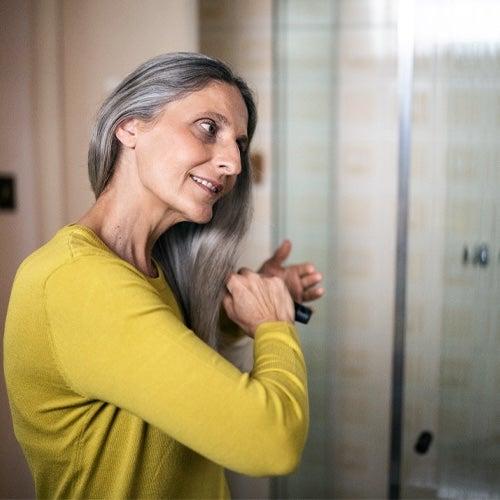
- Our team’s research points to Hers telehealth platform as the Best Overall Menopausal Hair Loss Treatment.
- The best products for menopausal hair loss include oral supplements, oral medications, and topical treatments. All hair loss treatments require 3–6 months to start showing results.
- The treatment options we recommend here range in cost from $40–$90 per month.
- Each of these products includes clinically proven ingredients, but the right choice for you will depend on your lifestyle, budget, and specific hair loss needs.
NCOA connects people with tools and resources to support a healthy life. We put products under the microscope before we can recommend them to you. To review hair loss products, we researched and tested for over 200 hours before making our first recommendation. To find the best hair loss treatments, we:
- Consulted with dermatologists, trichologists (hair and scalp specialists), psychologists, and primary care physicians
- Ordered a product and tested it for 2-4 weeks before moving it into the next round for consideration—with testing ongoing for 1 calendar year
- Interviewed long-time users of these brands
- Used the products as directed on an ongoing basis—they’re now staples in our testers’ showers and medicine cabinets
- Read thousands of verified customer reviews
We’re constantly testing new hair loss treatments to give you the most accurate and up-to-date recommendations. Read more about our hair loss treatment methodology.
For women in perimenopause and menopause, it can be discouraging to notice a thinner ponytail, more shedding, or a widening part. The reassuring truth is that menopausal hair loss is both common and manageable.
Hormonal shifts, like declining estrogen and progesterone, can disrupt the hair growth cycle, leading to thinning, reduced density, slower growth, and, yes, more hair in the shower drain. But menopausal hair loss doesn’t mean you can’t have healthy hair.
With a combination of lifestyle adjustments and targeted treatments containing clinically proven ingredients, many people see meaningful improvements in hair thickness and growth. In this guide, our team breaks down the best products for menopausal hair loss. We help you understand which treatments are clinically proven to work, and help you choose an option that’s right for you.
Our picks for the best products for menopausal hair loss
Hers Postmenopausal Hair Loss Spray: Best Overall
Happy Head Custom Oral Rx Medications: Best Personalized Treatment
Ro Hair Solution Rx: Best Prescription Treatment
Nutrafol Women’s Balance: Best Supplement
Compare the best products for menopausal hair loss in 2026
| Comparison Features | ||||
|---|---|---|---|---|
| Our rating | 9.9 |
9.8 |
9.7 |
9.6 |
| Billing cycles | 3-Month |
3-Month |
3-Month |
Pay-as-you-go |
| Starting Cost | $50/month |
$70–90/month, depending on ingredients |
$40/month |
$70–$79/month, depending on your subscription |
| Prescription required? | Yes |
Yes |
Yes |
No |
| Cruelty-free? | Yes |
Yes |
Yes |
Yes |
What to look for in products for menopausal hair loss
We asked board-certified dermatologists who treat menopausal hair loss to identify the best ingredients to look for in hair treatments. Here’s what to look for:

An expert's take on ingredients in menopausal hair loss products:
“Minoxidil is still the MVP—it helps keep hair in the growth phase longer. It’s not magic, but it does help with density if you stick with it. Spironolactone can help for some women, too, especially if there’s a hormonal pattern to their hair loss or if you're getting unwanted hair on your chin or upper lip. Some supplements can be useful, like ones with saw palmetto or marine collagen, and vitamin D can be helpful if you are low.”
—Mary Alice Mina, MD, Board-Certified Dermatologist at The Skin Real in Serenbe, Georgia
Our reviews of the best products for menopausal hair loss
Hers Postmenopausal Hair Loss Spray: Best Overall
Our team stands by Hers as the Best Overall Treatment for Menopausal Hair Loss due to its use of clinically proven ingredients and high user satisfaction. In our November 2025 survey of women experiencing hair loss or shedding due to menopause, over 39% of respondents who tried Hers were satisfied with their results, and over 15% were very satisfied.3
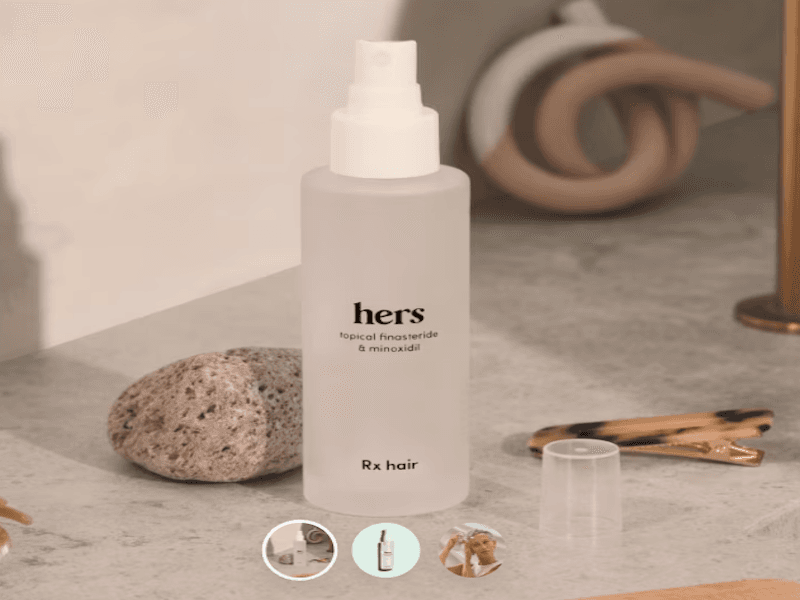
- Hers Hair Review
- Active ingredients: Finasteride and minoxidil
- Subscription: Required
- Type: Topical spray
- FDA-approved: Yes
- Prescription required: Yes
- Bottle size: 2 fluid ounces
- How to use: Spray solution directly onto dry scalp daily; gently massage into scalp. Wash hands after application.
Pros
- Simple application
- Clinically proven ingredients
- Our testers saw results within 3-6 months
- More affordable than other hair loss treatments
Cons
- Must use daily
- Results take time
- May cause itching or dryness of scalp
- Not safe for women who are pregnant/considering pregnancy
Why we chose Hers as Best Overall
The Hers telehealth platform specializes in personalized care to help women lose weight, find balance during menopause, reduce anxiety, and grow fuller hair. Hers is no stranger to treating menopausal symptoms, so it’s no surprise that they offer a hair loss treatment specifically for women losing hair due to menopause: the Postmenopausal Hair Loss Spray. This topical treatment contains the active ingredients minoxidil and finasteride, and our testers saw improvements in hair growth and fullness after about 9–12 weeks of use.
For women seeking additional treatment options, Hers offers a broad range of products, including minoxidil topicals, prescription oral medications, vitamins, gummies, and personalized guidance from a real doctor.
Highlights of Hers Postmenopausal Hair Loss Spray:
- Affordable and user-friendly
- First-line solution for diffuse thinning
- FDA-approved and clinically proven to be effective
- Prescription and non-prescription treatment available
Who we recommend it for: Postmenopausal women with mild to moderate thinning who want an accessible, noninvasive product.
Keep in mind: Treatment can’t be customized by strength or ingredient (which is possible with some prescription-blended formulas).
Testing notes: Our testers said the Postmenopausal Hair Loss spray was user-friendly, non-greasy, and affordable, with noticeable improvement around weeks 9–12.
Our testing experience with Hers
When you visit the Hers website, you’ll be prompted to complete an assessment of your hair loss symptoms and your treatment goals. Our testers felt the assessment was thorough without being too long—it took about 10–15 minutes to complete. At the end of the assessment, one or two products will be recommended for your treatment. Our testers found it frustrating that the Hers website makes it difficult to simply browse products—it strongly encourages you to take the assessment and follow its recommendations.
Though our testers noted it was sometimes challenging to remember to use the product daily, they appreciated that it was simple to use, non-greasy, and didn’t seem to weigh down the hair or leave a residue. Dryness and an itchy scalp were the primary side effects.
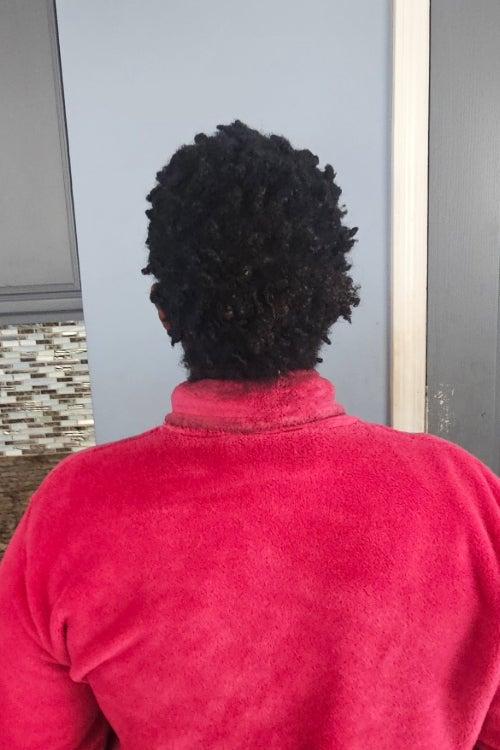
By month two, one of our testers said she had moments where she "wondered if anything was happening." But after 9–12 weeks of treatment, she says she began to see "real growth" and rated the treatment's effectiveness at 5/5. "I used this consistently for three months and saw an increase in my hair thickness and regrowth of hair in sparse areas," one tester said. "That’s when it hit me that the routine was working."
As our experts noted, positive results are not possible without consistent, daily use. Patience and persistence were essential to our testers’ hair loss treatment plans. One of our testers said this grew easier once she started seeing some progress. "If a friend asked me about my experience, I’d tell them to be patient," she said. Stay encouraged and trust the process."
By month three, I started noticing real growth. That’s when it hit me that the routine was working. Staying consistent wasn’t a challenge because I was determined to regrow my hair. I kept the Hers in my bathroom next to my cleanser/toner/moisturizer as a reminder.”
—One of our Hers Postmeno Hair Loss Spray testers
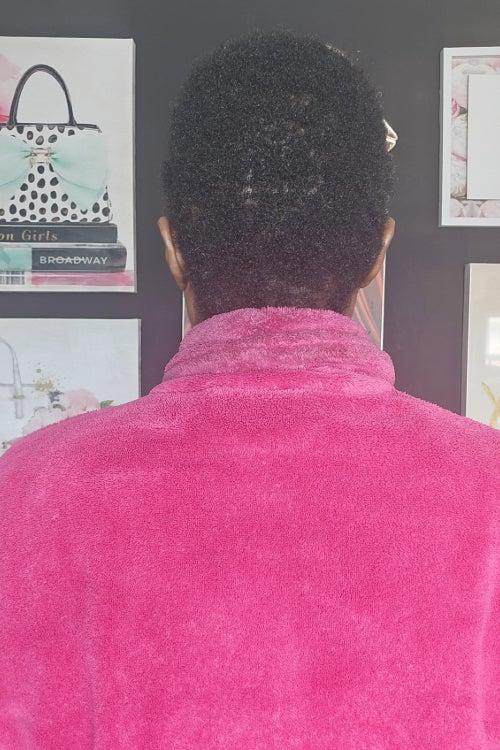
You can learn more in our Hers hair review.
The Hers customer experience
- Trial Periods and Refunds: Hers does not offer a trial period. They do not offer refunds for partially used subscription periods, but may provide refunds on a case-by-case basis. It is possible to pause a subscription.
- Financing: Financing may be available through third-party financing providers, like Klarna.
- Customer service: Hers customer service is accessible via email at any time, but you need to fill out the website’s contact form to initiate communication with a customer service representative.
- Phone: Call 800-368-0038 for appointment cancellations. Customer service-related questions must be directed to the website.
- Provider Messaging: Subscribers can message a provider through the website’s secure messaging at any time.
Happy Head: Best Personalized Treatment
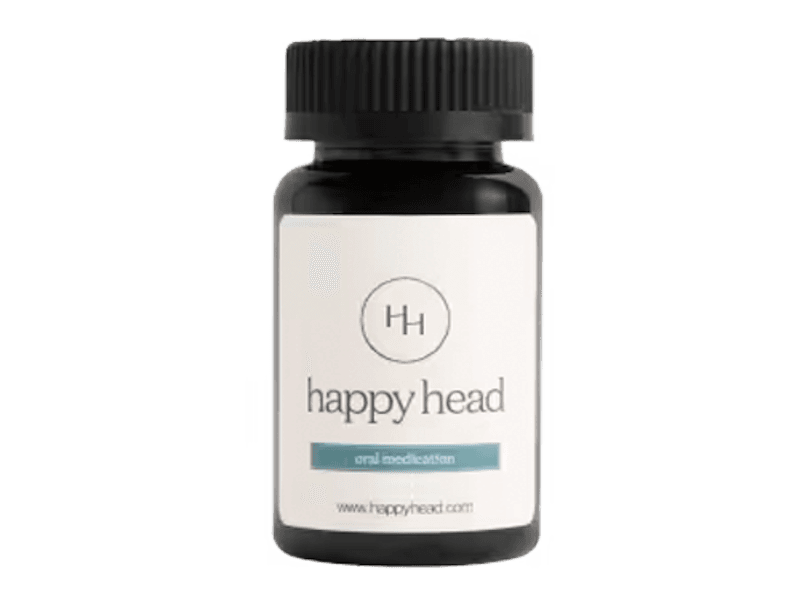
For a more personalized approach to your menopausal hair loss treatment, consider Happy Head for custom oral prescription medications. This telehealth company focuses exclusively on hair loss treatments, and its dermatologist-created custom blends of active ingredients can help you identify hormonal causes of hair loss.
- Happy Head Review
- Active ingredients: Minoxidil, finasteride, dutasteride, spironolactone, and vitamin D
- Subscription: Recommended but not required
- Type: Oral medication
- FDA-approved: Yes, though hair loss may be an off-label use for some ingredients
- Prescription required: Yes
- Bottle capacity: One-month supply per bottle (30 prescription tablets)
- How to use: Take orally once daily
Pros
- Just one pill daily
- No messy foams, sprays, or serums
- Dermatologist-led customization of treatment
Cons
- Complex product lineup
- More expensive than other treatments
- Higher risk of systemic side effects than with topical treatment
Why we chose Happy Head as Best Personalized Treatment
We chose Happy Head as the best personalized treatment for menopausal hair loss because it can tailor hair loss treatments based on the specific causes of your hair loss, including hormonal changes caused by menopause. While many platforms use well-known ingredients like minoxidil and finasteride, Happy Head stands out for also incorporating dutasteride and spironolactone, two powerful options for addressing hormonal hair loss common in perimenopause and menopause.
Happy Head’s customized oral blends can be formulated for women over 50, with active ingredients like finasteride and dutasteride, as well as for women under 50, replacing finasteride and dutasteride with spironolactone or vitamin D. The brand’s flexibility is another major advantage: They offer compounded formulas with multiple active ingredients, and you can request additions or removals to create a treatment to best fit your needs.
For an additional cost, Happy Head’s StrandIQ System provides a unique window into your hair’s biology, offering insights into factors such as graying tendencies and potential nutrient deficiencies that may influence hair growth, enabling more precise treatment customization. The test requires users to swab the inside of their cheek and mail the swab to Happy Head’s CLIA-certified labs.4 The swab is analyzed, and users receive their results via email within 2–3 weeks.
Highlights of Happy Head Oral Rx Medications:
- Personalized for your specified needs
- One pill per day instead of topical application
- Superior for stubborn or rapidly progressing thinning
Who we recommend it for: Women in perimenopause or menopause who are seeking targeted, data-driven treatment.
Keep in mind: Happy Head is one of the more expensive treatment options for postmenopausal hair loss, and all of its medications require a prescription.
Testing notes: Our testers appreciate the ease of taking one pill per day and started seeing results around 9–12 weeks into treatment.
Our testing experience with Happy Head
Happy Head offers two distinct ways to begin treatment for perimenopausal or menopausal hair loss: the advanced StrandIQ DNA system or the free online assessment. The StrandIQ kit, while costly at around $300, provides a personalized scalp health report that evaluates 33 traits, offers treatment insights, and includes a consultation with a dermatologist.
One of our testers opted for the free online assessment instead, which was more detailed than the assessment on similar platforms and included questions about health history, hair loss patterns, and treatment goals.
After completing the assessment, our testers were connected with a board-certified dermatologist and chose to answer questions via an additional online questionnaire; phone consultations are also available. The platform provides clear medication safety warnings, including those related to finasteride and dutasteride, which are not typically safe for women under the age of 50. Once treatment is approved and purchased, subscribers can access secure messaging with their provider to discuss medication adjustments, ask questions, or report side effects.
Our testers appreciated only having to take one daily pill, rather than keeping up with several medications or using potentially messy topical treatments. After two months of consistent use, one tester noted she “appreciated the ease of use.” It wasn't until around 9–12 weeks that she reported seeing results, particularly at the crown of the head. Ultimately, our testers gave Happy Head a 4/5 for effectiveness.
You can learn more in our Happy Head review.
The Happy Head customer experience
- Warranty and trial period: Happy Head provides a six-month money-back guarantee. The guarantee applies only to the product that you’ve most recently ordered, so you won’t receive money back for all of the products that you’ve ordered or used during the six months.
- Financing: No
- Customer service: If you need additional assistance, you can visit the Happy Head customer support page. You can submit a help request online, use the chat function, or text or call Happy Head.
Ro: Best Prescription
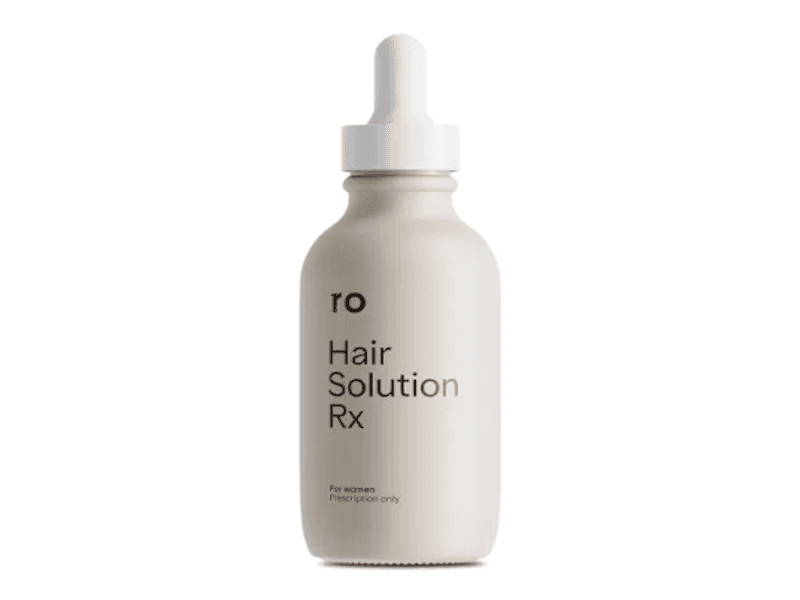
We recommend Ro’s prescription Hair Solution Rx treatment for perimenopausal and menopausal women who want to go a step further than over-the-counter treatments or supplements for shedding and thinning. This telehealth brand offers a broad range of hair-loss products at affordable prices, all under medical oversight from a dermatologist.
- Ro Hair Loss Review
- Active ingredients: Minoxidil, tretinoin (a retinoid), and melatonin
- Subscription: Required
- Type: Topical serum
- FDA-approved: Minoxidil is FDA-approved, but compounded drugs cannot get FDA approval
- Prescription required: Yes
- Bottle size: 2 fluid ounces
- How to use: Use dropper to apply serum to scalp at least once daily; massage into scalp after application, then wash hands.
Pros
- Clinically proven ingredients
- More affordable than other hair loss treatments
- Less chance of systemic side effects with topical treatment
Cons
- Could be messy to apply
- May cause itching or dryness of scalp
- Fewer overall products for women than for men
Why we chose Ro as Best Prescription
Ro, formerly Roman, was originally a men’s telehealth platform. Ro now offers weight management, hair loss, sexual health, and more products for both men and women. While its hair-loss product line offers more for men than for women, we appreciate that the Hair Solution Rx serum is formulated specifically for women. The serum contains three key active ingredients: minoxidil, tretinoin (a retinoid to aid minoxidil absorption), and melatonin, which has been shown to support hair growth.5 This product has a strong clinical profile, and the Ro platform offers access to medical providers who can help users address side effects or adjust their prescriptions as needed.
Highlights of Ro Hair Solution Rx:
- An affordable treatment for postmenopausal hair loss
- Access to stronger ingredients with medical oversight
- Good for women looking to move beyond over-the-counter options
Who we recommend it for: Women with moderate to advanced thinning who need more than over-the-counter products.
Keep in mind: Prescription medications require oversight from a medical professional, so users should take advantage of Ro’s secure messaging with their provider.
Testing notes: Testers appreciate the lower cost for clinical-grade ingredients; the ability to communicate with the provider as needed is key.
Our testing experience with Ro
Like similar telehealth platforms, Ro will guide you through a simple assessment about your hair loss symptoms and treatment goals. There are two assessments: one for men and one for women. The women’s hair loss assessment asks initial questions about your hair loss symptoms and then prompts you to create an account. Then, you’ll be asked to do the following:
- Answer in-depth questions about the severity of your hair loss
- Share whether you are pregnant or breastfeeding
- List any mental health concerns resulting from your hair loss
- Provide details about medications and pre-existing health conditions, including perimenopause and menopause
- Upload photos of your hairline, including the crown and back of your head
While this assessment can be time-consuming, our testers appreciate the thorough questions, which help to ensure you’re getting the right treatment. I trust this product thanks to the comprehensive experience I had when ordering," one of our testers said.
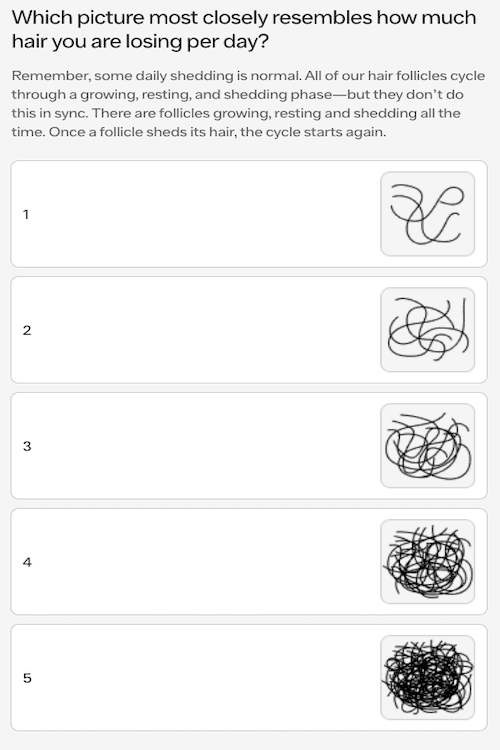
One tester, whose hair loss included bald patches and increased shedding, sought greater volume, reduced shedding, and regrowth in the areas where she was losing hair. The assessment guided her to the Hair Solution Rx. As with all hair treatments, seeing results with the Hair Solution Rx can take weeks or months of consistent daily use.
Learn more in our Ro hair loss review.
The Ro customer experience
- Warranty and trial period: Ro does not provide warranties or refunds and states that all sales are final.
- Financing: No
- Customer service: For Ro account, billing, or shipping questions, customer service representatives can be reached via email at care@ro.co. There is no customer service phone number. Ro subscribers can ask their provider medical questions by logging in and using the Ro messaging platform. For general questions and FAQ, try the Ro contact page.
Nutrafol: Best Supplement
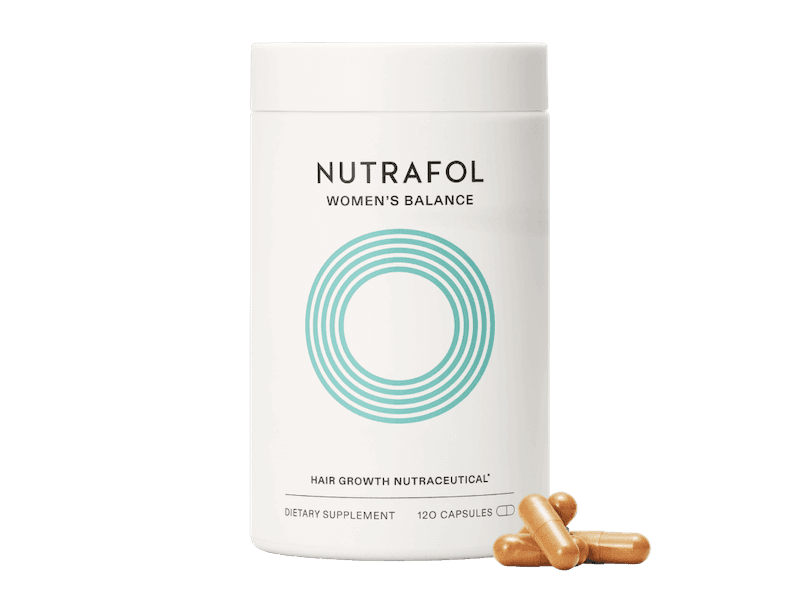
Nutrafol is our top pick for a drug-free supplement intended for perimenopausal or postmenopausal hair loss. Its Women’s Balance Hair Growth supplement is a great option for women who want to address the hormonal causes of their hair loss without committing to a prescription-grade medication.
- Nutrafol Review
- Active ingredients: Saw palmetto, ashwagandha, marine collagens, vitamin D, and zinc
- Subscription: Available but not required
- Type: Oral supplement
- FDA-approved: No
- Prescription required: No
- Servings per container: 120 capsules (1-month supply)
- How to use: Take four capsules once daily with a meal
Pros
- Take just once daily
- No prescription needed
- Formulated to address hormonal causes of thinning
Cons
- Daily dose is four pills
- More expensive than other treatments
- Pills are large and could be hard to swallow
Why we chose Nutrafol as Best Supplement
Nutrafol is one of the most clinically studied hair supplements for women over 45, which makes it a good option for women who want an evidence-based approach but aren’t ready for prescription medications. Our team likes that the ingredients in the Women’s Balance blend, like saw palmetto and vitamin D, are formulated to target stress, hormones, and inflammation.

An expert's take on Nutrafol:
“Nutraceuticals have become popular, and some, like Nutrafol and Viviscal, have supportive clinical studies showing improvements in shedding, density, and overall hair quality. Supplements containing saw palmetto, pumpkin seed oil, omega-3 fatty acids, or antioxidants may offer additional benefit by reducing inflammation or blocking the conversion of testosterone to DHT. At the same time, correcting deficiencies in iron, vitamin D, zinc, or B vitamins can boost the hair growth cycle in women who are lacking these nutrients.”
—Geeta Yadav, MD, Board-Certified Dermatologist
Highlights:
- Holistic, drug-free approach
- Saw palmetto for DHT balance
- Marine collagen and vitamins for follicle support
Who we recommend it for: Women seeking a natural, non-prescription solution or a product to pair with minoxidil.
Keep in mind: Nutrafol requires at least 3 months for visible results.
Testing notes: Our testers report improvements in shedding and hair strength.
Our testing experience with Nutrafol
Even though you don’t need a prescription to use Nutrafol, the platform offers a consultation with a naturopathic doctor to help you choose the right treatment. Once you start treatment, you can continue to communicate with Nutrafol doctors at no cost.
One benefit of Nutrafol is that it requires only once-daily use. But the dose (four pills at once) is considerable, and the pills are quite large, which could be challenging for people who have difficulty swallowing pills. Our testers noticed less shedding as early as five weeks into treatment and ultimately described it as "an excellent source for growing hair." Though they didn’t notice any adverse side effects, one tester noted that she didn’t enjoy taking four pills every day. Yadav pointed out that nutraceuticals like Nutrafol “work best as part of a broader routine that prioritizes nutrition, stress reduction, and gentle hair care.”
Check out our Nutrafol review to learn more.
The Nutrafol customer experience
- Warranty and trial period: Nutrafol does not offer a warranty or money-back guarantee, but it will issue a refund for unopened items within 30 days of purchase. Nutrafol doesn’t offer a trial period.
- Financing: No
- Customer service: You can reach customer support by phone or text at 800-454-3320. A chatbot is also available Monday through Friday from 9 a.m. ET through 7 p.m. ET. Email support is available at support@nutrafol.com.
Understanding menopausal hair loss
Many women notice thinning hair or increased shedding during perimenopause and menopause. “These shifts start because estrogen levels fall and androgens become relatively more dominant,” Dr. Yadav shared. “Estrogen normally keeps hair in the growth phase for longer, so when it drops, the growth phase shortens, and more hairs enter the resting and shedding phase. Over time, this can lead to smaller, finer hairs and reduced density.”
It can be difficult to distinguish age-related thinning from hair changes that may be due to menopause. “Age-related thinning tends to be slow and even across the whole scalp,” Dr.Yadav said, while “menopause-related thinning is often more patterned. The most common pattern is female-pattern hair loss, where density decreases along the part, crown, or temples.” Every woman’s experience will be different, and it’s important to check in with a dermatologist to learn the root causes of your hair changes. “A dermatologist can examine the scalp and, if needed, use dermoscopy or a biopsy to confirm whether follicles are miniaturizing or being scarred,” said Yadav.

Prescription vs. non-prescription solutions
Products with active ingredients like minoxidil and finasteride require a prescription, particularly when used off-label. For minoxidil, a prescription is required for concentrations above 8%, but you can find products containing 2% to 5% minoxidil over the counter. The online telehealth platforms we’ve identified as the best hair loss treatments for women are supported by licensed medical professionals who can screen users, write prescriptions, and answer clinical questions. Supplements containing vitamins and botanicals do not require a prescription, though medical oversight is key to any hair loss treatment.
What are the symptoms of menopausal hair loss?
Experts like Dr. Mina, the dermatologist in Georgia, point to clear signs of menopausal hair loss that many women notice, such as “their part widening, more scalp showing through, or that their ponytail isn’t as thick.” Women may see any of the following hair changes during perimenopause and menopause:
- Dryness or brittleness
- A widening part
- Diffuse thinning and overall decreased volume
- Textural changes, such as hair feeling more coarse
- Increased shedding (seeing more hair in the shower drain)
Tips for hair care during menopause
While it's possible to see reduced shedding and even increased growth with prescription hair treatments and hair loss supplements, lifestyle choices also impact your hair’s health. “Daily habits play a big role in how hair behaves during and after menopause because the scalp and follicles become more sensitive to stress, inflammation, and nutrient gaps as estrogen declines,” Dr. Yadav said.
She shared her tips for helping to reduce hair loss naturally, with or without additional hair loss treatments:
- Eat a balanced diet: Fruits, vegetables, and protein-rich foods high in iron, vitamin D, zinc, and B vitamins will support healthy hair growth and help prevent deficiencies that can worsen shedding.
- Manage stress: “Gentle lifestyle practices matter,” Yadav said. Regular exercise, good sleep, and stress management improve overall well-being and indirectly support the hair cycle.
- Use gentle hair styling: Aim to reduce heat styling, avoid tight or high-tension hairstyles, and treat hair gently to prevent breakage and protect strands.
- Take care of your scalp: Try regular scalp massage and consistent, gentle cleansing with non-irritating products to support circulation that stimulates growth.
How long does it take to see results from hair growth products?
The experts we spoke to agree: results from hair loss treatments take time and patience. With the menopausal hair loss treatments reviewed in this guide, including prescription medications and drug-free supplements, most people will see visible changes after 3 to 6 months. Results are dependent on daily use, though. Also, because there is no cure for hair loss, you must continue using the treatment to maintain your results.
The degree to which you see results from a hair loss treatment will also depend on the severity of your hair loss and its underlying causes. Adding supportive habits—a balanced diet, good sleep hygiene, stress management, and healthy scalp care—will likely help make any hair loss treatment more effective.
Frequently asked questions
Will hair loss from menopause grow back?
With the proper lifestyle changes and treatment plan, hair loss from menopause can grow back. Talk to your doctor about medications such as minoxidil and spironolactone to promote hair growth, and find ways to reduce stress and to eat a more balanced diet.
What is the best product to help with menopausal hair loss?
The best product for menopausal hair loss depends on your specific symptoms and treatment goals. Typically, minoxidil is considered a frontline treatment. Nutrafol supplements are often recommended as a drug-free option.
Are prescription treatments safe during perimenopause?
Yes, many prescription hair loss treatments are safe during perimenopause and menopause. The safety of a specific treatment depends on your health, any other medications you’re currently taking, and other factors. Always speak with your health care provider to find the best treatment option for your needs.
How can I tell if my hair loss is menopause-related?
Menopause-related hair loss often shows up as gradual thinning, especially at the part line or crown. It typically occurs alongside other menopause symptoms like hot flashes, sleep disruption, and mood changes. But hair loss can also be caused (or worsened) by other common issues—so it’s worth checking with your health care provider to discuss signs that point to something beyond hormonal changes.
Questions? Email us at reviewsteam@ncoa.org.