
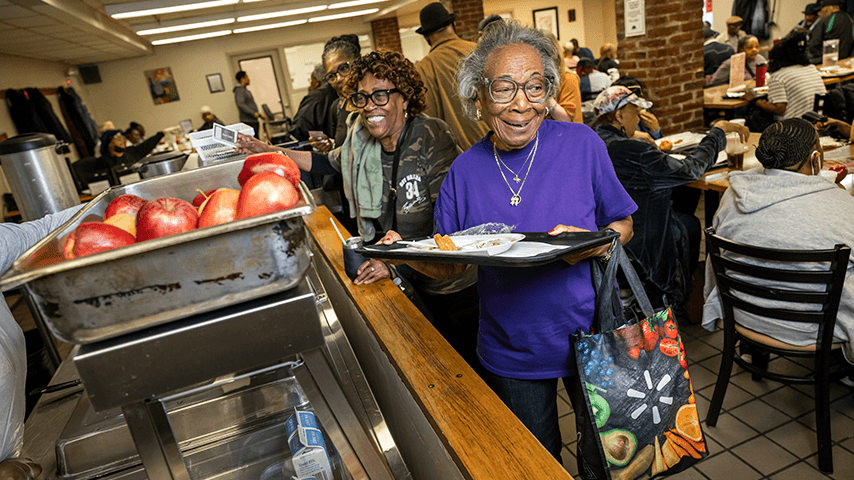
We all deserve to age well. And the Older Americans Act (OAA) helps make that possible for millions of Americans.
How?
In the 1960s, advocates and policymakers were finally starting to appreciate the breadth of support needed by older adults and how much things like health and economic security overlapped. Among the bills passed in response were the Medicare and Medicaid Act and the Older Americans Act (OAA) in 1965.
While Medicare and Medicaid are well-known, the OAA has always worked behind the scenes. It is the quiet backbone of federal aging policy, acting as a hub of funding and guidance that responds to specific aging needs. The services it fuels have evolved over time to include:
- Home-delivered and congregate (group) meals
- Senior center programs
- Family caregiver support
- America’s only senior-focused job training and employment program
- Transportation assistance
- Chronic disease education and self-management programs
- Falls prevention programs
- Home- and community-based health care to help people age in place
- Protections against elder abuse and elder fraud
- Protections for for nursing home residents
The OAA’s subtlety is a double-edged sword
One of the many reasons the OAA is so effective is because states have a lot of flexibility in how they use OAA funds. Some focus on fighting senior hunger. Others might spread funds between caregiver support and transportation assistance. But there’s nothing flashy in the delivery of these services, no giant label that says “Brought to you by the Older Americans Act.” This is great for the community-based organizations delivering services because it builds familiarity and trust with the people they serve.
But most people receiving these services—and even some of the professionals delivering them—don’t know it’s the OAA that makes them possible. Take senior centers, for example. They often host group meals or healthy aging programs for their communities, using money from grants they apply for through the local Department of Parks and Recreation. But that money is only available because the state is receiving it from the OAA and routing it to service providers.
The OAA also directs funding to local programs for older adults who want to strengthen or improve their health by preventing falls or managing chronic conditions. Proven falls prevention programs have reduced falls by more than half, saving over $1 billion.1 Evidence-based chronic disease self-management programs have been shown to reduce pain and health care costs.2,3 Most older adults who receive these and other healthy aging services don’t realize the OAA makes it possible.
The same can be said for older adults who need to re-enter the workforce to make ends meet. Through the Senior Community Service Employment Program (SCSEP), which is under the OAA, they get skills needed in the modern workplace, along with assistance finding employment in their community. The resulting economic boost to household and community keep people out of poverty, but the OAA isn’t taking the credit.
To people who care about protecting older Americans, what matters is that these services are flowing. The downside of this anonymity, of course, is that it’s hard for the OAA to get the political and media attention it deserves.
Bipartisan legislation to renew OAA is pending
On July 14, 2026—the 61st anniversary of enactment of the Older Americans Act (OAA)—the Senate unanimously passed S. 2120, the Older Americans Act Reauthorization Act of 2025. NCOA endorsed the legislation and urges the House to adopt the legislation quickly so it may be enacted.
The bill strengthens the OAA by:
- Calling for increased funding for all OAA programs;
- Strengthening the roles of senior centers and other community-based organizations in OAA service delivery;
- Expanding falls prevention, mental health services, infectious disease prevention, medically tailored meal delivery, and support for safe and healthy homes;
- Enhancing strategies for family caregivers and the home care workforce; and
- Protecting SCSEP and the roles it plays in helping older workers with financial security and serving communities throughout the country.
Aging well is popular!
We’re all aging—and we all want to have the support we need when we need it. That understanding has helped the OAA earn bipartisan support over the years. Meanwhile, the need for OAA-funded services has steadily grown as more and more Americans live longer lives. By 2030, more than 20% of the country will be age 65 or older. The cost of living is rising, and people already struggle to get help when they need it. The time to renew and strengthen the Older Americans Act is now.
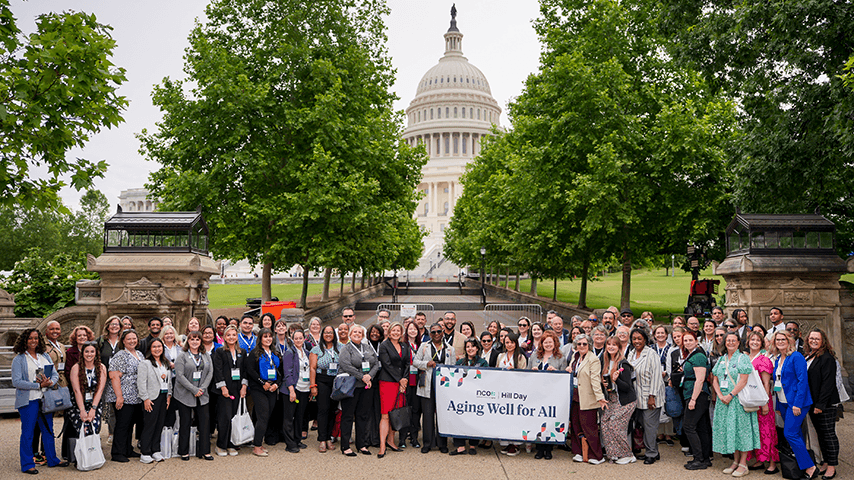
As members of Congress head home for the long August recess, we have an opportunity to educate them about the needs of older adults and the millions of lives improved every day by the Older Americans Act. We encourage everyone to use their voice quickly and often in support of OAA services. Educating members of Congress and having conversations about why the OAA matters will be critical to protecting older adults—many of whom are unable to speak up for themselves—now and in the future.
Sources
1. NCOA. Return on Investment of Falls Prevention Programs. Found on the internet at https://www.ncoa.org/article/return-on-investment-of-evidence-based-falls-prevention-programs/
2. NCOA. Low-Cost, Peer-Led Program Eases Chronic Pain for Older Adults, Boosts Independence. Found on the internet at https://www.ncoa.org/article/study-low-cost-peer-led-program-eases-chronic-pain-for-older-adults-boosts-independence/
3. NCOA. Return on Investment of CDSME Programs. Found on the internet at https://www.ncoa.org/article/return-on-investment-of-cdsme-programs/