

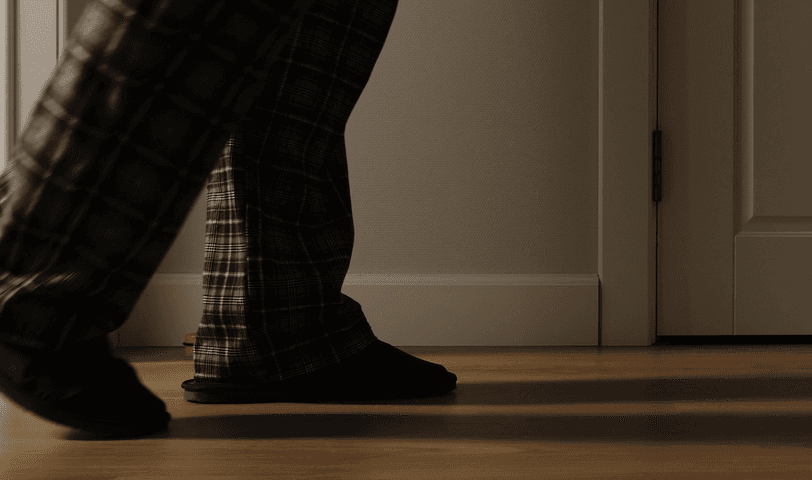
Have you ever woken up standing in front of the fridge? Sleepwalking is a rare disorder that usually affects children, but some older adults also find themselves walking around the house in the middle of the night. But while sleepwalking isn’t normally a concern for younger people, it might be a sign of more serious issues as an adult.
In this article, we explore what sleepwalking is, explain the symptoms and causes, and discuss what kinds of treatment options are available so you can get a good night’s rest.
What is sleepwalking?
Sleepwalking is a sleep disorder that causes you to move around while you are still sleeping. People go through several sleep cycles at night, including REM sleep where you are deeply asleep and dreaming, and non-REM. Sleepwalking usually occurs during lighter non-REM sleep.
Children and young adults typically experience sleepwalking because they have longer and more frequent non-REM sleep stages.1 As we get older, we have less of this type of sleep and more REM sleep.
Sleepwalking symptoms to look out for
Sleepwalking, also known as somnambulism, usually involves some of the following symptoms:
- Getting up and moving around while asleep
- Appearing to be awake when they aren’t
- No response or talking when spoken to
- Open, blank eyes
- Confusion when woken up
- No memory of the sleepwalking episode once awake2
Sometimes, sleepwalking results in dangerous or risky behavior, like the sleepwalker trying to drive a car or use knives in the kitchen.
How common is sleepwalking?
In general, sleepwalking is relatively rare. Only about 7% of the general population experiences sleepwalking, and of those, the majority are children or young adults. Only about 1%-1.5% of adults experience sleepwalking symptoms.3
If you live with a partner or roommate, they could tell you if you’ve been sleepwalking because they saw you walking around. If you live alone, you might have to look for clues, such as items being moved into strange places. You might also wake up in the middle of an episode and not remember how you got to the living room or why you’re standing in the kitchen.
What causes sleepwalking?
As an adult, sleepwalking is usually related to another issue or disorder. That’s because as we age our sleep cycles change and we stop experiencing as much non-REM sleep as we did when we were younger. If you are experiencing sleepwalking, it’s worth speaking to your doctor about what the root cause may be.
Some causes and risk factors of sleepwalking as an adult include:
- Sleep deprivation
- Certain medications
- Alcohol
- Sleep apnea
- Brain injury
- Illness or fever2
Sleepwalking can be genetic. If your parents experienced sleepwalking, you have an increased chance of experiencing it, too. Stress and anxiety can also make sleepwalking worse. These conditions sometimes cause sleepwalking to occur in the first place.
Potential dangers and misconceptions
While sleepwalking is often portrayed as something humorous in media, sometimes it can result in concerning or dangerous actions. This is especially true for older adults, because sleepwalking as an adult can mean that something more serious is going on.
If you are experiencing sleepwalking that includes risky behavior such as trying to drive, or if you become aggressive when you wake up, it’s important to speak to a doctor as soon as you can.
Is it dangerous to wake a sleepwalker?
No, it’s not dangerous to wake a sleepwalker.4 You won’t cause them any harm, but they may be confused or disoriented. Experts agree that, if you find someone sleepwalking, the best thing to do is guide them back to bed.
Is sleepwalking a sleep disorder?
Yes, sleepwalking is a sleep disorder. It’s part of a group of disorders called parasomnia, which means unwanted behaviors that disrupt your sleep. Parasomnia disorders include speaking while asleep or experiencing night terrors.5
Is sleepwalking a sign of mental illness?
Sleepwalking in adults can be a sign of mental health conditions like depression or anxiety, but it can also happen to people with no mental health issues.6 But it does usually mean that something else is going on, such as a reaction to new medication or a change in routine.
Managing and treating sleepwalking
The good news is that sleepwalking can be treated. Usually, identifying and treating any underlying issues is enough to resolve sleepwalking. Other people find that sleepwalking goes away on its own.
Sleepwalking treatments
A doctor will look at your medical history and discuss your experience and symptoms before diagnosing you. They might request a sleep study, but there isn’t a specific test for sleepwalking.
Your doctor will help you address any underlying issues (like switching up a medication, for example) or recommend ways to keep yourself safe while sleepwalking. These treatments might include:
- Waking yourself up about 15 minutes before you’d typically sleepwalk
- Therapy or counseling
- Learning self-hypnosis methods2
Five tips to reduce sleepwalking
Some strategies you can use at home to help reduce any sleepwalking include:
- Sticking to a regular bedtime routine
- Keep an eye on your stress levels and commit to a relaxing routine before bed
- Use a gate to stop yourself from going down stairs
- Make sure you’re getting enough sleep (7-9 hours)
- Don’t drink alcohol right before bed
High-quality sleep is important for your health. You can read more about ways to make your bedroom more comfortable in our guides to the best mattresses, best mattress toppers for cooling, best mattress for back pain, best orthopedic mattress, best sleep apnea pillows, and best adjustable beds.
When to see a doctor for your sleepwalking
Sleepwalking episodes are usually brief and resolve on their own. But if you are experiencing multiple sleepwalking episodes a week, feeling tired during the day, and find that your actions while asleep are risky, dangerous, or aggressive, you’ll want to make an appointment with your doctor.
What to do if you find someone sleepwalking
If you find someone sleepwalking, the best thing to do is gently and quietly lead them back to bed. You can wake them up, but sometimes this results in the person feeling confused, disoriented, or angry.
Frequently Asked Questions (FAQ)
What stage of sleep does sleepwalking occur?
Sleepwalking occurs during N3 sleep, which is the third stage of non-REM sleep.
Can sleepwalking be completely cured?
Yes, sleepwalking in adults can be cured because it is usually a symptom of another issue. Once that issue is resolved, the sleepwalking should resolve, too.
What causes sleepwalking?
Sleepwalking in adults can be caused by medication, sleep deprivation, anxiety or depression, or illness.
Why should you never wake up a sleepwalker?
It’s not true that you should never wake up a sleepwalker, because you won’t cause them harm. But it’s recommended to simply guide them back to bed instead of waking them up, which could cause them confusion or distress.
Photo credit: eugenekeebler for NCOA use only
Sources
1. Penn Medicine. Sleepwalking. Found on the internet at https://www.pennmedicine.org/conditions/sleepwalking
2. Mayo Clinic. Sleepwalking. Found on the internet at https://www.mayoclinic.org/diseases-conditions/sleepwalking
3. Cleveland Clinic. Sleepwalking. Found on the internet at https://my.clevelandclinic.org/health/diseases/14292-sleepwalking
4. UAMS Health. Is It Dangerous to Wake a Sleepwalker? Mar. 8, 2019. Found on the internet at https://uamshealth.com/medical-myths/is-it-dangerous-to-wake-a-sleepwalker/
5. Cleveland Clinic. Parasomnias. Found on the internet at https://my.clevelandclinic.org/health/diseases/12133-parasomnias--disruptive-sleep-disorders
6. Lamberg, Lynne. Sleepwalking More Likely With Several Psychiatric Disorders. Jul. 20, 2012. Found on the internet at https://psychiatryonline.org/doi/10.1176/pn.47.14.psychnews_47_14_21-a