Protect Older Adults From Online Scams: A Free Community Resource
2 min read
Related Topics
Senior centers play a pivotal role in helping older adults recognize online scams, offering a trusted place to tell their stories, get support, and arm themselves with information. Our shareable handout can help you bring these scam prevention conversations directly to your community.
Four community events, one shared purpose
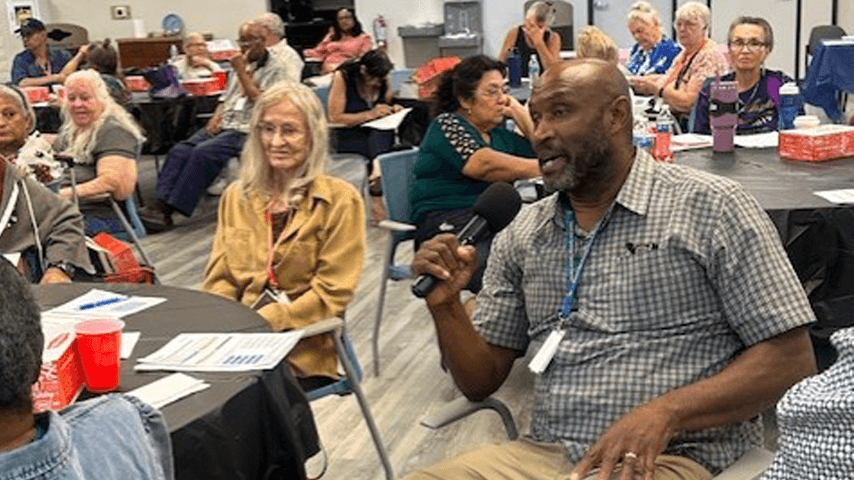
On Sept. 30, 2026, NCOA partnered with local senior centers to bring 127 people together in Detroit, Charlotte, Denver, and Pittsburgh for a National Day of Action organized through the United to Stop Online Scams coalition.
Participants shared their experiences with online scams and asked questions in a judgment-free setting. They talked about how scammers use impersonation, urgency, and increasingly sophisticated technology to deceive people. They also learned practical ways to stay safe, like pausing before responding to unexpected messages and independently verifying requests for personal information or money.
The events created room for honest discussions about the emotional toll of scams, and challenged the shame that can keep people from reporting fraud or asking for help. The overarching message was powerful: Being scammed is not a personal failure. Communities, lawmakers, technology companies, and online platforms all have a part to play in making digital spaces safer.
Get the full story about this National Day of Action.
Share scam prevention resources with your community
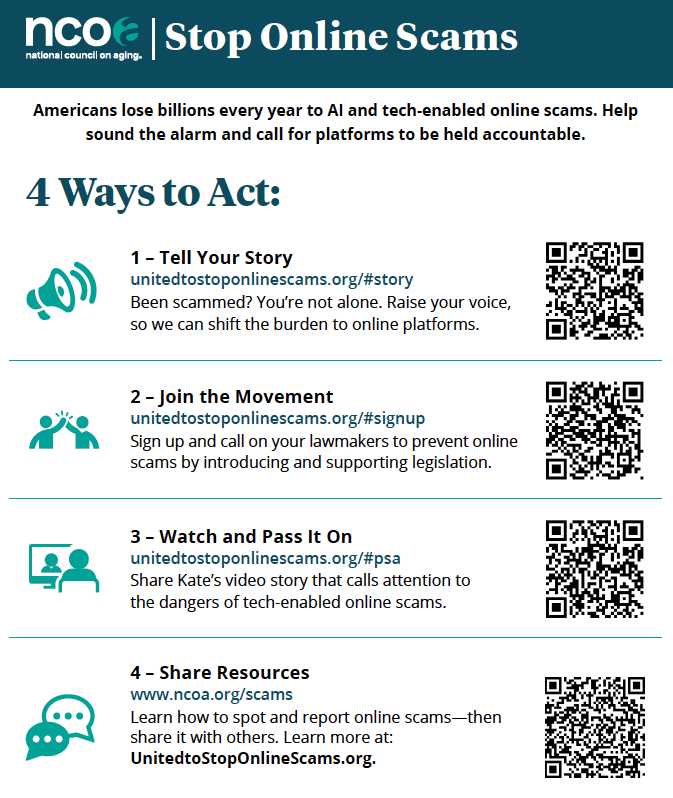
While the National Day of Action has passed, your senior center can help the momentum continue. Download our free, one-page handout to connect the older adults you serve with:
- Scam prevention resources to help them recognize scams and find support
- A personal video story to watch and share about the dangers of AI- and tech-enabled online scams
- Two ways to take action: they can share their scam experience online and contact their lawmakers
Print and distribute the handout at your senior center and use it to spark a deeper discussion. Every conversation can help an older adult feel more informed and empowered to protect themselves.
Top 5 Financial Scams Targeting Older Adults
Financial scams targeting older adults can be devastating, leaving you in a vulnerable position and without time to recoup your losses. Learn how to identify and stop the top 10 financial scams.