
I’ve Got RSV. Now What? How to Manage Symptoms and Recover
9 min read

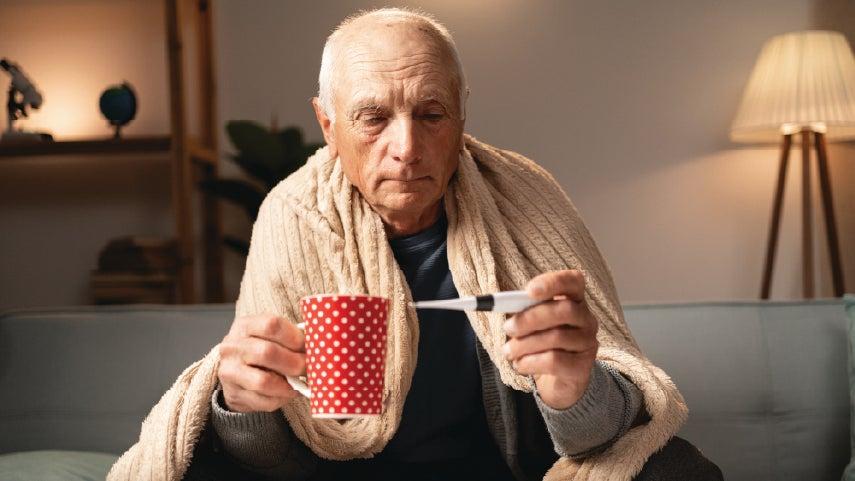
Respiratory syncytial virus (RSV) is a common respiratory virus that typically causes mild, cold-like symptoms. Most healthy adults with mild infections get better on their own within a week or two. But in older adults, especially those with chronic health conditions, RSV can be much more serious.
Since there’s no specific cure for RSV, treatment focuses on easing symptoms while your immune system fights the virus. If you become seriously ill, you may need additional medical care or even hospitalization. Explore our guide to learn more about RSV treatment depending on your age, overall health, and how severe your symptoms become.
RSV Quick Facts
| Is there a cure for RSV? | ❌ No. Treatment focuses on relieving symptoms. |
| Do antibiotics treat RSV? |
❌ No. RSV is a virus, so antibiotics don't treat the infection. |
| How is RSV treated? | With supportive care to relieve symptoms while your body fights the virus. |
| Can I recover from RSV at home? |
✅ Usually, if symptoms are mild and you aren't at high risk for complications. |
| How long does RSV last? | Most adults recover within 1–2 weeks, although some symptoms may last longer. |
| When should I call my doctor? |
If symptoms worsen, don't improve, or you're at higher risk for severe illness. |
| When should I go to the ER? |
🚨 For trouble breathing, chest pain or pressure, confusion, severe dehydration, or other serious symptoms. |
I have RSV, how can I treat it at home?
RSV treatment focuses on relieving symptoms while your body clears the virus. Most people with mild RSV can recover at home with rest, fluids, and other supportive care. If your symptoms are mild, your health care provider may suggest basic RSV treatment at home that includes:
- Getting plenty of rest
- Drinking extra fluids to prevent dehydration
- Taking an over-the-counter fever reducer or pain reliever, like acetaminophen or ibuprofen (if appropriate for you)
- Using a humidifier to ease congestion
- Using saline nasal spray or saline drops to relieve your stuffy nose
- Drinking warm fluids, like tea or broth, to soothe your throat
- Taking honey to help calm your cough
“These supportive treatments won't directly shorten the duration of your RSV infection,” explains Dorothea Vafiadis, NCOA Senior Strategist for Healthy Aging. “But they can help ease your symptoms, improve your comfort, and make recovery a little easier.”
Are there medicines that treat RSV?
For most adults, there is no specific medicine that treats or cures RSV. Treatment focuses on managing symptoms and preventing or treating complications. Unlike bacterial infections, RSV can't be treated with an antibiotic. And antiviral medications aren’t typically recommended to treat RSV, according to the Centers for Disease Control and Prevention (CDC).
There’s currently only one FDA-approved antiviral medication for RSV treatment. It’s called ribavirin, and it’s generally reserved for hospitalized patients with severe lower respiratory RSV infections. Ribavirin is not routinely used to treat RSV in otherwise healthy older adults.
Most adults, fortunately, recover from RSV without prescription treatments. But your provider may recommend certain medications to help manage specific symptoms or treat complications (e.g., a bronchodilator may be prescribed to relax your airways and help you breathe easier).
Will antibiotics treat RSV?
No. Antibiotics aren’t used to treat RSV because RSV is caused by a virus, not bacteria.
“This is one of the most common misconceptions about RSV,” Vafiadis said. “Antibiotics are only effective against bacterial infections, so they won't help your body fight the RSV virus, or help you recover faster.”
Some people develop a secondary bacterial infection after RSV, such as:
- Bacterial pneumonia
- A sinus infection
- An ear infection
If you develop one of these infections, your doctor may prescribe antibiotics to treat the bacterial illness (not the RSV itself).
When should I call a doctor about RSV?
Older adults should contact a health care provider if RSV symptoms are worsening, aren't improving, or if they have conditions that increase their risk for severe illness.
Contact your provider promptly if you're 75 or older or have a condition that increases your risk for severe RSV, such as:
- A fever that doesn't improve (or returns after subsiding)
- Symptoms that are getting worse instead of better
- A hard time eating or drinking
- Symptoms that last longer than expected
- COPD or another chronic lung disease (like asthma)
- Heart disease
- Diabetes
- A weakened immune system
Your provider can decide whether you need further RSV treatment or monitoring to help prevent complications or hospitalization. As many as 180,000 older Americans are hospitalized for RSV each year.1 Many patients hospitalized with RSV suffer lasting health effects, regardless of age.2 An estimated 10,000 older adults die annually due to RSV complications.3
When should I go to the emergency room if I have RSV?
RSV can become serious, especially in older adults. Seek emergency care for difficulty breathing, chest pain or pressure, severe dehydration, sudden confusion, or low oxygen levels. RSV can sometimes lead to serious complications, including pneumonia and respiratory failure.
Seek emergency medical care if you experience symptoms such as:
- Difficulty breathing
- High fever
- Chest pain or pressure
- Trouble eating or drinking
- Dehydration (signs include low urine output/dark-colored urine, rapid heartbeat, sunken eyes)
- Sudden confusion or dizziness
- Low oxygen (blood oxygen level below 90% if you check it at home, or you have symptoms like headache, racing heart, shortness of breath, confusion, or bluish tint under fingernails or on lips)
Vafiadis warns, “Don't delay emergency care if you're having shortness of breath or other severe symptoms. Early RSV treatment can help you get the care you need before complications arise. It can prevent a hospital stay and even save your life.”
Michele knows all too well how serious RSV can be. What she thought was a mild respiratory illness quickly escalated, and Michele, who has asthma, found herself barely able to get out of bed. She was hospitalized and diagnosed with RSV. During her grueling six-day hospitalization, Michele was given IV fluids for dehydration as well as breathing treatments. She was also given antibiotics to treat pneumonia, a common RSV complication.
“I don’t think most people living with chronic lung disease realize how an RSV infection can impact their lives,” Michele shares on the American Lung Association’s "Each Breath" blog. “I didn’t.”
Can I recover from RSV while at home?
Yes. Most older adults with mild RSV symptoms can recover safely at home by resting, staying hydrated, managing fever and discomfort, and monitoring their symptoms.
But older adults who are at higher risk for severe RSV—including those with chronic heart or lung disease, weakened immune systems, or advanced age—should notify their health care provider early, even if their symptoms seem mild. Early intervention can help identify complications before they become serious.
Can RSV be prevented?
You can reduce your risk of severe RSV by getting vaccinated if you're eligible and taking steps to avoid infection.
You can help protect yourself by:
- Getting an RSV vaccine if you're eligible
- Washing your hands frequently
- Avoiding close contact with people who are sick
- Covering coughs and sneezes
- Wearing a well-fitting mask during respiratory virus season if you're at higher risk
- Cleaning frequently touched surfaces
Vaccination against RSV is vitally important for older people, since our immunity to infectious illnesses weakens with age. CDC recommends a single-dose RSV vaccine for all adults age 75+ and adults age 50-74 who have risk factors for severe RSV.
“Talk to your doctor or pharmacist about your personal risks and get the RSV vaccine if you haven't already, ideally in late summer or early fall,” Vafiadis advises. “Vaccination is the best way to protect your health and independence.”
Note: The RSV shot is not annual like the flu shot; if you’ve already received yours, you don’t need another one right now.
Frequently asked questions (FAQ)
Does RSV go away on its own?
Yes. Most adults experience mild symptoms similar to a common cold and recover within a couple of weeks. Supportive care like rest, fluids, and over-the-counter medicines for fever or pain is usually enough to help you feel better while your immune system fights off the virus.
Some older adults or people with underlying health conditions develop severe RSV symptoms that require additional care and recovery time.
What can I do at home to treat RSV?
Most people with mild RSV can recover at home with rest, plenty of fluids, and medicines to manage fever or discomfort when appropriate. A humidifier and saline nasal spray may also help relieve congestion.
How long does RSV treatment take?
Supportive RSV treatment at home should continue until your symptoms improve. Most adults recover within one to two weeks, although some symptoms—like a nagging cough—may last a little longer.
How long does RSV treatment last?
There's no standard course of treatment for RSV. Instead, supportive care is used as long as needed until your symptoms improve and your body clears the virus.
Many adults begin feeling better within one to two weeks, although fatigue and a cough can last longer. RSV recovery may take more time for older adults or people with underlying health conditions.
That was Susan’s experience. “After my diagnosis, I continued to experience RSV symptoms such as fatigue, wheezing, coughing, and a stuffy nose for several months,” she writes on the National Foundation for Infectious Diseases website.
Is there medicine that helps treat RSV?
There isn't a specific medicine that cures or treats RSV. Treatment focuses on relieving symptoms with rest, fluids, fever reducers, pain relievers, saline nasal spray, and other supportive measures.
Can antibiotics treat RSV?
No. Antibiotics don’t work against RSV because it’s caused by a virus. They’re only prescribed if you develop a bacterial infection, such as bacterial pneumonia or a sinus infection, along with RSV.
Should I go to the hospital for RSV?
Seek medical care right away if you have difficulty breathing, chest pain or pressure, a high fever, trouble eating or drinking, signs of dehydration, sudden confusion or dizziness, or low oxygen levels (below 90% if you're using a pulse oximeter). These symptoms may signal a serious RSV complication that requires immediate medical attention.
Sources
1. University of Michigan School of Public Health. Adults face lasting effects months after RSV hospitalization. Found on the internet at https://sph.umich.edu/news/2025posts/adults-hospitalized-rsv-lasting-health-effects.html
2. Centers for Disease Control and Prevention (CDC). RSV in Older Adults and Adults with Chronic Medical Conditions. Found on the internet at https://www.cdc.gov/rsv/older-adults/
3. American Lung Association. RSV in Adults. Found on the internet at https://www.lung.org/lung-health-diseases/lung-disease-lookup/rsv/rsv-in-adults