
The 5 Best Comforters in 2026: Tested and Reviewed
After testing a dozen options, we chose these five as the best comforters for quality, value, and keeping sleepers cozy.
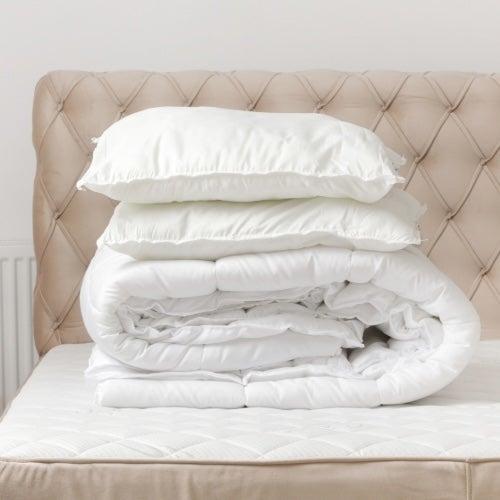
- We chose the Silk & Snow Down Alternative Comforter as the Best Comforter Overall. It’s the most affordable option on our list, and it scored a perfect 5/5 for material quality and ease of care.
- The best comforters in this guide range in price from $120–$399 for a queen size before discounts.
- Natural down is the fluffy underlayer of feathers from ducks and geese. It’s a popular fill type for its plushness and warmth, but it’s also expensive and may trigger allergies.
- Down alternatives like polyester microfiber and bamboo fabric are hypoallergenic and more affordable. They’re not as plush and breathable as natural down.
- If you get cold when you sleep, a heavy comforter with plenty of loft can help keep you warm. Hot sleepers may prefer a flatter, less densely filled comforter.
NCOA supports everyone’s right to age well. We take the time to research, test, and recommend products that can help you live a healthier life. We’ve spent thousands of hours researching and testing comforters and sleep accessories to give you the most accurate product reviews. To find the best comforters, we:
- Consulted with sleep specialists like doctors, occupational therapists, and physical therapists for guidance on choosing the best comforters
- Put numerous models through a series of 8 different tests at our in-house lab
- Mystery-shopped more than 10 brands
- Surveyed more than 2,000 older adults on their sleep quality
- Interviewed experts on the importance of good sleep for older adults
- Worked with older adult testers to evaluate comforters and get their opinion
- Read thousands of verified customer reviews
We’re constantly testing new comforters and sleep products to give you the most accurate and up-to-date recommendations. Read more about our sleep accessories review methodology.
Buying the best mattress is just one part of getting a good night’s sleep. The right comforter creates a comfortable temperature under the covers to help you rest. The best comforters provide the ideal balance of warmth, airflow, and humidity. But the right choice will vary for everyone.
“Find a comforter that delivers the right temperature and feel for you, in your actual bedroom, and that you can use and care for comfortably,” said James Wilson, a sleep coach and co-founder of Sleepunity in Wakefield, England. “If a comforter traps too much heat or humidity, or it provides too little insulation, thermal discomfort can produce more disturbed sleep.”
We tested a dozen comforters to find the top choices for a variety of sleep needs and budgets. Our pick for the Best Comforter Overall is the Silk & Snow Down Alternative Comforter. It’s affordably priced, easy to care for, and feels as plush and cozy as the higher-priced options we tried. Keep reading for our complete testing methodology and tips on finding the right comforter for you.
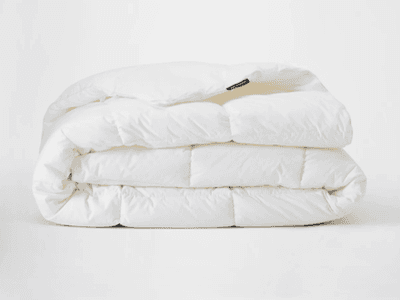
Silk & Snow Down Alternative Comforter
A more affordable option that's high-quality and easy to care for
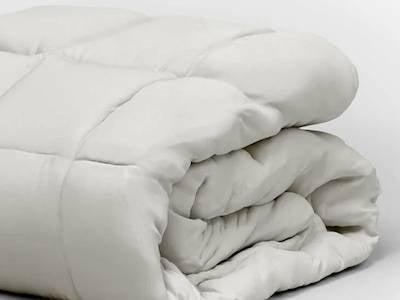
Saatva Down Alternative Comforter
The breathable, high-quality fill stays evenly distributed
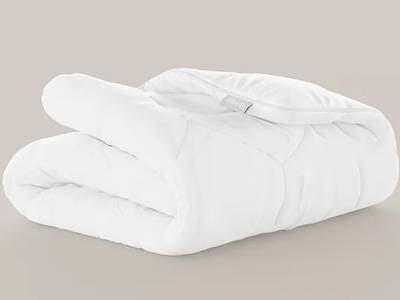
Layla All-Season Comforter
Testers found it as soft as natural down
Best comforters of 2026
- Silk & Snow Down Alternative Comforter: Best Overall
- Saatva Down Alternative Comforter: Best Down Alternative Comforter
- Layla All-Season Comforter: Best Comforter for Allergies
- Brooklinen Down Comforter: Best Down Comforter
- Cozy Earth Bamboo Viscose Comforter: Best Luxury Comforter
Comparing the best comforters of 2026
| Comparison Features | |||||
|---|---|---|---|---|---|
| Score out of 10* | 9.6 |
9.2 |
9.9 |
8.8 |
8.4 |
| Best for | Overall |
Down alternative |
Allergies |
Down |
Luxury |
| Materials | Cotton shell, down alternative microfill |
Cotton shell, recycled polyester microfiber fill |
Cotton shell, ClusterLoft down alternative fill |
Cotton shell, down clusters and feathers |
Viscose from bamboo |
| Trial period | 100 nights |
45 nights |
30 nights |
365 nights |
100 nights |
*Ratings reflect a brand's overall offering; the best overall pick does not necessarily have the highest score
How we tested the best comforters
We focused on the following criteria when testing the best comforters:
Silk & Snow Down Alternative Comforter: Best Comforter Overall
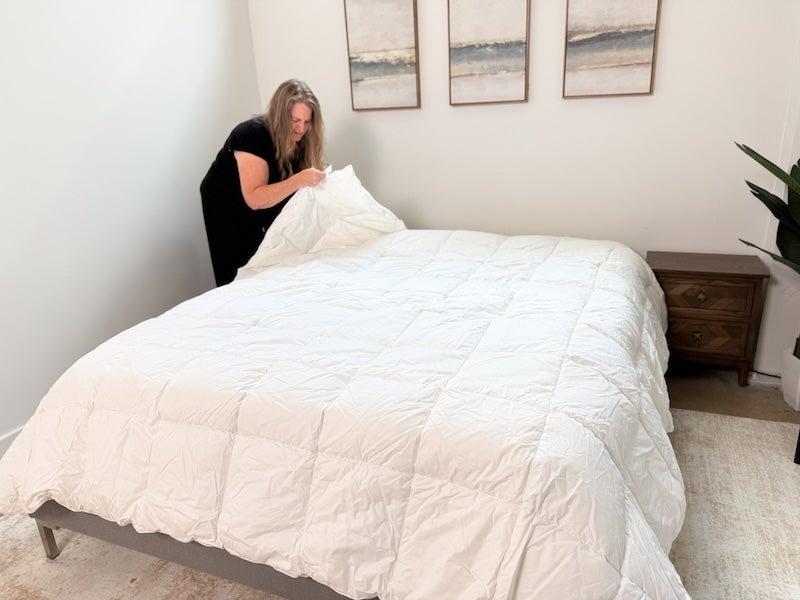
We named the Silk & Snow as the Best Comforter overall for its testing performance and value. It's the least expensive option on this list and includes a 100-night risk-free trial. It also earned a perfect 5/5 score for material quality and ease of care in our tests.
- Silk & Snow Mattress Review
- Only comforter to score a 5/5 for price
- OEKO-TEX STANDARD 100 certified against harmful chemicals
- Machine washable and dryer-safe for easy care
- Comforter materials: 100% cotton shell, down-like microfiber fill
- Warmth options: Lightweight, winter, all-season
- Trial: 100 nights
- Warranty: One year
Pros
- Lowest price on our list
- Hypoallergenic materials
- Good for cold weather
- Machine-washable
Cons
- Outer shell crinkles with movement
- May feel too hot for some sleepers
Saatva Down Alternative Comforter: Best Down Alternative Comforter
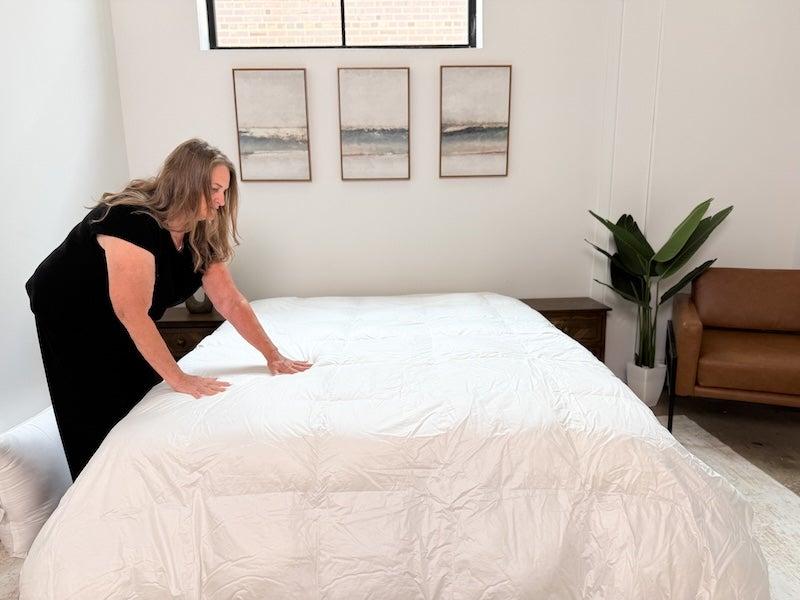
Saatva is our pick for the Best Down Alternative Comforter because it’s breathable, well-made, and easy to clean. We found it lightweight and easy to move, but puffy and thick at the same time.
- Saatva Mattress Review
- Heavyweight but doesn’t cling to the body
- Machine washable and dryer-safe
- Baffle-box construction keeps fill evenly distributed
- Comforter materials: Sateen cotton shell, 100% recycled polyester microfiber fill
- Warmth options: Lightweight, heavyweight, all-year
- Trial: 45 nights
- Warranty: One year
Pros
- Thick but not too hot
- Breathable and cool to the touch
- Machine washable
Cons
- Short trial and warranty for the price
- No material certifications
Layla All-Season Comforter: Best Comforter for Allergies
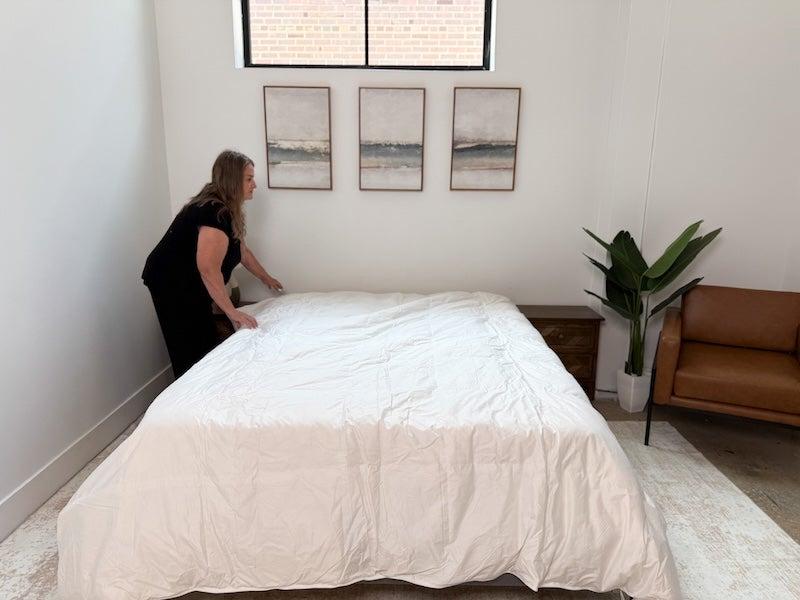
Earning the top overall score in our tests, the down alternative Layla All-Season Comforter feels as lush as natural down. If you’re sensitive to feathers, we believe this is the Best Comforter for Allergies you can buy.
- Layla Mattress Review
- Our highest-scoring comforter overall
- Machine washable and OEKO-TEX certified
- Hypoallergenic down alternative fill
- Comforter materials: 100% cotton shell, ClusterLoft down alternative fill
- Warmth options: All-season
- Trial: 30 nights
- Warranty: 5 years
Pros
- Feels like natural down
- The best cooling comforter on our list
- Made with high-quality materials
- OEKO-TEX certified
Cons
- Shorter trial period
Brooklinen Down Comforter: Best Down Comforter
Brooklinen uses ethically sourced Canadian down and a sateen cotton cover to create a cozy comforter that’s not too heavy. It comes with a 365-night trial, the longest on this list.
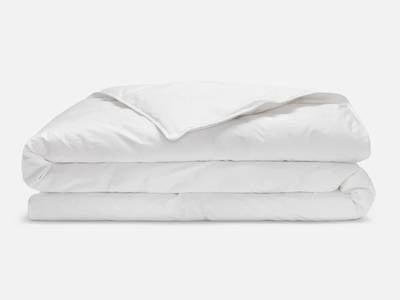
- Longest trial period on this list
- DOWNMARK certified Canadian down
- Weighty but soft with great insulation
- Comforter materials: Sateen cotton shell, Canadian down clusters and feathers
- Warmth options: Lightweight, heavyweight, all-season
- Trial: 365 nights
- Warranty: One year
Pros
- Lofty without being too heavy
- Ethically sourced down
- 365-night trial
Cons
- Not a good option for sleepers with allergies
- Only fits in commercial washers and dryers
- $10 return fee
Cozy Earth Bamboo Viscose Comforter: Best Luxury Comforter
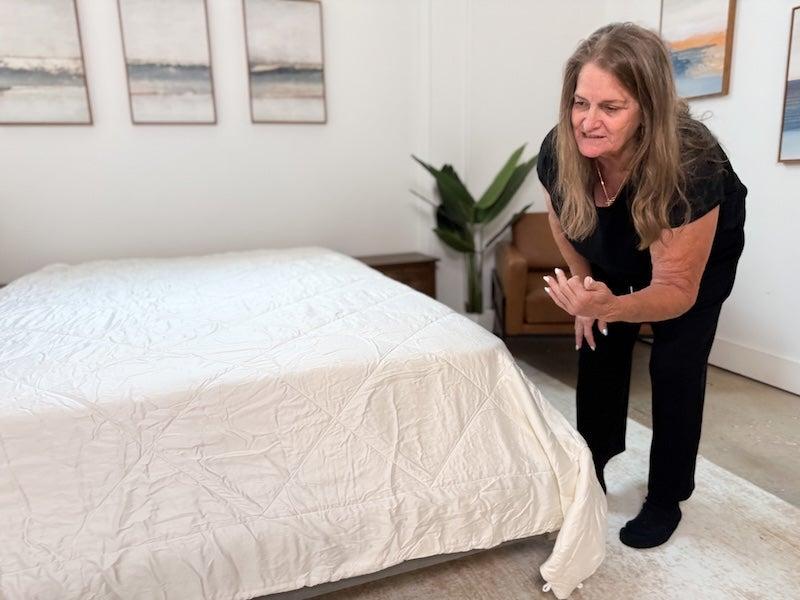
The Best Luxury Comforter comes from Cozy Earth. It uses 100% viscose from bamboo for the outer shell and inner fill. This sleek comforter is cozy yet light and is easy to lift when you’re getting in and out of bed. But it does require specialized care to help it last.
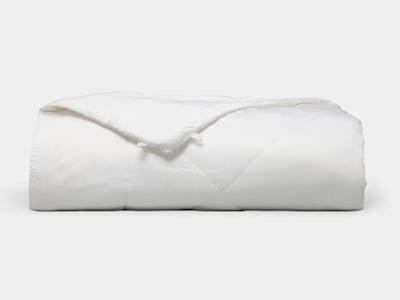
- Longest warranty on this list
- Lays nearly flat, almost like a blanket
- Light to handle, but lays heavy on the body
- A duvet cover is recommended to prevent stains and wrinkles
- Comforter materials: 100% viscose from bamboo (fill and fabric)
- Warmth options: Lightweight, midweight
- Trial: 100 nights
- Warranty: 10 years
Pros
- Easier to lift for people with limited mobility
- OEKO-TEX certified against harmful substances
- 10-year warranty and 100-night trial
Cons
- Wrinkles easily and isn’t machine washable
- Feels heavy against the body
- Shipping fees for returns
What makes a good comforter?
The characteristics of a good comforter depend on what you need to sleep well. It’s important to shop according to your preferences and sleep environment, and not solely by price or brand reputation.
“Consider whether you sleep hot or cold, your bedroom climate, whether you share a bed, and what weight and feel you enjoy,” said James Wilson, co-founder of Sleepunity. Research suggests that the level of insulation should complement your sleep environment so you don’t wake up sweating or shivering.1
Two criteria that determine how warm and heavy a comforter will be are fill power and fill weight. Fill power measures volume in cubic inches and ranges from 300 to 900, with a higher number yielding more loft and greater insulation. Fill weight, usually measured in grams, refers to the amount of fill inside a comforter. A higher fill weight means more warmth.
Also consider what the comforter is made of. Natural down is popular because it’s fluffy and warm, but it’s expensive and not hypoallergenic. Synthetic and plant-based down alternatives are good for budget-conscious shoppers and allergy-prone sleepers. They won’t be as soft or breathable as natural down, and natural materials like cotton can be costly.
A good bed comforter is also easy to clean, comes with a reasonable return period, and is backed by a manufacturer’s warranty. If you care about how your bedding is made, seek comforters with certifications for organic or safe materials and sustainable practices.
How to choose a comforter
Choosing the best comforter comes down to knowing what you need to sleep soundly. Shopping with the below features in mind can help you find the right one sooner.
Fill
The first thing to consider when choosing a comforter is the fill. Some of the most common fill types are:
- Down: The soft layer found underneath the outer feathers of ducks and geese. “Down is light, lofty, and excellent at keeping you warm,” said Wilson.
- Feathers: Flatter, heavier, and denser than down. They’re sometimes blended with down to add loft and breathability.
- Polyester microfiber: An affordable down alternative. It's hypoallergenic and generally easy to care for.
- Bamboo fiber: Hypoallergenic, moisture-wicking, and eco-friendly. It’s usually a semi-synthetic material such as lyocell or Tencel.
- Wool and cotton: Naturally breathable fibers. They’re great for hot sleepers, but tend to be more expensive than synthetic materials.
As we prepare for sleep, our core body temperature naturally begins to fall. The bedding needs to keep the skin comfortably warm while allowing excess body heat and moisture to escape. If the comforter traps too much heat or humidity—or provides too little insulation—thermal discomfort can produce more disturbed sleep."
—James Wilson, sleep coach and co-founder of Sleepunity
Outer shell
Choosing the right type of fill for your comforter is important, but that alone won’t make a comforter a good fit for you. “The shell, weave, stitching and amount of fill can matter as much as the fiber itself,” said Wilson.
A comforter’s outer layer, also called a shell, is usually made of cotton, a polyblend, bamboo fabric, or silk. The material of this outer layer works with the inner fill to make the comforter softer, warmer, or more breathable.
The outer stitching also matters, and not just for looks. Baffle-box stitching creates more loft and keeps the fill in place, but it’s usually more expensive. Sewn-through stitching creates a flatter, blanket-like comforter that’s easier to move. But it doesn’t prevent fill from clumping in spots.
Fill power and fill weight
To determine how warm or heavy a comforter will be, look at its fill power and fill weight. Fill power measures a comforter’s loft. The fill weight measures the amount of fill packed inside a comforter. Higher fill power means a fluffier, more insulating comforter. A higher fill weight yields a heavier, warmer comforter.
If you have limited mobility or reduced strength, a flatter, lighter comforter will be easier to handle. “A large or heavy comforter may be difficult to reposition, lift, or remove, particularly for someone with arthritis, pain, or [other health issues],” said Wilson. If you’re also sensitive to the cold, try combining a lightweight comforter with another layer, such as a quilt or a blanket.
Ease of care
The comforter is the top-most layer of your bed, so you’ll want to keep it clean and neat. Ease of care largely depends on the material. Polyester and cotton are machine washable and dryer-friendly. Bamboo fabric is smooth and silky, but it wrinkles easily and requires specialized care.
Some comforters have corner loops to secure them to a duvet cover. This can help keep them fresh so they require less washing. A duvet cover is especially useful for comforters that wrinkle easily or are spot-clean only.
Note that very thick comforters may not fit in home laundry machines. In that case, you’ll need to bring them to a laundromat with commercial machines.
Trial period and warranty
Before buying a new bed comforter, look at the return policy and warranty. Most comforters come with a trial period. These can range from 30 nights up to a full year. You can return a comforter during the trial period for an exchange or refund, but some companies charge for return shipping.
A warranty protects against manufacturer defects and other issues beyond your control. The most common warranty for a comforter is one year, but some brands offer between five and 10 years. Read the warranty terms carefully, as every brand has its own guidelines.
Certifications
Look for certifications that ensure the materials are safe and have been sustainably sourced through fair labor practices. Here are some of the most common certifications for comforters:
- OEKO-TEX is among the most common certifications for textiles tested for harmful chemicals
- DOWNMARK identifies products made with ethically sourced Canadian down
- Global Organic Textile Standard (GOTS) applies to organic fibers, usually cotton or wool
How much do the best comforters cost?
The best comforters in this guide cost between $120–$399 for a queen-size before discounts. Common factors that influence the price include materials (synthetic materials often cost less), fill power, and construction.
| Comparison Features | Silk & Snow Down Alternative Comforter |
Saatva Down Alternative Comforter |
Layla All-Season Comforter |
Brooklinen Down Comforter |
Cozy Earth Bamboo Viscose Comforter |
|---|---|---|---|---|---|
| Cost for queen size | $120* |
$315* |
$234 |
$399* |
$388 |
| Shipping costs | Free |
Free |
Free |
Free |
Free |
| Warranty length | 1 year |
1 year |
5 years |
1 year |
10 years |
| Return fees | Free |
Free |
Free |
$10 |
Free exchanges; processing fee for returns |
*The price listed is for the All-Season weight.
Frequently asked questions
Where can you buy high-quality comforters?
You can find high-quality comforters online from brands like Brooklinen, Cozy Earth, Silk & Snow, Saatva, and Layla. Certain department stores such as Macy’s, Nordstrom, and Kohl’s also sell comforter sets and other bedding.
What are the best brands of comforters?
The best comforters come from brands with a reputation for excellent product quality and customer service. The brands that performed best in our testing were Silk & Snow, Saatva, Brooklinen, Cozy Earth, and Layla.
How often should you wash a comforter?
You should wash your comforter at least once every three months. If you have pets or regularly eat or drink in bed, you’ll want to clean it more frequently. Adding a duvet cover can protect your comforter from stains and dust so you won’t have to wash it as often. For the best results, refer to your comforter’s care instructions.
Questions? Email us at reviewsteam@ncoa.org.