
Best Hair Loss Treatments for Men in 2026, Researched and Tested
We tried the best hair loss treatments for men on the market—here’s what we liked, what could be better, and what surprised us.

- The Hims Hair Regrowth Treatment is the best hair loss treatment for men, and it costs $15 per month.
- Hair loss treatments for men are available in many forms, like oral medications, topical serums or foams, and shampoos and conditioners.
- The best hair loss products for men affect everyone differently, so you may need to try a few before you find the product that works best for you. Most companies give subscribers the option to ask medical professionals questions for free.
- Male pattern baldness is the most common cause of hair loss for men, and while it’s hereditary, hair loss treatments can help.
Our mission at NCOA is to connect people with the tools and resources they need to live a healthy life. We put products under the microscope before we can recommend them to you. To review hair loss products, we researched and tested for over 200 hours before making our first recommendation. To find the best hair loss treatments, we:
- Consulted with dermatologists, trichologists, psychologists, and primary care physicians
- Ordered a product and tested it for 2-4 weeks before moving it into the next round for consideration—with testing ongoing for 1 calendar year
- Interviewed long-time users of these brands
- Used the products as directed on an ongoing basis—they’re now staples in our testers’ showers and medicine cabinets
- Read thousands of verified customer reviews
We’re constantly testing new hair loss treatments to give you the most accurate and up-to-date recommendations. Read more about our hair loss treatment methodology.
Our hair naturally changes as we age. Research indicates that hair loss affects both men and women, and approximately 53% of men experience balding after age 65.
Though it’s common, living with hair loss isn’t easy. Research finds hair is a very important part of self-identity, and hair loss can harm your emotional health. Hair loss can lead to feelings of self-consciousness, embarrassment, frustration, and jealousy. Some people who lose their hair may feel less attractive and likable.1
The best hair loss treatments for men may help. Prescription and over-the-counter treatments work in different ways to help promote hair growth. These treatments come in many different forms, including pills, gummies, serums, shampoos, and more. There’s no one-size-fits-all solution to hair loss, but we tested many products to find what works.

- Specially formulated combination of prescription and supplement medication
- Free consultations with prescribers
- Multiple formulas available
Our picks for the best hair loss treatments for men in 2026
- Hims: Best Hair Loss Treatment Overall
- Happy Head: Best Shampoo for Hair Growth
- Roman: Best Hair Growth Serum
Compare the best hair loss treatments for men in 2026
| Comparison Features | |||
|---|---|---|---|
| Our rating | 9.9 |
9.7 |
9.7 |
| Billing cycles | 3 months or annually |
3 months or annually |
1 or 3 months |
| Product offerings | Chewable tablets, serum, spray, gummies |
Shampoos, conditioners, supplements, oral medications |
Spray, serum, oral tablets |
| Prescription required? | Both prescription and OTC products are available |
Both prescription and OTC products are available |
Both prescription and OTC products are available |
Our reviews of the best hair loss treatments for men
Hims Hair Regrowth Treatment: Best Hair Loss Treatment Overall
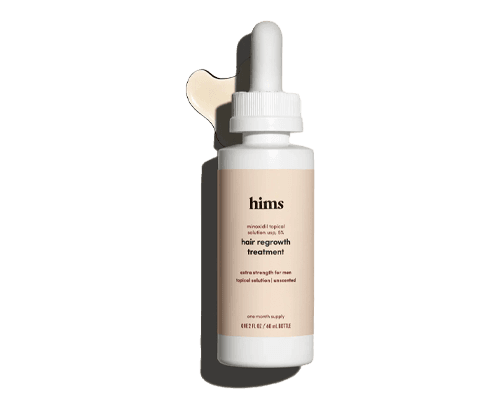
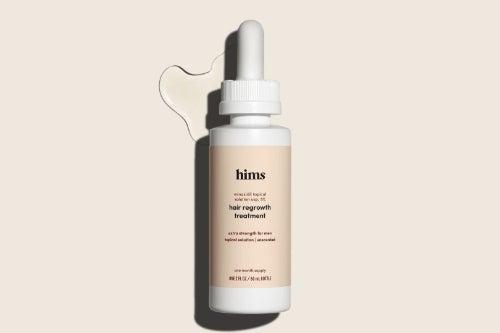
The Hims Hair Regrowth Treatment is simple to apply, has a light scent, and costs just $15 per month. Subscribers can send unlimited messages to the customer service team and Hims medical professionals. We like that this gives users valuable access to medical help if they need it.
- Learn more in our Hims review
- Active Ingredients: 5% Minoxidil
- Treatment type: Topical
- Billing cycle: Buy once, every three months, or annually
- Prescription treatments: spray, serum, foam, chewable, and oral pills
- Over-the-counter (OTC) shampoos, conditioners, and supplements available
- Free delivery and ongoing support for subscribers
Pros
- Helps regrow hair in the vertex or crown
- Easy to apply
- Low cost
- Subscribers get unlimited messaging with medical professionals or customer service
Cons
- May not be the best option for a receding hairline
- No discount for signing up for automatic refills
- Need to apply the serum twice per day
Why we chose Hims Hair Regrowth Treatment as Best Overall
The Hims Hair Regrowth Treatment, a 5% minoxidil topical serum, is competitively priced at $15 per month. The serum was easy to use and had a light scent. It comes in welcoming packaging that doesn’t have a medicinal feel. It’s vegan and cruelty-free, and we appreciated that Hims required us to submit a photo when we placed our order for identity verification.
Since the regrowth treatment is affordably priced, you could easily try it out for a few months before deciding if you want to subscribe. Subscribers don’t save on the serum cost, but they do get free shipping. The biggest advantage to subscribing is that you can send unlimited messages to Hims medical professionals and the customer service team. If you have any concerns, you can get personalized answers from an expert without paying a fee. These factors made our team consider Hims to be one of the best subscription hair loss treatments.
Our testing experience with Hims Hair Regrowth Treatment for Men
Overall, the serum is easy to use with simple instructions. It’s designed to be applied twice a day, which is a drawback compared to other products that are just applied before bed.
“When applying the product, it felt very light,” a tester said. “The dropper holds 1 mL of product and it applied very easily and dispersed well on my head with a little massaging into the scalp.”
One tester noted that the packaging is user-friendly and doesn’t make the serum feel medicinal, so they were more comfortable using it. He didn’t experience any scalp tingling while using the serum. “The product feels like baby oil and has a peroxide smell,” he said. The ingredient propylene glycol is what can make these serums feel greasy, so our medical review team suggests trying the foam version of this medication if the texture bothers you.
Other Hims hair growth treatments
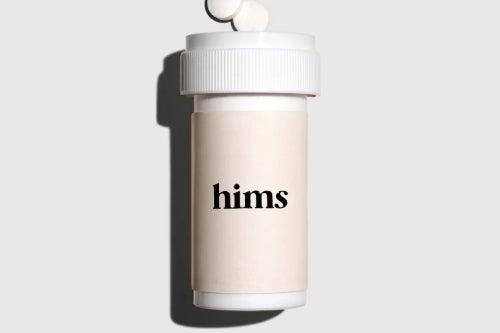
| Comparison Features | Hims Finasteride & Minoxidil + Supplement Blend Chew Visit Sitefor Hims Finasteride & Minoxidil + Supplement Blend Chew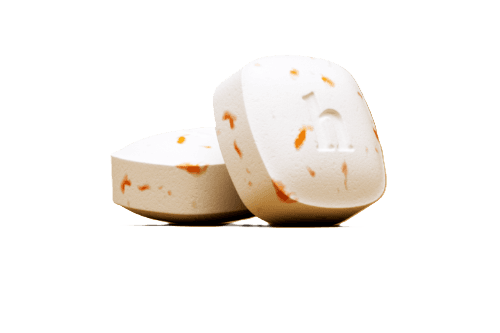 |
|||
|---|---|---|---|---|
| Active ingredients | 0.3% finasteride, 6% minoxidil |
0.3% finasteride, 6% minoxidil |
Finasteride, minoxidil |
Finasteride, minoxidil |
| Treatment type | Spray |
Serum |
Chew |
Pill |
The Hims customer experience
- Warranty and trial period: None
- Financing: No
- Customer service: Hims subscribers receive unlimited messaging with customer service or medical professionals. Customer service responds within 24 hours. If you’re not a subscriber, you will need to submit a message online, and the response time is typically 24 to 72 hours.
Happy Head Thickening Shampoo: Best Shampoo for Hair Growth
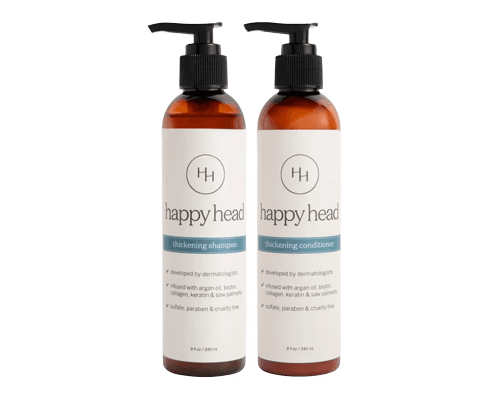
With its pleasant citrus scent and easy lathering, the Happy Head Thickening Shampoo is enjoyable and simple to use. Subscribers also receive ongoing dermatologist support as needed. The brand’s product and service combine to make Happy Head our top pick for the best thickening shampoo.
- Learn more in our Happy Head review
- Active Ingredients: Argan oil, biotin, collagen, keratin, saw palmetto
- Treatment type: Topical
- Billing cycle: Buy once or monthly
- Prescription treatment options include serum, gel, and oral pills
- OTC shampoos, conditioners, supplements, and a scalp roller available
- Free delivery and ongoing support for subscribers
Pros
- Lathers well
- Safe for colored hair
- Shipping is free
- Money-back guarantee
Cons
- Recommended to pair with Happy Head Thickening Conditioner
- Bottle is only 8 ounces
- Price increases to $30 per month after your first subscription order
- Not a vegan product
Why we chose Happy Head Thickening Shampoo as Best Shampoo
The Happy Head Thickening Shampoo is easy to use and requires no special steps or leave-in time. It features a pleasant citrus scent and easily forms a good lather. Our tester was very impressed by the shampoo’s performance and didn’t have anything negative to say about their experience.
The shampoo has a few hair health ingredients, like argan oil and collagen. But we’re more interested in the saw palmetto when it comes to treating hair loss. Research has shown that saw palmetto can help reduce the level of dihydrotestosterone (DHT), a male sex hormone that can be a major contributing factor to hair loss in men.2 It is worth noting that slapping the shampoo on and rinsing it off immediately won’t allow the ingredients to soak deeply into the scalp. Make sure to really lather up.
In addition to the shampoo, Happy Head offers a Thickening Conditioner you can pair it with. You’ll receive a free consultation and ongoing support from a board-certified dermatologist. You can also work with your dermatologist to adjust the formula, ensuring you get the best results possible.
The shampoo can be used independently of the conditioner, which can save you money. The products are definitely more expensive than standard drugstore buys. If you are only buying it once, a bottle costs $36. You can save by choosing the subscribe and save option, where the first bottle is $21, and then the price rises to $30 per month.
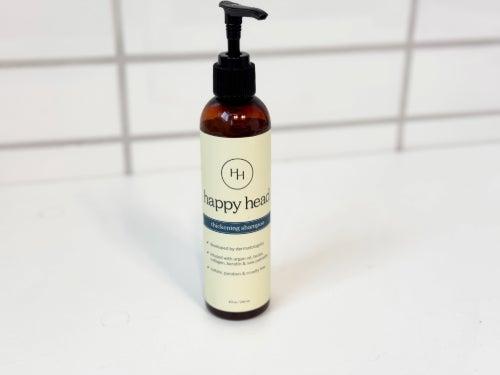
Since the bottle is somewhat small, one tester felt they wouldn't use it as their daily wash. But it did leave their hair feeling just as clean as their usual shampoo, and they’d gladly swap it in daily otherwise.
Though some testers worried that their hair would look different than normal when they changed their shampoo routine, that wasn’t an issue. Once dry, testers reported that their hair had its usual texture.
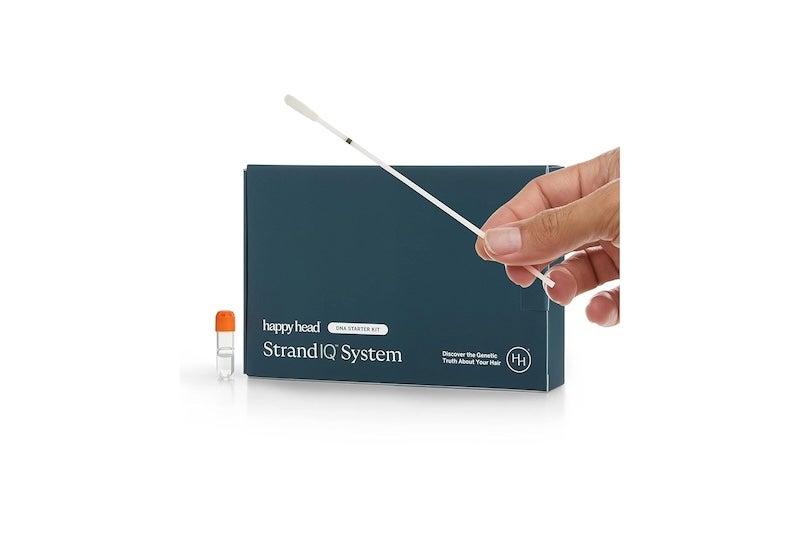
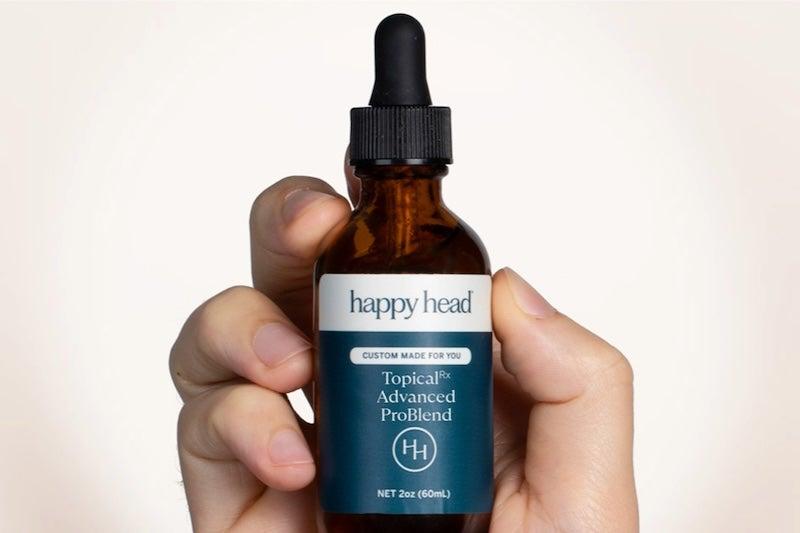
Other Happy Head hair growth products
| Comparison Features | Topical + SuperCapsule: Dutasteride & Minoxidil Visit Sitefor Topical + SuperCapsule: Dutasteride & Minoxidil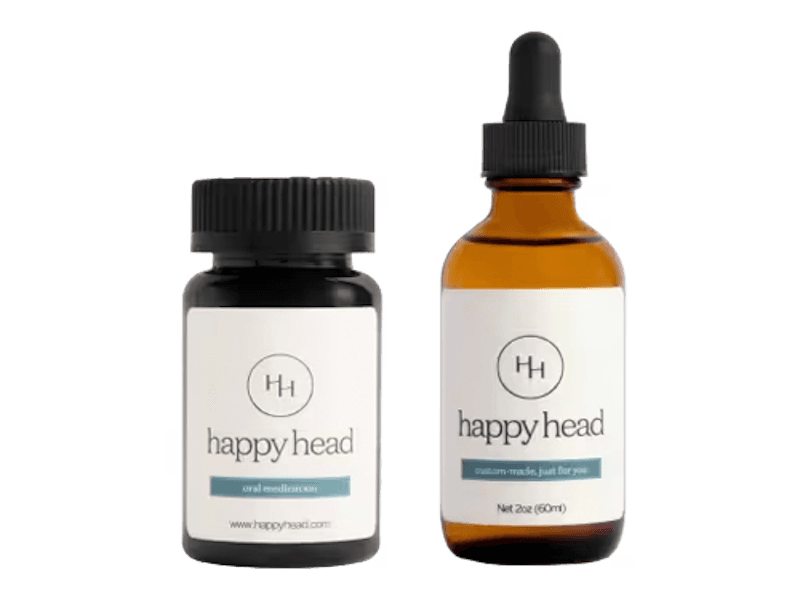 |
SuperCapsule: Dutasteride, Minoxidil & Vitamin D Visit Sitefor SuperCapsule: Dutasteride, Minoxidil & Vitamin D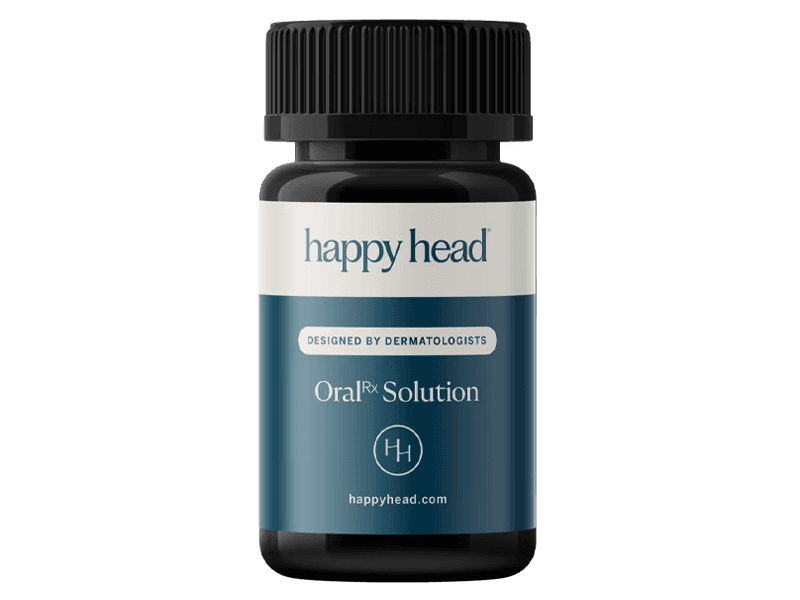 | ||
|---|---|---|---|---|
| Type | Diagnostic |
Oral and topical |
Topical |
Oral |
| Key Ingredients | n/a |
Dutasteride, minoxidil |
Minoxidil, tretinoin |
Dutasteride, minoxidil, vitamin D |
| Best For | Identifying optimal treatment |
Advanced DHT-related loss |
Early-stage thinning |
Genetic loss |
The Happy Head customer experience
- Warranty and trial period: Happy Head offers a six-month money-back guarantee. You have up to six months to request your money back if you’re not satisfied with a product. But the guarantee only applies to the product that you’ve most recently ordered, not to all of the products that you have ordered or used during the six months.
- Financing: No
- Customer service: If you need assistance, you can visit the Happy Head customer support page. There, you can submit a help request online or use the website’s chat function. You can also text or call Happy Head.
- Phone: 844-962-4247, Monday through Friday from 6 a.m. to 5 p.m. PT.
- Text: 213-464-0214, Monday through Friday from 6 a.m. to 5 p.m. PT.
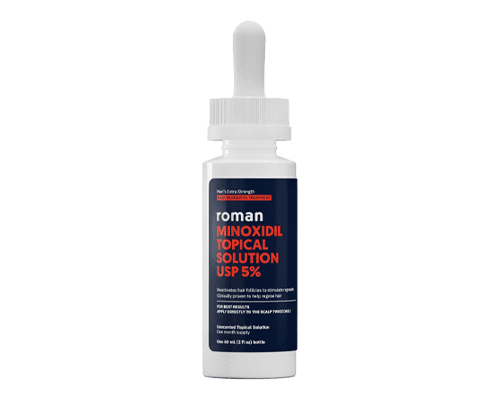
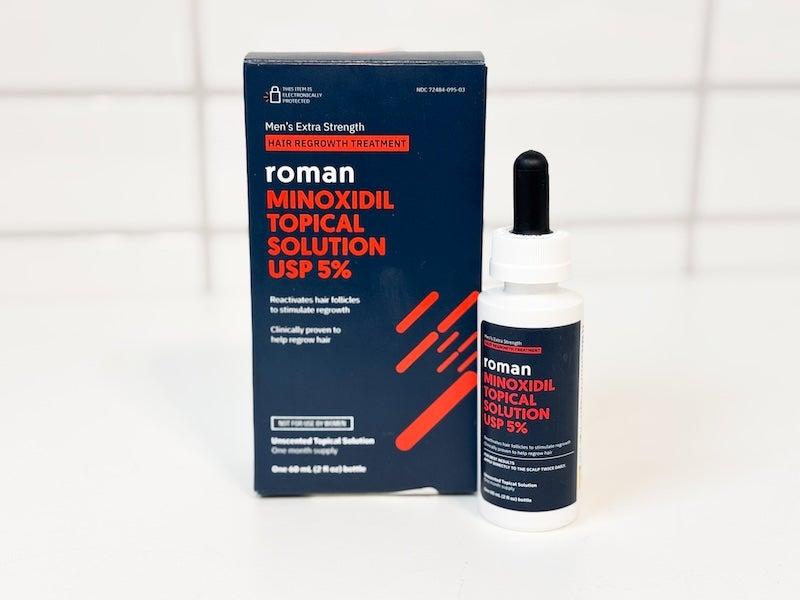
Roman Men's Extra Strength Minoxidil Topical Solution USP 5%: Best Hair Growth Serum
Our testers reported how easy it was to use Roman Men’s Extra Strength Minoxidil Topical Solution USP 5%. This serum didn’t cause any scalp tingling, and it came with clear instructions. We like Roman’s flexibility. Many companies bill subscribers every three months. But Roman offers a one-month billing option for subscribers who want a more flexible payment option.
- Learn more in our Ro review
- Active Ingredients: 5% Minoxidil
- Treatment type: Topical
- Billing cycle: Monthly or every 3 months
- Prescription treatment options include spray, serum, and oral pills
- OTC shampoos and conditioners also available
- Free delivery and ongoing support for subscribers
Pros
- Very easy to use
- Simple instructions
- Gave hair a nice shine
- Shipping is free for subscribers
- Option for subscribers to be billed monthly
Cons
- Could be too greasy for some
- Directions state to use twice a day
- No money-back guarantee
- Not a vegan product
Why we chose Roman Men's Extra Strength Minoxidil Topical Solution as Best Topical Serum
Roman Men’s Extra Strength Minoxidil Topical Solution USP 5% is the generic form of Rogaine. It’s an easy-to-apply serum offered at a lower cost than the name brand. Our tester found that the instructions were clear and the dropper worked well. The combination of a lower price and ease of use earned the solution the title of best topical hair loss treatment for men.
Roman (widely recognized as Ro, a brand often associated with Ro hair loss treatments) offers free shipping on this serum, which is manufactured in Canada. You’ll hear back from a health care professional in 24 hours to verify that you’re choosing the right product for your needs. If you subscribe, you have free, unlimited follow-ups to discuss your treatment and make any necessary dosage changes. You can message your health care provider on the Roman platform for easy communication.
We like Roman’s monthly subscription option, instead of the standard three-month plan. Extra payment options allow for more flexibility if you have a tight budget. Though the product is called “Extra Strength,” the active ingredient is a standard dosage. You’ll find 5% minoxidil in Rogain and Hims serums, too.
Our testing experience with Roman Men's Extra Strength Minoxidil Topical Solution
One tester said that the instructions were very easy to follow and the dropper worked well. “I was able to apply the product to my scalp easily,” he said. He described the serum as being a clear liquid that was very runny, so he had to rub it in right away so it didn’t drop down to his face or clothes.
“The oil is light and spreads well into your scalp so I think this bottle will last a while for me.” said a tester.
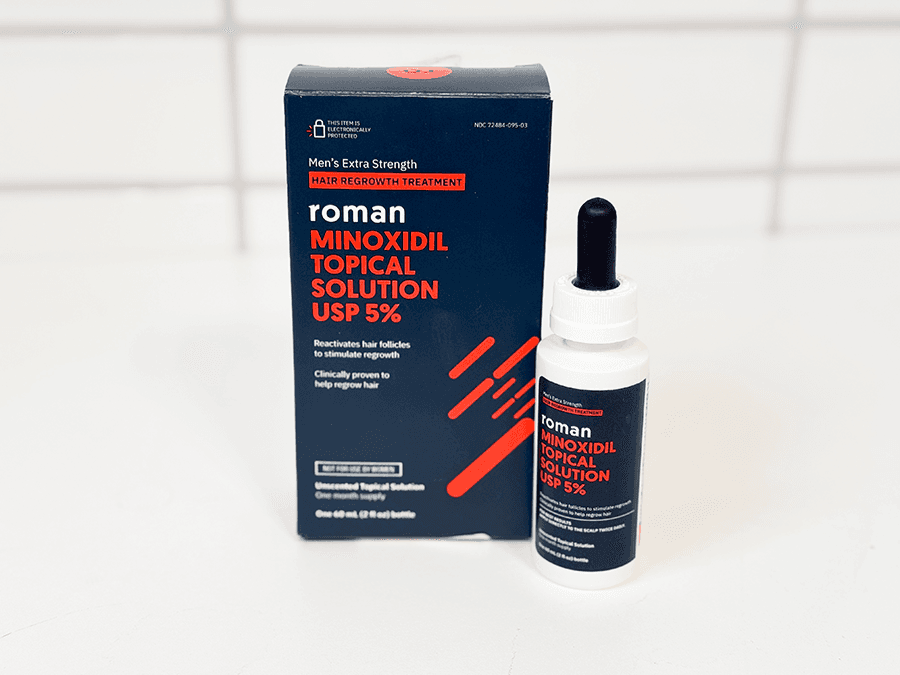
The instructions say to apply the serum twice a day, but our tester was tempted to just use it in the evening before bed, since he was worried it would make his hair look greasy. In the end, he liked the shine that it gave his hair. As someone who doesn’t normally use styling products, he was pleasantly surprised with the results. Our medical advisory team said the same, noting that they’ve also heard of users working these treatments into their routines as stylers.
Other Roman hair growth products
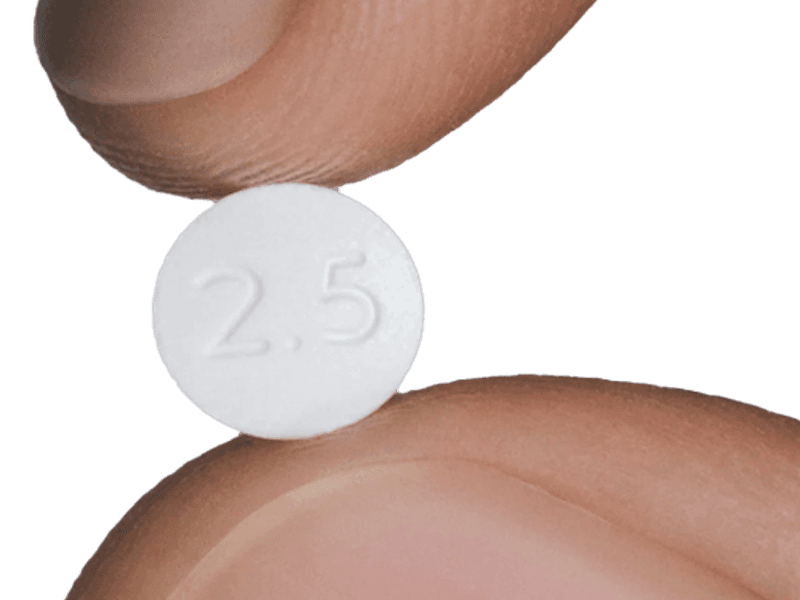
| Comparison Features | ||||||
|---|---|---|---|---|---|---|
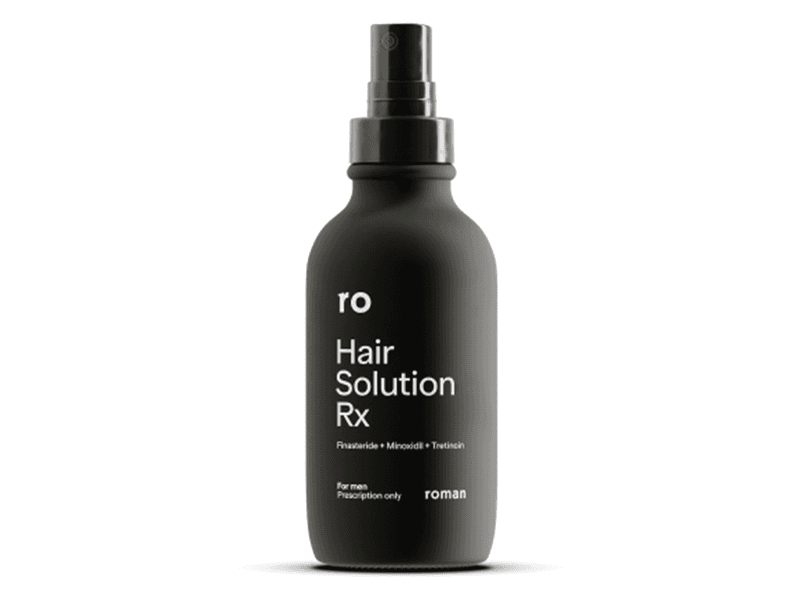
| Key Ingredients | Minoxidil, finasteride, and tretinoin |
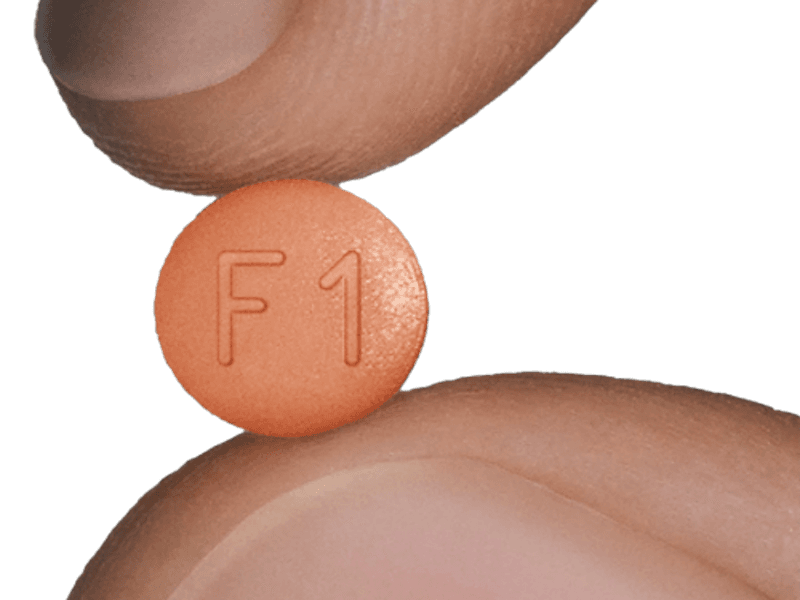
Finasteride |
Minoxidi |
Minoxidi |
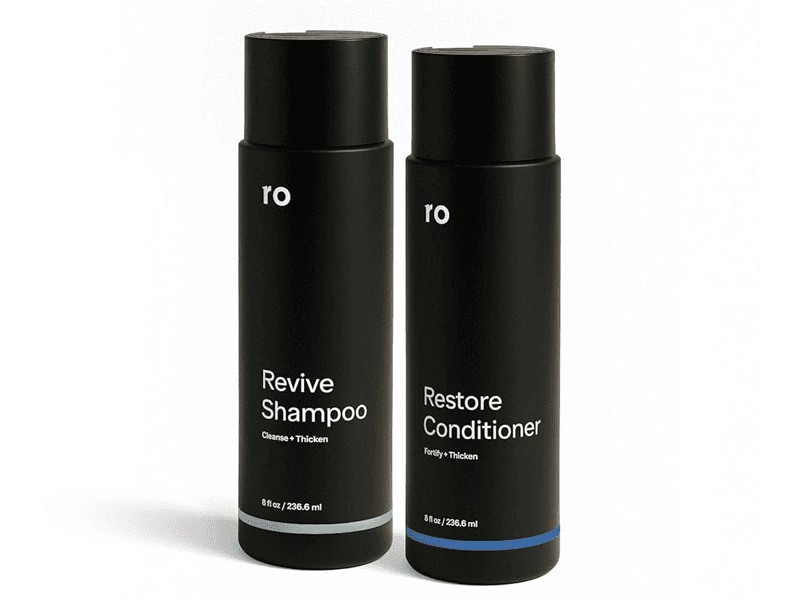
Salicylic acid and caffeine |
Plant proteins and shea butter |
| Best For | All-in-one solution |
Genetic hair loss |
Stubborn thinning |
General hair loss |
Scalp health |
Dry or damaged hair |
| How to Use | Apply daily |
Take daily |
Take daily |
Apply 1–2x daily |
Use daily |
Use daily |
The Roman customer experience
- Warranty and trial period: Roman doesn’t offer any warranties or refunds on its products, and states that all sales are final.
- Financing: No
- Customer service: Roman doesn’t publish any customer service contact information. Only account-holders can access the customer support page. Subscribers receive free, unlimited follow-ups with Roman medical professionals to discuss their products and dosage.
Other men’s hair loss treatments to consider
We are consistently testing new products and retesting products we’ve previously reviewed to provide new information.
Here are some of the other hair loss brands we’re currently evaluating:
- Nutrafol Men: Nutrafol Men’s daily hair growth supplement targets excess shedding and hair thinning. We like that subscribers receive a hair mineral analysis to help identify the cause of their hair loss. We've ranked Nutrafol as our best hair loss supplement. Check out our Nutrafol review to learn more.
- Keeps: Keeps Minoxidil + Spray uses a combination of minoxidil, caffeine, melatonin, and tretinoin in a spray delivered on a 3-month billing cycle. We appreciate the spray’s ease of use and that this combination doesn’t require a prescription, making it one of the best hair loss sprays we've tried.
- Maximus: The Maximus 4-in-1 Gel is another product that combines active ingredients, including minoxidil, fexofenadine, tretinoin, dutasteride, caffeine, and melatonin. We like the brand’s product finder tool to help users find the right option. But we don’t like that users still need to pay the $30 doctor consultation fee even if they don’t qualify for treatment.
Comparison of popular men’s hair loss treatments
| Treatment type | How it works | Best for | Time to see results | Key considerations |
| Minoxidil | Increases blood flow to the hair follicles to prolong the hair growth phase | Early-stage hair loss, thinning at the crown | 3-6 months | Topical, must be used consistently to maintain results, available over-the-counter |
| Finasteride | Blocks the hormone DHT, which is linked to hair loss | Male pattern baldness, which is a receding hairline and crown | 3-6 months | Oral and topical treatment options; prescription only |
| Thickening shampoos and topicals | Temporarily increases the volume of the hair shaft | Early thinning, mostly for cosmetic enhancement | Immediate visual results, but no growth effect | No impact on long-term hair loss, but pairs well with other treatments |
| Hair growth supplements | Supports hair health with vitamins and minerals, such as biotin, DHT blockers, or zinc | Nutritional deficiencies, often used in partnership with other treatments | Varies | Not a good option as a primary treatment, but it can support other hair loss treatments |
| Low-level laser therapy (LLLT) | Stimulates follicular growth using light energy | Mild to moderate hair loss | 4-6 months | Ongoing use is needed, with options for at-home or in-clinic treatment. |
| Hair transplant surgery | Relocates healthy follicles to balding areas | Advanced hair loss, used as a permanent solution | 6-12 months | Invasive, expensive, and requires downtime |
What causes men’s hair loss
, medical director and chief hair transplant surgeon at Sanctuary Medical Center, explained that genetics play a major role in men’s hair loss. “Ninety-five percent of men’s hair loss is genetics,” she says. “If you have hair loss, you likely have the gene for hair loss, which is a lifelong condition that can be managed.”
Because there’s such a strong link between men’s hair loss and genetics, you can look to your family history for clues about what to expect from your hair. Your hair loss may ultimately follow the patterns of hair loss in your parents, siblings, aunts, uncles, cousins, and grandparents. “You will likely follow a similar pattern as your relatives as far as age of onset– when your hair begins to thin or recede,” explained Dr. Saltzburg.
Other factors can also contribute to hair loss in older adults. According to the American Academy of Dermatology Association, most older adults will notice some hair loss as their hair follicles stop growing, which results in thinning hair.3
Several lifestyle and medical issues can also cause hair loss, including:
- Diseases like alopecia areata, where your body’s immune system attacks hair follicles
- Cancer treatments, like chemotherapy and radiation
- Stressful events like illness, surgery, or the death of a loved one
- Coloring, perming, or relaxing your hair
- Hairstyles that tightly pull on your scalp
- Hormonal imbalances
- Medication side effects
- Pulling on your hair, such as to relieve stress
- Thyroid disease
- Diets lacking in biotin, iron, protein, or zinc
- A tight hat that rubs against your head
Most common types of hair loss for men
Androgenetic alopecia, also called male pattern baldness, is the most common cause of hair loss in men, according to Weston Wall, MD, a board-certified dermatologist and the owner and founder of Wall Dermatology. Dr. Wall explained that male pattern baldness is a genetically inherited condition that often begins in your late 20s or early 30s. “Dihydrotestosterone, a byproduct of testosterone, causes hair follicles to shrink over time, leading to thinner hair and eventually, hair loss,” he explained.
According to Dr. Saltzburg, male pattern baldness may appear as a hairline recession that can lead to a widow’s peak, thinning throughout the top of the scalp, or thinning in the crown. “Male pattern hair loss follows a relatively predictable pattern and can be managed well,” he said.
Dr. Wall said males can experience other forms of hair loss, including telogen effluvium, which is a temporary mass shedding of hair that’s triggered by a stressor. Alopecia areata, an autoimmune condition that causes patchy hair loss, and scarring alopecia, an inflammatory disease that permanently destroys hair follicles, can also affect men.
These causes differ from the common causes of hair loss in women. “Women are more likely to undergo hormonal hair shedding, such as postpartum hair loss,” said Dr. Wall. He noted that thyroid issues are also more common in women, and they can cause hair thinning. “As opposed to male pattern baldness, androgenetic alopecia in women typically presents with diffuse thinning of the hair on the top of the scalp,” he said. Women may notice their hair part is widening, or their ponytail feels less full.
How to choose a treatment option
“There are many treatment options for men’s hair loss,” said Dr. Wall. “Unfortunately, there is no one-size-fits-all solution.
Topical minoxidil, which is the generic form of Rogaine, is an FDA-approved over-the-counter medication. According to Dr. Wall, minoxidil increases blood flow to the scalp and can prolong the follicle growth phase.
Dr. Saltzburg explained that other common treatments include oral medicine and personalized topical solutions, such as red light therapy for hair growth stimulation, regenerative medicine injections, nutritional support, and hair transplants.
“The most common treatments for men are oral finasteride, which is a medication that prevents hair from falling out and keeps it nice and thick,” said Dr. Saltzburg.
Dr. Wall recommends looking for clinically tested, FDA-approved ingredients in a hair loss solution. “Be skeptical of products with exaggerated claims such as 'instant regrowth’ or 'guaranteed results,’” he cautioned. “Unregulated supplements can sometimes contain harsh ingredients that may irritate the scalp or worsen hair loss.”
Dr. Saltzburg encouraged her patients to avoid products that include phthalates, sulfates, and parabens. She also recommended patients avoid scented products, since they contain extra chemicals. “Over-the-counter Ketoconazole and Nizoral are great shampoos to include in regimens for those with dry scalps,” she said. Ketoconazole can also help with inflammation (a contributor to hair loss), so you may see it pop up on ingredient lists for hair loss products.
Our medical advisory team also notes that increased shedding during the initial months of treatment is a common side effect of using ingredients like minoxidil, and it usually means you’re responding by turning over the hair follicle. So if you see more shedding than usual, don’t panic! This can actually be a good sign that the treatment is working and you’re about to start seeing results. But talk to your doctor if you’re concerned at any point during treatment.
Frequently asked questions
What are the best hair loss treatments for men?
We’ve ranked some of the best hair loss treatments for older adults based on our testing, but your results may vary. Since hair loss treatments affect people differently, it’s important to find the product that works best for you. You may need to try a few different products before finding the best solution. Your doctor may be able to suggest the treatments that are best for your health and hair loss.
How long does it take for hair loss treatments to work?
Most hair loss treatments take 3–6 months for users to see noticeable results. Since hair grows in cycles, it can take time for a treatment to slow hair shedding or stimulate new growth. Most new treatments can cause temporary shedding at first. This response is especially common with minoxidil and is a positive sign that your hair follicles are beginning a new growth cycle.
Are hair loss treatments legit?
Hair loss treatments, including over-the-counter options, can work. “Topical minoxidil, available over the counter, is clinically proven to slow hair loss and stimulate new growth in many men,” said Dr. Wall. However, it may take several months before you see results, and you’ll need to use it regularly to maintain them. “Pairing over-the-counter products with prescription medications, and/or procedures can offer the best results,” Dr. Wall explained.
Can I use multiple hair loss treatments at the same time?
Yes, many dermatologists recommend a combination of treatments, as it can be more effective than a single treatment approach. Hair loss can have several causes, and treating it with multiple options can offer better results. Before combining treatments, speak with your health care provider, especially if you're using prescription medications.
How much hair loss is normal?
It’s normal to shed anywhere between 50 and 100 hairs per day, but this can vary from person to person. The most important thing is to report an unusual amount of hair loss to your doctor. Call a dermatologist or primary care physician if you notice your hair starting to fall out more frequently or in more volume than is normal for you.
What is the best way to stop early hair loss?
The best way to minimize early hair loss is to act quickly rather than wait until the thinning becomes more obvious. Men tend to see the best results when they start treatment soon after noticing increased shedding or thinning.
Are men's and women’s hair loss treatments the same?
The cause of your hair loss will determine the best treatment plan. Talk to a dermatologist to see what sort of products may be right for your specific type of hair loss.
Questions? Email us at reviewsteam@ncoa.org.