Funding Opportunity: Community Care Hub Falls Prevention Grant
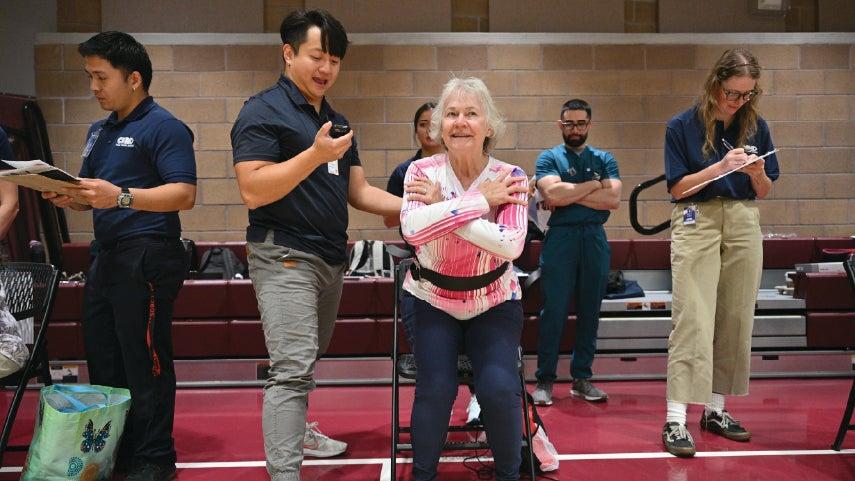
Falls are a significant public health issue affecting the health, independence, and well-being of older adults across the United States. Yet, many falls can be prevented through evidence-based interventions. The Centers for Disease Control and Prevention’s (CDC) Stopping Elderly Accidents, Deaths, and Injuries (STEADI) initiative and the evidence-based Stepping On program are proven approaches for identifying falls risk and reducing falls among older adults respectively.
With support from the Administration for Community Living (ACL), NCOA will fund five (5) regional community care hubs (CCHs) to develop and expand falls prevention referral pathways that connect fall risk screening using STEADI with referrals to community-based Stepping On workshops. This initiative is designed to strengthen clinical-community partnerships, increase access to proven falls prevention interventions, and improve older adult health and well-being.
Request for Proposals (RFP)
Review the RFP key deadlines, summary information, and complete details (link to full RFP) on the project goals, funding, eligibility requirements, and application instructions before preparing your proposal.
|
Key Deadlines & Summary Information |
Information / Dates |
|
RFP Release |
November 2, 2026 |
|
Funder |
NCOA under an Administration for Community Living (ACL) cooperative agreement |
|
Anticipated awards |
Five community care hub (CCH) subawards in different geographic regions; maximum $717,000 per award over 30 months |
|
Project period |
The 30-month subaward period is anticipated to run from February 1, 2027 to July 31, 2029, and will be divided into three budget periods of 6-months, 12-months, and 12-months (subject to change) |
|
Application portal |
Zengine (application portal link) |
|
Informational webinar |
Thursday, November 12, 2026, at 2:00 p.m. ET (link to register) |
|
Intent to apply |
Complete this form to indicate your interest in applying to this funding opportunity by: November 20, 2026 (intent to apply link) |
|
Questions | |
|
FAQ posted/updated |
Weekly (link coming soon!) |
|
Application deadline |
December 10, 2026, 11:59 PM ET |
|
Anticipated award notification |
January 28, 2027 |
|
Anticipated project start |
February 1, 2027 |
Key Activities
Awarded subgrantees will:
- Build or expand a clinical-community pathway(s) in which healthcare partners screen and assess falls risk using STEADI and refer at-risk individuals to the CCH/network for appropriate follow-up and, as applicable, participation in Stepping On.
- Scale Stepping On through a network of implementation sites.
- Engage aging and disability network organizations in service delivery, referrals, regional expansion, and sustainability.
- Commence active STEADI implementation and referrals to Stepping On within the first six months of the 30-month subaward.
- Collect and report monthly implementation and participant data
- Participate in NCOA’s rapid-cycle evaluation and continuous quality improvement activities
- Participate in ACL’s external evaluation process
- Participate in technical assistance and peer learning
- Leverage technology, where feasible, to strengthen community-clinical linkages.
- Plan for long-term sustainability
- Participate in NCOA’s performance monitoring and financial reporting requirements
See RFP for a detailed description of required project activities and grantee expectations.
Awarded sites will receive technical assistance from NCOA and NCOA's project partners, the Wisconsin Institute for Healthy Aging (WIHA), USAging, and Assistive Technology Acts Programs (ATAP).
Eligibility
Applicants must function as a community care hub (CCH) and demonstrate the capability to serve a large geographic area in partnership with healthcare entities and program implementation partners. See RFP to review full eligibility requirements.
Application Process
- All applicants must submit their application electronically via the application portal.
- Applicants should log in to the application portal and familiarize themselves with the online application requirements before the submission deadline.
Please Note: In the 24-hour period leading up to the application deadline, staff may not be able to assist applicants with system-related issues. Applicants are encouraged to submit their application before the deadline so that any unforeseen difficulties or technical problems may be addressed in advance. Late submissions will not be accepted.
Required Application Materials
The following materials are included in the RFP and linked below. Applicants are required to use the templates below for the application attachments section. These forms are also available for download via the application portal.
- Appendix A: Healthcare Screening and Referral Partners
- Appendix B: Projected STEADI Screening and Referral Volume
- Appendix C: Letters of Commitment Guidance
- Appendix E: Work Plan Template
- Appendix F: Budget Template
- Appendix G: Budget Narrative Template
- Appendix K: Application Checklist
Resources to Support Your Application
The following are available to support your application process.
- Budget Template Sample/ Reference
- Grant Writing Resources
- Partner Engagement Tools
- Public Data Links
See Making the Most of Data to Improve Falls Prevention Programs for more information on accessing falls prevention data sources.
- Relevant Links
- Stepping On - WIHA
- Assistive Technology Programs - ATAP
- Functions of A Mature Community Care Hub – Partnership to Align Social Care
- Map of Community Care Hubs - USAging
Frequently Asked Questions
Answers to common applicant questions will be available soon. The FAQ will be updated weekly throughout the funding opportunity application period to address common questions from prospective applicants.
Please direct all questions to healthyaging@ncoa.org.
NCOA's Role in Falls Prevention
Since 2004, NCOA has been a national leader in falls prevention, working to expand access to evidence-based programs, strengthen cross-sector partnerships, and improve outcomes for older adults. Through the Falls Free® Initiative and our leadership of the National Falls Prevention Resource Center (NFPRC), NCOA provides national leadership, technical assistance, training, and resource development to support state and local falls prevention efforts. NCOA also serves as a convener for the national network of State Falls Prevention Coalitions, bringing together partners across sectors to advance shared falls prevention goals.
Over the past two decades, NCOA has helped shape the national falls prevention landscape through initiatives including the Falls Free CheckUp, developed in partnership with the CDC Foundation, Falls Prevention Awareness Week, the National Falls Prevention Action Plan, the ACL Innovation Lab, and research demonstrating the value and return on investment of evidence-based falls prevention programs.
This demonstration project builds on NCOA's longstanding commitment to advancing falls prevention through sustainable clinical-community partnerships. By supporting five community care hubs in different regions, NCOA aims to strengthen connections between healthcare providers and community-based organizations, creating scalable referral pathways that help more older adults access proven falls prevention interventions. Because reducing falls requires coordinated action across multiple sectors, this initiative is designed to foster the partnerships, infrastructure, and shared learning needed to create the conditions for older adults to remain independent and falls free.
This project was supported by the Administration for Community Living (ACL), U.S. Department of Health and Human Services (HHS) as part of a financial assistance award totaling $4,781,733 with 100 percent funding by ACL/HHS. The contents are those of the author(s) and do not necessarily represent the official views of, nor an endorsement, by ACL/HHS, or the U.S. Government.
Submit Your Proposal to NCOA
Ready to bring evidence-based falls prevention to more older adults in your region? NCOA invites eligible community care hubs to apply for funding to build stronger health care partnerships, improve connections to community-based services, and expand access to proven falls prevention programs.