

Related Topics
Protecting eye health is important for all of us. And for the millions of US adults with diabetes, regular eye exams can literally be sight saving.
How common are diabetes and diabetic retinopathy?
Consider these statistics:
- Diabetic retinopathy is the No. 1 cause of blindness among adults under age 65 in America today.1
- More than 1 in 4 people with diabetes also have diabetic retinopathy.2
- More than 38 million US adults have diabetes, and that number continues to grow.3
- The percentage of Americans with diabetes increases with age—nearly 30% of US adults 65+ have diabetes.3
Although most adults living with diabetes will be diagnosed with the disease, approximately 25% will remain undiagnosed, jeopardizing their health and increasing their risk for developing diabetic retinopathy.4
What is diabetic retinopathy?
The National Institutes of Health National Eye Institute projects that more than half of adults with diabetes are at risk of developing diabetic retinopathy. This serious progressive condition can damage the retina, macula, and blood vessels, leading to bleeding and the buildup of scarring lipid deposits. If left untreated, diabetic retinopathy can lead to permanent vision loss.
The longer you have diabetes, the greater your risk for developing diabetic retinopathy. Maintaining healthy blood glucose levels and other diabetes treatments are key, as is getting a comprehensive eye examination. Because diabetic retinopathy can be diagnosed through a comprehensive eye exam, in some cases, a visit to your eye doctor may be the first time you learn you have diabetes.
The American Academy of Ophthalmology advises all adults to have a baseline comprehensive eye exam at age 40. People with existing eye conditions, diabetes, or a family history of these issues should schedule an appointment with an eye doctor as soon as possible, regardless of age. Even if you are not experiencing any vision problems, regular eye exams are vital because they can uncover hidden concerns before they become serious.
What common symptoms to look for
Early-stage diabetic retinopathy may present with mild or no symptoms. As the disease progresses, common symptoms may include:
- Floaters
- Blurred vision
- Vision loss
- Darkness or empty areas in your vision
- Difficulty seeing up close or at a distance
- Difficulty seeing in low light
Although some vision changes later in life are normal, see your eye doctor if you experience any sudden or chronic issues, including seemingly minor developments such as an infection, excessive tearing, or itchiness. Early detection and diagnosis offer the best chance for successful treatment and long-term eye health.
Early detection and diagnosis
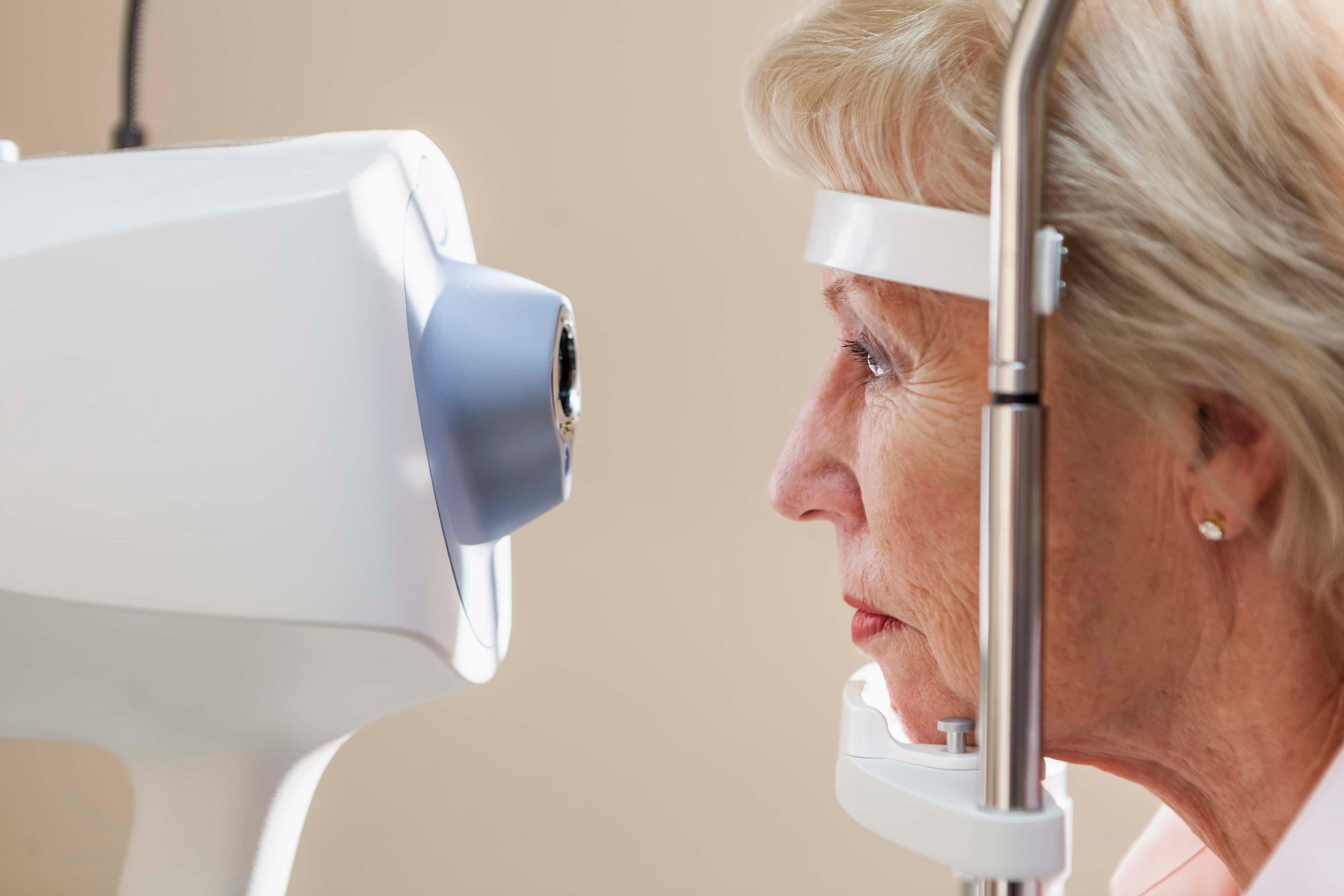
During a comprehensive eye exam with dilation, your eye doctor tests visual acuity (the letter chart), your pupil's response to light, eye movement, fluid pressure inside the eye, and looks for irregularities on the front of the eye using a slit lamp. Even before the onset of symptoms, these quick and painless tests can identify changes in the eye related to diabetic retinopathy, including:
- Retinal bleeding
- Bleeding in the vitreous
- Bulging or abnormal blood vessels
- Ruptured blood vessels
- Macular edema
- Lipid deposits
- Abnormal growth of wispy nerves and blood vessels
The presence of these and other irregularities in the eye will likely prompt your eye doctor to conduct more specific tests, such as:
- Fluorescein angiography tracks the circulation of blood to and throughout your eye to detect blockage, leakage, or rips.
- Optical coherence tomography (OCT) uses near-infrared light to obtain highly detailed cross-sectional images of your retina, revealing its thickness and any anomalies.
- Ocular ultrasound uses sound waves to visualize the eye's internal structures better.
- Fundus photography captures highly detailed images of the retina and is used to both diagnose diabetic retinopathy and track its progression.
Two types of diabetic retinopathy
If you are diagnosed with diabetic retinopathy, it's important to know whether you have nonproliferative (early) or proliferative (advanced) disease.
Nonproliferative diabetic retinopathy (NPDR) often progresses through three stages:
- Mild NPDR features swollen blood vessels.
- Moderate NPDR is diagnosed when blood vessel swelling increases, obstructing blood flow and causing vision impairment.
- Severe NPDR is indicated by extremely swollen blood vessels and greater restriction of blood flow, causing increased vision impairment.
Proliferative diabetic retinopathy (PDR) is the fourth and most advanced stage. In PDR, weak blood vessels often form on the retina's surface, which can lead to permanent vision loss.
Treatment begins with you
With diabetic retinopathy, an ounce of prevention truly is worth a pound of cure. Although this condition is not reversible, the American Academy of Ophthalmology reports that maintaining healthy blood sugar levels can sometimes restore some lost vision.
According to the Centers for Disease Control and Prevention, 90% of diabetes-related vision loss in adults is preventable.5 Work with your doctor to maintain good glucose and cholesterol levels, blood pressure, and healthy habits.
If you are diagnosed with diabetic retinopathy, discuss treatment options and surgery with your ophthalmologist. Your overall health and the extent of the disease will help determine which treatment or combination of treatments is best for you.
And most important of all: If you have diabetes, think you might, or have a family history of it, make an appointment for a comprehensive eye exam today!
Learn about vision rehabilitation
If you experience vision loss that impacts your daily activities, agencies across the country provide life-changing vision rehabilitation services, training, and support. Access a list of vision rehabilitation agencies, and visit Time to Be Bold to find local vision rehabilitation services and other resources. You can also call the APH hotline to receive support and practical coping strategies for everyday tasks, join remote discussion and support groups, and access free online resources at Hadley, APH Connect Center, and VisionAware.
Sources
1. Centers for Disease Control and Prevention. Vision Loss and Diabetes. May 15, 2024. Found on the internet at https://www.cdc.gov/diabetes/diabetes-complications/diabetes-and-vision-loss.html
2. Elizabeth A. Lundeen, PhD, et al. Prevalence of Diabetic Retinopathy in the US in 2021. JAMA Opthalmology. August 2023. Found on the internet at https://jamanetwork.com/journals/jamaophthalmology/fullarticle/2806093#
3. American Diabetes Association. Statistics About Diabetes. Found on the Internet at https://diabetes.org/about-diabetes/statistics/about-diabetes
4. Centers for Disease Control and Prevention. National Diabetes Statistics Report. May 15, 2024. Found on the internet at https://www.cdc.gov/diabetes/php/data-research/index.html#
5. Centers for Disease Control and Prevention. Fast Facts: Vision Loss. May 15, 2024. Found on the internet at https://www.cdc.gov/vision-health/data-research/vision-loss-facts/index.html