

Related Topics
Food prices continue to rise. And for way too many of us, our incomes don’t keep up.
“Today in America, this means that millions of us face a distressing gap between what we can afford at the grocery store, and what we actually need,” said Jennifer Teague, NCOA Director for Health Coverage and Benefits.
That’s where the Emergency Food Assistance Program (TEFAP) comes in. This federally-funded initiative provides grant money and surplus food to state and local partners who prepare and distribute it as they see fit.
Keep reading to learn how TEFAP helps those facing food insecurity—regardless of whether or not you already qualify for Supplemental Nutrition Assistance Program (SNAP) benefits or other food assistance.
The Emergency Food Assistance Program: Fast Facts
|
➡️ No age restriction ➡️ Individual states set their own eligibility rules ➡️ No vouchers, EBT card, or other payment form required ➡️ Benefits available in two ways: ✅ By visiting a food bank or food pantry ✅ By eating a congregate meal at a soup kitchen or community center ➡️ Contact your local FNA office for details |
What is the Emergency Food Assistance Program (TEFAP)?
The Emergency Food Assistance Program, or TEFAP, is a federal food assistance program that provides vital resources to food banks, food pantries, soup kitchens, and other community-based partners who feed people in need, including older adults.
First authorized by Congress in 1981, TEFAP’s original purpose was twofold: to support agricultural markets; and to assist people with low income by distributing surplus food from the government stockpile to hungry Americans.
While the program has evolved in the decades since, its goals remain the same. Congress authorizes TEFAP funding through the Farm Bill. The USDA then uses these funds to buy healthy food from farmers, growers, and producers and distribute it to emergency feeding organizations throughout the country. In fiscal year 2024, TEFAP enabled $461.5 million in food purchases across the nation.1
How does TEFAP work?
In partnership with state distributing agencies (such as agencies of education, departments of agriculture, health and human services agencies, and others), the USDA makes available the food it buys—and some administrative funding, too—to local organizations that serve hungry people at no cost.
You can access TEFAP benefits in two ways:
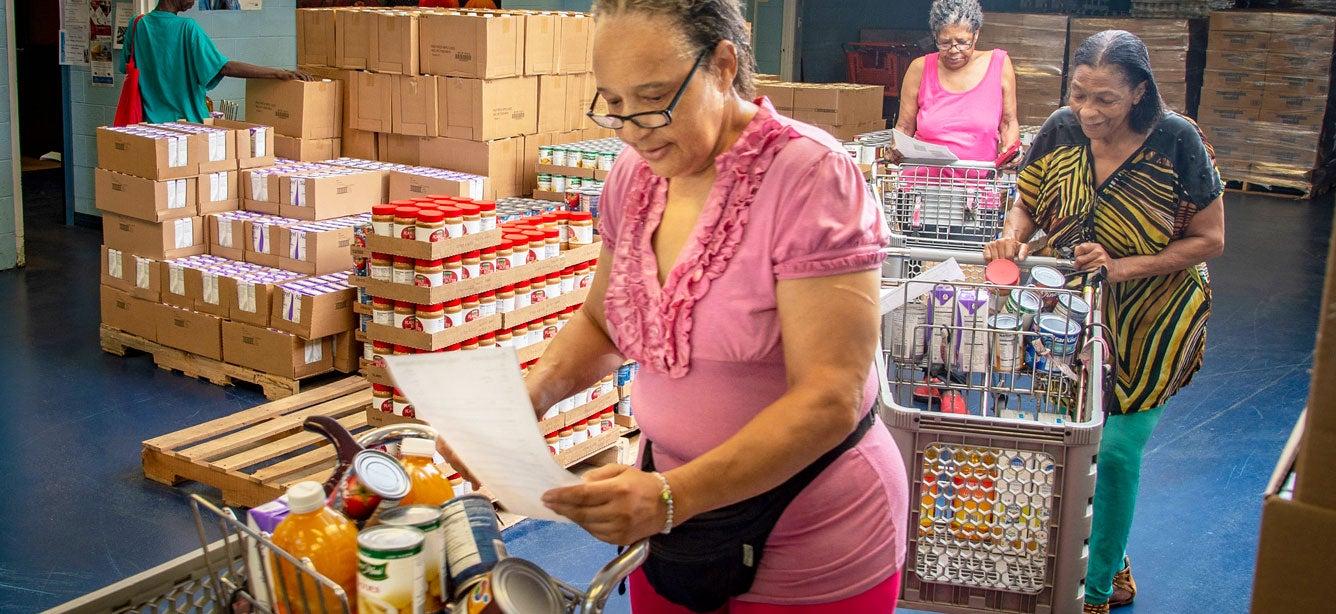
- By visiting a food bank or food pantry
- By eating a meal at soup kitchen, community center, or other congregate setting
Is TEFAP the same as SNAP?
No. Although you may have heard people refer to TEFAP as “emergency food stamps,” there are some important differences.
Unlike most other food assistance programs including SNAP, you don’t receive—and won’t need—electronic benefit transfer (EBT) cards, farmers market vouchers, or other forms of payment for TEFAP. If you qualify, you can shop at your local food pantry or dine at a community kitchen at no cost without having to exchange anything.
What are the TEFAP income guidelines?
Each state sets its own eligibility criteria. Sometimes, these depend upon how you plan to access TEFAP benefits.
Generally speaking, the burden of proof is low.
For example, if you’d like to shop at a local pantry for food to take home, verifying your income eligibility simply could mean signing a self-declaration form, or showing that you already are enrolled in another federal, state, or local income-based benefits program. On the other hand, if you’d like to have a meal at a soup kitchen, you likely could do it without providing any proof of income whatsoever. Why? Because these locations have demonstrated that they mostly serve low-income clients.
Do I need to apply for TEFAP?
It depends. There’s no standard TEFAP application form. However, because individual states set their own eligibility standards, you may need to meet certain criteria or complete certain steps in order to benefit from the program. It’s best to contact your state distributing agency for the most recent guidance in your area.
What types of foods can I get through the Emergency Food Assistance Program?
Subject to availability, food banks may order a broad variety of items within the following eight categories through TEFAP:
- Dairy
- Fruits
- Grains
- Oils
- Proteins
- Vegetables
- Beans, peas, and lentils
- Other (often, canned soups)
The USDA arranges these selections according to current dietary guidelines to help food banks identify, order, and stock well-balanced food choices.
Together, these foods can help supplement the diets of low-income Americans at no cost, just when they need it most.
How can I learn more about food assistance programs for seniors?
Check out our article 6 Benefits That Could Help Older Adults Pay For Food. You can also use BenefitsCheckup.org to browse benefits programs available in your area and even get help applying. These programs can help you save money on food, utility bills, property taxes, health care, and more—so it’s worth seeing what you may qualify for.
Sources
1. USDA. TEFAP Program Fact Sheet. Found on the internet at https://www.fna.usda.gov/tefap/factsheet