
The Critical Contributions of Lived Experience: Recruiting Community Members to Join Falls Prevention Coalitions
5 min read
Related Topics
Falls prevention coalitions are most powerful when they unite people from a range of backgrounds to work together on initiatives that help reduce falls and fall-related injuries.
It is critical to involve both professional members, such as health care and aging services providers, researchers, and public health professionals, as well as non-professional members, such as family caregivers and older adults—the people most directly affected by falls. While this can be complicated, effectively partnering with those who have lived experience allows for the creation of impactful solutions that fit the community’s needs and priorities.1,2
Why include community members with lived experience in falls prevention coalitions?
Harold Bell is an older adult, the president and CEO of Radionext.tv, and a celebrated member of the Hoosier Falls Prevention Coalition, the state-based falls prevention coalition of Indiana. Harold has previously fallen and participated in Stepping On, an evidence-based falls prevention program.
Harold understands firsthand the importance of having information about falls and knowing techniques to prevent falls. When he learned of the Hoosier Falls Prevention Coalition, he jumped at the chance to get involved. Now, Harold serves on the coalition’s steering committee and promotes the coalition’s initiatives through his internet radio station and social media platforms, proudly sharing his falls prevention knowledge with others.
The benefits of engaging people with lived experience in falls prevention coalitions include:
- Firsthand experience: Community members and caregivers with lived experience have direct knowledge that can inform coalition activities. Older adults at risk for falls understand how the fear of falling can limit their day-to-day activities and impact their mental well-being. Family members can talk about how their lives have been affected by a loved one’s fall. Those who have fallen or are concerned about falling can identify gaps and strengths of formal and informal resources in their community.
- New and unique perspectives: Increasing coalition membership by recruiting community members improves not only the quantity, but also the quality of voices involved. Community members can pull from their experiences to give feedback on the quality and accessibility of existing programs, influence decision-making, and ensure data is interpreted correctly.3
- Enhanced trust and influence: Fostering teamwork between professionals and community members can help break down barriers and enhance trust.4 Community members may help spread the coalition’s message with hard-to-reach groups of the general community. Also, their lack of professional ties with institutions or organizations means the public sees them as people with less of a vested interest and are considered more credible spokespeople.5
- Energized coalition: While each community member is different, some, like Harold, join the coalition with passion and the drive to “do something.” This energy and the direct connection with consumers can revitalize coalitions that may feel stuck, overburdened by the scope of the problem, and lacking hope.
How do we recruit community members with lived experience to participate in our coalition?
Step 1: Identify potential community members with lived experience
The first step of recruitment involves identifying potential members. Strategies for identifying older adults and caregivers directly affected by falls include:
- Meet community members where they are: Faith-based organizations, senior centers, libraries, councils on aging, and health care entities can be ideal partners to work with to identify potential members with lived experience.
- Engage evidence-based program providers: Evidence-based falls prevention program (EBFPP) facilitators may be able to spread the news about the coalition with a wider network of older adult program participants. Contact current EBFPP providers in your state to explore opportunities to connect with their program facilitators and participants.
- Reach out to retired professionals: Retired health care providers and aging services professionals as well as business and marketing professionals who have personal experiences with falls can offer a unique perspective that combines their professional background and lived experience. Find out if there are state associations or alumni groups in your state that may be willing to share information about your coalition with their networks.
- Conduct a listening session: Hold a listening session to learn more about community members’ experiences with falls. This communicates to the public that you are invested in understanding their perspective and function as a first point of contact between potential members and the coalition.4
- Don’t underestimate word of mouth: Ask your coalition members to make a list of family members, friends, neighbors, and colleagues who they think may be interested in getting involved. Community members are likely to feel more comfortable joining a coalition when they have an existing connection with the group and are personally invited to get involved.
Step 2: Prepare the coalition to welcome and engage community members with lived experience
Before beginning recruitment, use the following strategies to ensure the coalition will be a welcoming and accessible space for community members.
- Get everyone on board: Educate coalition members on how the coalition can benefit from engaging members with lived experience. Use educational resources(such as this article!). Invite a member of another coalition that successfully involves community members to speak at your next meeting. Or host a presentation (use the Community Toolbox’s PowerPoint) and include time for discussion.
- Encourage individual reflection: Every member of a coalition influences the process by which community members become and remain involved in the coalition.4Invite members to reflect on questions such as:
- What will our coalition gain from including community members with lived experience?
- How will I react to different people and new ideas?
- What motivates me to participate in this group?
- Identify barriers: Because most falls prevention coalitions disproportionately consist of professionals, established group processes may be less open to community members’ needs and abilities. Identify potential barriers that may limit community member participation and be prepared to enact solutions and adapt procedures.
Step 3: Recruit community members with lived experience
As prospective members are identified, use a personalized approach and provide necessary background information to empower older adults and caregivers to join the coalition.
- Use a personalized approach: Often, community members wait for an invitation rather than ask to get involved.2 Personally inviting older adults and caregivers to join your coalition demonstrates that you recognize their worth and makes participation in the group less intimidating.4 A personalized approach also enables you to answer questions the individual may have and learn more about their interests. Encourage all to invite new members, not just leadership. Once you have one person with lived experience at the table, they can serve as an ambassador and invite others to join.
- Describe the coalition and their role: Provide prospective community members with information about the coalition so they can make an informed decision about joining. Limit jargon and acronyms, and answer common questions, such as:
- “What does the coalition do?”
- “What is the time commitment?”
- “What would my involvement look like?”
You may also direct potential members to your coalition’s website, examples of past activities, or your by-laws or mission statement. As you describe the coalition, illustrate how their experience will make them a valuable member. Make it clear that your goal is to learn from their experience and co-design solutions to prevent falls together.2
- Understand their interest: As you share information about the coalition, get to know the person. Everyone has a reason for becoming engaged.4 Have they benefited from evidence-based falls prevention programs and are eager to get others involved? Are they newly retired and hoping to contribute their expertise to an important cause? Is there a particular gap they are dedicated to addressing? Are they hoping to meet new friends and peers?
Engaging community members with lived experience can ensure your coalition’s efforts resonate with the community and those most directly affected. Adopting strategies for effectively engaging older adults and caregivers in your coalition can make a meaningful impact on the community members themselves, your coalition, and the wider community.
Learn more about NCOA’s recommended strategies for maximizing community member participation in falls prevention coalitions.
Sources
1. Engaging Community Residents with Lived Experience: Common Concerns & What to do About Them. 100 Million Healthier Lives. Found on the internet at https://www.communitycommons.org/entities/b983930f-4b54-4b9e-9395-1356f4d7dafe
2. Engaging People with Lived Experience Toolkit. 100 Million Healthier Lives. Found on the internet at https://www.communitycommons.org/collections/Engaging-Lived-Experience-Toolkit
3. Building a Cross-Sector Mobility Coalition. Urban Institute. Found on the internet at https://upward-mobility.urban.org/toolkit-increasing-upward-mobility/2-building-cross-sector-mobility-coalition
4. Engaging People Most Affected by the Problem. The Community Toolbox. Found on the internet at https://ctb.ku.edu/en/table-of-contents/participation/encouraging-involvement/engage-those-affected/main
5. Working Upstream: Skills for Social Change. Developed by Lori Dorfman, Susan Sorenson, and Lawrence Wallack. 2009. Found on the internet at https://www.bmsg.org/wp-content/uploads/2009/02/bmsg_handbook_working_upstream.pdf
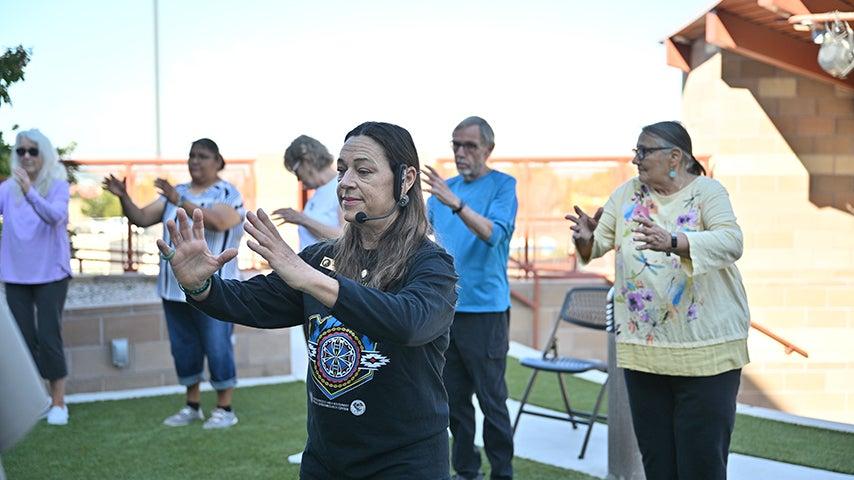
Photo by Sam Wasson/Getty Images for National Council on Aging
This project is supported by the Administration for Community Living (ACL), U.S. Department of Health and Human Services (HHS) as part of a financial assistance award totaling $2,5000,000 with 100 percent funding by ACL/HHS. The contents are those of the author(s) and do not necessarily represent the official views of, nor an endorsement, by ACL/HHS, or the U.S. Government.
See if you're at risk for falling.
Falls threaten the safety and independence for older Americans and can create a heavy economic and personal burden. Check to see if you’re at risk of falling with NCOA’s Falls Free CheckUp tool.