
Senior Centers as Community Service Hubs: Shifting Narratives and Expanding Impact
4 min read
Related Topics
Senior centers have always played an essential role in strengthening community life—offering connection, learning opportunities and support. Today, they are building on that foundation in new and creative ways, expanding both their reach and impact.
By developing innovative programs and deepening community partnerships, senior centers are increasingly recognized as dynamic hubs of service, collaboration, and civic engagement. For senior center leaders and practitioners, these efforts illustrate how centers can strengthen their role as trusted community anchors while advancing positive, modern narratives about aging.
This evolution not only benefits the broader community but also highlights the expertise, creativity, and leadership people bring throughout their longer lives. As centers broaden their activities, they create even more opportunities for older adults to contribute, develop new skills, and shape the well‑being of their communities.
Shifting the narrative about aging
For decades, the public image of senior centers has often been limited or antiquated—seen as places “for old people” rather than vibrant community connectors. Today’s programs help redefine these perceptions by showcasing people in later life as active contributors, knowledge holders, and community builders. When senior centers lead or host community service initiatives, they highlight the strengths, experience, and generosity of participants, shifting the narrative from one of decline to one of continued purpose and capability.
These efforts not only change how communities perceive older adults—they also shape how people see themselves as they age, reinforcing confidence, purpose and belonging.
Community service is a two-way benefit
Community service initiatives succeed because they generate value on both sides by strengthening communities while enriching the lives of participants.
For the community
- Expanded access to resources (e.g., safety items, fresh produce, educational materials, enhanced public spaces)
- Increased cross‑generational connection and understanding
- Visibility of older adults as partners in community well‑being
For senior center participants
- Development of new skills through organizing drives, hosting events, repairing goods, gardening, creative arts, and collaborative projects
- Increased confidence and a strengthened sense of purpose
- Opportunities to access new health, safety, and wellness resources
- Deepened social bonds through shared, mission‑driven activities
The Slipper Exchange–Safety, dignity, and engagement
A compelling example of this dual impact is the Slipper Exchange, an initiative designed to support safer mobility while fostering dignity, connection, and engagement.
- The Slipper Exchange provides participants with the opportunity to trade worn or unsafe slippers for new, non‑slip, supportive footwear aligned with CDC STEADI fall‑prevention guidelines.
- The initiative is part of a broader community health and safety effort led by RUSH Generations, the Rush Center for Excellence in Aging, and the Illinois Falls Prevention Coalition.
- Slippers are distributed at high‑engagement community events like the Steppin’ Into Summer Health Fair and through ongoing community balance‑screening programs across Chicago.
This model demonstrates full‑circle community impact. It expands access to evidence‑informed safety resources, while participants become active partners in wellness—learning about fall prevention, modeling safe behaviors, and engaging in a program that supports their confidence and independence. Importantly, this is a replicable approach that senior centers and community organizations can readily adapt to meet local needs.
More examples of community‑serving innovation
Across the country, senior centers are leading innovative efforts that respond to local needs while showcasing creativity, skills, and leadership of participants. The following examples, most honored as NISC Programs of Excellence award winners, highlight a range of approaches—from resource creation to public art, sustainability, and food security.
Creating Community Resources: Braille Book Project (Calabasas Senior Center, California)
The Braille Book Project, a NISC Programs of Excellence award‑winner, brought together people ages 65–94 and young professionals to assemble 400 Braille storybooks and 1,000 instructional toys for visually impaired children. This collaborative effort not only created essential educational materials but also led to the establishment of a Braille section in the local library, extending access for years to come.
Beautifying Public Spaces: Cove Island Bridge Project (Stamford Senior Center, Connecticut)
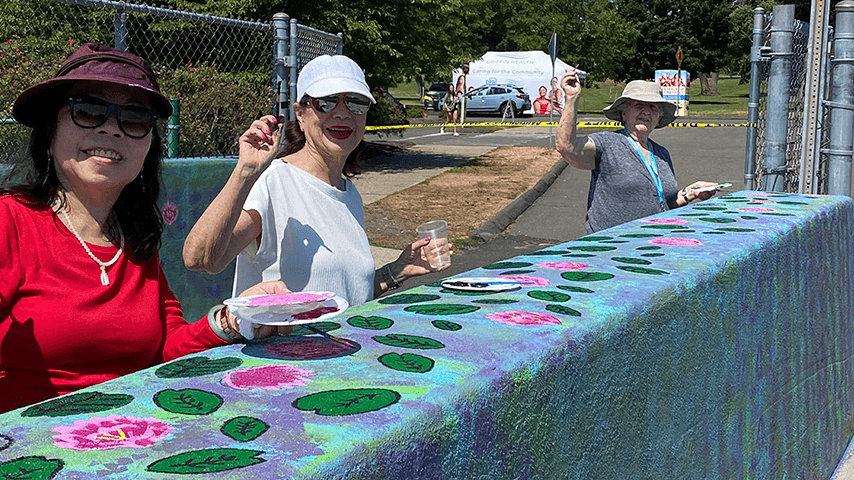
More than 50 members of the Stamford Senior Center transformed a neglected concrete bridge in Cove Island Park into the vibrant Welcome Kindness Bridge—a community‑led public art piece that now greets thousands of visitors (also a NISC Programs of Excellence awardee). Their seascape mural sparked spontaneous volunteerism from passersby, local businesses, children’s camps, and city partners, illustrating the power of older adults as civic collaborators and creative leaders.
Advancing sustainability: Repair Café (Hopkinton Senior Center, Massachusetts)
The Repair Café at the Hopkinton Senior Center invited community members to bring household items—such as lamps, clocks, sewing machines, and tools—for repair by skilled volunteers. In its first year, the event successfully repaired 24+ items and sharpened 25+ knives and tools, while introducing many residents to the center for the first time. The program underscores the technical knowledge and practical problem‑solving abilities that older adults contribute to community sustainability efforts.
Supporting food access: The Giving Garden (Newington Senior & Disabled Center, Connecticut)
The accessible Giving Garden at the Newington Senior & Disabled Center produces hundreds of pounds of fresh produce each season for the local food pantry. Its raised beds and navigable paths enable individuals of varying abilities to participate in growing food that supports community nutrition. This strengthens local food systems while fostering purpose, connection, and outdoor engagement for participants.
Modernizing senior centers through service
When senior centers engage in community‑serving work, they disrupt outdated narratives and underscore the continued contributions, creativity, and commitment of people as they age. These projects:
- Promote positive, strengths‑based images of aging
- Build trust and visibility within the community
- Attract new participants, funders, and partners
- Reinforce senior centers as vibrant, mission driven spaces
Ultimately, community service empowers participants, strengthens neighborhoods, and positions senior centers as essential institutions—places where people of all ages can learn, contribute, and thrive.
Tell us about your programs, partnerships, and the difference your center is making.
Your stories help illuminate what’s possible, celebrate the contributions of people of all ages, and strengthen the network of senior centers committed to helping communities thrive.
Photo of the Cove Island Bridge Project courtesy Stamford Senior Center