
How to Make It Easier for Older Adults to Get Energy and Utility Assistance
4 min read
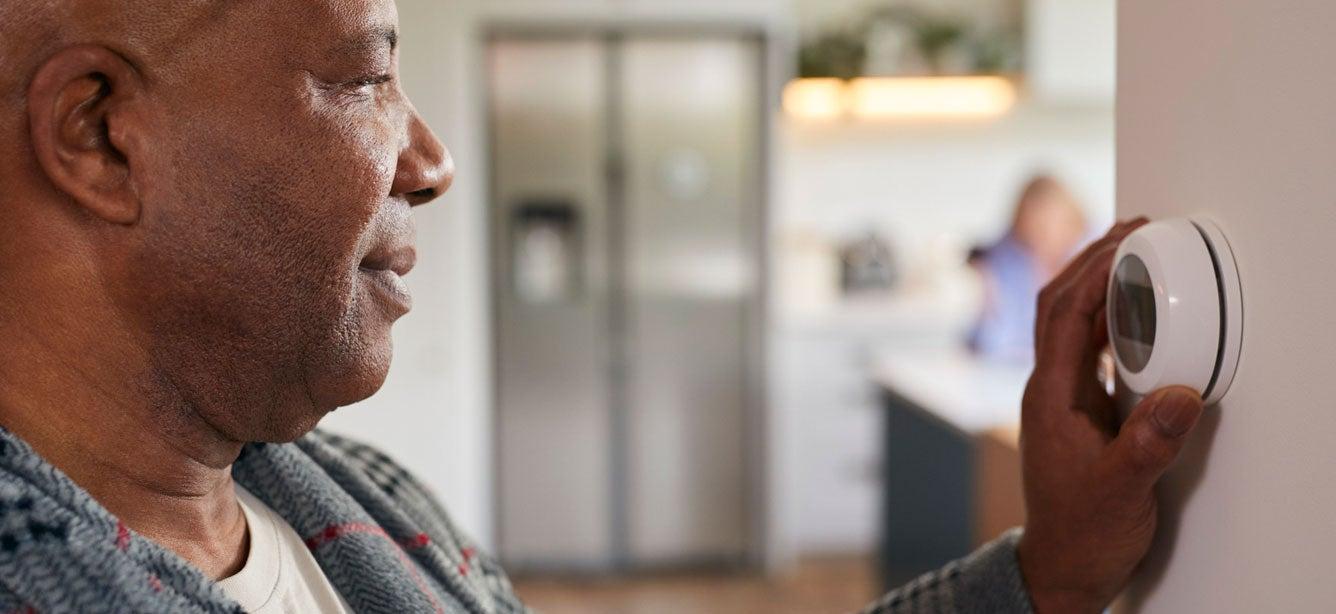
You already know that many programs exist to help older adults pay for their home energy (heating/cooling) bills and broadband Internet costs. You also know that applying for these programs can sometimes be cumbersome: for you, and for your clients who most can benefit from them.
"Frustration can be a powerful deterrent," acknowledged Jessica Johnston, NCOA Senior Strategist for Economic Well-Being. "Now more than ever, it's crucial to find ways to overcome it. That's why we're here to support professionals like you, who are on the ground fighting to improve your client's lives every day."
That fight includes addressing a worsening American crisis: energy poverty. According to the National Energy Assistance Directors Association (NEADA), 2026 heating costs are expected to jump as much as 12.2% in households that use electricity for this purpose.1 And older adults—more of whom are sinking into poverty every day—are particularly vulnerable to these hikes.
The encouraging news? The U.S. Department of Health and Human Services estimates that households who qualify for the Low Income Home Energy Assistance Program (LIHEAP) receive an average of $622 in vital home heating assistance.2
Several of NCOA's Benefits Enrollment Center members offer helpful how-to strategies to ease the application process for you and your clients. We cover them below.
1. Get copies of necessary documents
To receive LIHEAP in most states, applicants must provide several documents that prove their identity, income, and heating/cooling or utility cost burden.
Catholic Charities of Northern Nevada works with older adults to gather these documents, Caseworkers make copies of the documents and use them to complete the Low-Income Home Energy Assistance Program (LIHEAP) application form on behalf of their clients, who then sign it. For clients who don't have the documents on hand, caseworkers offer the following tips that they themselves follow:
- Approach the landlord directly for a copy of the client’s current lease
- Ask the utility company to email the client’s most recent bill
- Use Social Security's automated system to get a faxed copy of the client’s award letter (to prove income).
Finally, Catholic Charities of Northern Nevada hand delivers all documentation and the client's signed application to the local LIHEAP administration agency.
The turnaround for a determination is three weeks, and the BEC typically has a 95% approval rate if all documents are included with the application.
2. Track LIHEAP applications online
Several BECs operate in states with online portals that permit them to submit and track applications on behalf of their clients. In New Mexico and Arizona, the Native American Disability Law Center creates accounts for their clients (including setting up an email address for those who don’t have one) in the state portals, which can be used to track LIHEAP, Supplemental Nutrition Assistance Program (SNAP), and Medicaid benefits applications.
Similarly, in Ohio, National Church Residences uses the Ohio Benefits Bank portal to submit and monitor application statuses. Recent updates have made the portal easier to navigate, including a more visible documents upload area. This upload area benefits applicants and case workers alike, the latter of whom are able to process applications much more quickly as a result.
3. Build relationships with case managers
Staff at Aster Aging, Inc. in Mesa, Arizona have eased the LIHEAP application process thanks to a strong relationship with Mesa Community Action Network (CAN) / Turn A New Leaf, which administers the program in their local area.
Aster's outreach specialists complete their client's applications, gather the needed documentation, and then email the information to Yvette, Mesa CAN's case manager. Yvette typically responds with a status update—including any LIHEAP award amount—within hours of receiving an application email; she also calls the applicant with the details and to explain funding processes. In addition, Yvette assists her colleagues at Aster in answering questions and taking special cases as needed. Both Mesa CAN and Aster retain the application records, making the next annual application process very smooth.
"Honestly, because of our relationship with MesaCAN and Yvette’s hard work, we have been able to navigate the benefit easily if participants are willing to accept other federal, state, and local benefits,” said Anne McFarland, MASM, Aster Aging Director of Social Services.
Sources
1. Mark Wolfe. Mid-Winter Heating Price Update: Home Heating Costs Projected to Jump 9.2 Percent, Putting Millions of Families at Risk. National Energy Assistance Directors Association. Janury 20, 2026. Found on the internet at https://neada.org/wp-content/uploads/2026/01/winterupdatejan26.pdf
2. U.S. Department of Health and Human Services, Administration for Children and Families. Low Income Home Energy Assistance Program Report to Congress for Fiscal Year 2022. Found on the internet at https://acf.gov/sites/default/files/documents/ocs/RPT_LIHEAP_RTC01BodyTTAProjects_FY2022-compliant.pdf