
AirSep Portable Oxygen Concentrator Review
AirSep portable oxygen concentrators are discreet, light, and offer more independence than stationary oxygen units.
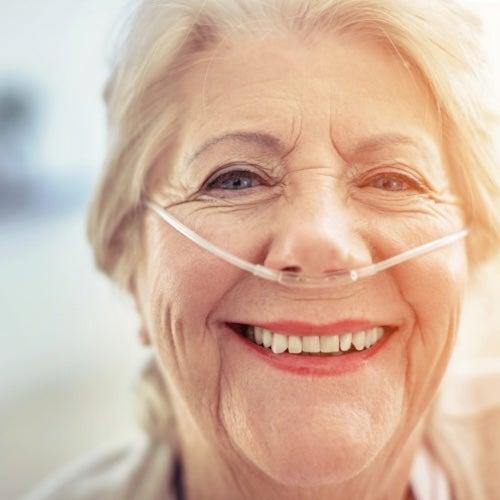
- Each AirSep portable oxygen concentrator weighs less than 10 pounds and delivers oxygen in a pulse-dose bolus, or a measured puff.
- AirSep portable oxygen concentrators start at around $2,695.
- You need a prescription to use supplemental oxygen.
- AirSep is a division of CAIRE Oxygen.
- The AirSep Focus is one of the smallest portable oxygen concentrators on the market.
- While small portable oxygen concentrators are more discreet, they can’t deliver pulse-dose oxygen at the rates some people need.
We recommend products and services that offer real value to our readers. It's important to us that our reviews of portable oxygen concentrators are accurate, helpful, and trustworthy. So our team spent more than 1,000 hours researching and comparing options.
To choose what to recommend, we:
- Researched 15+ brands and 30 models on our own
- Spoke with experts in geriatric care and respiratory medicine
- Mystery-shopped manufacturers and retailers to check product claims and see what the buying experience is like
- Surveyed 300 oxygen machine users and caregivers to learn what matters most in real life
- Reviewed medical and academic research on how well portable oxygen concentrators work and how safe they are
- Looked at verified customer reviews on trusted sites like the Better Business Bureau and Trustpilot
Our review process is based on clinical evidence and expert input. So you can feel confident you’re getting reliable, up-to-date guidance. Learn more about our oxygen machine review methodology.
Receiving supplemental oxygen once meant staying at home and relying on a machine the size of a mini fridge. Now, portable oxygen concentrators help people with an oxygen prescription continue their lives. Today’s portable oxygen concentrators may help people who need supplemental oxygen maintain more flexibility.
Doctors prescribe oxygen for a range of conditions. COPD (chronic obstructive pulmonary disease) is often named as the main condition treated with supplemental oxygen. But portable oxygen may also help manage pulmonary fibrosis, sleep apnea, and COVID-related oxygen needs. One older adult we surveyed uses their portable oxygen to treat the effects of wildfire smoke.1 People of any age can have a condition that requires supplemental oxygen, but research estimates Medicare provides 80% of America’s oxygen prescriptions.2
Portable oxygen concentrators can treat many conditions. But there are a limited number of companies that make the devices. CAIRE Oxygen, which has been in the oxygen business for 38 years, acquired AirSep in 2019. AirSep had early success with its LifeStyle portable oxygen concentrators. This AirSep oxygen concentrators review will explore the cost, noise level, and ease of use of AirSep’s three portable models. We'll also dive into what sets AirSep apart from other supplemental oxygen systems.
AirSep portable oxygen concentrators compared
| Comparison Features | |||
|---|---|---|---|
| Flow type | Pulse dose |
Pulse dose |
Pulse dose |
| Flow settings | 1 |
3 |
5 |
| Max oxygen output | 330 ml/min |
500 ml/min |
1,000 ml/min |
| Noise level | 41 dBA |
38-44 dBA (depends on setting) |
48 dBA |
| FAA-approved | Yes |
Yes |
Yes |
| Bluetooth capabilities | No |
No |
No |
Our reviews of AirSep portable oxygen concentrator models
AirSep Focus: Most Lightweight
The AirSep Focus is among the lightest portable oxygen concentrators on the market. It weighs 2 pounds and is shorter than a plastic water bottle. The next lightest we’ve researched is the Inogen Rove 4 at 3 pounds.
AirSep Focus
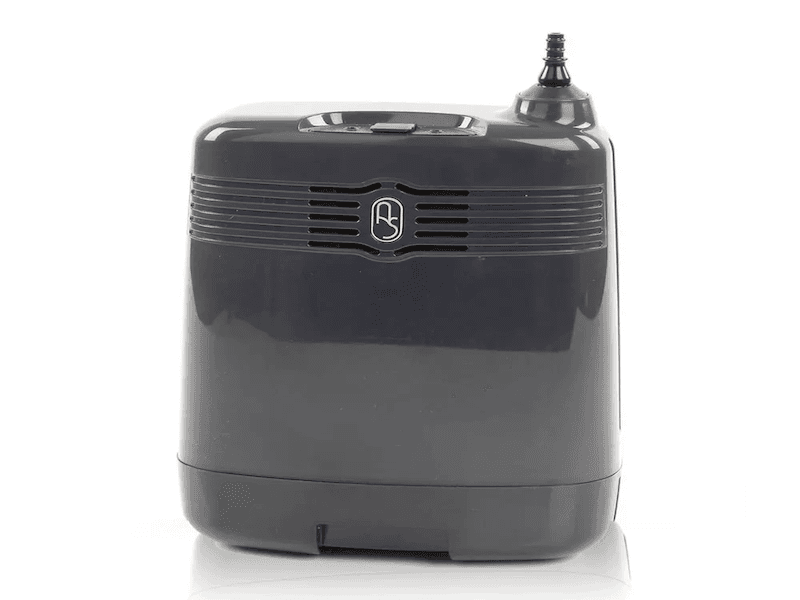
- One of the smallest available portable oxygen concentrators
- Comes with a carry bag and batteries
- Lightweight
- Weight: 2 lbs (with microbatteries)
- Dimensions: 4.8 inches x 2.5 inches x 6.4 inches
- Battery life: 3 hours
- Battery charging time: 4 hours
- Delivery/flow type: Pulse dose
- Range of flow settings: 1
- Noise level: 41 dBA
The AirSep Focus comes with the following supplies:
- Focus concentrator unit
- Two rechargeable micro batteries
- Universal AC power supply/charger
- Carrying bag
- Shoulder strap
- Nasal cannula
- User manual/documentation
You can purchase extra accessories for your Focus. These accessories include a DC car charger and an AirBelt. The AirBelt is a battery belt worn around the waist, like a fanny pack, that provides up to four extra hours of use.
Pros
- Discreet
- FAA-approved
- Three-year warranty
Cons
- 3-hour battery life
- No Bluetooth capability
- Lower oxygen output
AirSep FreeStyle 3: Best for Summer and Warm Climates
The AirSep FreeStyle 3 can deliver almost 200 mL/min more oxygen than the Focus while still weighing less than 10 pounds. It suits a wider variety of supplemental oxygen users. The FreeStyle 3 is also built to function in temperatures up to 104 degrees. This temperature range is rare among the portable oxygen concentrators we reviewed.
AirSep FreeStyle 3
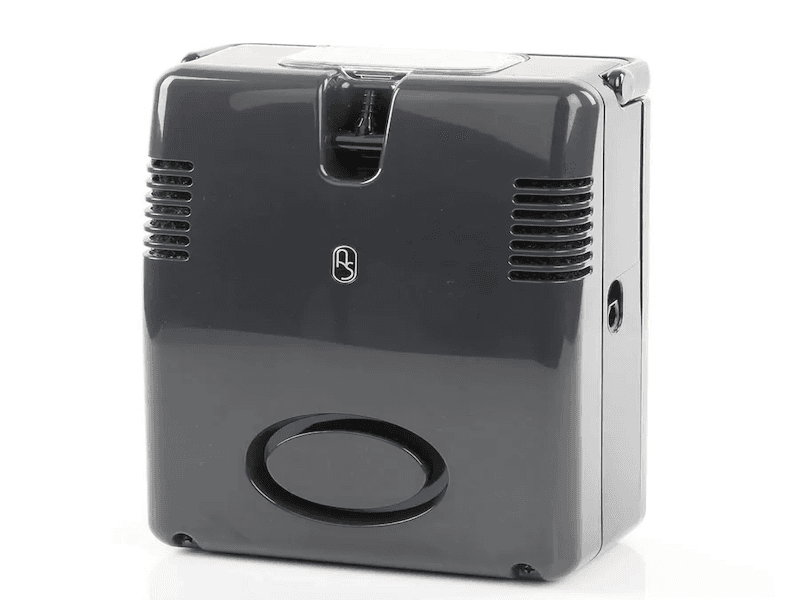
- Longer battery life than the AirSep Focus
- “One-touch” operation
- Matte finish can help hide dings and scrapes
- Weight: 5 lbs
- Dimensions: 6.1 inches x 3.6 inches x 8.6 inches
- Battery life: 3.5 hours
- Battery charging time: 4–5 hours
- Delivery/flow type: Pulse dose
- Range of flow settings: 3
- Noise level: 38–44 dBA
The FreeStyle 3 comes with the following supplies:
- FreeStyle 3 concentrator unit
- Nasal cannula
- Universal AC power supply/charger
- AC power cord
- DC car adapter/power cord
- Internal rechargeable battery
- Adjustable shoulder strap
- Carry bag
- User manual/documentation
You can purchase extra accessories for your FreeStyle 3, such as the wrist-strap carry bag or the FreeStyle backpack.
Pros
- Built to handle high temperatures
- Starts up in 2 minutes
- Three pulse settings
Cons
- Delivers less oxygen than other portable concentrators
- Some carry options cost extra
- Doesn’t arrive fully charged
- No AirBelt compatibility
I wouldn’t be afraid to fluctuate oxygen. You may have one prescription at rest, one prescription at exertion.”
—Alexis Smith, DO, at Novant Health, pulmonary and critical care medicine
AirSep FreeStyle 5: Highest Output
The FreeStyle 5 is the largest of the three models in this AirSep portable oxygen concentrator review. It also offers the most pulse-dose settings, with five. This means the FreeStyle 5 can deliver up to 1,000 mL/min of oxygen.
AirSep FreeStyle 5

- Includes UltraSense auto-adjusting technology
- 2.5 hours of battery life
- FAA-approved
- Weight: 6.7 pounds
- Dimensions: 6.6 in x 4.4 in x 10.7 in
- Battery life: 2.5 hours
- Battery charging time: 4–5 hours
- Delivery/flow type: Pulse dose
- Range of flow settings: 5
- Noise level: 48 dBA
The FreeStyle 5 comes with the following supplies:
- FreeStyle 5 concentrator unit
- Internal rechargeable battery
- Universal AC power supply/charger
- AC power cord
- DC car adapter/power cord
- Carrying case or carry bag
- Adjustable shoulder strap
- Nasal cannula
- User manual/documentation
You can purchase extra accessories for your FreeStyle 5, such as the AirBelt battery or a different carry bag.
Pros
- Compatible with AirBelt
- High oxygen output
- Whisper-quiet
Cons
- 2.5-hour battery life
- Long charging time
- Battery is not removable
How much do AirSep portable oxygen concentrators cost?
The cost of oxygen concentrators was by far the biggest concern of our survey respondents—and with good reason.1 Oxygen concentrators are expensive.
AirSep’s online store focuses on business- and building-sized oxygen solutions. It doesn't sell AirSep portable oxygen concentrators directly. Those are only available through third-party sellers, such as the Oxygen Concentrator store. These retailers list the whole AirSep portable oxygen concentrator family with a starting price of $2,695.
That’s about average for a portable oxygen concentrator. CAIRE portable oxygen concentrators fall within the $2,000–$3,000 range. Competitors Inogen and Invacare also fall within this price range. Portable oxygen concentrators that deliver higher oxygen flow rates (1,500–2,500 mL/min) can cost as much as $4,000.
| Comparison Features | |||
|---|---|---|---|
| Estimated cost | $2,695 |
$2,695 |
$2,695 |
| Warranty or protection plan | 3 years on machine, 1 year on batteries and accessories |
3 years on machine, 1 year on batteries and accessories |
3 years on machine, 1 year on batteries and accessories |
| Free trial | No |
No |
No |
Who should consider AirSep?
Since they’re so lightweight, AirSep portable oxygen concentrators may be a good fit for people who value discretion. They may also be a good option for those who can’t or don’t want to carry a bulky machine around. Frequent flyers might appreciate that all AirSep’s portable oxygen concentrators are FAA-approved.
Who should not use AirSep
Folks who enjoy being mobile for long stretches of time. The battery life in the AirSep lineup is comparatively short. If you're mobile for more than three hours, you’ll need to charge your device. You can pay extra for the AirBelt or ensure you’re near an outlet that can charge your AirSep as you use it.
People with high oxygen prescriptions. Certain oxygen prescription levels won’t be met by a portable oxygen concentrator. Your prescribed dose may require continuous-flow oxygen or a device that delivers higher pulse doses than the AirSep family can.
“There are some people that need a certain number when they are just sitting down, but as they exert themselves walking or straining or carrying something, they may need a little bit more during a specific activity,” said Alexis Smith, DO, at Novant Health, pulmonary and critical care. “I wouldn’t be afraid to fluctuate oxygen. You may have one prescription at rest, one prescription at exertion.”
To ensure your pulse dose oxygen is working properly, measure your blood oxygen levels with a pulse oximeter. You can read our Oxiline pulse oximeter review to learn more about these devices and how we review them.
AirSep customer reviews
AirSep, a division of CAIRE, is not accredited by the Better Business Bureau (BBB), and neither is CAIRE, so it does not have a customer rating on the site. But it does have a letter grade: The BBB has given AirSep an A+ rating, which is determined by factors like whether the company promptly responds to complaints.
AirSep is not verified on Trustpilot, but Oxygen Concentrator Store—which sells AirSep to the public—is. Oxygen Concentrator Store has a 4.8 out of 5 Trustpilot rating. Below are some AirSep oxygen concentrator reviews from the Oxygen Concentrator Store.
“Unit lasts me exactly 2 hours and then begins emitting a loud alarm. Definitely not getting 2.5”
—Ann, reviewing the AirSep FreeStyle 5 (OXYGENCONCENTRATORSTORE)
“I'm happy with my Focus because it's small and quiet. I work in a call center, and it doesn't bother anyone at all. I have the freedom of getting my oxygen therapy at work, as well as out and about.”
—Shelly, reviewing the AirSep Focus (OXYGENCONCENTRATORSTORE)
“I take my Focus with me everywhere. Very easy to wear a loose jacket and cover it, but without keeping the oxygen from getting to it. I went skiing while using it!”
—Will, reviewing the AirSep Focus (OXYGENCONCENTRATORSTORE)
Frequently asked questions
Is the AirSep portable oxygen concentrator pulse dose or continuous flow?
AirSep portable oxygen concentrators deliver pulse-dose oxygen. The AirSep FreeStyle 5 has five pulse dose settings. The AirSep Focus has a single setting.
What oxygen settings does the AirSep portable oxygen concentrator offer?
That depends on which machine you have. The AirSep Focus has a single pulse-dose setting. The FreeStyle 3 has three pulse-dose settings, and the FreeStyle 5 has five settings.
How much does the AirSep portable oxygen concentrator weigh?
AirSep’s line of portable oxygen concentrators weighs 2–6.7 pounds. The AirSep Focus is the lightest in the lineup, weighing 2 pounds with its batteries installed.
Is the AirSep portable oxygen concentrator FAA-approved?
Yes. All portable oxygen concentrators in the AirSep lineup are FAA-approved.
Can I use an AirSep portable oxygen concentrator while sleeping?
If you have no other option (like during travel), you can use a portable oxygen concentrator while sleeping. Most portable oxygen concentrators don't have a high enough flow rate to meet nighttime oxygen needs, which is why nighttime oxygen is usually delivered via stationary oxygen concentrators. You regulate breathing differently while sleeping (at night, your body doesn’t send the same breathing signals as during the day), and your doctor may base your nighttime oxygen prescription on your waking prescription. This may be a higher flow rate than a portable concentrator can deliver.
Questions? Email us at reviewsteam@ncoa.org.