
The Best TENS Units of 2026
The best TENS units may help you manage pain without medication, but each has its own features and purposes. Learn which device may work best for your needs.
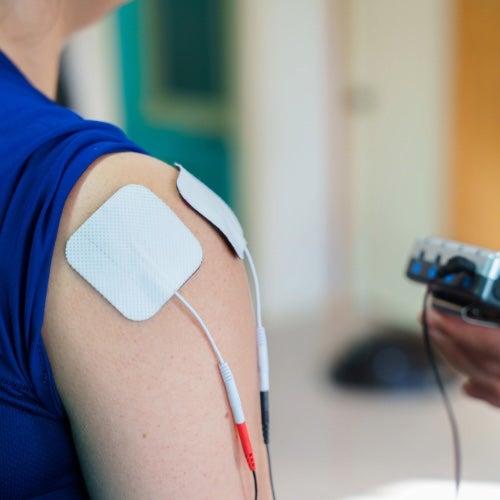
- Our Best TENS Unit Overall is the Oxiline TENS XS Pro. It has a user-friendly screen, portability, and a lifetime warranty.
- The best TENS devices on our list cost $70–$250, though many brands run promotions that lower the price.
- TENS units can provide pain relief using low-voltage electrical currents. These create a tingling or buzzing sensation to block pain signals.
- Most TENS units can treat one area at a time. But some models can treat two areas at once.
To support everyone’s right to age well, we research, test, and recommend products so you can find the right options to help you live your healthiest life. We’ve spent more than 50 hours conducting in-depth research and testing scales from several brands to help you make an informed decision. To find the best TENS Units, we:
- Examined and mystery-shopped leading TENS unit brands and products
- Consulted registered nurses and board-certified doctors to fully understand the importance and process of managing pain at home, and determine key features to look for in a device
- Personally tested TENS units, comparing factors such as ease of setup, stimulation, display readability, electrode experience, and portability
- Researched and reviewed evidence and guidance from reputable health sources to understand TENS therapy and pain management
- Combed through verified customer reviews of TENS units on the company and third-party seller websites
We’re constantly testing new TENS units to continue to share the most accurate and up-to-date recommendations. Read more about how we test home health devices.
Are you looking for medication-free pain relief? A TENS unit may help. TENS is short for transcutaneous electrical nerve stimulation. This small, portable device delivers low-voltage electrical currents to your body. The currents can interrupt pain signals traveling to your brain.1 Many people rely on TENS units as an alternative to pain medication and a complement to physical therapy.
Electrical stimulation therapy may sound intimidating. But these TENS units are designed for at-home use. We tested the best TENS units for electrode experience, control accessibility, current strength, and comfort. Our testers also evaluated the best TENS units for cost and setup difficulty. Read on for our recommendations for the best TENS therapy devices.
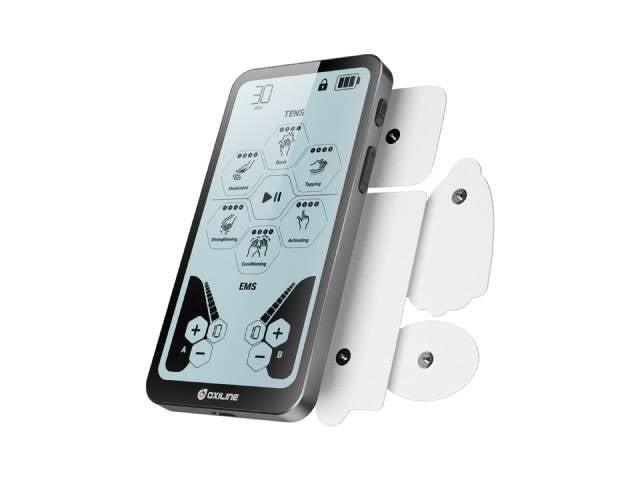
Oxiline TENS XS Pro
A user-friendly touchscreen with 24 therapy settings
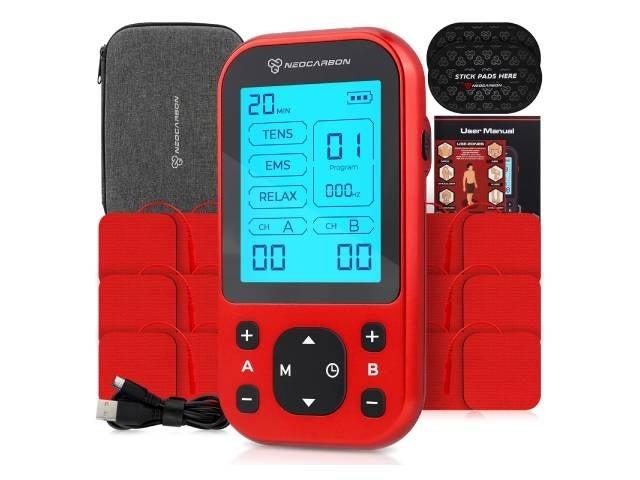
Neocarbon TENS Pro
Highly portable with a user-friendly manual
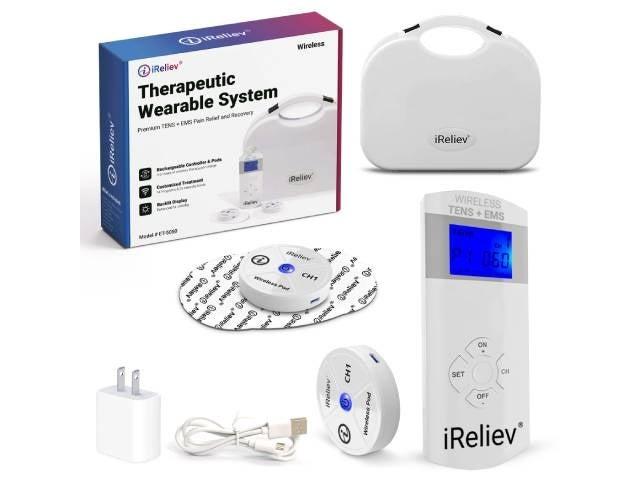
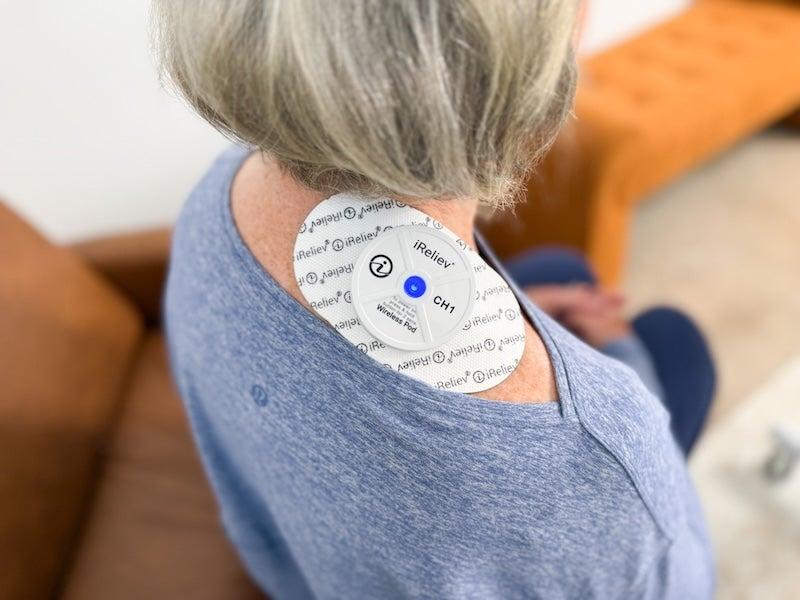
iReliev Therapeutic Wearable TENS+EMS System
Wireless device allows users to multitask
Best TENS Units in 2026
- Oxiline TENS XS Pro: Best Overall TENS Unit
- Neocarbon TENS Pro: Best Budget-Friendly TENS Unit
- iReliev Therapeutic Wearable TENS+EMS System: Best Wireless TENS Unit
- Beurer 3-in-1 TENS & EMS Device: Best TENS Unit for Sciatica
The best TENS units compared
| Comparison Features | iReliev Therapeutic Wearable TENS+EMS System Visit Sitefor iReliev Therapeutic Wearable TENS+EMS System |
|||
|---|---|---|---|---|
| Score (out of 10) | 9.4 |
8.7 |
8.2 |
8.1 |
| Best | Overall |
Budget-friendly |
Wireless |
For sciatica |
| Number of intensity levels | 10 |
20 |
25 |
50 |
| Stimulation score | 4.5/5 |
4.5/5 |
4.5/5 |
4.5/5 |
| Trial Period | 30 days |
30 days |
30 days |
60 days |
How we tested the Best TENS Units
We ordered and tested several of the leading TENS units, identifying several important factors in the process. Here are some ways we tested TENS units:
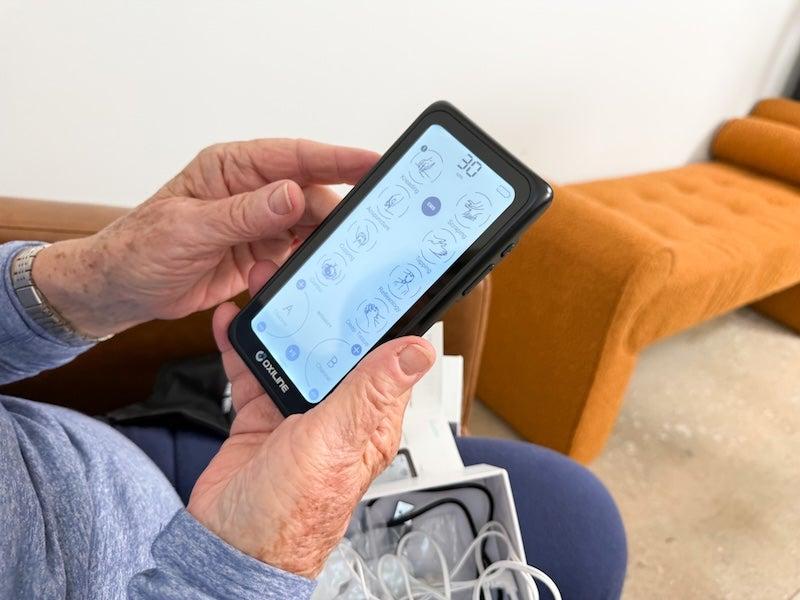
Oxiline TENS XS Pro: Best Overall TENS Unit
Our testers found this rechargeable TENS unit to be incredibly straightforward to use. It earned Best Overall for its user-friendly touchscreen and pleasant stimulation experience.
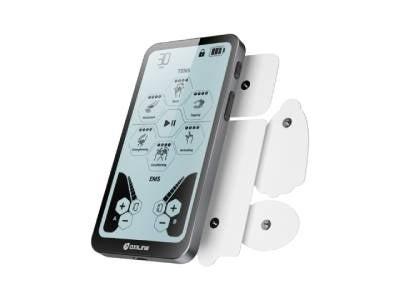
- Weighs just one pound
- Biggest screen of all the TENS units on this list
- Small, portable device
- Ease of use: 5/5
- Intensity levels: 10
- Pads included: 6
- Battery life: Approximately 24 hours
Pros
- Large, clear display
- Financing available through Affirm
- Hypoallergenic pads
- Smaller, discreet pads
Cons
- Expensive
- Pads can be uncomfortable to remove
- Only usable on one area at a time
Neocarbon TENS Pro: Best Budget-Friendly TENS unit
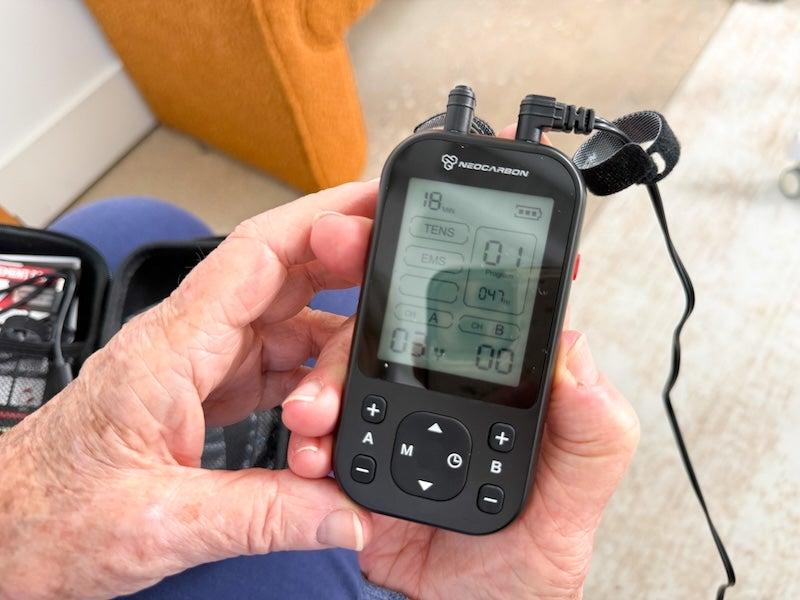
The Neocarbon TENS EMS unit has twice the intensity options of the Oxiline TENS XS Pro at a lower price. The Neocarbon also lets you create two independent channels. This lets you stimulate two areas of the body in separate modes.
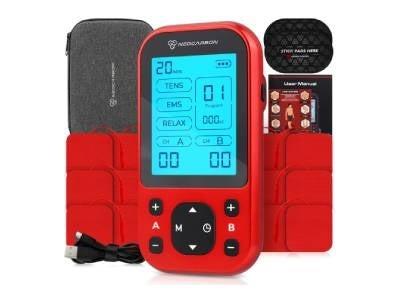
- Two independent channels allow treatment of multiple areas at once
- Most affordable TENS unit we tested
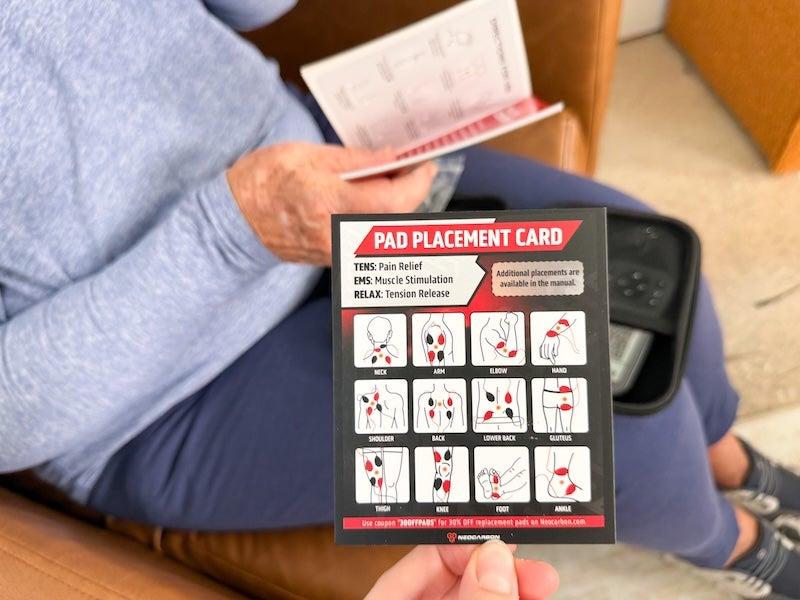
- Large-text user manual our testers found easier to read
- Ease of use: 4.5/5
- Intensity levels: 20
- Pads included: 12
- Battery life: Approximately 50 hours
Pros
- Battery lasts about 50 hours per charge
- Free shipping
- Testers found the electrode pads pain-free to remove
- Comes in two colors
Cons
- Wall adapter not included
- Small buttons can be more challenging to use
- One tester found the wires tangle easily
iReliev Therapeutic Wearable TENS+EMS System: Best Wireless TENS unit
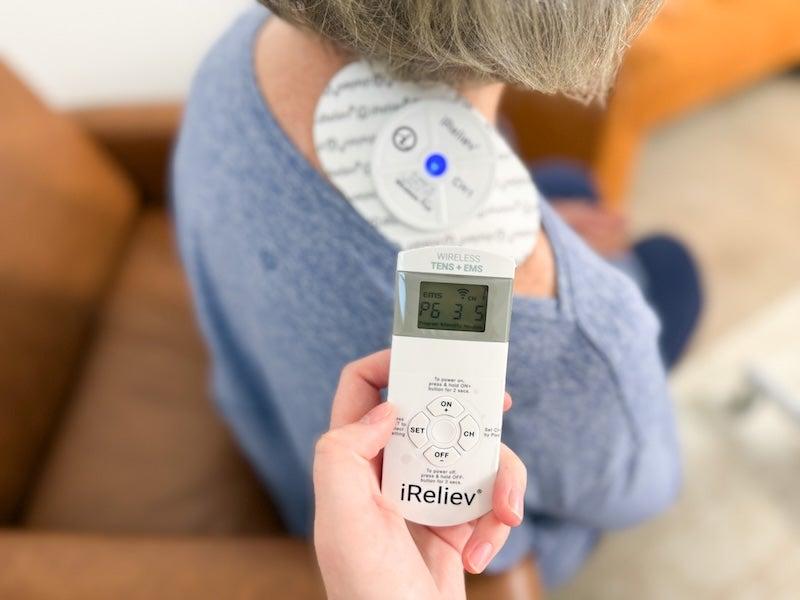
The iReliev is the only wireless TENS unit on our list. It has wireless contact pods so you can move around while enjoying the benefits of TENS and EMS therapy.
- Only wireless TENS unit on this list
- Wireless pods can treat multiple areas of the body at the same time
- Testers reported painless electrode pad removal
- Ease of use: 4.5/5
- Intensity levels: 14
- Pads included: 2
- Battery life: 3–5 hours
Pros
- Easier to wear while moving around
- Comfortable application
- Testers found it easy to switch between modes
- Slim, portable remote
Cons
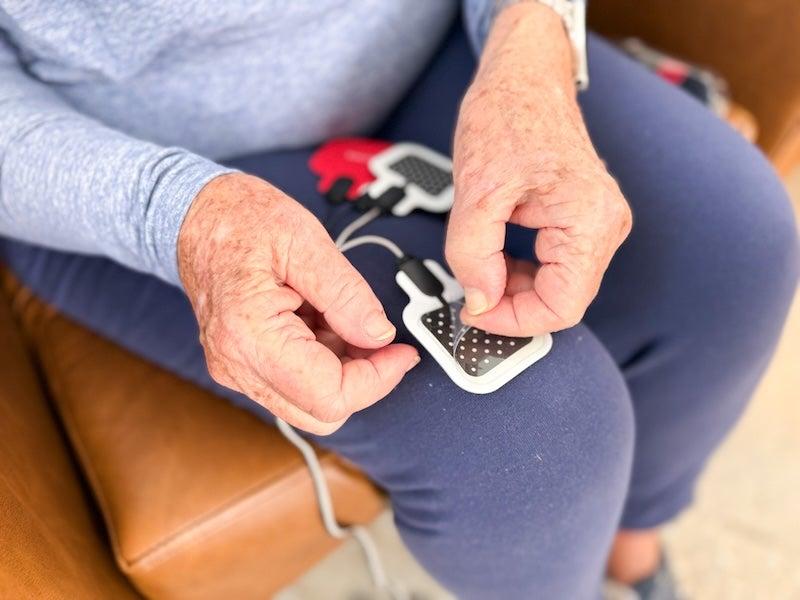
- Sticky electrode pods may get stuck if dropped
- Tiny print in user manual
- Screen display may be harder to read
- Electrode pods are not discreet
Beurer 3-in-1 TENS & EMS Device: Best TENS Unit for Sciatica
While other TENS units on this list include EMS therapy for muscles, the Beurer also offers heat. It offers 50 intensity levels and combines TENS, EMS, and heat therapy in one device. These features led our testers to choose the Beurer 3-in-1 as the Best TENS Unit for Sciatica.
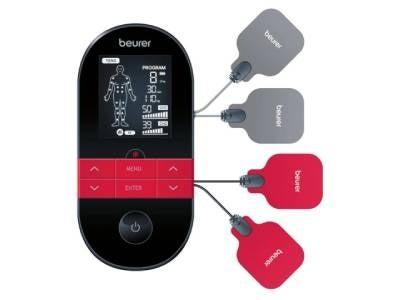
- The most intensity levels of all the TENS units we tested
- 5-year warranty
- Offers EMS and heat therapies
- Ease of use: 4/5
- Intensity levels: 50
- Pads included: 4
- Battery life: Varies depending on use
Pros
- Programs to treat many conditions
- Has a heat setting
- 50 stimulation settings
- Lightweight
Cons
- No free shipping
- Four-hour charging session required before first use
- Electrode pads leave residue
- Not very portable
What does a TENS unit help with?
TENS units are designed to provide temporary pain relief. They work by creating a tingly electric sensation that may compete with the pain signals being sent to your brain. This is called signal interruption, and it may reduce how strongly you perceive the pain. Studies have also shown that TENS may trigger the body to release pain-relieving chemicals such as endorphins, which can help with pain.3
Using electrodes and electrical currents, TENS units stimulate the skin (the T in TENS stands for “transcutaneous”) around the affected area. Through the skin, the electrical pulse follows the path the pain takes to your brain.1
Some conditions TENS units may help you manage include:
- Sciatica
- Arthritis
- Tendonitis
- Post-surgery pain
- Fibromyalgia
Who should consider a TENS Unit?
People with chronic pain should speak with their health care provider to learn if TENS therapy is right for them. Those who may benefit from using a TENS unit may include:
- Those looking for a drug-free pain-management alternative. TENS units offer a non-pharmaceutical alternative to pain medications.
- People recovering from surgery. TENS units can supplement physical therapy when it comes to managing post-surgical pain and discomfort.
- People who have back pain. Whether your back pain is caused by sciatica or another condition, a TENS unit may offer temporary relief. It can’t decompress your vertebrae. But a TENS unit can interrupt pain signals so you don’t have to feel pain constantly.
- Anyone seeking relief from cramps. TENS units may soothe cramps or lactic acid that arrive after a strenuous workout. They may also relieve menstrual cramps.4
- Those with fibromyalgia or arthritis. The American Fibromyalgia Syndrome Association discusses TENS as an option for managing fibromyalgia pain. Users should speak with a health care provider about electrode placement for managing symptoms.
What to look for when buying a TENS Unit
Because you can use a TENS unit for multiple conditions, you should invest in a device that can deliver a range of electrical current intensities. All of the best TENS units we tested offer at least 10 intensities. We also evaluated the Best TENS Units for features that may matter to people with dexterity, arthritis, or vision concerns, such as larger controls and more readable displays.
We ensured the TENS units had settings that would support treatment of conditions common in older adults, like arthritis and fibromyalgia. Read on for what our testers recommend checking for when buying a TENS unit.
Display
The best TENS devices have easier-to-read screens. This may include a larger screen with backlighting or high contrast. But to stay portable, many TENS therapy devices have a smaller screen.
The Oxiline TENS XS Pro has the largest screen of all the TENS units we tested. Among the smaller screens, the iReliev impressed our testers with its backlighting.
Controls and ease of use
If you have dexterity concerns or find it difficult to focus when you’re in pain, tiny buttons can be a challenge. Our testers focused on buttons that were easier to operate and controls that were straightforward to use. The Oxiline TENS XS Pro and the Neocarbon were the most intuitive, but our testers found that with the manuals and some trial and error, all the TENS units on this list became easier to use over time.
Intensity options
TENS units come in three main intensities: conventional, acupuncture, and intense.1 All the TENS units on this list can sort their 10–50 therapy settings under one of those umbrellas. The setting you need depends on the type of pain signal you’re using the TENS unit to interrupt. For the best investment, choose a TENS unit that can deliver multiple current intensities. The Beurer 3-in-1 has up to 50 intensity settings. But our testers found the TENS units with 10–20 intensity settings just as helpful.
Portability
Our portability standard hinged on whether the TENS unit fits in your pocket while you’re on the move. This helps when you want treatment while active: walking, hiking, playing a sport, or cleaning your house. If a TENS unit isn’t portable, you can use it only while sitting.
The Oxiline TENS XS Pro is smartphone-sized to slide into your pocket. The Beurer 3-in-1 feels more like a massage chair remote. Our testers worried its electrode wires would tangle easily if you moved around while using it. The iReliev and Neocarbon remotes were similarly slender, but the iReliev will never tangle. It has no electrode wires and instead delivers electricity via wireless electrode pods.
Battery life
The TENS units on this list have long battery lives. Charging frequency depends on the device and how often you use it. All the best TENS units on this list come with a USB-C charging cable, but you’ll have to provide your own wall adapter.
Wired vs. wireless TENS unit
Wireless TENS units are a little less common than TENS units with wired electrodes. They deliver electricity the same way. Instead, the choice comes down to how mobile you want to be during TENS therapy. Wireless TENS units let you move freely without tangling electrode wires.
Wireless TENS units also enable you to treat more than one affected area at a time. With a wired set of electrodes, you’re limited to where the pairs of electrode pads can go. A wireless TENS unit like the iReliev can treat two different locations at once.
Electrode stickiness
The electrode pads on TENS units should be reusable. To get the most reuse out of an electrode pad, the first use is often incredibly sticky. While extra stickiness is good over time, it can be a hassle at first. If you accidentally set your electrode down or drop it while placing it, prying it up can be harder than expected.
That early stickiness might also be unpleasant when you’re treating pain anywhere with body hair. Even if you place the electrodes on a hairless area, you may still leave a gel-like residue behind.
Electrode pad variety
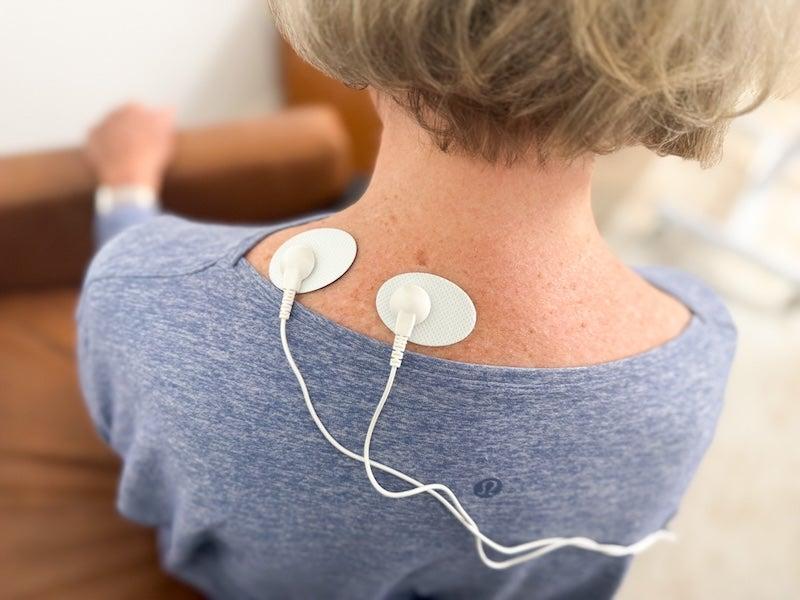
TENS units work best in a criss-cross pattern. During treatment, use the electrodes to create an X-shaped pathway over the affected area. The pathway goes over the injury. The electrode itself does not. TENS electrodes are not like Band-Aids, where the pad size should increase with injury size. Still, because human bodies are not flat, a variety of electrode pad sizes is always a bonus.
TENS unit safety
TENS units use low-voltage electrical currents. You should not use a TENS unit if you have a pacemaker or other implanted cardiac device. The TENS unit's electrical pulses might disrupt your device. Studies have shown that while pacemakers were fine during active TENS unit use, extended monitoring revealed pacemaker dysfunction.5
If you have sensitive skin or an allergy to gel, you might not want to use a TENS unit. Do not place TENS electrodes over any metal jewelry. If you can remove your jewelry, do so. TENS uses electricity to disrupt pain, and metal conducts electricity.
If you have an implanted or indwelling medical device, such as an insulin pump, catheter, drain, or chemotherapy pump, ask the appropriate health care professional whether TENS therapy is safe for you.
TENS vs. NMES units
EMS (electrical muscle stimulation), or NMES (neuromuscular electrical stimulation), is the muscle-stimulation version of TENS. When using a TENS unit, you do not want muscle contraction (that usually means your intensity is too high). With EMS and NMES, however, muscle contraction is part of the treatment. EMS therapy can help muscles after a stroke or surgery, or after long periods of weakness due to critical illness.6
How much do the Best TENS Units cost?
The best TENS Units on our list cost $70–$250. Many brands run seasonal promotions that lower those costs significantly. Some brands, such as iReliev and Oxiline, allow you to finance your TENS unit through Shop Pay or Affirm. While some TENS therapy devices offer free shipping, that’s not guaranteed. Returning a TENS unit may require paying an extra fee.
| Comparison Features | Oxiline TENS XS Pro |
Neocarbon TENS Pro |
iReliev Therapeutic Wearable TENS+EMS System |
Beurer 3-in-1 TENS & EMS Device |
|---|---|---|---|---|
| Cost | $200 |
$70 |
$250 |
$90 |
| Trial Period | 30 days |
30 days |
30 days |
60 days |
| Warranty length | Lifetime |
1 year |
1 year |
5 years |
| Return fees? | Shipping costs |
Shipping costs |
25% restocking fee |
20% restocking fee |
Frequently asked questions
What does TENS unit stand for?
TENS unit stands for “transcutaneous electrical nerve stimulation” unit. It is a small electronic device that uses electrodes and electrical currents to help your brain manage body pain.1
Does Medicare cover TENS units?
TENS units are classified as durable medical equipment under Original Medicare Part B. If your doctor prescribes a TENS unit, Medicare might initially cover the rental of one.7 In some cases, Medicare will cover the purchase of a TENS unit for chronic pain. Medicare coverage of TENS units depends on the type of pain you’re experiencing.
How do you make TENS unit pads sticky again?
Wetting the pad with a single drop of water will remove some lint and help the electrode pad stick again. But prevention is a better strategy. After every use, place the electrodes sticky side down on the plastic film they came with. Store the pads somewhere dust can’t get to them.
Questions? Email us at reviewsteam@ncoa.org.