
Related Topics
Access to safe, affordable, and accessible transportation is essential for ensuring that older adults and people with disabilities can remain independent, engaged, and connected to their communities.
This presentation, featuring David Somers, Senior Research Associate at USAging/National Aging & Disability Transportation Center (NADTC), along with Emma Nalin and Mary Maruscak from the Rural Health Network of South-Central New York, highlights innovative strategies, partnerships, and resources designed to improve mobility and address transportation barriers in rural communities.
The National Aging & Disability Transportation Center and Inclusive Transportation
- The National Aging & Disability Transportation Center (NADTC) provides training, technical assistance, and grants to enhance transportation options for older adults and people with disabilities
- NADTC's mission is to promote the availability and accessibility of transportation options for older adults, people with disabilities, caregivers, and communities.Community Engagement as a Foundation
- Engaging diverse stakeholders, such as local nonprofits, health providers, and people with lived experience, is critical in shaping transportation solutions that truly reflect community needs.
- Listening sessions, surveys, and pilot programs are effective tools to gather input and test strategies.
During the presentation, Somers stressed the importance of several avenues to improving access to reliable transportation, including the right kind of partnerships, planning, and innovative approaches.
Cross-sector partnerships
- Collaborations between transit agencies, aging and disability organizations, and local government play a pivotal role in expanding transportation options and integrating services.
- Successful examples include mobility management coalitions and coordinated funding approaches.
Accessible planning and implementation
- The webinar emphasized that transportation planning must consider and address all possible barriers within the community.
- Transportation programs must reach those with the greatest need to be impactful.
Innovative approaches and pilot projects
- Projects explored using technology, flexible routing, and volunteer drivers to fill service gaps.
- There was a strong focus on sustainability and long-term scalability of successful pilot initiatives.
The Rural Health Network of South-Central NY and Inclusive Transportation
Malin and Maruscak addressed common rural transportation barriers and highlighted how their organization addresses those. Among the key takeaways:
- Multiple, layered rural transportation barriers exist
- Long distances and high travel costs due to dispersed rural populations.
- Lack of public transit in several counties, and closure of private transit options (e.g., taxi services).
- Driver shortages, especially among Medicaid transportation providers, leading to canceled trips with little notice.
- Weather-related issues affecting both provider availability and participant comfort while driving.
- Even participants who own a car may not be comfortable driving in inclement weather or long distances.
- Even among those who make it to class, 20% of participants still report limited or no access to reliable transportation.
- Rural program providers may need to develop internal transportation solutions such as the Rural Health Network of South-Central NY’ ‘GetThere’ program
- Medicaid Transportation: RHN uses, when possible, though reliability is limited due to:
- Lack of awareness among Medicaid transport providers about eligibility and processes for CDSME trips.
- Last-minute cancellations and no-shows.
- Connection to Care Program:
- Volunteer driver program, funded by local foundations.
- Provides prepaid fuel cards, bus passes, and private fare coverage (cabs, meta vans).
- Offers mileage reimbursement for friends, family, or volunteer drivers at the federal rate.
- Aims to increase flexibility and reach for participants lacking other transportation options.
- Medicaid Transportation: RHN uses, when possible, though reliability is limited due to:
- Site-based program delivery reduces transportation needs
- Delivering programs at familiar and trusted community locations, including:
- Libraries, churches, senior centers, congregate meal sites, and even malls.
- Built-in transportation support often exists at these sites (e.g., facilities that already transport their clients).
- Familiar locations are easier for participants to access using informal or community-based transport.
- Delivering programs at familiar and trusted community locations, including:
- Community partnerships and champions are critical
- Strategies for Success:
- Recruiting local champions at each host site who are:
- Trusted by the community.
- Willing to recruit, support, and sometimes even transport participants.
- Hosting closed-cohort workshops for organizations with existing clients that have often overcome the transportation barriers for their members such as:
- Mental health drop-in centers
- Assisted living facilities
- Leveraging partner organizations’ transportation (e.g., a staff member providing rides to a Walk with Ease program).
- Recruiting local champions at each host site who are:
- Strategies for Success:
Shared commitment
Improving transportation access is a foundational step toward independence and social connections for older adults, particularly in rural and other areas lacking robust access to services. Meaningful progress begins with listening to communities, forming cross-sector partnerships, and being flexible in both planning and service delivery.
Whether through NADTC’s national efforts or the Rural Health Network’s local innovations in New York’s Southern Tier, it’s clear that sustainable solutions are rooted in community engagement, creative problem-solving, and inclusive design. Scaling these approaches will require continued collaboration, investment, and a shared commitment to inclusivity in every step of the journey.
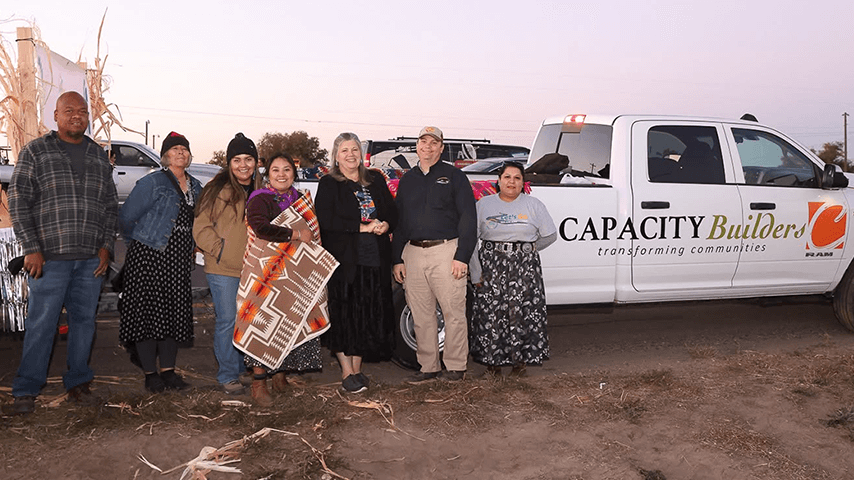
Photo courtesy Capacity Builders, Farmington, New Mexico
This project was supported by the Administration for Community Living (ACL), U.S. Department of Health and Human Services (HHS) as part of a financial assistance award totaling $10,000,000 with 100 percent funding by ACL/HHS. The contents are those of the author(s) and do not necessarily represent the official views of, nor an endorsement, by ACL/HHS or the U.S. Government.