
How Digital Literacy Classes Can Reduce Social Isolation
6 min read

Related Topics
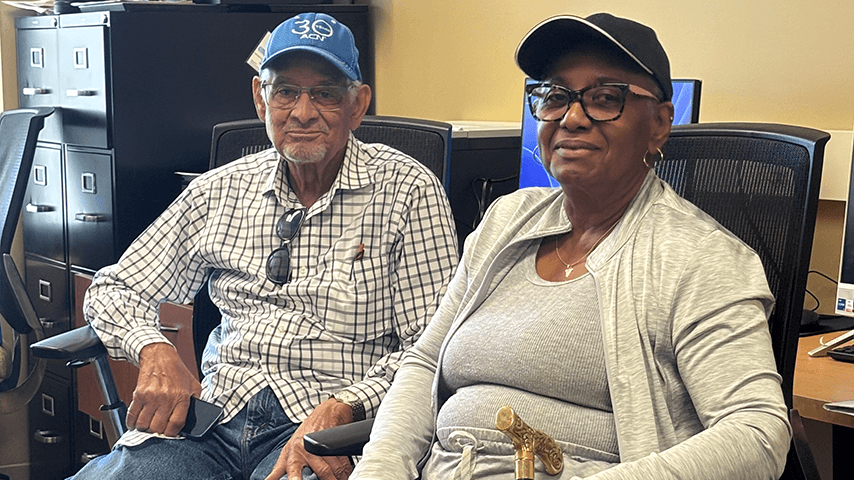
Moving from Massachusetts to Florida two years ago, it meant everything to keep in touch with my family and friends. I learned how to FaceTime. I now enjoy FaceTiming my friend of 25 years, back home. We FaceTime every Saturday and I try to convince our group of friends to do the same. There are five of us; we are all widows. –Aileen, 87, Digital Literacy participant in Hillsborough County, Florida
We all benefit from feeling connected to others. But more than one third of adults ages 50-80 report feeling lonely and isolated.1 This is especially true for those managing major physical or mental health issues.
While digital skills can help reduce loneliness and isolation, not everyone is comfortable using technology. According to AARP’s 2026 Tech Trends and Adults 50-Plus research:2
- Despite the fact that 99% of adults over 50 own at least one technology device, only 64% of them agree or strongly agree that they have the digital skills necessary to take full advantage of being online.
- For adults age 80 and older, less than half (48%) felt they had the necessary skills to successfully navigate the online environment.
- When asked if technology is well designed for someone their age, 60% of adults 50+ did not feel it was designed well for their age group.
How basic digital literacy classes can boost confidence
In collaboration with AT&T, NCOA worked with 50 community-based organizations across the country to deliver foundational digital literacy workshops using curriculum developed by the Public Library Association. The program focused on practical topics such as email basics, internet basics, mobile devices, and cybersecurity—and paired structured classroom instruction with one-on-one office hours for individualized support.
By leveraging trusted local organizations and senior centers, the initiative met older adults where they already felt comfortable learning. These organizations understand their communities, know the people they serve, and create welcoming environments where participants can ask questions without fear of judgment.
Classes emphasized foundational skills such as texting, making video calls, and saving contacts, all taught in small, hands-on settings where repetition and relationship-building were central to the learning experience. This combination of relevant content, personalized support, and trusted community-based delivery helped participants gain both digital confidence and meaningful opportunities for connection.
Stories from the classroom
At a workshop at the Bernice Fonteneau Senior Wellness Center in Washington, D.C., participants described meaningful, everyday changes:
- One participant now uses WhatsApp to stay connected with family in their home country, building skills through continued practice.
- Another shared how learning Zoom made it possible for family members in different places to come together and navigate an urgent moment—highlighting how digital skills enable connection when it matters most.
- Group chats have created new forms of connection across generations:
“The older people get to connect with the younger people…we all get the message at the same time. - For one participant, learning digital skills opened the door to ongoing community engagement through an online Zoom-based Bible study group:
“I had no idea how to use a computer… now I can type my homework and submit it… it’s like one day at a time.”

These moments—sending a message, joining a call, participating in a group—create real, sustained connection.
What makes digital literacy classes effective
The effectiveness of digital literacy programs lies not only in what is taught, but in how and where the learning takes place. Workshops focused on practical topics—such as email, mobile devices, internet navigation, and cybersecurity—address real-world needs that participants encounter every day, from staying in touch with family and friends to attending virtual appointments, participating in online groups, and accessing essential services.
In welcoming environments, participants gain more than technical skills; they build confidence, form new social connections, and become part of a supportive community that often extends beyond the classroom.
Closing the gap and building digital skills
Support like this can help older adults overcome such common challenges as not knowing how to send text messages, join video calls, or use everyday applications (i.e., FaceTime email, etc.), as well as low confidence and apprehension about technology.
Studies suggests that access alone is not enough to ensure digital inclusion. Concerns about trust, privacy, perceived value, device setup, ongoing support, and ease of use all influence whether older adults adopt and use technology.2 And about 30% of older adults lack access to adequate internet speeds, creating another barrier to meaningful digital engagement.
Researchers also point to a "second-level digital divide," in which digital skills vary significantly based on income, education, and age within the older adult population. Because older learners often need more time and repeated practice to build proficiency, effective digital literacy programs must provide hands-on instruction, ongoing support, and opportunities to apply skills in real-life situations rather than simply focusing on technology access alone.2,3
The body of research regarding how technology can reduce isolation and loneliness is growing. One study found that older adults who engaged in extensive phone and email communication with their long-distance family members had a higher level of emotional satisfaction compared to those who only communicated in-person.4
Increased digital skills can allow people to connect with not only family and friends but also learn a new skill through online universities or programs or join a hobby or support group. Teaching someone how to use a rideshare app can increase their independence and allow them to continue connecting with others in person.5
Research increasingly points to digital literacy as an important tool for reducing social isolation among older adults. But for Aileen and the thousands of older adults who have participated in NCOA's digital literacy program, the impact goes far beyond technology skills.
Learning to use Zoom has helped her stay connected with her granddaughter and attend doctor's appointments. Texting allows her to keep in touch with friends out of state, and Google Maps helps her navigate her new community with confidence. At 87, she is still learning—"little by little," as she describes it—but each new skill has opened another door to connection, independence, and engagement.

"A lot of seniors are set in their ways. At my age, it's tough to learn something new," she says. "I am getting more comfortable as I'm learning more. I still have lots to learn, but I'm getting these things little by little. I am willing to learn and I'm not giving up!"
For older adults like Aileen, digital literacy is not simply about learning how to use a device; it is about staying connected to family, friends, services, and the world around them.
Photos courtesy Dianne Stone for NCOA use only
Sources
1. Kara Gavin. 1 in 3 older adults still experience loneliness and isolation. University of Michigan. Michigan Medicine. Dec. 9, 2024. Found on the internet at https://www.michiganmedicine.org/health-lab/1-3-older-adults-still-experience-loneliness-and-isolation
2. AARP. 2026 Tech Trends and Adults 50-Plus. December 2025. Found on the internet at https://www.aarp.org/content/dam/aarp/research/topics/technology/internet-media-devices/2026-technology-trends-older-adults.doi.10.26419-2fres.01020.001.pdf
3. Susan Nash. Older Adults and Technology: Moving Beyond the Stereotypes. Stanford Center on Longevity. Found on the internet at https://longevity.stanford.edu/older-adults-and-technology-moving-beyond-the-stereotypes/
4. Sen, K, Prybutok, G, and Prybutok, V. The Use of Digital Technology for Social Wellbeing Reduces Social Isolation in Older Adults: A Systematic Review. SSM-Population Health. Dec. 30, 2021. Found on the internet at https://pmc.ncbi.nlm.nih.gov/articles/PMC8733322/
5. Vivian Welch, et al. PROTOCOL: Digital interventions to reduce social isolation and loneliness in older adults: An evidence and gap map. Campbell Systematic Reviews. June 2022. Found on the internet at https://pmc.ncbi.nlm.nih.gov/articles/PMC9233308/