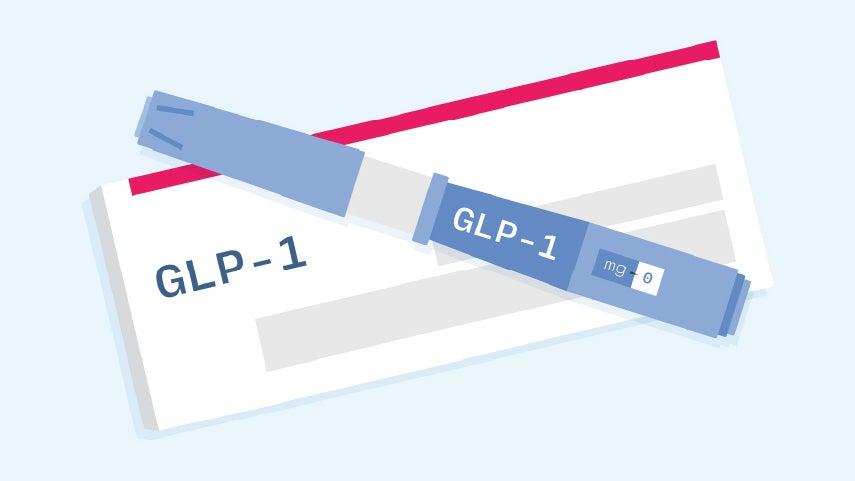

GLP-1 Medications for Weight Loss: Safety, Side Effects, Compounded Drugs, and Access
11 min read
Related Topics
Weight loss medications, when combined with good nutrition, physical activity, and behavior modification, can be an effective part of managing overweight and obesity, helping improve health outcomes and quality of life. But as these medications have grown in popularity, so have counterfeit and untested products that can put consumers at risk.
In this article, you’ll learn more about GLP-1 medications, their potential benefits and risks, and how to recognize counterfeit or untested products that could harm your health.
What are GLP-1s?
GLP-1s, or glucagon-like peptide-1 receptor agonists, are medications that mimic a hormone involved in blood sugar regulation, digestion, and appetite. They were originally developed to treat type 2 diabetes, but some GLP-1 medications are now FDA-approved to treat overweight and obesity.
Researchers later found these medications help people lose a significant amount of weight and improve several health outcomes, which has led to their approval by the U.S. Food and Drug Administration (FDA) for overweight/obesity treatment.1 They are touted as “miracle drugs” not only because of these documented health benefits but also for promising outcomes in managing conditions such as cardiovascular disease and substance use disorder.2
How do GLP-1s work in the body?
GLP-1s work by mimicking the natural GLP-1 hormone that’s produced in your small intestine:3
- It triggers insulin release from your pancreas, which in turn, helps lower the amount of glucose in your bloodstream.
- It blocks the hormone glucagon from releasing more glucose into your bloodstream.
- It delays stomach emptying of food (i.e., slows down digestion) which causes less glucose to enter your bloodstream.
- It increases feelings of fullness by affecting areas of your brain that regulate hunger and satiety.
Are GLP-1s safe?
Although GLP-1s have only recently become well-known to the public, they have been used to treat diabetes for 20 years, and there are many studies that show that these drugs are both safe and effective. These studies generally show improvements in overall health and some specifically show their potential to lower the risk of heart attack and stroke.
Despite their overall safety profile, older adults taking GLP-1s who have frailty or a history of heart attack or stroke may need additional clinical support to ensure that they are meeting their nutritional needs and getting sufficient physical activity to alleviate loss of muscle mass and function (sarcopenia). These drugs can also produce other side effects that may spur changes in eating habits, which can lead to safety risks or worse health outcomes if not appropriately managed.2
What are the side effects of GLP-1s?
The most common side effects of GLP-1s include:
These side effects are more likely to happen when you start the medication or if you’re taking an increased dose.
Other side effects can include:
- Dizziness
- Mild tachycardia (increased heart rate)
- Infections
- Headaches
- Indigestion (upset stomach)
You may also have temporary mild itchiness and/or redness on your skin at the site of the injections. If this is a concern, you may discuss with your health care provider the option to take GLP-1s orally in the newly released pill forms.
Severe—but rare—side effects can include:
- Pancreatitis
- Medullary thyroid cancer
- Acute (sudden) kidney injury
- Worsening diabetes-related retinopathy
What are compounded GLP-1s?
Compounded GLP-1s are custom-made alternatives to standard formulations. They can be useful in specific situations where patients require personalized medication preparations (e.g., different doses or forms, removal of an allergen that may be listed as one of the inactive drug ingredients, etc.). These are made by licensed pharmacies with a prescription from the patients’ healthcare providers.4
|
Did you know? FDA announced in February 2026 that it intended to take action against mass-marketed, non-FDA-approved compounded GLP-1 products and misleading claims that these products are the same as or equivalent to FDA-approved medications. The FDA has emphasized that compounded drugs are not FDA-approved and do not undergo the same premarket review for safety, effectiveness, and quality as FDA-approved medications. |
Another purpose for compounded GLP-1s is to fill supply gaps when national drug shortages limit the availability of the FDA-approved versions. From 2022 to 2024, there was a nationwide shortage of semaglutide and tirzepatide. During that period, the FDA allowed certain registered compounding pharmacies called outsourcing facilities to manufacture direct copies of branded versions. When the shortage was resolved, FDA prohibited the mass production and sale of compounded GLP-1s after May 22, 2025. The only exceptions are limited to compounding GLP-1 medications in limited quantities for individualized patient prescriptions.5
Which GLP-1 medications are FDA-approved for weight loss?
There are four GLP-1s that are currently FDA-approved for the treatment of obesity.6,7 These include liraglutide (Saxenda®), semaglutide (Wegovy®), tirzepatide (Zepbound®) and orforglipron (Foundayo™).
|
Why is being FDA-approved so important? FDA-approved medications have undergone FDA review for safety, effectiveness, and quality. Compounded drugs are not FDA-approved and do not go through the same premarket approval process. |
All four FDA-approved GLP-1s have the following safety features:
- Rigorous Testing. FDA-approved GLP-1 medications are thoroughly tested for safety and effectiveness before they can be sold. Compounded GLP-1s do not go through the same FDA approval process.
- Consistent Dosing. FDA-approved GLP-1s provide reliable, consistent doses. Compounded GLP-1s may vary in strength and are often supplied in multi-dose vials, which can increase the risk of dosing mistakes.
- Quality Standards. FDA-approved GLP-1s are made under strict quality and safety standards. Compounded GLP-1s are not subject to the same manufacturing requirements, which may increase the risk of contamination, inconsistent quality, or incorrect dosing.
What are grey market GLP-1 products and why should I be concerned?
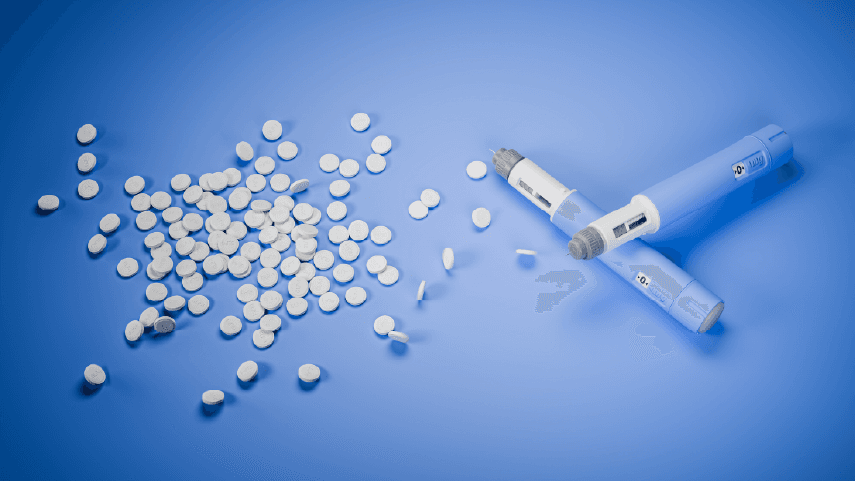
Grey-market GLP-1 products are products marketed as weight loss medications outside the FDA-approved drug supply chain. They may be sold as “research peptides,” powders, self-mixing kits, or other products that have not been reviewed by FDA for safety, effectiveness, or quality.
FDA-approved GLP-1s have helped many people lose weight, but high costs and limited insurance coverage make them too expensive for many others. This lack of access has created a market for products advertised as “compounded” GLP-1s, but many of those are not legitimately compounded medications and may be unsafe. They are considered grey market.8
Grey market GLP-1s aren’t reviewed for safety, and their supply chains are unverified. This puts people at risk of contamination, incorrect dosing, or even exposure to entirely different substances being sold as treatment (much like snake oils).
Most telehealth services are legitimate and trustworthy, but it's important to choose licensed providers and reputable pharmacies to avoid counterfeit or unsafe GLP-1 medications.
With so many ads and online offers, it can be hard to tell which GLP-1 products are safe and legitimate. To help you avoid counterfeit or unsafe products, watch for these warning signs.
|
How can you tell if a GLP-1 product is unsafe or counterfeit? | |
| 1. Are there misspellings, grammatical errors, or fictitious professional organizations cited? |
Many illegitimate companies—especially those originating in countries outside of the US—have errors in their English advertising copy and may use fabricated health professional societies that allegedly endorse the product. |
| 2. Does it come in a form other than injections or a pill? |
Three FDA-approved GLP-1s come in injections, with two brands recently releasing pill formulations (Foundayo™). and Wegovy®). If the medication is delivered via powders, patches, drops, self-mix kits, and chewable forms, then it’s a grey market product. |
| 3. Does it tell you what the active pharmaceutical ingredient (API) is and where it’s sourced? |
Illicit manufacturers will not disclose the API of its product and the origins of its ingredients. The purity, quality, and actual ingredient identities cannot be verified and may have entered the U.S. supply chain through illegal means (e.g. smuggling). |
| 4. Does it discuss any contraindications or side effects? |
These “material risk information” are often excluded, which are necessary to make informed decisions about the product. |
| 5. Does it contain misleading claims that suggest it is similar, healthier, or even safer than the FDA-approved version? |
“Similar” is not equal to “the same”, especially when it comes to the API. The identity, source, dose, purity, and manufacturing process may be different for the grey market product (and even compounded GLP-1). There’s no clinical evidence to support that hybrid formulations containing mixes of vitamins or microdoses are safer or healthier than the FDA-approved originals. These combinations have not been evaluated by the FDA. |
| 6. Does the online pharmacy have the warning signs of an unsafe website? |
Sites that don’t require prescriptions and offer deep discounts that seem too good to be true—among other things—are red flags. |
How can I get affordable FDA-approved GLP-1s?
Cost is a major barrier to obesity treatment. Not all insurance plans carry GLP-1s and currently, Medicare does not cover them under Part D.
However, a new short-term program called Medicare GLP-1 Bridge may help eligible Medicare Part D patients gain access to certain GLP-1 medications for obesity care with a $50 monthly copay. The program runs from July 1, 2026 through December 31, 2027. For more information, talk to your health care provider and visit CMS's website.
Other Ways to Ensure Patient Safety and Access to FDA-Approved GLP-1s:
1. Urge the Federal Trade Commission (FTC) to:
- Investigate compounders and online telehealth platforms marketing compounded GLP-1 weight loss drugs.
- Enforce existing laws on GLP-1 advertising practices that violate the FTC Act:
- Ads that omit “material risk information,” such as side effects and contraindications.
- Content with statements and omissions that would mislead a reasonable consumer regarding the FDA approval.
2. Uphold the Obesity Bill of Rights. These are eight principles that define the core requirements of person-centered care and can provide the impetus to pass new legislation that will remove regulatory and insurance obstacles many older adults living with obesity face.
3. Advocate for the Passage of the Treat to Reduce Obesity Act (TROA). This legislation will help expand Medicare beneficiaries’ access to more comprehensive treatment options and the services of qualified health professionals to deliver quality obesity care.
Frequently asked quesitons (FAQ)
Are compounded GLP-1s FDA-approved?
No. Compounded drugs are not FDA-approved. They do not undergo the FDA's premarket review for safety, effectiveness, and quality that FDA-approved medications do.
How can I tell if a GLP-1 is legitimate?
A legitimate GLP-1 should come from a licensed health care provider and a reputable, state-licensed pharmacy. Be cautious of products sold without a prescription, products marketed as “research peptides,” or websites making claims that seem too good to be true.
Are GLP-1 medications safe for older adults?
GLP-1 medications can be appropriate for some older adults, but individual risks and nutritional needs should be considered. Older adults who are frail or at risk for muscle loss may need additional clinical support while taking these medications.
Sources
1. Mattingly II, T.J. and Conti, R.M. Marketing and Safety Concerns for Compounded GLP-1 Receptor Agonists. JAMA Health Forum. January 17, 2025. Found on the internet at https://jamanetwork.com/journals/jama-health-forum/fullarticle/2829222
2. National Academy of Medicine. Understanding GLP-1 Drugs: Cost, Safety, and Access in Context. January 20, 2026. Found on the internet at https://nam.edu/news-and-insights/understanding-glp-1-drugs/
3. Cleveland Clinic. GLP-1 Agonists. July 3, 2023. Found on the internet at https://my.clevelandclinic.org/health/treatments/13901-glp-1-agonists
4. National Consumers League. The Weight Truth: Compounded GLP-1s. Found on the internet at https://nclnet.org/the-weight-truth/compounded-glp-1s/
5. FDA. FDA clarifies policies for compounders as national GLP-1 supply begins to stabilize. April 1, 2026. Found on the internet at https://www.fda.gov/drugs/drug-alerts-and-statements/fda-clarifies-policies-compounders-national-glp-1-supply-begins-stabilize
6. FDA. FDA Drug Safety Communication (see Table 1). April 3. 2026. Found on the internet at https://www.fda.gov/drugs/drug-safety-communications/update-fdas-ongoing-evaluation-reports-suicidal-thoughts-or-actions-patients-taking-certain-type?ref=glp1.guide
7. FDA. FDA Approves First New Molecular Entity Under National Priority Voucher Program. April 1, 2026. Found on the internet at https://www.fda.gov/news-events/press-announcements/fda-approves-first-new-molecular-entity-under-national-priority-voucher-program
8. Obesity Action Coalition. OAC Statement About Grey Market GLP-Products and Safe Obesity Care. December 12, 2025. Found on the internet at https://www.obesityaction.org/oac-statement-about-grey-market-glp-1-products-and-safe-obesity-care/
Could You Get GLP-1s for $50 a Month Through Medicare?
A new temporary Medicare program could make certain weight-loss medications more affordable for eligible beneficiaries. Find out whether you may qualify, what medications are covered, and how to get started.