
Understanding Allowable Costs for ACL Evidence-Based Falls Prevention Grants
5 min read

Related Topics
Implementing evidence-based falls prevention programs (EBFPP) requires careful planning—not only of program activities, but also of how grant funds are used. The Administration for Community Living (ACL) has specific rules about which costs are allowable and which are not under its cooperative agreements. Understanding these requirements early can help grantees design strong budgets, stay in compliance, and avoid common pitfalls during grant implementation.
What types of costs are generally allowable?
This funding is intended to support implementation, evaluation, and dissemination of evidence-based falls prevention programs using person-centered approaches. Allowable costs must be reasonable, necessary, and directly tied to approved grant activities. Always refer to your signed grant agreement and the original Notice of Funding Opportunity1 (NOFO) for further details and contact your ACL Project Officer with questions.
Below are common categories of allowable expenses with examples.
Personnel and staffing costs
Salaries and wages of grantee program staff, including fringe benefits.
Allowable expenses include:
- Salaries and wages for project staff time spent on program implementation, partnership development, evaluation, reporting, and dissemination
- Fringe benefits (health insurance, FICA, retirement, etc.)
- Time spent collecting and reporting required ACL data
Training and program delivery costs
This covers all required training for staff as well as the purchase of any supplies needed to ensure program delivery aligns with fidelity requirements of each program.
Allowable expenses include:
- Program leader or trainer certification fees
- Required training provided by program developers
- Materials required to deliver approved programs
- Costs to ensure programs are delivered with fidelity
Examples:
- Purchasing participant manuals required by program developers
- Training staff in program certificatio
Travel costs
Travel costs are allowable when they directly support grant activities. They must align with federal per diem2 and travel policies and be clearly justified.
Allowable expenses include:
- Travel for program staff to attend required trainings
- Travel to deliver programs or meet with partners
- Required travel for two program staff to attend the annual Age+Action conference hosted by the Falls Prevention Resource Center. Please note that the Project Director is required to attend the annual conference.
Technology and equipment costs
Technology may be funded when it is necessary to deliver or support falls prevention programs, especially in a virtual setting. All equipment purchases must comply with federal restrictions on prohibited telecommunications and surveillance equipment under 2 CFR 200.2163.
Allowable expenses include:
- IT equipment needed to deliver remote evidence-based programs
- Software or platforms required for virtual program delivery, such as Zoom accounts
- Data systems used for participant tracking and reporting
Evaluation, data collection, and reporting costs
ACL emphasizes the importance of grantees evaluating and sharing their outcome data, and funding is allowed to cover related expenses.
Allowable expenses include:
- Printing costs related to collecting ACL-required participant data
- Data entry
Examples:
- Staff time to submit data to the Healthy Aging Programs Integrated Database (HAPID)
- Developing reports summarizing project outcomes and lessons learned
Partnership development and outreach costs
Because partnerships are central to this funding opportunity, costs related to building and sustaining collaborations are generally allowable.
Allowable expenses include:
- Subcontracts or consultant fees for partner organizations
- Outreach materials targeted to older adults at greatest economic or social need
- Marketing and recruitment activities aligned with the approved project plan
What types of costs are generally not allowable?
Some costs are explicitly prohibited under this funding opportunity or under broader federal grant rules. Refer to your grant agreement for specific details and contact your ACL PO with further questions.
Below are common categories of unallowable expenses with examples.
Construction and capital improvement costs
Not allowable:
- Construction of buildings
- Major renovations or rehabilitation projects
Research activity costs
This funding supports program implementation and evaluation, not research studies.
Not allowable:
- Basic or clinical research
- Scientific or medical experiments
Continuation of existing programs without innovation
ACL funding cannot be used to simply continue existing falls prevention programs without expansion, innovation, or new strategies.
Programs must demonstrate:
- New partnerships
- Person-centered delivery approaches
- Expanded reach or innovative implementation methods
Meals and food costs
Meals are generally not allowed, with very limited exceptions. Grantees should be cautious when budgeting any food-related expenses and consult their ACL Project Officer if unsure.
Typically not allowed:
- Food provided to participants or staff
- Refreshments for meetings or workshops
Limited exceptions include:
- Meals included as part of allowable travel per diem
- Meals under a conference grant (not applicable for most falls prevention grants)
Other commonly disallowed or restricted costs
- Entertainment expenses
- Lobbying activities
- Costs not clearly tied to approved project activities
- Unapproved telecommunications or surveillance equipment
Best practices for staying in compliance
When in doubt, always refer to your signed grant agreement and the original Notice of Funding Opportunity1 (NOFO) for further details and contact your ACL Project Officer. To reduce the risk of disallowed costs, follow these five steps:
- Clearly link each expenditure to approved grant activities
- Track expenses following your organization’s normal accounting cycle
- Maintain documentation for all expenditures
- Communicate early with your ACL PO when questions arise
- Ensure all costs align with both the NOFO, your grant agreement, and 2 CFR Part 200 (Uniform Guidance)
ACL’s falls prevention funding offers significant flexibility to support staffing, partnerships, training, evaluation, and innovation—but only when costs are clearly aligned with program goals and federal requirements. By understanding allowable and unallowable expenses upfront, grantees can focus on what matters most: delivering high-quality, evidence-based falls prevention programs.
To learn more about the specific requirements for your EBFPP, visit the National Council on Aging (NCOA)’s Falls Prevention Fidelity Hub4 where you can find program implementation and delivery requirements for the following ACL approved falls prevention programs:
- A Matter of Balance
- Bingocize
- Enhance®Fitness
- FallScape
- FallsTalk
- Healthy Steps for Older Adults
- Virtual Healthy Steps for Older Adults
- Healthy Steps in Motion
- Stepping On
- Tai Chi for Arthritis and Falls Prevention
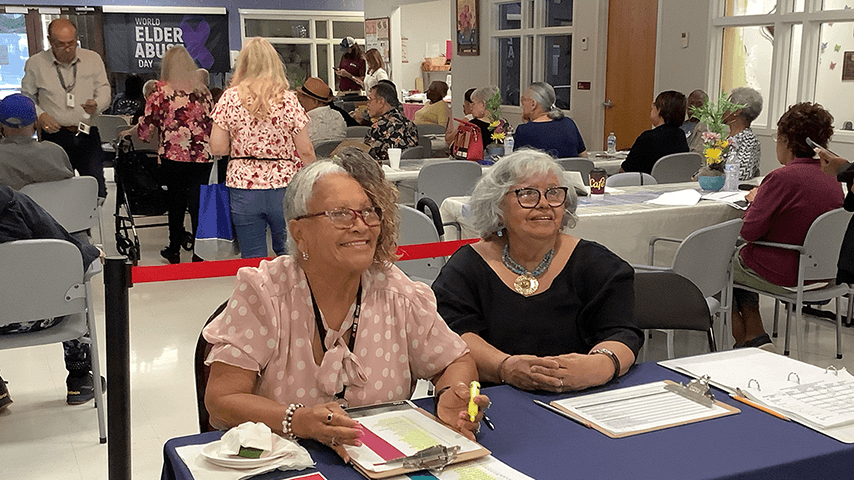
Photo by Nate Smallwood for Age-Friendly Greater Pittsburgh
Sources
1. Grants.gov. Notice of Funding Opportunity: HHS-2025-ACL-AOA-FPSG-0037, "Expanding Strategies for Community Evidence-Based Falls Prevention Programming.” July 28, 2025. Found on the internet at https://www.grants.gov/search-results-detail/358663
2. US General Services Administration. Per Diem Rates. Found on the internet at: https://www.gsa.gov/travel/plan-book/per-diem-rates
3. Code of Federal Regulations. Prohibition on certain telecommunications and video surveillance services or equipment 2 CFR, § 200.216. 2025. Found on the internet at https://www.ecfr.gov/current/title-2/subtitle-A/chapter-II/part-200/subpart-C/section-200.216
4. NCOA. Falls Prevention Evidence-Based Programs Fidelity Hub. Found on the internet at https://www.ncoa.org/page/falls-prevention-evidence-based-programs-fidelity-hub/
This project was supported by the Administration for Community Living (ACL), U.S. Department of Health and Human Services (HHS) as part of a financial assistance award totaling $5,000,000 with 100 percent funding by ACL/HHS. The contents are those of the author(s) and do not necessarily represent the official views of, nor an endorsement, by ACL/HHS, or the U.S. Government.