
Effective Referral Systems for Falls Prevention Programs
9 min read
Leaders across sectors came together at the 2024 National Falls Prevention Summit to address the growing challenge of falls among older adults. The outcome: the National Falls Prevention Action Plan outlining six strategic priorities to reduce older adult falls nationwide.
One priority is Goal 4: Drive Clinical and Community Partnerships for Coordinated Care. That goal emphasizes the need to improve referral systems that connect at-risk individuals with community-provided, evidence-based programs. Strengthening referral pathways is essential for turning risk identification into meaningful prevention.
Why referrals matter
Screening and identifying individuals at risk of falling is a vital first step for reducing falls risk and improving outcomes. But screening alone is ineffective without action. Referral to evidence-based programs is a key intervention recommended by the widely used STEADI initiative, developed by the Centers for Disease Control and Prevention (CDC).1
While there are many validated tools available for fall risk screening, once someone has been identified as high risk, barriers exist to connecting them with evidence-based falls prevention programs and services in the community. There is no standardized process for referring older adults to evidence-based falls prevention programs. Also, many providers and organizations are eager to connect individuals with specialized resources but lack the knowledge of available resources and/or access to an effective mechanism for coordinating the referral process.
Successful referral to fall prevention programming requires coordination between those who regularly identify adults at high risk for falls and those who provide evidence-based falls prevention programs.
Often, this means coordination between health care providers and community-based organizations.1 Effective referral systems are essential for turning risk identification into real-world prevention. Yet poor communication and coordination between clinical and community settings often hampers referral follow-through.1
How referral systems work
There is no one-size-fits all approach to program referrals. Important considerations include variations in community needs, consumer preferences, and available resources across regions. As a result, referral systems vary widely by state and community.
Most effective referral systems do include the following core steps:
- Maintain the referral system: A comprehensive, current directory of programs and services is essential to effectively connect people to appropriate resources. The referral system must be regularly maintained and updated by a designated individual, team, or organization.
- Share the referral system: The referral system should be simple, accessible, and user-friendly. Those positioned to refer must be aware of the referral system and trained on how to use it. Those maintaining referral systems should frequently lead introductory presentations on the referral system to ensure new providers are aware of the referral process.
- Identify individual need: A provider, health plan, caregiver, or partner identifies someone at risk (or the person self-identifies) and recommends a referral to a particular program or resource. Depending on the at-risk person’s readiness and agreeability, they may endorse moving forward with a referral or may deny interest in additional services and supports.
- Initiate referral: If the individual endorses interest in a referral, that person is referred via phone, email, or online form. At this point, additional information should be gathered to ensure comprehensive understanding of needs, preferences, and abilities to ensure a match with an appropriate program or service.
- Connect to appropriate program: The process of connecting someone with an appropriate program may take the form of the person submitting an interest form, directing the person to a website where they can review a program directory and self-match, or working with a designated referral system coordinator who can match a consumer to a program or service. This step varies greatly depending on the sophistication of a given referral system. Connection to programs also requires consideration of potential eligibility factors that may affect someone's ability to participate.
- Complete referral: Completion of the referral process can similarly vary depending on the particular program. Depending on availability, a participant may be enrolled in a program or may have to be placed on a waiting list.
- Follow up: Including a follow-up step after a referral has been completed is useful for evaluating a referral system’s effectiveness and consumer satisfaction. Follow-up activities can be completed by the person who made the referral or the referral system administrator. Follow-up metrics can include confirming program completion and participant satisfaction.
Examples of effective referral models
Coastal Bend Wellness Foundation (Texas)
The Coastal Bend Wellness Foundation (CBWF) integrates falls prevention into its Federally Qualified Health Center (FQHC) model, serving underserved, rural, and Hispanic older adults in Texas. CBWF provides a strong example of how to make referrals a routine part of care.
Key components of their system:
- Clinical integration—Falls risk assessments are embedded into patient visits and tracked using the Electronic Medical Record (EMR) system. This triggers automatic internal referrals to the evidence-based falls prevention programs, Bingocize® and FallsTalk.
- Promotional outreach—CBWF uses local media (TV, radio, newspaper) and sites like pharmacies, grocery stores, banks, and churches to advertise programs.
- Strong partnerships
- Local fire departments, EMS, and ambulance services refer older adults to CBWF following fall-related calls.
- The area agency on aging and aging and disability resource center in 11 counties coordinate closely with CBWF to avoid service duplication, promote each other’s programs, and co-host awareness campaigns.
- Program continuity—After finishing a program like Bingocize®, participants are often referred to another falls prevention program, supporting a continuum of care.
CBWF’s success stems from:
- Engaged in-house providers making direct referrals
- Effective use of EMR prompts and tracking
- Robust rural partnerships
- Continuous, targeted marketing
Community HUB Integration for Statewide Referrals (Iowa)
Iowa has created a centralized statewide referral model through the Iowa Community HUB (the HUB), a community-focused entity that connects health care providers with evidence-based falls prevention programs.
Key highlights of Iowa’s model:
- Over 575 health care providers have referred patients through the HUB.
- The system is in the initial phases of integrating with EPIC EMRs at FQHCs statewide via FHIR (Fast Healthcare Interoperability Resources), to enable real-time referrals.
- The HUB collaborates with the Iowa Department of Health and Human Services and a broad network of statewide organizations to encourage adoption and enhance utilization.
- The HUB facilitates referrals to falls prevention programs and arthritis-appropriate evidence-based interventions like Tai Chi for Arthritis, Stepping On, and Walk with Ease as part of the Iowa Falls Prevention Coalition’s efforts and the Arthritis Care Model initiative.
- The HUB provides feedback to referring clinicians, reinforcing the value of their participation.
- The HUB screens participants for health-related social needs and connects them to community resources to help address barriers to participation.
Iowa’s success is rooted in the combination of technical infrastructure with cross-sector collaboration and provider engagement, resulting in a scalable and sustainable model for falls prevention programming.
How to build or strengthen referral systems in your region
Organizations interested in establishing new or enhancing existing referral systems can adopt a variety of actions to improve their state or region capacity to turn risk identification into program connection. Because relationships and technology form the backbone of most referral systems, many of these actions rely on relationship cultivation and leveraging technology to strengthen referrals.
- Engage stakeholders: Bring together a variety of partners who regularly interact with older adults and are positioned to identify those who may benefit from evidence-based falls prevention programs. Stakeholders can include AAAs, community health workers, hospitals, libraries, senior centers, EMS, law enforcement, home health providers, and faith-based organizations.
- Map your local ecosystem: Identify existing evidence-based falls prevention programs offered in your region and groups that act as referral sources. Ensure identification of a range of program types and settings and consider both formal referral sources (e.g., physicians, senior centers) and informal referral sources (e.g., local champions, rotary clubs, volunteer groups).
- Understand existing referral processes: Through discussion with stakeholders, gain knowledge on existing referral practices. Evaluate the strengths and weaknesses of current referral mechanisms. Scaling and improving an existing process can be an ideal way to implement a state-wide referral system.
- Choose a model: Referral systems vary greatly in terms of sophistication and automation. A simple web form or email-based system can serve as an effective starting point to allow providers to connect people to programs. A more sophisticated referral system might include integration into electronic health records or other electronic platforms. Choosing a model may involve exploring how technology solutions can be leveraged to reduce the burden on those making referrals.
- Develop tools and protocols: Creating additional tools and protocols may be necessary to ensure effective referral system implementation and sustainability. Such products might include a referral tracking sheet or database, consent forms, or standard operating procedures that outline the role each member of the referral system will play.
- Train users: Ensure all individuals situated to identify older adults with high fall risks are aware of your referral system and know how to use it. If your referral system accommodates self-referrals, training should include older adults themselves. Consider hosting virtual training sessions to orient users to your referral system.
- Monitor effectiveness: Set up a system that allows consumers, referrers, and service providers to share feedback on the referral system’s effectiveness. Consider implementing a follow-up system to gauge consumers' follow-through and satisfaction with the programs they are referred to.
- Adjust and improve: As feedback is collected, consider improvements that can address identified gaps and ensure the referral system’s sustainability. Form a multi-sector workgroup that is designed to track effectiveness and implement solutions. Share data with other community members who may be situated to address gaps that are outside of the scope of those maintaining the referral system.
- Promote the referral system: Continuous promotion is critical to a referral system's success. Use local and national platforms to promote the referral system. The audience for promotion should include referrers, service providers, and consumers.
Tools to support referral system development
Referral process flowchart (simple)
Fall Risk Identified
↓
Referral Made (form, email, call)
↓
Referral Coordinator or Program Lead Matches to EBP
↓
Participant Contacted & Enrolled
↓
(Optional) Referrer Receives Feedback
Sample intake or referral form
Use the following list to standardize information collected during referrals.
- Participant Name:
- Date of Birth:
- Preferred Language:
- Phone/Email:
- Address or ZIP Code:
- Fall Risk Identified (Yes/No):
- Referred By (Org/Person):
- Preferred Program (if known):
- Accessibility Needs (transportation, hearing, etc.):
- Make HIPAA-compliant if used with medical providers (e.g., secure submission)
Referral Tracking Log (Spreadsheet Template using Excel or Word)
Track referrals and follow-ups over time using a log such as the example below.
|
Referral Date |
Participant Name |
Referred By |
Program |
Status |
Date Contacted |
Enrolled? |
Notes |
|
7/15/25 |
Jane Smith |
St. Luke Clinic |
AMOB |
Contacted |
7/16/25 |
Yes |
Needs transportation |
Directory of referral-ready programs
Consider developing a directory of “referral-friendly” programs and organizations that are ready to receive referrals including their contact information and eligibility details such as the example below.
|
Program Name |
Contact Person |
Phone/Email |
Location |
Format (in-person/virtual) |
Language(s) |
Start Date |
Eligibility |
Program Completion Info |
|
Tai Chi for Arthritis |
Maria Lopez |
maria@agency.org |
Atlanta |
In-person |
English/Spanish |
Aug 5, 2025 |
Age 60+, ambulatory, no severe cognitive impairment |
8-week course; attendance tracked |
|
AMOB – Virtual |
John Carter |
john@aaa.gov |
Statewide |
Zoom |
English |
Ongoing |
Age 60+, moderate fall concern, able to follow directions online |
Self-paced; participation monitored by coach |
Feedback Template for Referrers (Email/Message)
Use the following template to close the loop with partners and encourage more referrals.
Subject: Referral Follow-up – [Participant Name]
Hello [Referrer's Name],
Thank you for referring [Participant] to our falls prevention program. We’re happy to share that they [have enrolled / were contacted but declined / could not be reached].
We appreciate your continued partnership in keeping older adults safe and independent.
Best,
[Program Contact Info]
Falls prevention is only as effective as the referral systems that connect screening with support. By building streamlined, partner-driven referral pathways, organizations can ensure that fall prevention screenings are actionable by promptly connecting older adults identified as at risk to evidence-based falls prevention programs.
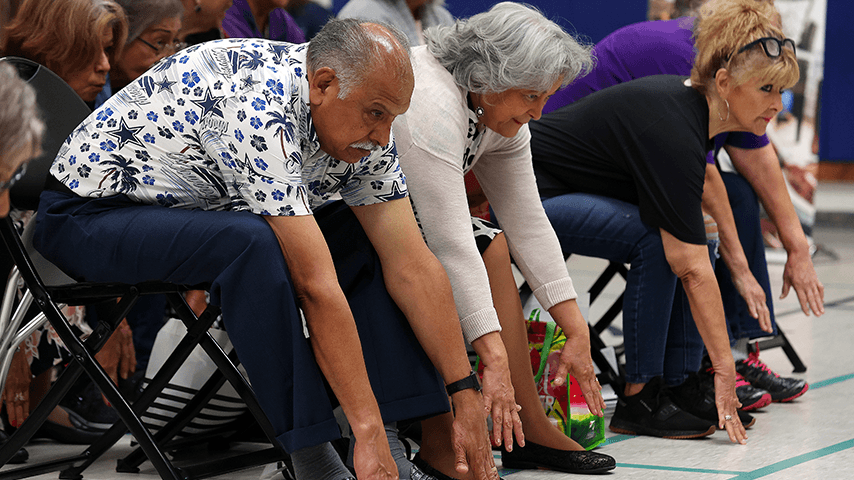
Photo by Richard Rodriguez/Getty Images for National Council on Aging
Sources
1. Boehm, L.M., et al. Physical Therapists as Partners for Community Fall Risk Scrennings and Referrals to Community Programs. Frontiers in Public Health. June 2021. Found on the internet at https://www.frontiersin.org/journals/public-health/articles/10.3389/fpubh.2021.672366/full
This project is supported by the Administration for Community Living (ACL), U.S. Department of Health and Human Services (HHS) as part of a financial assistance award totaling $2,5000,000 with 100 percent funding by ACL/HHS. The contents are those of the author(s) and do not necessarily represent the official views of, nor an endorsement, by ACL/HHS, or the U.S. Government.