“By Us, for Us”: Connecting Culture, Community, and Health Through Báa nnilah
4 min read
Related Topics
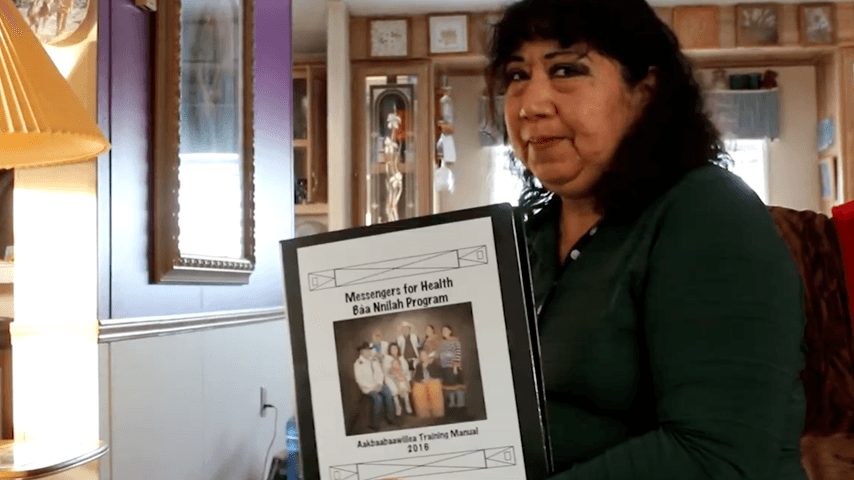
Messengers for Health is an Indigenous non-profit based on the Apsáalooke (Crow) Reservation in Montana, dedicated to improving community health through cultural strengths. Founded in 1996 through a partnership between Apsáalooke members and Montana State University, the organization began by training community women to promote cancer screenings and support quality care.
Today, Messengers for Health programs serve both Crow men and women with chronic conditions like type 2 diabetes. One example of a program that’s had an immense impact on the community is Báa nnilah.
What is Báa nnilah?
Báa nnilah is a free, culturally tailored chronic illness self-management and health promotion program for Crow elders. The program name translates to "advice we receive from others" or providing love and nurturing through advice, often shared in a story form.
What are the benefits of participating in Báa nnilah?
The program includes seven gatherings with meals, where participants:
- Gain practical knowledge and tools for healthy living and self-care to enhance their quality of life.
- Explore and apply Crow cultural strengths to support community health.
- Learn about nutrition and physical and emotional well-being through interactive, hands-on activities.
- Receive encouragement and support from program staff and fellow participants to help put new skills into action for better self-care.
How does Báa nnilah reduce health care costs for Apsáalooke members?
The Báa nnilah program reduces health care costs by empowering Apsáalooke community members with chronic illnesses to better manage their conditions. This leads to fewer complications, a reduced need for urgent or emergency care, and potentially fewer medications.
Participants also reported:
- Improved relationships with health care providers
- A greater understanding of and adherence to their medications
- Increased physical activity
- Healthier diets and decreased consumption of sugar-sweetened beverages.
One participant even reported discontinuing some medications under a doctor’s guidance due to improved health. Another described resolving many health problems after losing 50 pounds with family support.
These changes suggest a reduction in preventable health care utilization and long-term cost savings, especially in a community where many people travel long distances to access care and experience high rates of comorbidities.
Alma McCormick, Executive Director of Messengers for Health and a member of the Crow Nation, shared, “The greatest benefit was just to see that people knew they weren’t alone. We were able to establish a setting that was so comfortable, so safe, so relational, so culturally appropriate in bringing people together. When we brought people together in that setting, it allowed them to feel the power of that love and encouragement to know they are not alone and to know that others are going through the same thing.”
“We don’t take things apart. We keep things whole.” — On the importance of honoring personal stories in Indigenous research.
What part of the program has had the greatest impact on participants’ health?
Báa nnilah participants reported profound emotional and behavioral shifts throughout the program. Many felt less alone in their health journeys, while others shared what they learned with family and community members, creating a ripple effect that extended well beyond the individual. Mental health also improved, with one participant stating, “This program brought me out of my depression.”
One participant now proudly refers to their healthier drink choice as “my Báa nnilah drink” after giving up soda to better manage their health. Program Manager, Christiane, noted the impact of visual tools, such as using sugar cubes to demonstrate the amount of sugar in some participants’ favorite drinks. This impactful tool made nutrition concepts more tangible and helped community members better understand their sugar intake.
The program also embraced cultural relevance by adapting terms and approaches. Terms were culturally adapted—instead of “goal setting,” they used “counting coup,” which is relational to the Crow people and the different ways they can gain from the enemy. Participants identify their own “feathers” (personal achievements they would like to gain) throughout the gatherings, often alongside a supportive partner. This peer partnership approach fostered ongoing motivation and accountability during the program.
McCormick also spoke to the profound impact of grief within Indigenous communities, sharing that many families face one loss after another without time to heal. She emphasized that healing becomes possible when people come together. Báa nnilah has helped revive traditional Crow cultural practices by encouraging a return to a way of life centered on visiting, building connections, and deeply knowing one another.
What sets Báa nnilah apart from other interventions?
McCormick explained that few programs truly address chronic conditions among Indigenous people. While some standard models exist, Messengers for Health created something “by us, for us”—a program designed with a deep understanding of why community members may be guarded. It was built to speak directly to those experiences. Each gathering begins and ends with prayer, honoring the community’s spirituality, which is central to their identity.
What Participants Say About Báa nnilah
|
"This program was the catalyst for so many positive things in my life. I have since built an extended therapy and health community around me that I am involved in on a daily basis." |
|
"I know I can always call upon Messengers for Health if I ever need help. I am a healthier person for all the help and information they have shared with all of us." |
|
"I have more confidence in myself. It helps to know someone who is like me." |
|
“I feel more confident talking with my doctor.” |
Learn more about Báa nnilah
- Báa nnilah Health Promotion Program
- Download the Interview with Báa nnilah Elders (PDF)
- Improving Chronic Illness Self-Management with the Apsáalooke Nation: The Báa nnilah Project, a Cluster Randomized Trial Protocol
- The Báa nnilah Program: Results of a Chronic-Illness Self-Management Cluster Randomized Trial With the Apsáalooke Nation
This project was supported by the Administration for Community Living (ACL), U.S. Department of Health and Human Services (HHS) as part of a financial assistance award totaling $10,000,000 with 100 percent funding by ACL/HHS. The contents are those of the author(s) and do not necessarily represent the official views of, nor an endorsement, by ACL/HHS or the U.S. Government.
What Is Chronic Disease Self-Management?
Older adults are disproportionately affected by chronic conditions such as diabetes, arthritis, and heart disease. Learn more about chronic disease self-management, a low-cost program that helps people with chronic diseases learn how to manage and improve their health.